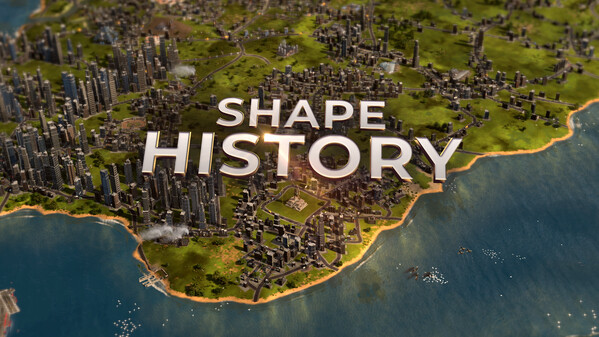
Build a nation starting at any point in human history and compete for supremacy in this epic turn-based strategy game. Engage in diplomacy, fight wars, and go head-to-head with other leaders from history.
Modeled estimate, not a reported figure. How we estimate →
Prices
Each in the currency that store quoted — not converted: the gap between two rows is the publisher's pricing, not an exchange rate.
14 of 15 markets; the rest we haven't asked for this title, not markets where it is unavailable.
Availability
We put this game to every storefront we collect. A market that answered not sold has told us something about the game; a market we never asked has not, and the two are never drawn the same.
About
Ara: History Untold is an evolution in historical grand strategy, featuring beloved classic PC strategy mechanics alongside innovative gameplay like a national crafting economy, true simultaneous turn resolution, a non-linear technology tree, and cloud-backed synchronous/asynchronous multiplayer - all with an expansive and vibrant presentation where you can zoom out from surveying the very edges of your empire all the way down to your citizens living their daily lives. In Ara, there are no pre-set paths to victory, leading to endless possibilities. Your choices will define the world you create, your experience, and your legacy.
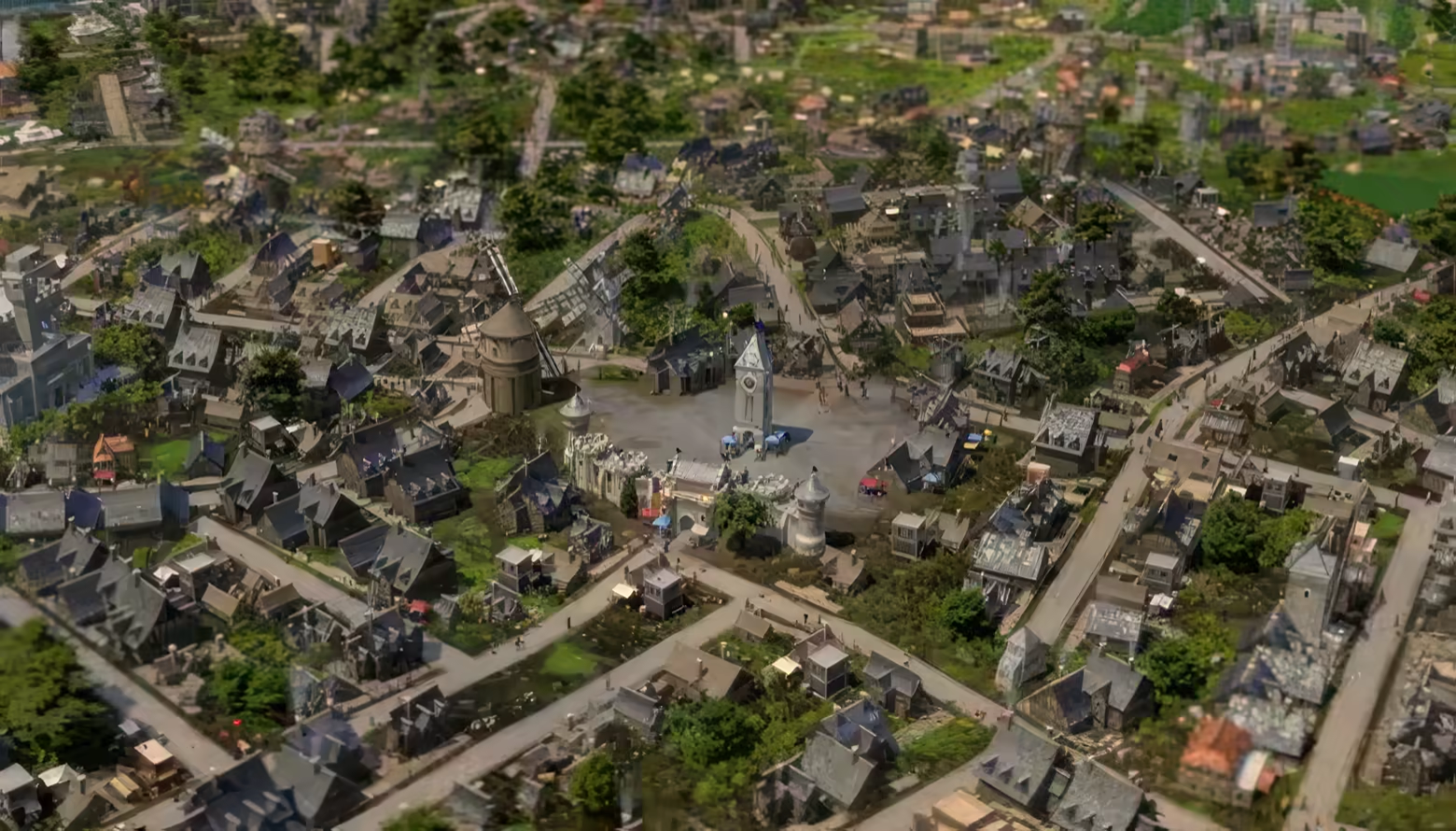
Explore an Immersive Living World:
Explore a dynamic living world filled with life and charm across sweeping landscapes ranging from tropical jungles to sand-swept deserts as you discover the resources you need to develop your nation. Witness the world come to life in vivid, realistic detail as citizens move throughout the world and react dynamically to times of health and sickness, war and peace, wealth and despair with unique biomes, cultures, and eras representing the diversity of human experience.
Build Your Nation:
Serve your people and grow your prestige with numerous Improvements, from forges to libraries, citadels to cathedrals, public parks to industrial factories - as well as a global variety of the greatest architectural Triumphs ever conceived and built by human hands.
Guide your people through the eras of human discovery:
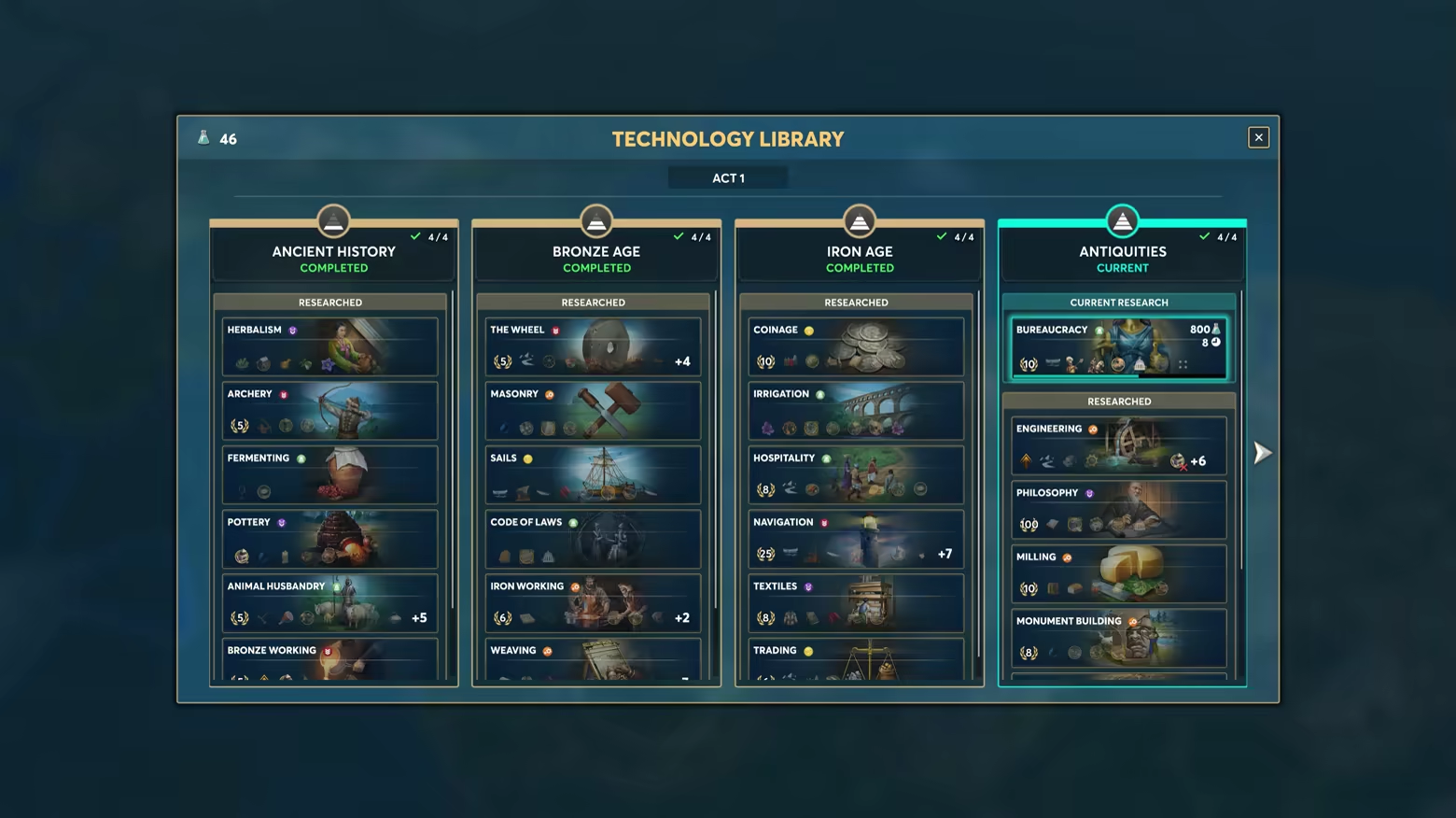
Nurture your people’s brilliance and invention as you progress your Nation through twelve unique Technology Eras, making the hard choices about where to focus your Nation’s greatest minds. As you near the end of each Era, you’ll have to decide how fast to push your scientists along the path to the future - at the risk of the present.
Oversee a rich and detailed national economy:
Harvest the bounty of the natural world and deploy the labor of your people with a depth-filled National Crafting system. Will you manufacture Amenities - like lavish feasts - to provide your cities and citizens with powerful benefits, or invest in the creation of Equipment - the weapons of war - to prepare your Armies to defend your nation or conquer your rivals? Whatever paths you choose you’ll need to carefully optimize your resources and production to achieve the most efficient systems if you want to outpace your rivals to fortune and lasting glory.
Rule Your Way:
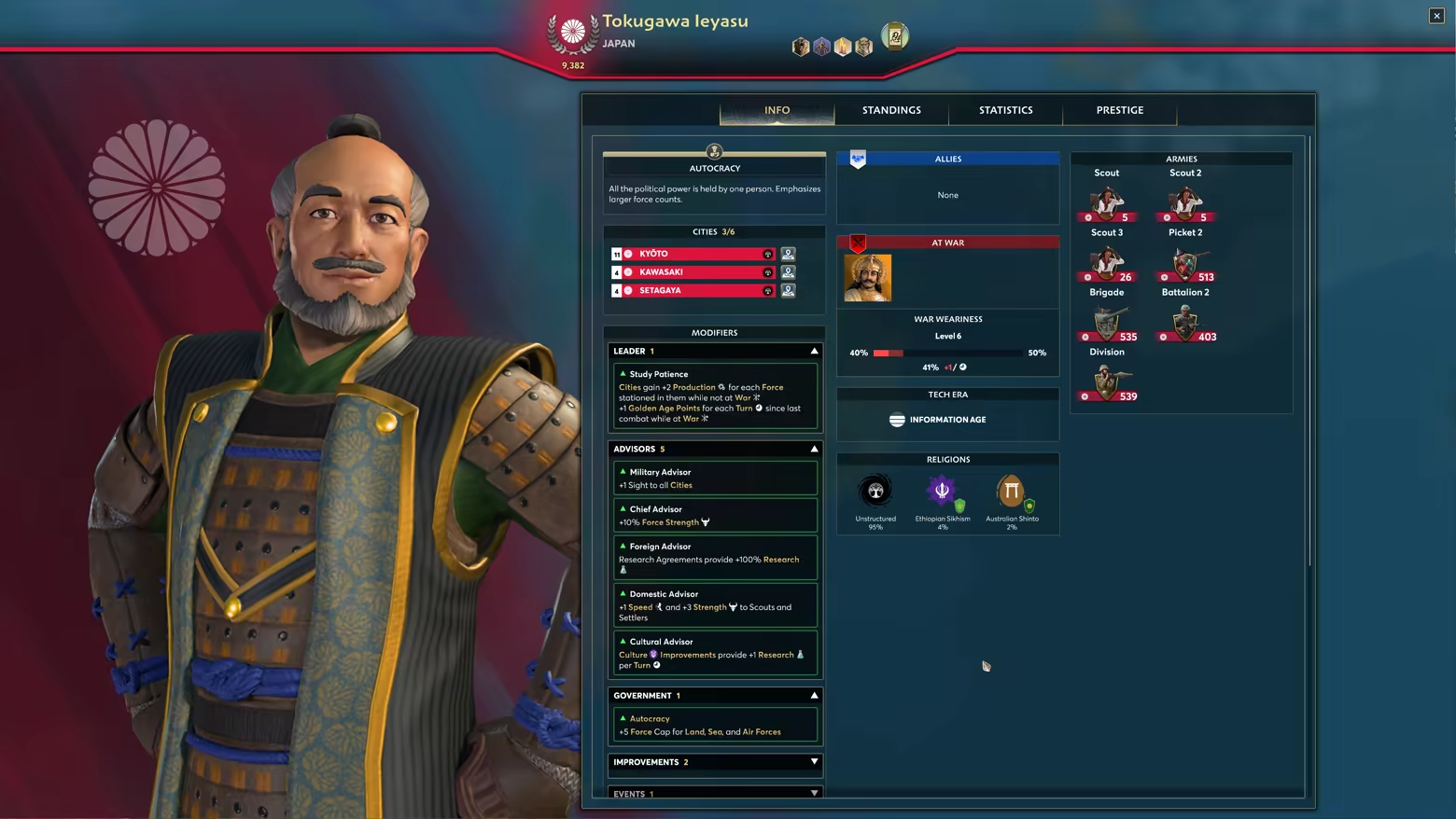
Choose from dozens of history's most influential figures to embody as you reshape the world through your choices. The unique and varied global Leaders and Nations in Ara emphasize a wide variety of different playstyles. Experiment with gameplay-impacting Traits and powerful Leader Abilities drawn from the effect they had on world history. Whether friend or foe, each Leader has a distinct personality based on their historical background that informs their AI behaviors.
Grow your Nation:
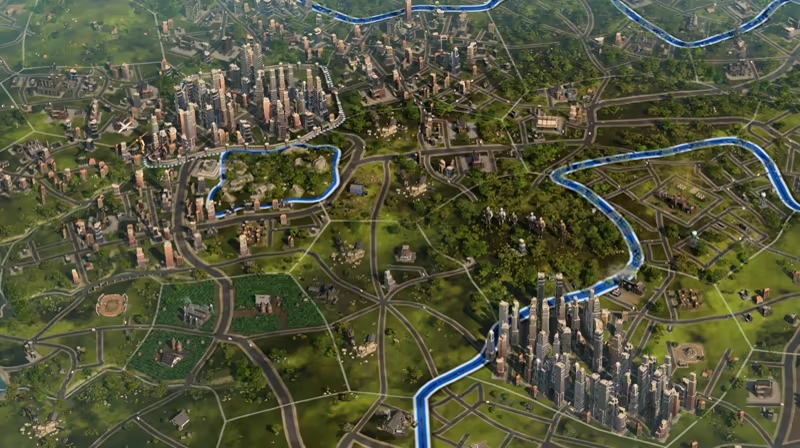
Extend your reach and expand your Nation’s borders through claiming new territory, conquering cities, spreading your Religion, or by expending Influence. How your Nation grows and defines new borders is up to you.
Experience True Simultaneous Turns:
Every turn each nation's actions and choices resolve simultaneously, leading to suspense, anticipation, unique outcomes, and surprising twists on the classic turn-based formula. The fate of your people will be determined by your decisions and your ability to predict your opponent’s next move, putting your skill as a leader to the ultimate test.
Defend your people by land, sea, and air:
Warfare in Ara is presented in the Living World, as thousands of years of military conflict reflect the progress and martial prowess of your people. Develop technologies to advance your weaponry against your rivals, hone your wartime economy and industry to gain the edge, and outthink your opponent’s strategies as maneuvers resolve authentically at once thanks to the power of True Simultaneous Turns.
Prove Your Worth in Online Multiplayer:
Combining the speed and surprise of True Simultaneous Turns with the power of the cloud - multiplayer in Ara is fast, seamless, and able to be enjoyed asynchronously with a wide range of options to tailor you and your friend’s experience to the way you want to play together.
A Microsoft Account is required to play online multiplayer.
Updates
Build ids and update times come straight from Steam's PICS — the same source SteamDB reads. Patch history grows as we record new builds.
Engagement
Reviews
Themes across 821 recent reviews and how positive each mention is. A keyword signal, not full sentiment analysis.
Reviews
Civ lite. It's weird that I miss barbarians. Map is small, growth is slow, relationship AI is weird (country across the map will declare war on you, meanwhile country that just declared war on you will offer you massive relationship bi-lateral defense treaty 5 turns after the war ends) If you just want a lazy weekend civ itch scratcher on sale, its not bad.
Good game overall - however, more work needs to be done to improve re-playability.
Media

Related
Related
Price dynamics, follower growth, revenue and sales trajectories with interactive tooltips
This and every other Pro feature is free until October 20, 2026. A free account is all it takes.
14 on sale1 answered “not sold”0 we did not ask
The 1 “not sold” market is read from the Steam price pass of Aug 31: that day the store answered for this game elsewhere and gave no price there. The 14 priced markets are the same rows as the table above — each the latest price we hold, dated here when it is older than that pass. The 0 marked “not asked” were not put to this store at all — either it has no storefront there or we do not collect it yet, and neither is a statement about the game. A refusal is a refusal on one day; a store can list a title again tomorrow.
Genres
Stats
All-time low is the lowest price we've recorded for this game since we started tracking it.
Languages: English*, French*, Italian*, German*, Spanish - Spain*, Czech, Danish, Dutch, Finnish, Greek, Hungarian, Japanese* +14 more
Hours played at review time, across 822 reviews with recorded playtime.
positive critical· bar length = how often the theme comes up
Version 1.4 Review. I’ve been saying for years that I’d love to play a turn based version of Anno. With its focus on production chains, just like the Anno series, I should therefore love this game – and bought it very shortly after version 1.0 release after watching some Let’s Play youtube videos as a result. But I don’t. Why? Because whilst it’s based on some great concepts – I love the diversity of resources and the emphasis on economics and city building rather than warfare for instance – I think Ara suffers from a fundamental flaw. Whilst games like Anno, Stardew Valley, Oxygen Not Included and Civ IV (which is the best PC game I’ve ever played) have a tendency to give you the resources you need or provide workaround mechanics (like monarchy in Civ IV if you lacked happiness resources) and let you succeed or fail based on the choices you make or what you produce with those resources (which may involve going to war to acquire more resources), the developers of Ara seem to have decided instead to force early game choice upon the gamer by imposing scarcity upon them. In my view, production and crafting take too long in the early game – relative to both research speed and per number of turns. Whilst Civ IV solved this problem by deploying the slavery mechanic (which allowed you to convert local population into production), the developers of Ara have decided instead to follow the route taken in Civ V (which I loathed as much as I loved Civ IV) to use gold to speed production. Since gold is a global resource however and has other uses, including to (i) expedite the crafting of even basic items like feasts (needed now in my experience since the impact of their duration has been cut to 5 turns from 10) and (ii) satisfy some diplomatic missions, it must be used sparingly initially to accelerate the production of improvements. In my experience, Ara’s use of early game boosters (such as tools or plows) doesn’t solve this issue because their bonuses are applied to a base production that is too low. This is particularly noticeable when producing or crafting in cities outside the capital, where production is at least boosted at the outset by the hearth. In my view, this imposition of scarcity also extends to border expansion – with city growth and border expansion also too slow in the early game. The result is that cites aren’t able to access the resources in surrounding regions they’ve been settled for, for some time. This is despite using the relevant amenities (such as grain stores or herbal tea) to boost city growth. Whilst I appreciate that some of the above might replicate the struggle faced by early civilizations and may be needed to slow the pace of progression, given that I’ve found that late game cities in earlier versions of Ara tend to have been swimming in gold, in my view it tends to lead to too many turns passing by prior to that point without me feeling as if I’m making many decisions that actually shape a civilization. To solve this, I suspect that early game production in cities outside the capital needs boosting (or maybe boost the early production of all cities and reduce the production boost from the hearth) and / or early game production and / or crafting costs need to be lowered – perhaps at the expense of later game increases to smooth out game pacing. Alternatively, or perhaps in addition depending on how this is issue is resolved, early game border growth may need hastening in my view. As it stands however, I find that the combination of (i) low production, (ii) hard and low early game city caps, (iii) slow border growth and (iv) the inability to use gold to materially boost production until well into the game, mean that I’m unable to make a sufficient number of decisions per turn to develop my cities to maintain my interest in a game. As a result, it’s time for me to acknowledge that - for now at least – I’ll enjoy my gaming time more if I put Ara down and return to playing either of my existing games of Stardew Valley or ONI – which leave me feeling as if I make more choices that shape my farm or colony per hour of gameplay in the early game than Ara currently does whilst I’m trying to nurture a civilization. Hopefully that’ll change in a future version of the game – and if it does, I’ll be happy to edit this review.
Äußerst gute Civ Alternative, die meiner Meinung nach auch besser aussieht. Kann sie nur jedem empfehlen. Einziges Manko, das Politiksystem ist doof und langweilig, da die Ki so ziemlich alle Vorschläge abschmettert, wenn man nicht super dicke mit denen ist. Sogar offene Grenzen zum Handeln. (Man kann nur ein Handelsabkommen schließen wenn man sich auf offene Grenzen einigt.)
Ich liebe einfach dieses sehr hübsche Spiel.
后期玩不成,电脑要爆炸了。 i7-13650HX + 4060游戏本
Very good game, just a few glitches. Like building menu and crafting lists become never ending long at the end of the game. Combat videos become Benny Hill show if you have more than 5 units. (They are running around and around.... or moving backward....especially cavalry can do that....or just died and slipping towards enemy line.....very weird, indeed). Maybe units can get also slots for crafted equipment, like scope, etc…..just an idea…. Also, just at the end of the last era, strange combat animation is more and more frequent. The died flat enemy horses also sliding on the ground to your line. Enemy with axes overrun your tanks. Enemy swordman fighting against your modern AK47 infantry with great success. Enemy cavalry perfect in riding upside down. Etc.
Podoba mi się! Polecam. Może są jakieś elementy, które innym niezbyt odpowiadają. Mnie jednak nic nie przychodzi do głowy. Gra jest konkurentem Civilizacji z dodaną głębią, której tamtej grze brakuje- zwłaszcza w końcowym etapie kiedy klikamy następną turę i właściwie to mamy już dość i nudzi nas to w sposób żołądkowy. Właściwie to uważam tą grę za przynależną do innego gatunku gier, bardziej jako City Builder, w którym pominięto estetykę budowy i wyglądu budynków czy siłę roboczą i logistykę z ukształtowaniem terenu. Głęboka głębia w postaci zarządzania surowcami i dobrami, z których nie tyle posiadanie ile ich ale ich zastosowanie się liczy. Generalnie mapa podzielona jest na mniejsze poletka na których dowolnie zakładamy miasta i je powiększamy wraz z przyrostem populacji, który jest powolny, dlatego kluczowe jest skupienie się na wytwarzaniu boosterów przyrostu. Te poletka znów są podzielone na mniejsze poletka z różną ich ilością od 2-6 sektorów na których budujemy lub wydobywamy, po ostatnich aktualizacjach te same zasoby występują gromadnie w obrębie jednej czy sąsiadujących prowincjach. Dla całej rozgrywki kluczowe jest posiadanie jak największej połaci mapy w celu zgromadzenia ważnych surowców w odpowiedniej ilości. Co do budynków to jest ich dużo (mają wyższe wersje), a niektóre są ograniczone ilością na dane miasto czy całą nacje. Niektóre zasoby jak proch nie są zasobem do wydobycia (jak w Civ na polu saletry) tylko produkowalnym dobrem w budynku wojskowym. W trakcie rozgrywki możemy założyć własną religię- i tu minus bo nie są one doprecyzowane, to jest nie do końca, jest ich dużo do wyboru, ale brak zawartości czym się one cechują, jednak są trzy główne grupy- mono-, poli-, -teistyczne oraz pogańskie/nie zorganizowane/prymitywne, gdzie po wyborze np. katolicyzmu odblokowujemy budowlę kultu- katedrę, w innych odrębny dedykowany budynek. Poza tym w trakcie rozgrywki (przyrost wiernych) wybieramy "wersy" -perki wpływające na naszych wiernych. Religia jest rozprzestrzeniana w obrębie miasta z budynkiem religijnym z tą cechą np. ołtarz na wczesnym etapie (cmentarz generuje zadowolenie). Nie ma więc wywierania nacisku na miasta przeciwnika jak w Civ, czy efektów obecności obcej religii- kwestia do dopracowania bo ogólnie to liczy się liczba wiernych aby odblokować kolejny werset, ale obce religie też mają swoje wersety które też boostują naszą nacje innowierców. Co do zarządzania "boostami" to jest opcja w interfejsie gry otwierająca nam okno z podziałem na grupy budynków jako zakładki i listą tych budynków wraz z polami ulepszeń gdzie możemy dokonać wszelkich zmian, ulepszeń, upgradów, przypisań. Co do "boostów" to są wyprodukowane przez nas dobra, które możemy użyć w konkretnych celach- np. ziarno z pól uprawnych pszenicy lub ryżu możemy użyć w spichlerzu przyspieszając jego produkcję o 100% produkowanego przez niego dobra które wykorzystamy do rozwoju naszych miast- i tu pojawia się związek mikro z makro -ekonomią. Mianowicie w mieście wykorzystamy 1szt 'boosta' na 10 tur, a produkujemy np. 1szt na 3 tury co pozwala nam na zastosowanie tego dobra w kilku (3-4) innych miastach i w przypadku niedoboru nie zostanie ono usunięte tylko użyte kiedy będzie dostępne- wygodne co? Ale po aktualizacja powstała różnica co do zlecenia na produkcję dóbr- było wyprodukuj 5 szt i zgłoś brak zleceń, teraz jest produkuj jeśli w magazynie jest mniej niż 5. Niestety to może być utrudnienie bo w tym przypadku zakłady będą "stały" z produkcją czegoś co łatwo jest o 5 sztuk w magazynie. Więc trzeba pilnować na początku ile czego- też kwestia zarządzania która nie została uproszczona w formie tabelki i trzeba ją wykonywać manualnie, a żeby się zorientować to trzeba jeszcze się przyjrzeć zakładom w każdym z miast- bez ikonki dobra zakład stoi. W grze mamy możliwość zagrania dużą gamą przywódców, z których niektórzy są nowością w tego typu grach - jak Belgia, czy plemię rdzennych Indian pod przewodnictwem mało znanej Kobiety. Czy jak niektórzy krytykują Miko Koperek jako Wódz Polski hmmm, może hmmm... dlaczego nie Piłsudski? Albo to mało było faktycznych przywódców? Jakoś dla Hiszpanii jest Izabela I to może by ją zamienili na Krzysia Kulomba? Co do walk to jednostki są grupowane w formacje, te odblokowujemy w badaniach- na początek możemy formować pojedyncze jednostki osobno lub w 2-ki, 3-ki, 4-ki ale każda formacja ma podgrupy - dające bonusy konkretnemu zestawieniu- np. zwarcie-dystans-zwarcie- daje +10% każdej jednostce w tak złożonej formacji- jeśli złożymy d-z-z to już nie będzie boostu ale formację wystawimy- i tu kolejna rewelka- formacja się zbiera kilka tur- więc jak przeciwnik pojawi się na terenie któregoś z miast to już formacji nie będziemy mogli wystawić o ile nie zleciliśmy tego wcześniej spodziewając się wizyty lub obserwując ruchy jednostek. Narody teraz mają swoje "kultowe" jednostki jak np. polska Husaria. Kolejną sprawą jest PRESTIŻ- najważniejsza poza kasą, żarciem, żelazem i wieloma innymi ważnymi... Prestige zdobywamy wszędzie, jest główną miarą rankingu, możemy go wykorzystać na akcje dyplomatyczne. Poza tym zawsze rośnie, dzięki budowaniu cudów, dzięki zwykłym budynkom, dobrom, dziełom sztuki itd. Jest to główne odniesienie w jaki sposób radzimy sobie w rozgrywce, które dodatkowo nas mobilizuje, bo możemy zostać wykluczeni z dalszej rozgrywki. Czy to złe że jest eliminacja? A teraz wyobraź sobie że masz 3 miasta i brak możliwości rozwoju bo graniczysz z przeciwnikiem który Cię obstawił swoimi 5 miastami- i jeśli zbierzesz wystarczająco prestiżu a on nie to Ty przejdziesz dalej a jego ziemie sobie skolonizujesz, po pokonaniu jego zbuntowanych armii- więc nie całkiem bez wystrzału. Generalnie polecam tę grę i wcale nie w oczekiwaniu na Civ7 (już wyszło i ma duże negatywy przy cenie z kosmosu) tylko zupełnie poza głównym nurtem, aby coś się zaczęło zmieniać i dziać w tej grupie gier. Osobiście powiązałbym tę produkcję z Humankind (prestiż, surowce, armie, rozwój) i pod względem ekonomii trochę do Victorii3, choć nie na tak zaawansowaną skalę. Rozumiem, że niektórych może przytłoczyć mnogość dóbr zwłaszcza w połączeniu z ograniczeniami na liczbę budynków mogących je produkować- należy się skupić na najważniejszym- a nie na wszystkim żeby mieć, ale strategicznie planując nie tylko ruchy wojsk ale własną ekonomię w dążeniu do osiągnięcia celu. Polecam i życzę pozytywnych wrażeń z gry.
Forget what you know about 4X games; this is an Economic Sim in a historical trench coat. If you come into Ara expecting Civ 7, you’ll be disappointed. But if you come into it wanting the complexity of Anno 1800 or Victoria mixed with grand strategy, you’ll be addicted. The Good: The Crafting Loop: Managing production chains—from grain to flour to bread to keep your citizens happy—is incredibly satisfying. Stunning Scale: The "living world" is real. You can zoom from a satellite view all the way down to individual citizens walking through your town squares. v2.0 Improvements: The Revolutions update finally fixed the tedious micromanagement with the "AI Shop Owners" and quotas. It’s much smoother now. The Bad: Warfare is Mid: Combat is still mostly about numbers and formations; it lacks the tactical "crunch" of other strategy games. Steep Learning Curve: Even with the better tutorials, the math behind "Prestige" can feel opaque. Verdict: A refreshing alternative to the standard 4X formula. It’s finally the game it was promised to be at launch.
The best of the recent civ competitors. I love it but it's not for the faint of heart. The game has an incredible amount of detailed management and it is at much an economic/supply chain sim as it is a 4x. It is like if civ and Anno had a baby that ended up being a child prodigy It is still not 100% perfect but it has improved tremendously since launch.
Active players
Estimated daily and monthly active players (DAU/MAU) modeled from peak concurrency.
Players by region
Where this game's players are, estimated from review languages.
Players also reviewed
The games this title's players most often review too — audience affinity.
Related
| Game | Estimated lifetime revenue | Reviews | Review score | Price |
|---|---|---|---|---|
| — | 0 | — | — | |
| $134.1M | 62.1K | 47% | $69.99 | |
| $22.7M | 16.2K | 63% | $59.99 | |
| $7.4M | 6.9K | 83% | $39.99 | |
| $4.8M | 3.8K | 67% | $39.99 | |
| $941.9K | 7.8K | 89% | $4.99 |
Related
| Game | Estimated lifetime revenue | Reviews | Review score | Price |
|---|---|---|---|---|
| $3.9M | 4.2K | 78% | $24.99 | |
| $3.9M | 7.9K | 92% | $24.99 | |
| $3.9M | 6.9K | 87% | $29.99 | |
| $3.9M | 9.9K | 90% | $19.99 | |
| $3.9M | 7.9K | 95% | $19.99 | |
| $3.9M | 4.5K | 83% | $39.99 |