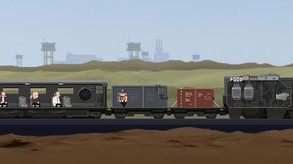
Travel by train through a dying world. Look after your passengers, keep your train operational, and make sure you can always reach the next station. Make your way through swarms of infected at each station. Explore mysterious and abandoned stations looking for supplies and survivors.
Modeled estimate, not a reported figure. How we estimate →
Prices
Each in the currency that store quoted — not converted: the gap between two rows is the publisher's pricing, not an exchange rate.
Discounts
Every price cut of more than 20% we have observed, in each market that quoted one, with this game's chart position on either side of it. These are episodes, not a model: a sale is one event, and one event cannot tell you what the next one will do.
Reviews, worldwide (the counter carries no country): 0.86/day in the week to Sep 14 → 1/day in the week after.
About

Genres
Sums Steam only; Xbox, PlayStation, Nintendo publish no volume signal, so the true total is higher by an unknown amount.
| Store | Price | Audience | Score | Chart | Est. revenue |
|---|---|---|---|---|---|
SteamYou are here | $3.74−75% | 9.5Kreviews | 87% | — | $760K |
| $14.99 | 1.7Kratings | 80% | — | not modelled | |
Updates
Build ids and update times come straight from Steam's PICS — the same source SteamDB reads. Patch history grows as we record new builds.
Engagement
Reviews
Themes across 851 recent reviews and how positive each mention is. A keyword signal, not full sentiment analysis.
Reviews
Ждёшь симулятор машиниста который будет кататься по всем маршрутам которые есть, подбирать людей и апгрейдить поезд. Получаешь философский зомбиапокалипсис с отсылкой на Стругацких. Очевидно минусов я не нашла, хех.
Если бы можно было как-то охарактеризовать игру одним словом, это минимализм. Игровой процесс местами может показаться сложным. Но игра легко прощает ошибки и даёт быстрые рестарты. При определенной сноровке начинаешь более внимательно оценивать окружение и экономичнее относиться ко всем ресурсам, тогда становится проще. А основной сложностью будет являться — это вытерпеть нудное повествование. Оно крайне линейное, и никакими своими действиями, я так понял, невозможно повлиять на финал или жизнь окружающих. Чувствуется потенциал, но многие моменты не раскрыты и сделаны довольно поверхностно. Присутствует атмосфера, и можно даже погрузиться в неё, в этот необычный мир с отсылками на классическую фантастику, с милым нарративом, небольшими деталями в окружении. Если такая способность или возможность имеется, то супер. В общем, случайным людям я бы не стал рекомендовать, но любителям пиксель-арта и 2-мерных игр — обратите внимание.
Media

Related
Related
Price dynamics, follower growth, revenue and sales trajectories with interactive tooltips
This and every other Pro feature is free until October 20, 2026. A free account is all it takes.
Related
| Game | Estimated lifetime revenue | Reviews | Review score | Price |
|---|---|---|---|---|
| $760K | 1.4K | 90% | $19.99 | |
| $760K | 4K | 88% | $7.99 | |
| $759.5K | 959 | 77% | $18.99 | |
| $759.5K | 1K | 62% | $19.99 | |
| $760.5K | 1.9K | 78% | $14.99 | |
| $759.3K | 4.6K | 79% | $7.19 |
Related
| Game | Estimated lifetime revenue | Reviews | Review score | Price |
|---|---|---|---|---|
| — | 197 | 76% | $2.99 | |
| $5.1M | 12.8K | 79% | $14.99 | |
| $706.7K | 6.6K | 90% | $4.99 | |
| — | 0 | — | — | |
| $516.6K | 1.3K | 85% | $9.99 | |
| $63.3K | 1.7K | 72% | $1.79 |
Every market we collect.
Reviews, worldwide (the counter carries no country): 0.67/day in the week to Aug 5 → 2.14/day in the week after.
For scale, across Steam · Top Sellers · Brazil over the last 30 days: the 24 chart moves that followed a price cut of more than 20% went a median of 9 places towards #1, and the 2,404 moves with no price cut behind them went 2 away. One store, one chart, one country — it is the only place we have enough observations to say even that.
Prices outside the United States have been collected since 6 August 2026 and chart positions since 19 July 2026, so a cut older than that has no market to compare and a market that joined later has no history yet. Nothing here is converted between currencies.
Stats
All-time low is the lowest price we've recorded for this game since we started tracking it.
Languages: English, Russian, Italian, German, Spanish - Spain, Polish, Portuguese - Portugal, Portuguese - Brazil, French, Simplified Chinese
| $14.99 |
| 878ratings |
| 86% |
| — |
| not modelled |
| $4.99−75% | — | — | — | not modelled |
Matched by title — a reused name can pair the wrong games. * is a critic aggregate. Prices and positions are each store's United States storefront; Epic charts worldwide. Audience and Score too, except Steam's, which is worldwide.
Hours played at review time, across 853 reviews with recorded playtime.
positive critical· bar length = how often the theme comes up
好玩,有点难度但不多
小时候看逆风笑玩的,很好玩,列车上的风景很好看,游戏的氛围也非常的好,能看到美丽的风景也能感受到人类的绝望,剧情碎片化不是特别能看懂一些东西,总体来说不错,除了近战蓄力的判定十分迷以外是很好的游戏
What a great little game! Super creepy and cool story. I love pixel art and trains so this was a no-brainer for me to pickup. The only issue I have is the English is a little hard to understand at a couple points, its clear the writer/programmer is not a native english speaker so sometimes text may seem weird or not worded correctly but you can always get the idea of the meaning. 100% recommend for those that are looking for a lightweight, fun, creepy, pixel game.
The Final Station, developed by Do My Best and published by tinyBuild, is an evocative blend of survival horror, narrative-driven exploration, and management simulation set against the haunting backdrop of a collapsing world. It invites players into a grim, pixel-art vision of the future, where humanity faces extinction from an otherworldly infection known as the “Second Visitation.” You play as a lone train conductor, tasked with delivering crucial cargo through a series of increasingly desolate towns, while contending with dwindling resources, infected horrors, and the slow unraveling of civilization. The premise alone gives the game an atmosphere of constant tension and melancholy, but it’s the quiet moments between chaos—the rhythmic clatter of the train wheels, the soft hum of machinery, the conversations with passengers—that truly define its tone. Every journey forward feels like both an escape and a descent into something inescapably tragic. At its core, The Final Station alternates between two distinct forms of gameplay that complement each other perfectly. When you arrive at a station, the game transforms into a side-scrolling action segment, where you leave the safety of your train to scavenge supplies and search for survivors. These excursions are dangerous, filled with shadowy corridors, flickering lights, and the ever-present threat of infected enemies. Ammunition is scarce, healing items are rare, and the enemies are relentless, forcing you to rely on careful aim and quick thinking rather than brute force. The combat is tense and minimalist, rewarding precision and resourcefulness. Every station tells a story through its environment—empty homes, hastily abandoned workplaces, and bloodstained walls all serve as fragments of a greater narrative. There’s no exposition dump or lengthy dialogue explaining what went wrong; the player pieces together the truth through notes, background details, and the eerie silence that pervades each location. Once you return to your train, the game shifts gears entirely. These sequences act as both a reprieve and a source of anxiety. As the train rumbles across the tracks, you manage the passengers you’ve rescued, keeping them fed and healthy while monitoring the train’s various systems to prevent malfunctions. Food and medkits are limited, so tough choices must be made—do you heal a wounded passenger or save your resources for later? The survivors converse amongst themselves, offering glimpses into their personalities, fears, and fragments of the larger catastrophe, but rarely do you feel like a savior. Instead, there’s a persistent awareness that survival is temporary and that you’re only postponing the inevitable. The balancing act of keeping the train operational while rationing supplies creates a delicate rhythm between tension and exhaustion. It’s this constant cycle—venturing into danger, returning to safety, and repeating the process—that gives The Final Station its distinctive sense of pacing and emotional gravity. The game’s aesthetic plays a crucial role in establishing its mood. The pixel art is deceptively simple yet rich in atmosphere, using light, shadow, and color to convey emotion without excess detail. Each environment feels deliberate—the washed-out greys of industrial ruins, the dim orange glow of fires burning in the distance, the eerie emptiness of tunnels and train stations. The visual restraint allows the player’s imagination to fill in the blanks, making the world feel larger and more desolate than what’s seen on screen. The sound design reinforces this tone beautifully: the rhythmic clank of the train wheels becomes almost hypnotic, broken only by the crackle of radio transmissions or the cries of unseen horrors. Music is sparse, appearing at key moments to heighten emotion rather than dominate the experience. The combination of minimalist visuals and restrained audio design creates an atmosphere that’s both haunting and strangely intimate. Narratively, The Final Station unfolds subtly, never fully revealing all its mysteries. There’s a sense of realism in how the story develops—not through exposition or cinematic cutscenes, but through the accumulation of small, human details. The fragments of conversation, the personal notes left behind, and the quiet dread of seeing each station more devastated than the last build an overwhelming sense of loss. The protagonist remains largely silent, a stoic observer rather than an active hero, which reinforces the game’s theme of futility. You’re not fighting to save the world; you’re just trying to keep moving through it. The writing, though sparse, carries weight. Characters speak in clipped, weary tones, and their words often hint at despair, resignation, or denial. The world-building is deliberately vague, allowing the player’s imagination to fill in the horrors that exist beyond the train tracks. It’s a story about survival in a world that’s already ended, told with quiet confidence and restraint. While The Final Station’s greatest strength is its atmosphere and pacing, its simplicity can also be a limitation. The train management segments, while thematically effective, can become repetitive after several hours. The act of adjusting levers, monitoring gauges, and handing out supplies loses some of its tension once you understand the routine. Similarly, the combat and exploration sequences, though tense at first, lack mechanical variety as the game progresses. Yet these minor shortcomings are overshadowed by the game’s consistency of tone and the emotional resonance of its journey. The short playtime—roughly five hours—works in its favor, preventing the repetition from overstaying its welcome and keeping the focus on narrative momentum and world-building. By the time the credits roll, the game has said exactly what it needs to say and leaves you with a lingering sense of reflection and melancholy. In its entirety, The Final Station is less about fighting monsters and more about confronting despair. It’s a study in atmosphere, a game that uses scarcity, silence, and routine to build emotional tension rather than relying on spectacle or shock. Every stop along the tracks deepens the sense of hopelessness, yet the very act of continuing—of driving forward into uncertainty—becomes its own form of resistance. The combination of its tight gameplay loop, subdued storytelling, and haunting aesthetic makes it one of the most memorable indie titles in recent years. The Final Station doesn’t bombard players with action or exposition; instead, it trusts them to find meaning in the spaces between. It’s a quiet apocalypse rendered in pixels—a story about endurance, duty, and the fleeting connections that persist even as the world falls apart. Rating: 8/10
La ambientación que da este juego si llega a ser inquietante y desoladora, la historia no entendí nada pero si siento que algo importante esta pasando y que tu estas en medio de todo y el gameplay de shooter 2d me encantó y me atrapo desde el inicio pero la parte del tren si que no me pareció muy interesante y supongo que podria ser mejor, la verdad no se a quien podria gustarle este juego asi que supongo que deberías probarlo y ver que te parece
▶ ¡Chu chu!, pero con zombies y aliens... eso creo. ★Historia: En un mundo donde al parecer unos aliens dejaron una infección en el planeta, un conductor de tren tiene que cruzar el mundo con cargas secretas y una misión de ver a su familia. ★Gameplay: Es un juego de combate contra zombies simple, pero con gestión de recursos en el tren. ★Audio: Normal ★Dificultad: Normal ★Rendimiento: Gamma baja ★Tiempo de juego: 3-4 horas; es corto realmente. ★Precio: Está bien. ★Online: No ★Gráficos: Pixel art minimalista. ★Platino: Complicado. ★Rejugabilidad: No. ★Stream: Quizás es una historia corta. ★Contenido: Campaña y DLC. Una propuesta barata, simple e intrigante. Es un juego entretenido con una trama misteriosa que te da lo suficiente, pero no todo.
那我不管,拿了霰弹枪我就是小黑怪的爹。吃我一记曼巴铁肘(╯▔皿▔)╯。 I DON'T CARE,WHEN THOSE ZOMBIES FACED WITH MY SHOTGUN THEY'D BETTER TURN AROUND,OTHERWISE TO EAT MY KOBE'S ELBOW STRIKE.
❗ For the English version, please scroll down. ❗ The Final Station привлекает и удерживает внимание прежде всего атмосферой. Ощущение «происходит что-то непонятное и опасное» здесь передаётся скорее не напряжённо и пугающе, а меланхолично: медленно проплывающие за окном поезда пейзажи с гигантскими техногенными объектами, тихое запустение на станциях, люди в растерянности и ступоре. Очевидно влияние братьев Стругацких: прежде всего «Пикника на обочине», но также и «Гадких лебедей» — и, возможно, в меньшей степени романа «Волны гасят ветер». Вам не нужно знать сюжет книг, чтобы вполне понять игру, но если вы знакомы с ними — атмосфера безусловно покажется вам знакомой. Именно эта атмосфера, великолепный пиксель-арт и приличный саундтрек вытягивают игру на высокий уровень, даже если геймплейные решения периодически вставляют палки в колёса повествованию. Сам основной геймлпей — исследование станций — иногда ругают за однообразие, но на самом деле именно он обеспечивает погружение. Цикл «приехал, отбился от врагов, нашёл код, уехал» создаёт необходимый ритм: мы играем за машиниста, и для него апокалипсис — это прежде всего работа. Эта монотонность отлично передаёт ощущение будничности конца света. Лишь ближе к финалу разработчики, кажется, испугались, что игроку станет скучно, и местами превратили меланхоличное выживание в более быстрый экшн, что заметно слегка смазывает впечатление от последней трети игры. Гораздо более серьёзная проблема кроется в механике поездок. В теории это время для передышки и погружения в лор, но на практике происходит конфликт между ключевой механикой и вашим желанием следить за сюжетом: информация о мире подаётся через диалоги пассажиров, но игра буквально не даёт их читать. Вас заставляют бегать по вагонам, дёргать рычаги вентиляции, разносить еду и аптечки. В итоге приходится выбирать: либо следишь за здоровьем людей и исправностью поезда, либо пытаешься уловить суть сюжета. Часто реплики просто улетают за край экрана, пока ты занят мини-игрой, и это раздражает: вы буквально прослушали кусок лора, потому что были заняты работой. В DLC эту проблему исправили, но базовую игру приходится проходить так. К слову о нарративе: история сама по себе интригует, но оригинальная кампания страдает от чрезмерной недосказанности. Да, неполнота картины работает на атмосферу, а финал вызывает эмоции (постарайтесь себе его не заспойлерить), но игра в целом оставляет слишком много белых пятен. Без DLC The Only Traitor картина мира попросту неполна: дополнение не просто расширяет вселенную, оно даёт необходимые ключи к пониманию происходящего в базовой игре, делая сюжет цельным. Без него сама основная игра выглядит как красивый, атмосферный но вырванный из контекста фрагмент истории мира. В итоге мы имеем крепкую, стильную вещь, которой для идеала не хватило чуть более грамотного геймдизайна в части поездок на поезде. Игра вам точно запомнится, но наверняка вы будете жалеть о строчках диалогов, которые пропустили, настраивая чёртову вентиляцию. И если у вас есть возможность купить DLC вместе с игрой, рассмотрите её: дополнение не только раскрывает глобальный сюжет, но и геймплейно лучше практически во всём. 8 из 10 ___ The Final Station grabs and holds your attention primarily through its atmosphere. The sense that "something strange and dangerous is happening" isn't conveyed through tension or jumpscares, but through melancholy: landscapes drifting slowly past the train window featuring giant industrial structures, the quiet desolation of the stations, and people standing around in a state of confused stupor. The influence of the Strugatsky brothers is obvious — primarily Roadside Picnic, but also The Ugly Swans and, perhaps to a lesser extent, The Waves Extinguish the Wind. You don’t need to know the books to understand the game, but if you are familiar with them, the vibe will feel instantly recognizable. It is this atmosphere, combined with magnificent pixel art and a decent soundtrack, that elevates the game, even when the gameplay decisions occasionally throw a wrench in the works of the storytelling. The core gameplay — exploring stations — is sometimes criticized for being repetitive, but in reality, that repetition is exactly what sells the immersion. The cycle of "arrive, fight off enemies, find the code, depart" creates a necessary rhythm. We play as a train conductor, and for him, the apocalypse is primarily a job. This monotony perfectly conveys the feeling of a mundane end of the world. It’s only near the finale that the developers seemed to panic that the player might get bored, turning the melancholic survival into faster-paced action, which unfortunately blurs the impression of the final third of the game. A much more serious design flaw lies in the train travel mechanics. In theory, this should be a time for respite and lore immersion. In practice, there is a conflict between the mechanics and your desire to follow the story. Information about the world is delivered through passenger dialogue, but the game literally won't let you read it. You are forced to run between cars, pull ventilation levers, and deliver food and medkits. You have to choose: either maintain the health of your passengers and train, or try to grasp the plot. Often, text bubbles just float off the edge of the screen while you’re busy with a mini-game. It’s frustrating: you literally miss a piece of lore because you were busy working. The DLC fixed this issue, but in the base game, you just have to deal with it. Speaking of narrative, the story itself is intriguing, but the original campaign suffers from being overly vague. Yes, the incompleteness of the picture adds to the atmosphere, and the ending is emotional (try not to spoil it for yourself), but the game leaves too many blank spots. Without The Only Traitor DLC, the world-building is simply incomplete. The expansion doesn't just broaden the universe; it provides the necessary keys to understand what is happening in the base game, making the plot cohesive. Without it, the main game feels like a beautiful, atmospheric, but context-free fragment of a larger history. On the technical side, everything is solid. The game runs well even on very weak systems, and I didn't encounter any serious bugs. In the end, we have a solid, stylish title that falls just short of perfection due to some questionable game design regarding the train sections. The game will definitely stick with you, but you will almost certainly regret the lines of dialogue you missed while tuning that damn ventilation. If you have the option to buy the DLC along with the game, do it: the expansion not only reveals the global plot but is practically better in every way gameplay-wise. 8/10
Active players
Estimated daily and monthly active players (DAU/MAU) modeled from peak concurrency.
Players by region
Where this game's players are, estimated from review languages.
Players also reviewed
The games this title's players most often review too — audience affinity.