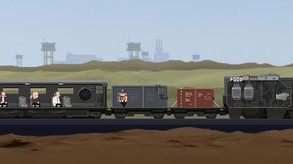
Travel by train through a dying world. Look after your passengers, keep your train operational, and make sure you can always reach the next station. Make your way through swarms of infected at each station. Explore mysterious and abandoned stations looking for supplies and survivors.
Modeled estimate, not a reported figure. How we estimate →
Prices
Each in the currency that store quoted — not converted: the gap between two rows is the publisher's pricing, not an exchange rate.
Discounts
Every price cut of more than 20% we have observed, in each market that quoted one, with this game's chart position on either side of it. These are episodes, not a model: a sale is one event, and one event cannot tell you what the next one will do.
Reviews, worldwide (the counter carries no country): 0.86/day in the week to Sep 14 → 1/day in the week after.
About

Genres
Sums Steam only; Xbox, PlayStation, Nintendo publish no volume signal, so the true total is higher by an unknown amount.
| Store | Price | Audience | Score | Chart | Est. revenue |
|---|---|---|---|---|---|
SteamYou are here | $3.74−75% | 9.5Kreviews | 87% | — | $760K |
| $14.99 | 1.7Kratings | 80% | — | not modelled | |
Updates
Build ids and update times come straight from Steam's PICS — the same source SteamDB reads. Patch history grows as we record new builds.
Engagement
Reviews
Themes across 851 recent reviews and how positive each mention is. A keyword signal, not full sentiment analysis.
Reviews
Amazing game, absolute masterpiece. The dlc is amazing, the story is amazing
小时候电视上看过直播,印象深刻。就是结局太让人难以接受了,可惜没有多结局。
What a great little game! Super creepy and cool story. I love pixel art and trains so this was a no-brainer for me to pickup. The only issue I have is the English is a little hard to understand at a couple points, its clear the writer/programmer is not a native english speaker so sometimes text may seem weird or not worded correctly but you can always get the idea of the meaning. 100% recommend for those that are looking for a lightweight, fun, creepy, pixel game.
Media

Related
Related
Price dynamics, follower growth, revenue and sales trajectories with interactive tooltips
This and every other Pro feature is free until October 20, 2026. A free account is all it takes.
Related
| Game | Estimated lifetime revenue | Reviews | Review score | Price |
|---|---|---|---|---|
| $760K | 1.4K | 90% | $19.99 | |
| $760K | 4K | 88% | $7.99 | |
| $759.5K | 959 | 77% | $18.99 | |
| $759.5K | 1K | 62% | $19.99 | |
| $760.5K | 1.9K | 78% | $14.99 | |
| $759.3K | 4.6K | 79% | $7.19 |
Related
| Game | Estimated lifetime revenue | Reviews | Review score | Price |
|---|---|---|---|---|
| — | 197 | 76% | $2.99 | |
| $5.1M | 12.8K | 79% | $14.99 | |
| $706.7K | 6.6K | 90% | $4.99 | |
| — | 0 | — | — | |
| $516.6K | 1.3K | 85% | $9.99 | |
| $63.3K | 1.7K | 72% | $1.79 |
Every market we collect.
Reviews, worldwide (the counter carries no country): 0.67/day in the week to Aug 5 → 2.14/day in the week after.
For scale, across Steam · Top Sellers · Brazil over the last 30 days: the 24 chart moves that followed a price cut of more than 20% went a median of 9 places towards #1, and the 2,404 moves with no price cut behind them went 2 away. One store, one chart, one country — it is the only place we have enough observations to say even that.
Prices outside the United States have been collected since 6 August 2026 and chart positions since 19 July 2026, so a cut older than that has no market to compare and a market that joined later has no history yet. Nothing here is converted between currencies.
Stats
All-time low is the lowest price we've recorded for this game since we started tracking it.
Languages: English, Russian, Italian, German, Spanish - Spain, Polish, Portuguese - Portugal, Portuguese - Brazil, French, Simplified Chinese
| $14.99 |
| 878ratings |
| 86% |
| — |
| not modelled |
| $4.99−75% | — | — | — | not modelled |
Matched by title — a reused name can pair the wrong games. * is a critic aggregate. Prices and positions are each store's United States storefront; Epic charts worldwide. Audience and Score too, except Steam's, which is worldwide.
Hours played at review time, across 853 reviews with recorded playtime.
positive critical· bar length = how often the theme comes up
One Part is a 2D platformer where you move with WASD and shoot or melee enemies or throw ♥♥♥♥ at them while walking down custom maps. It's just go there kill some enemies pick up some stuff get the code and then take the shortcut back. Second Part is train. You "manage" some passagiers and fix one subsystem of the train. Managing of passagiers is just give them food or heal bleeding ones. Little to no progression at all. You can occasionally buy weapon upgrades and you collect money for the upgrades and food or medkits or ammo. Else no progression whatsoever except story. All in all game too simple for me. Finished the game in 3.6h according to steam so yeah... I thought it there was more depth to it like managing a crew on train with mechanics and medics or workers. But the main gameplay loop is just the 2D-Platformer and the story.
Ждёшь симулятор машиниста который будет кататься по всем маршрутам которые есть, подбирать людей и апгрейдить поезд. Получаешь философский зомбиапокалипсис с отсылкой на Стругацких. Очевидно минусов я не нашла, хех.
I love the final station, I have now played 3 times. I wished it had more recognition, much love to the devs.
The Final Station, developed by Do My Best and published by tinyBuild, is an evocative blend of survival horror, narrative-driven exploration, and management simulation set against the haunting backdrop of a collapsing world. It invites players into a grim, pixel-art vision of the future, where humanity faces extinction from an otherworldly infection known as the “Second Visitation.” You play as a lone train conductor, tasked with delivering crucial cargo through a series of increasingly desolate towns, while contending with dwindling resources, infected horrors, and the slow unraveling of civilization. The premise alone gives the game an atmosphere of constant tension and melancholy, but it’s the quiet moments between chaos—the rhythmic clatter of the train wheels, the soft hum of machinery, the conversations with passengers—that truly define its tone. Every journey forward feels like both an escape and a descent into something inescapably tragic. At its core, The Final Station alternates between two distinct forms of gameplay that complement each other perfectly. When you arrive at a station, the game transforms into a side-scrolling action segment, where you leave the safety of your train to scavenge supplies and search for survivors. These excursions are dangerous, filled with shadowy corridors, flickering lights, and the ever-present threat of infected enemies. Ammunition is scarce, healing items are rare, and the enemies are relentless, forcing you to rely on careful aim and quick thinking rather than brute force. The combat is tense and minimalist, rewarding precision and resourcefulness. Every station tells a story through its environment—empty homes, hastily abandoned workplaces, and bloodstained walls all serve as fragments of a greater narrative. There’s no exposition dump or lengthy dialogue explaining what went wrong; the player pieces together the truth through notes, background details, and the eerie silence that pervades each location. Once you return to your train, the game shifts gears entirely. These sequences act as both a reprieve and a source of anxiety. As the train rumbles across the tracks, you manage the passengers you’ve rescued, keeping them fed and healthy while monitoring the train’s various systems to prevent malfunctions. Food and medkits are limited, so tough choices must be made—do you heal a wounded passenger or save your resources for later? The survivors converse amongst themselves, offering glimpses into their personalities, fears, and fragments of the larger catastrophe, but rarely do you feel like a savior. Instead, there’s a persistent awareness that survival is temporary and that you’re only postponing the inevitable. The balancing act of keeping the train operational while rationing supplies creates a delicate rhythm between tension and exhaustion. It’s this constant cycle—venturing into danger, returning to safety, and repeating the process—that gives The Final Station its distinctive sense of pacing and emotional gravity. The game’s aesthetic plays a crucial role in establishing its mood. The pixel art is deceptively simple yet rich in atmosphere, using light, shadow, and color to convey emotion without excess detail. Each environment feels deliberate—the washed-out greys of industrial ruins, the dim orange glow of fires burning in the distance, the eerie emptiness of tunnels and train stations. The visual restraint allows the player’s imagination to fill in the blanks, making the world feel larger and more desolate than what’s seen on screen. The sound design reinforces this tone beautifully: the rhythmic clank of the train wheels becomes almost hypnotic, broken only by the crackle of radio transmissions or the cries of unseen horrors. Music is sparse, appearing at key moments to heighten emotion rather than dominate the experience. The combination of minimalist visuals and restrained audio design creates an atmosphere that’s both haunting and strangely intimate. Narratively, The Final Station unfolds subtly, never fully revealing all its mysteries. There’s a sense of realism in how the story develops—not through exposition or cinematic cutscenes, but through the accumulation of small, human details. The fragments of conversation, the personal notes left behind, and the quiet dread of seeing each station more devastated than the last build an overwhelming sense of loss. The protagonist remains largely silent, a stoic observer rather than an active hero, which reinforces the game’s theme of futility. You’re not fighting to save the world; you’re just trying to keep moving through it. The writing, though sparse, carries weight. Characters speak in clipped, weary tones, and their words often hint at despair, resignation, or denial. The world-building is deliberately vague, allowing the player’s imagination to fill in the horrors that exist beyond the train tracks. It’s a story about survival in a world that’s already ended, told with quiet confidence and restraint. While The Final Station’s greatest strength is its atmosphere and pacing, its simplicity can also be a limitation. The train management segments, while thematically effective, can become repetitive after several hours. The act of adjusting levers, monitoring gauges, and handing out supplies loses some of its tension once you understand the routine. Similarly, the combat and exploration sequences, though tense at first, lack mechanical variety as the game progresses. Yet these minor shortcomings are overshadowed by the game’s consistency of tone and the emotional resonance of its journey. The short playtime—roughly five hours—works in its favor, preventing the repetition from overstaying its welcome and keeping the focus on narrative momentum and world-building. By the time the credits roll, the game has said exactly what it needs to say and leaves you with a lingering sense of reflection and melancholy. In its entirety, The Final Station is less about fighting monsters and more about confronting despair. It’s a study in atmosphere, a game that uses scarcity, silence, and routine to build emotional tension rather than relying on spectacle or shock. Every stop along the tracks deepens the sense of hopelessness, yet the very act of continuing—of driving forward into uncertainty—becomes its own form of resistance. The combination of its tight gameplay loop, subdued storytelling, and haunting aesthetic makes it one of the most memorable indie titles in recent years. The Final Station doesn’t bombard players with action or exposition; instead, it trusts them to find meaning in the spaces between. It’s a quiet apocalypse rendered in pixels—a story about endurance, duty, and the fleeting connections that persist even as the world falls apart. Rating: 8/10
豪玩,主线打完了,美术和表现力都很赞,但是我等会说的话可能有一点剧透:[spoiler] 我主角最后死得太草率了吧?经过一个场景咳两下就寄了?还有那个卫士,这么大一个机器人我刚开过一站就趴地上了,有点像《权力的游戏》夜王、天地会的盟主、铺垫大半天刚出来就死得不能再死的BOSS级跑龙套[spoiler] 最后一段剧情看得我简直鬼火冒。DLC还没开始玩,希望人没事。
I have 2 stations left I think, but idk if I will finish the game. The combat feels like I am cheesing everything to get by, by either ladder riding or, well, dying and coming back with meta knowledge. There is a little luck too, there was one section I got absolutely mauled, then the next try not a scratch, which unless I'm missing something, I have to sometimes put myself in spots were that is the "difficulty". You literally have to put yourself in a room full of enemies cuz you can't shoot them at a safe angle. As for listing to the story, you are better off just watching someone play the game, you won't hear ♥♥♥♥ the passengers are saying, you will be busy doing everything else. I don't think I ever finished a message in the messaging system once.
[h1] Interesting story, decent gameplay, cut off with some important character dying from hunger mid-sentence [/h1] The Final Station is an excellent game, with a simple gameplay loop with many pieces of lore scattered throughout each infected zone (be it in computers, notes, or scribbled drawings and text on walls) The soundtrack and overall sound design fits in very well with the theme of the game, which is confusion and resignation in the face of a truly terrible enemy, a nigh unbeatable one even if humanity stood to face it head on, but with some people and groups trying to put a wrench in humanity's plan of survival, all hope seems lost. The only major gripe i have in this game has been outlined in the header. i wish they'd done away (or greatly simplified) the food and bleed mechanic of the survivors riding your train. i wanted to digest the story but was forced to rush through it as you would never know when one of them would perish.
Active players
Estimated daily and monthly active players (DAU/MAU) modeled from peak concurrency.
Players by region
Where this game's players are, estimated from review languages.
Players also reviewed
The games this title's players most often review too — audience affinity.