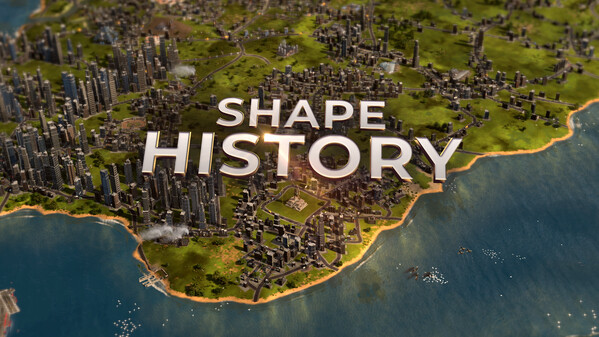
Build a nation starting at any point in human history and compete for supremacy in this epic turn-based strategy game. Engage in diplomacy, fight wars, and go head-to-head with other leaders from history.
Modeled estimate, not a reported figure. How we estimate →
Prices
Each in the currency that store quoted — not converted: the gap between two rows is the publisher's pricing, not an exchange rate.
14 of 15 markets; the rest we haven't asked for this title, not markets where it is unavailable.
Availability
We put this game to every storefront we collect. A market that answered not sold has told us something about the game; a market we never asked has not, and the two are never drawn the same.
About
Ara: History Untold is an evolution in historical grand strategy, featuring beloved classic PC strategy mechanics alongside innovative gameplay like a national crafting economy, true simultaneous turn resolution, a non-linear technology tree, and cloud-backed synchronous/asynchronous multiplayer - all with an expansive and vibrant presentation where you can zoom out from surveying the very edges of your empire all the way down to your citizens living their daily lives. In Ara, there are no pre-set paths to victory, leading to endless possibilities. Your choices will define the world you create, your experience, and your legacy.
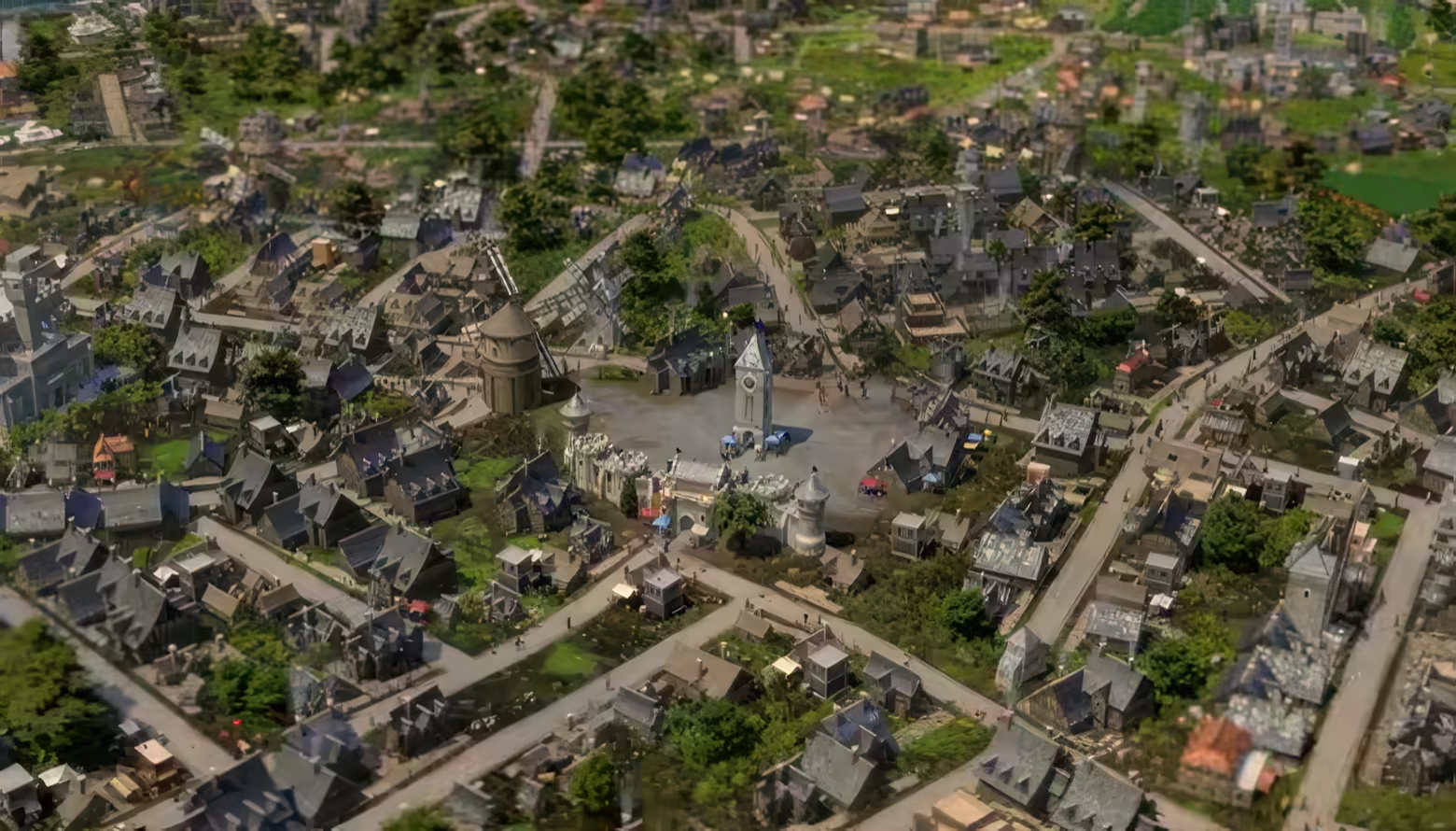
Explore an Immersive Living World:
Explore a dynamic living world filled with life and charm across sweeping landscapes ranging from tropical jungles to sand-swept deserts as you discover the resources you need to develop your nation. Witness the world come to life in vivid, realistic detail as citizens move throughout the world and react dynamically to times of health and sickness, war and peace, wealth and despair with unique biomes, cultures, and eras representing the diversity of human experience.
Build Your Nation:
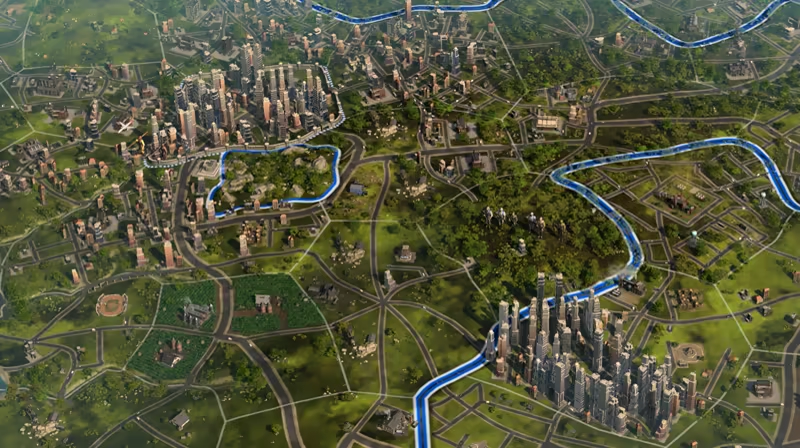
Serve your people and grow your prestige with numerous Improvements, from forges to libraries, citadels to cathedrals, public parks to industrial factories - as well as a global variety of the greatest architectural Triumphs ever conceived and built by human hands.
Guide your people through the eras of human discovery:
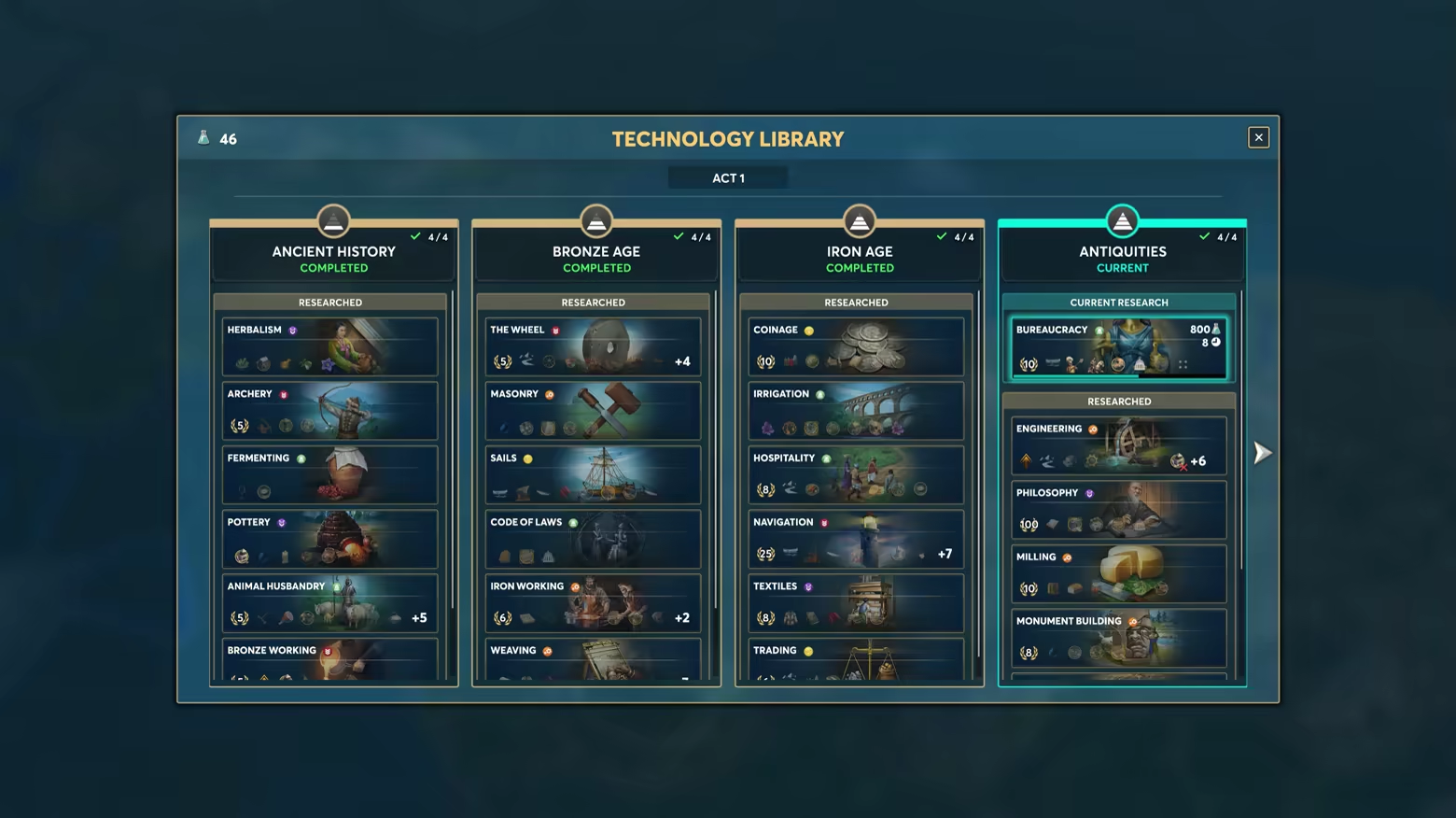
Nurture your people’s brilliance and invention as you progress your Nation through twelve unique Technology Eras, making the hard choices about where to focus your Nation’s greatest minds. As you near the end of each Era, you’ll have to decide how fast to push your scientists along the path to the future - at the risk of the present.
Oversee a rich and detailed national economy:
Harvest the bounty of the natural world and deploy the labor of your people with a depth-filled National Crafting system. Will you manufacture Amenities - like lavish feasts - to provide your cities and citizens with powerful benefits, or invest in the creation of Equipment - the weapons of war - to prepare your Armies to defend your nation or conquer your rivals? Whatever paths you choose you’ll need to carefully optimize your resources and production to achieve the most efficient systems if you want to outpace your rivals to fortune and lasting glory.
Rule Your Way:
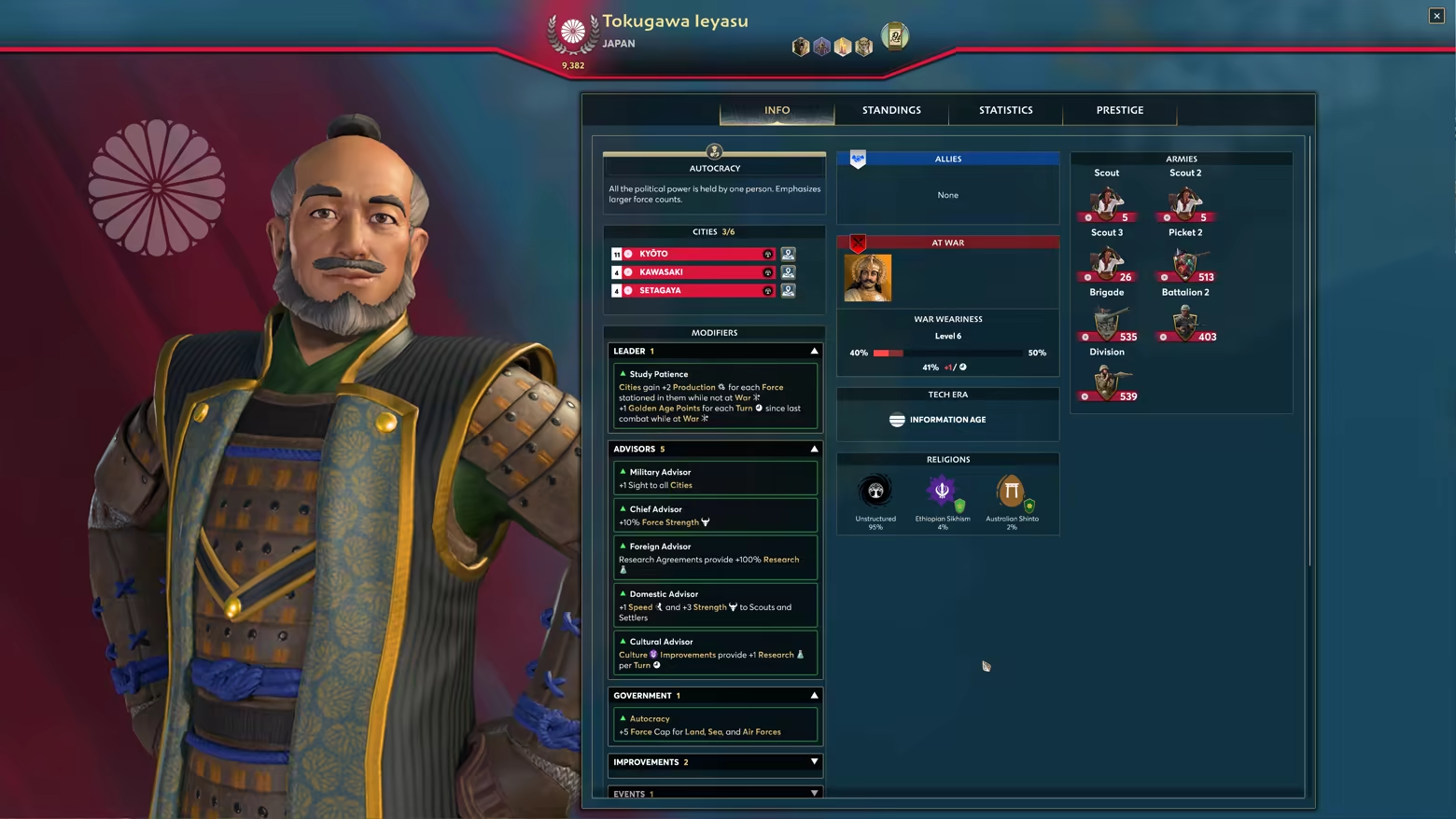
Choose from dozens of history's most influential figures to embody as you reshape the world through your choices. The unique and varied global Leaders and Nations in Ara emphasize a wide variety of different playstyles. Experiment with gameplay-impacting Traits and powerful Leader Abilities drawn from the effect they had on world history. Whether friend or foe, each Leader has a distinct personality based on their historical background that informs their AI behaviors.
Grow your Nation:
Extend your reach and expand your Nation’s borders through claiming new territory, conquering cities, spreading your Religion, or by expending Influence. How your Nation grows and defines new borders is up to you.
Experience True Simultaneous Turns:
Every turn each nation's actions and choices resolve simultaneously, leading to suspense, anticipation, unique outcomes, and surprising twists on the classic turn-based formula. The fate of your people will be determined by your decisions and your ability to predict your opponent’s next move, putting your skill as a leader to the ultimate test.
Defend your people by land, sea, and air:
Warfare in Ara is presented in the Living World, as thousands of years of military conflict reflect the progress and martial prowess of your people. Develop technologies to advance your weaponry against your rivals, hone your wartime economy and industry to gain the edge, and outthink your opponent’s strategies as maneuvers resolve authentically at once thanks to the power of True Simultaneous Turns.
Prove Your Worth in Online Multiplayer:
Combining the speed and surprise of True Simultaneous Turns with the power of the cloud - multiplayer in Ara is fast, seamless, and able to be enjoyed asynchronously with a wide range of options to tailor you and your friend’s experience to the way you want to play together.
A Microsoft Account is required to play online multiplayer.
Updates
Build ids and update times come straight from Steam's PICS — the same source SteamDB reads. Patch history grows as we record new builds.
Engagement
Reviews
Themes across 821 recent reviews and how positive each mention is. A keyword signal, not full sentiment analysis.
Reviews
The game is severely lacking in several key aspects that make it rather unfun despite the good production system and roguelike-esque trait empire trait system. There is no zone of control for military units, which means that enemies can run wild through your regions and pillage all your improvements with impunity. Game also started crashing multiple times in a row. The newest national production update seems to have had an adverse effect on the game, as it essentially forces poor automation and demands that I manually click every producible item over and over again to disable this system. I don't think the game is trash fire, but the devs need to fix this stuff asap.
Game has amazing potential, but the framerate and lag are really distracting in a strategy game. As you try to scroll around the map it's clunky and jittery, where you really want to be able to smoothly hop between cities, regions, and buildings. With smoother graphics, it would be A+
Media

Related
Related
Price dynamics, follower growth, revenue and sales trajectories with interactive tooltips
This and every other Pro feature is free until October 20, 2026. A free account is all it takes.
Related
| Game | Estimated lifetime revenue | Reviews | Review score | Price |
|---|---|---|---|---|
| $3.9M | 7.9K | 92% | $24.99 | |
| $3.9M | 6.9K | 87% | $29.99 | |
| $3.9M | 9.9K | 90% | $19.99 | |
| $3.9M | 4.2K | 78% | $24.99 | |
| $3.9M | 2.7K | 74% | $38.99 | |
| $3.9M | 4.5K | 83% | $39.99 |
Related
| Game | Estimated lifetime revenue | Reviews | Review score | Price |
|---|---|---|---|---|
| — | 0 | — | — | |
| $121.8M | 62.1K | 47% | $69.99 | |
| $22.6M | 16.2K | 63% | $59.99 | |
| $7.4M | 6.9K | 83% | $39.99 | |
| $4.8M | 3.8K | 67% | $39.99 | |
| $941.9K | 7.8K | 90% | $4.99 |
14 on sale1 answered “not sold”0 we did not ask
The 1 “not sold” market is read from the Steam price pass of Aug 31: that day the store answered for this game elsewhere and gave no price there. The 14 priced markets are the same rows as the table above — each the latest price we hold, dated here when it is older than that pass. The 0 marked “not asked” were not put to this store at all — either it has no storefront there or we do not collect it yet, and neither is a statement about the game. A refusal is a refusal on one day; a store can list a title again tomorrow.
Genres
Stats
All-time low is the lowest price we've recorded for this game since we started tracking it.
Languages: English*, French*, Italian*, German*, Spanish - Spain*, Czech, Danish, Dutch, Finnish, Greek, Hungarian, Japanese* +14 more
Hours played at review time, across 822 reviews with recorded playtime.
positive critical· bar length = how often the theme comes up
Excellent 4X game. It doesn't copy from other titles and boasts an interesting system. It nevertheless still requires a lot of improvements (more about this later). (1) The map is not a classic hex map ; it is divided into regions, each region containing from 1 to 6 areas which you will use to improve your city (build industry, farms, mines...). In effect, a region is about the same as 3 hexes in Civ. (2) You gain a new region every time your city size gains one step, and you get to choose which region you gain ; this is different from most other games where you have little to no control on your expension. Regions farther that 3 from your city cost more (so you avoid expending that far). (3) The economic system is based on a supply chain and the basic production from you citizen. This starts with basic wood/material/food/money/specila resource. An industry can transform these into higher level products (e.g. with wood and materials you can get lithic tools, which you will later be able to transform into metallic tools and so on). Products may have three uses : as an intermediate step for a higher level product, as a lever to improve your buildings (e.g. a forge without and anvil is less productive), as a consumable to improve your citizen lives (e.g. your citizen have a better health and happiness with good clothing). Some players are troubled by this system, but it really forces you to think instead of mindlessly cloning your cities throughout the map (e.g. civ) where you always build the same buildings. Here, for exemple, a single forge will provide for your empire up to the middle ages, and two are sufficient up to the industrial age ; more is contraproductive : at best you'll overproduce metal ingots for which you won't have a use, at worst you'll drain your resources producing something not needed. (4) The game is divided into 12 periods (starting at bronze age), and every 4 periods, the last civilizations drop out, leaving their place on the map, so that other civs may find more space to expend to. Winning is defined by an intersting prestige system (win battles, build wonders, keep your cities happy and healthy). This means that you can from exemple wipe out your neighbours, but still end up into the trash bin of history because you achieved nothing meaningfull (say mongols for exemple). Now (devs, listen!), lets see the problems: (1) The game regularly crashes once I reach the industrial age (I have a very good computer and graphic card). This is a shame. The interface also increasingly slows down, to the point where you have to wait seconds when incrementing the production size by one! (2) Managing your cities/goods at high level requires a much better interface. I want to be able to organize the products used by a city. I want to see all buildings at once when I am into the city screen ; I don't care about the background city view, which obviously slows things down and brings nothing. I also want to be able to jump from product to producers/customers so that I can take action easily when needed. (3) I also want a much better diplomatic interface ; when I enter an alliance, I don't even know who the opposing party likes or dislikes, so that I don't have a clue on whom I might end up fighting. There should also be a possibility to trade without letting other units get through! There should be a possibility to attack other units inside my territory, even when at peace, possibly at a small opinion penalty. (4) I have a problem with setllers going around the world. Some even settle between my cities in spots that are obviously spelling problems. I believe you should have either a hard range limit, or better introduce an attrition for all units but explorers outside their country (say lose 20% each turn) which could later be mitigated by technology and/or a logistic train unit. (5) In the same idea, cities that are unconnected (no road) to the capital should somehow suffer, as well as cities that cannot connect though owned areas. Cities should have a chance to revolt if mismanaged (average stats less than 45). (6) I just understand nothing about the combat system. There are formations, but they look mostly irrelevant (the 10% strength bonus looks unsignificant). And why don't losing opponents retreat before destruction ? (7) Religion spread is at best unclear. Missionary/Oracle do nothing significant. Religion requires an overhaul and a specific interface, as in civ 6. And why should I expand my religion ? The prestige gain from religion looks minimal. (8) The map is hard to read ; roads are no really apparent. Terrain doesn't seem to affect combat and it doesn't affect movement. There should be a "strategic view" that abstracts things out instead of trying to render the same map as in the lowest level. Some terrain remain impassable even at high technology. Oh, and why can units not pass through mountains but move through desert (happens in many other 4X really) ? In addition, I want to be able to define my own roads : sometimes, a road between two cities cannot be built because a road that passes through other territories already exists. (9) Some specialists spots are clearly superior to other specialist spots (e.g the 150% production boost is mostly cosmetic given the underlying maths). Some production chains are weird ; there is still a lot to improve here. Docks and such should improve fishing more significantly. And there should be some improvement that boosts productivity for cities that have no sea access (or remove that from docks). Overall, this is a promising game, but it will require important overhauls to stand out.
I played it a bit at launch and bounced off of it hard. It's clear they've done a lot of work to get it to where it is with their 2.0 update. It's a great alternative to the Civ games as it has their flavour in some ways, but Ara's focus on product chains and goods is quite a shift and quite complex in a good way, and the game is much less micro intensive at this point than it was at release. There's still a lot that could be done to improve upon the game, but it feels like it's in a good place! And I hope they continue to iterate and improve.
After trying the 2.0 update through the beta , i can definitely say that the developers do definitely listen to the community for feedback and the game has changed a lot within the past year through updates , hopefully it will have a great future.
tl;dr - To summarize in a word, tedious; maybe 3/10. Much of the game plays similarly to Civ 3-6, if you removed the rock-paper-scissors element of the combat, if it were even more work to manage significantly fewer cities in the mid to late game, and the diplomacy were irrelevant. There are interesting concepts, and I think they could make for an interesting game, but they're still pretty nascent in this game. I got this game shortly after it released, and have played it on occasion over the last two years, for about 70 hours to date, adding a bunch of play time after each patch in hope that they address some of what seem to me to be glaring issues, because I want it to be good. There are several interesting concepts in the game that I think suffer from quite superficial implementations (the system for crafting+assigning amenities, culture+influence bonuses, religion bonuses, combat, diplomacy come to mind). The amenity system is the most pervasive example for how it affects how you play the game: * The several amenities are linear upgrades (in that, amenity X produced in early game provides low bonus and can be used to accelerate production of Y in mid game which provides mid bonus and is used to produce Z late game for high bonus; so Z is better than Y is better than X, and that chain of amenities is assigned into the same slot across several production buildings). * "mostly linear" because there are maybe 3 amenity slots across all building types (actually only 1 building type and its upgrades I can think of) where amenities provide different bonuses, the amount of micromanagement involved in taking advantage of that differentiation is quite excessive compared to the benefit (eg, 3 knowledge vs 3 happiness, times N instances of the building in the city, to maybe improve the happiness bonus to city production from 1.4x->1.6x). The "supply policy" system for amenity assignment (added after the game was launched) was a nice QoL improvement, but it works against those choices by overwriting them when a policy is assigned, assuming you even happen across that feature as it's pretty hidden. * Given that many amenities are linear improvements, I would expect assigning them to be unnecessary. Alas, the only avenue for that is the aforementioned "supply policy". For each building with amenity slots, and each of its upgrades (one for each Act), you must re-create essentially the same "policy", which you also must remember to do yourself because the game will not explicitly tell you it happened (because you built the first instance of an upgrade to a building, for example). Furthermore, there's no way to share these choices across games, so you get to experience the "fun" of re-assigning the priorities of "First Z, then Y, then X", for the same slot across 10 buildings, in each act, every game. * National production and prioritization to maintain target quantities of amenities (added in the 2.1 patch) is an impressive miss in terms of addressing the tedium of amenities, particularly because it INCREASES the amount of work involved because crafting accelerators must be re-selected when the amenity changes in each building * In the early game, there's a period of ~50 turns where the choice of what building gets an amenity is potentially an interesting optimization question (not actually, if your scout(s) have been collecting caches, but anyway), as there aren't enough to go around, but after ~10 turns, the problem is gone. Briefly discussing the other mentioned systems: * Combat - a city literally cannot be captured if an enemy can maintain a stream of one unit every ~3 turns into the city's space. I've yet seen a difference of force (20x bigger, fighting outside a city's territory, at the biggest difference so far) that reduced the battle duration to less than 3 turns, and the full stack of units in the 20x larger force came out with 75% health. Since combat strength evidently has little bearing on combat result, the bonuses from different formations are inconsequential, for formations don't end up serving any purpose. * Religion - City growth (in terms of literal population numbers) easily outpaces a missionary/oracle's ability to convert population (to which, I assume the solution must be to stack 10-15 of them, to be able to keep up with the growth of even a small city? fuuunnnn). All of that to be able to select one of 3 randomly chosen "religious verse" bonus, where most of that pool of bonuses are inconsequential. Further, I think the scale for achieving a religious verse bonus is logarithmic (a 1,2,5,10 I'd guess, possibly even slower), so verse bonuses are somewhat infrequent, particularly if your cities outgrow your opponents'. That (pop conversion, verse bonuses) is the full extent of the religion system in the game, AFAIK there are no other interactions. * Influence (gained by city culture) - City growth (in terms of granted territory claims) was made slower, I think it was reduced by patch 2.1. Reduced claim speed is augmented by the ability to purchase claims via influence, which competes with a pool of influence bonuses that can be purchased, with cost scaled by number of cities and bonuses purchased, which if you're lucky enough to roll a bonus in the same area multiple times, might yield a 5-10% bonus by the end of the game in that one specific area (I think this is the closest of these discussed systems to "balanced" in terms of gameplay effect, and it's still pretty well into "inconsequential" IMO). * Diplomacy - Relationship management for Diplomacy is a chore if you endeavor to do so, on easy difficulties the AI is rapidly dragged towards the lowest relationship level in the span of ~20 turns (of no interaction - no military presence, no denied requests/demands, just the default preference seems to be "be at war with the player"). An AI player can and will declare war from across an ocean with no intention (or ability, when also missing the required tech for ocean travel) of moving units against the player. The benefits and consequences of entering trade or research agreements don't merit consideration as the AI can and will break the agreements randomly (for trade agreements, the AI will change what they're producing, sometimes every turn, so what amenities are available are constantly changing), The relationship values for AI player can swing between 0 and 100 based solely on the actions of a different AI player; so the measure of control the player has over maintaining relationship levels is quite limited, and so the benefits of diplomacy necessarily are too. As reported by other users, I also experience the graphics issues (allegedly due to an issue in nvidia drivers, but as mentioned by other users, other games not seeing these issues make the developers look sus) where shading for most of the map is broken (mountains full black, most of the rest of the map is a flat color of the correct shading). The work around I've found dramatically reduces the graphics quality (setting shading quality to "direct shading"), but several models still render incorrectly (eg, mines render full-black), which AFAIK has been a known issue for >6 months now. Furthermore, when I initially bought the game, I played it on an Nvidia 2080 card, which did not experience that graphical issue, but did cause my machine to run hot and eventually crash due to tripping a heat sensor over the course of ~an hour of play (occurred consistently when playing this game, specifically). Lastly, I find requesting a review distasteful. Interrupting the game to request a review sucks, and in my view, is strong evidence the people making decisions for this game are making bad ones.
Oyunda Amerika'nın lideri kölelik karşıtı no name zenci bir karı. Elli çeşit zenci kabile lideri koymuşsunuz. Buna rağmen bir tane Türk medeniyeti yok. Bu duruma zaten kuruluydum. Onca Abd başkanı varken hala gidip bir tane zenci karı bulup onu Abd lideri yapmışsınız. Almayı düşünüyordum, bunu görünce direkt soğudum. Bir tane daha karı var, amerikan yerlisi aktivist. Onu da Çeroki lideri diye koymuşlar. Eminim öldürdüğünüz Çerokilerden geriye kalan ve rezarvuarlarda üç kuruşa yaşayıp madde bağımlılığından işemek için skinin yerini bile bulamayan hayatı kayık bir avuç yerli bu oyunu oynayıp orgazm olmuştur. Adamların tek sorunu sikik bir Civ klonunda ulus olarak temsil edilmemekti onu da böylelikle çözmüş oldun amına kodumun mor kafalı woke malı seni. Ben Allah'ın Türkiyesinde yaşayan bir Türk olarak neden para verdiğim her üründe sikik Amerikan iç politikasının zırvalıklarına maruz kalıyorum? Oyuna gireyim belki gameplay iyidir dedim ama arayüz falan da berbat. Saçma sapan optimizasyon sorunu var. Yahu çok mu zor. Civ 5'i temel alıp onun oynanış açısından daha gelişmişini yapacaksınız işte aq. Hani beleş verseler kütüphaneme eklemem o derece kötü bir oyun.
First of all, the game is beautiful! I really tried to enjoy ARA, and to be honest I like thr beginning, where managing your productions are, well, manageable. But after act 2 the cracks star to show. The micromanagment of resources grow exponentially with new technology and aquisition of new territories. War becomes slow and the constant interruption of having to ajust every single step on the production lane between each turn brings you out of the zone. Conquering enemy territories is more of a hassle, having to reajust all production between your empire and demolishing those 13 bread factories the ai loves to create. A suggestion for the devs: I think the game has potential, I like games with complex systems, but it would be very cool if there were a sort of auto pillot mode focused on different types of cities (grow,production,military,etc) after you are past 10 or 15 cities. Micro managing manually will always be better, and I like it sometimes, but it gets boring after every single turn for 15 cities with multiple territories each.
Явно лучше чем Civilization. Но пока сложно, только переучиваюсь. Дополню. Разобрался в игре. Классная. Микроменеджемент как я люблю, любителям Victoria III, Stronghold тоже будет по кайфу, когда разберутся. Вкратце: Добыл железо, отправил в кузницу, выковал меч, построил мечника либо сделал металлические сваи и поставил высокое здание. В современности-добыл металл, отправил на фабрику, сделали сталь, добыл топливо, отправил на нефтеперерабатывающий, совместил-сделал танк, либо холодильник, либо кондиционер либо еще что то...прикольно! Города надо бустить, все материалы нужны в производстве, буханки хлеба из пекарни (и многое другое) нужно расходовать на ускоренный рост городов и тп. Впечатления: +Классные механики которых нет в Civilization, можно совмещать армии с армиями и своим ударным кулаком пробивать эшелоны обороны противника. +Радует, что нет этого истерического, эмоционального поведения глав государств, которые в Civilization орут на тебя, кидаются книжками, кривляются...даже если у тебя армия х1000 мощнее их и максимум как они должны вести себя, это вставать на колени, стягивать с тебя штаны и открывать рот... +ИИ не заёбует тебя своими посланиями или предложениями как в циве, а в конце игры вообще их не слышно не видно)))) +Микроменеджемент. +Возможность переименовать всё и вся, в фабриках не запутаешься... +Можно поглядеть на жителей, чем занимаются, классный зум-глобальная карта/вид сверху как в SkyCityes каком нить... +Возможность поглядеть на анимацию боя, хотя она слабенькая, не Total War конечно...но всё ровно круто. +Договора с ИИ куда круче чем в Civ. +Можно играть с 35+ ИИ одновременно, а не как в циве, полторы страны на карте. Крч я рад, что Civ7 о6осралась, а я благодаря этому нашел для себя альтернативу по круче (: В игре не много тоскливо без погодных катаклизмов и очень не хватает возможности вернуть к жизни какую нить уничтоженную цивилизацию. И редактора. И вагона читов как в Victoria III, не люблю когда ИИ выносит полностью другой ИИ, так бы чем нить помог, начитерил... Надеюсь игра будет пользоваться популярностью и разрабы будут ее совершенствовать.
A turn-based strategy game that pleasantly surprised me. Choose your civilization (over 40 to choose from!) and lead it from the Stone Age to the future. One aspect that particularly surprises you is that the game features a very well-designed city management aspect, from the placement of buildings to the creation and use of resources. The division of eras is also very well done, giving you the feeling of living through history. Among the aspects that need improvement, in my opinion, is the military aspect of the game, which seems to boil down to a simple arm wrestling match without any real strategic component. The artificial intelligence needs a more significant overhaul. The Italian localization of the game also needs to be revised, as in some places the translations are incomprehensible. The 2.0 patch is very important, as it has made significant changes. I would particularly like to highlight the greater ease and automation of the city management process, as well as greater differentiation between civilizations, with the introduction of specific military units for each one. To sum up, I recommend this game to anyone who wants to approach the 4X genre in an intuitive, well-designed, and fun way. Happy gaming, everyone!
Active players
Estimated daily and monthly active players (DAU/MAU) modeled from peak concurrency.
Players by region
Where this game's players are, estimated from review languages.
Players also reviewed
The games this title's players most often review too — audience affinity.