A dark fantasy turn-based strategy game where unit synergy, positioning and map control wins. Combine your troops strategically and unlock devastating special abilities and combos. Three factions. Three commanders. Infinite tactical possibilities.
Modeled estimate, not a reported figure. How we estimate →
Discounts
Every price cut of more than 20% we have observed, in each market that quoted one, with this game's chart position on either side of it. These are episodes, not a model: a sale is one event, and one event cannot tell you what the next one will do.
Reviews, worldwide (the counter carries no country): 0.14/day in the week to Aug 22 → 0.29/day in the week after.
For scale, across Steam · Top Sellers · Brazil over the last 30 days: the 26 chart moves that followed a price cut of more than 20% went a median of 7 places towards #1, and the 2,400 moves with no price cut behind them went 2 away. One store, one chart, one country — it is the only place we have enough observations to say even that.
Prices outside the United States have been collected since 6 August 2026 and chart positions since 19 July 2026, so a cut older than that has no market to compare and a market that joined later has no history yet. Nothing here is converted between currencies.
About

Shields of Loyalty is a dark fantasy turn-based strategy game built around one core idea: units fight smarter together than alone.
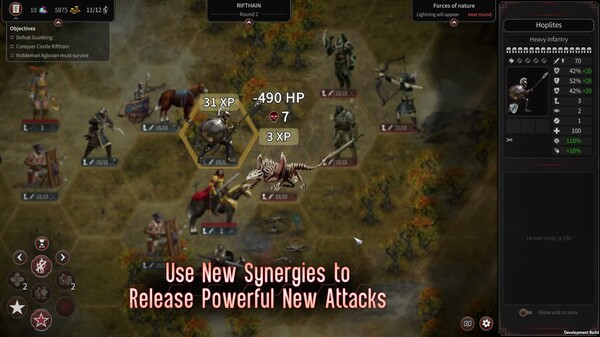
Three distinct factions, each with unique special abilities, create a deep synergy system that rewards players who think beyond raw numbers. Pair your cavalry with anchoring infantry to trigger bonus effects. Empower sorcerers with a frontline that shields their casting. Unleash hero auras that transform your entire formation. The island world of Mantaria demands not just strength but the right combination at the right moment.Inspired by the strategy classics of the 90s. Rebuilt for the modern TBS player.

Your commander isn't just a figurehead — they define which synergies your army can unlock. Choose wisely.
Aglovan the Noble: The Cavalry Commander
A foreboding cavalry lord whose aura empowers swift, multi-class offensives. Aglovan's true strength emerges when you mix cavalry charges with infantry support — his synergy abilities chain across unit types, turning a coordinated attack into a cascade of devastating effects. If you want to master the art of combined arms, start here.
Warlord Karnoth: The Iron Warlord
A raw commander who turns brute force into a tactical weapon. Karnoth's infantry and flight units unlock brutal counter-synergies — the harder the enemy pushes, the stronger his army's response. Stack his special abilities right and your frontline doesn't just hold. It crushes.
Sargon I: The Spellcaster
A sorcerer-commander whose presence warps the rules of engagement. Sargon's desert mystic faction builds around magical amplification synergies — protect his casters with powerful melee units and watch incoming magic damage plummet while your own sorcery tears through enemy lines. The most technical playstyle. The highest ceiling.
Train your units into elite warriors. Collect artifacts to unlock specialized abilities. Every upgrade deepens your synergy options — and every battle teaches you new combinations.
Shields of Loyalty is driven by a deep synergy system — a web of interactions between unit types, hero auras, and special abilities that rewards tactical thinking over raw firepower.
How it works:
Unit Type Interactions. Cavalry charges are powerful alone — but positioned alongside anchoring infantry, they trigger bonus damage and movement effects that neither unit type could achieve on its own.
Special Abilities. Each unit and hero carries abilities that activate based on position, formation, and adjacent unit types. Activating the right ability at the right moment can reverse a losing battle.
Hero Auras. Free the heroes of the old wars and their auras ripple across your entire army — amplifying the synergies already in play. The right hero in the right position multiplies everything.
Terrain Formations. The hex grid rewards positioning. Forests, ridges, and chokepoints don't just slow movement — they shape which synergies are available to you and your enemy.
High Replayability. Branching campaign decisions unlock certain paths and close others — no two playthroughs produce the same army composition or the same synergy combinations.
The island world of Mantaria shifts beneath your feet. Each biome isn't just a visual change, it reshapes the terrain, alters which unit types have the advantage, and introduces new environmental threats that hit friend and foe alike.
Darkwoods
Dense forests, swamps, and rocky terrain define your opening campaign. Movement is constrained. Positioning your synergy formations early is critical. Cavalry loses its speed advantage. Infantry holds the line.
Eternal Ice
A frozen tundra laced with lethal traps. Slowed movement forces tighter formations. Synergies that rely on adjacency become your greatest weapon. One wrong step punishes an entire flank.
Lava Desert
Scorching ground, molten hazards, and aggressive new enemy types. The open landscape finally gives cavalry its moment but the environment punishes static formations. Constant adaptation required.
Mantaria is a hostile world and it doesn't take sides. Lightning strikes, meteor showers, and violent storms erupt without warning, striking any unit on the battlefield regardless of allegiance.
Use these events to your advantage or adapt when they hit your own formation at the worst possible moment. The commanders who master Mantaria don't just read the enemy. They read the weather.
Your decisions shape Mantaria and not just the story. Branching campaign paths unlock certain battles and close off others, meaning the army you build, the synergies you discover, and the special abilities you develop change with every playthrough.
Can you find all three hero units hidden across Mantaria's maps? Each one is unique, non-respawning, and carries an aura that unlocks synergy combinations unavailable anywhere else.
Engagement
Reviews
Themes across 48 recent reviews and how positive each mention is. A keyword signal, not full sentiment analysis.
Reviews
Shields of Loyalty takes a deliberately traditional approach to turn-based strategy, drawing inspiration from classic fantasy war games while introducing enough modern mechanics to establish an identity of its own. Set in the dangerous island realm of Mantaria, the campaign revolves around defending the land against increasingly powerful supernatural forces. Developed by Mosaic Mask Studio and published by indie.io, the game puts considerably more emphasis on tactical army management than cinematic storytelling. Its greatest appeal comes from assembling an effective force, understanding how different units complement one another, and adapting to battlefields where positioning can be just as important as raw strength. The campaign provides three commanders with substantially different specialties. Aglovan the Noble is particularly effective when employing cavalry and versatile combined forces, Karnoth favors more aggressive armies built around powerful infantry and flying troops, while Sargon I emphasizes magical units and spell-oriented strategies. These distinctions matter because commanders provide useful auras and advantages that influence the performance of surrounding troops. Selecting a commander therefore affects more than appearance or narrative flavor. Each encourages a different approach to army composition, creating opportunities to revisit battles with alternative formations and tactics. Unit synergy is arguably the most interesting element of combat. Rather than treating every soldier as an isolated piece, the game encourages players to build formations around units that strengthen or protect one another. Fragile magical troops are far more useful when positioned behind dependable frontline fighters, while mobile units can exploit openings created by heavier forces. Combining troops into stronger squads adds another strategic consideration, and discovering particularly effective arrangements becomes an important part of progression. Successful battles consequently feel less like exercises in overwhelming opponents with numbers and more like carefully constructed tactical puzzles. Army development continues outside individual engagements. Units can become stronger through training and advancement, while artifacts and specialized abilities provide additional methods of improving a force. Unique heroes can also be discovered, bringing valuable abilities and auras that potentially transform an existing formation. Keeping important soldiers alive becomes increasingly significant because a well-developed veteran can represent a meaningful investment. This creates continuity between encounters, since losing valuable troops may affect more than the immediate battle. Decisions made early in a campaign can influence the options available much later. Mantaria itself contributes substantially to the tactical experience. The campaign travels through environments such as the gloomy Darkwoods, the frozen landscapes of Eternal Ice, and the dangerous Lava Desert. These regions are not simply visual background changes, as their terrain and hazards can influence movement and positioning. Forests, swamps, rocky ground, ice, volcanic landscapes, and other environmental features require players to consider where their forces should advance or defend. This variety helps keep the campaign from becoming a repetitive succession of similar battlefields. Environmental events introduce an additional element of unpredictability. Storms, lightning, meteorites, and other hazards can suddenly interfere with carefully prepared strategies. These dangers can affect both friendly and hostile armies, creating situations in which players must rapidly reconsider what had appeared to be an ideal plan. This randomness can be entertaining because it produces unexpected battlefield stories and rewards adaptability. At the same time, players who prefer completely deterministic tactical systems may occasionally become frustrated when an unfortunate environmental event disrupts a strong formation. Branching campaign choices further strengthen replay value. Taking one path may open particular battles while making other encounters inaccessible during that playthrough. Combined with different commanders, faction characteristics, hidden heroes, artifacts, unit development, and numerous possible synergy combinations, this structure provides good reasons to return after completing a campaign. The game benefits from experimentation, particularly when players resist the temptation to rely exclusively on one successful army composition. Visually, Shields of Loyalty uses a stylized 2D fantasy presentation that complements its old-school strategic foundations. The artwork effectively communicates Mantaria's darker atmosphere without depending on extravagant cinematic effects. Different regions possess recognizable identities, while the assortment of warriors, cavalry, magical forces, monsters, undead enemies, and other fantasy creatures gives battles sufficient visual variety. Animation and presentation are relatively modest compared with major-budget strategy releases, but the restrained style works reasonably well for a game whose primary attraction is tactical depth. The learning curve can be demanding because several interconnected systems need to be understood simultaneously. Commander abilities, auras, formations, terrain, unit upgrades, artifacts, environmental effects, and squad combinations all contribute to battlefield performance. Players who rush through these mechanics may encounter unnecessary difficulty, whereas those willing to study their armies are more likely to appreciate the underlying depth. Some battles can also become challenging when unfavorable circumstances combine with tactical mistakes, making patience and adaptation essential. Steam Deck compatibility is rated Verified. The game can be played on Steam Deck and performs adequately on the handheld, but the experience includes several compromises. Certain interactions may benefit from touchscreen use or customized controller layouts, some interface elements and text can be relatively small on the Deck's display, and occasional keyboard input may require manually opening the virtual keyboard. It is therefore a viable portable strategy experience, although playing with a conventional desktop setup can provide more comfortable interaction with its interface. Overall, Shields of Loyalty is a rewarding choice for players who appreciate methodical fantasy warfare and enjoy discovering relationships between units. Its commander specialization, army progression, formation mechanics, branching routes, varied environments, heroes, artifacts, and unpredictable hazards combine into a strategy game with considerably more depth than its straightforward presentation initially suggests. Random environmental events and a somewhat demanding learning process will not appeal equally to everyone, but they also contribute to a campaign where plans frequently need adjustment. It does not attempt to reinvent turn-based strategy completely, instead concentrating on combining familiar foundations with distinctive synergy and battlefield systems. For players who enjoy carefully developing armies and experimenting with tactical formations, Mantaria offers a substantial and engaging challenge. Rating: 8/10
Media

Related
Related
Price dynamics, follower growth, revenue and sales trajectories with interactive tooltips
This and every other Pro feature is free until October 20, 2026. A free account is all it takes.
Genres
Stats
All-time low is the lowest price we've recorded for this game since we started tracking it.
Languages: English*, French, Italian, German, Spanish - Spain, Polish, Portuguese - Portugal, Russian, Japanese, Korean, Simplified Chinese*languages with full audio support
Hours played at review time, across 48 reviews with recorded playtime.
positive critical· bar length = how often the theme comes up
Nach dem Abschluss der ersten Insel "Düsterwald" rate ich jedem, der mit dem Spiel liebäugelt, dringend davon ab, das Spiel jetzt schon zu kaufen, dafür ist es noch zu unreif und unausgegoren. Auf dem Papier klingt das Prinzip mit den unterschiedlichen Einheitentypen (leichte und schwere Infantrie, Unterstützungseinheiten wie Schamanen usw.) und ihren Stärken und Schwächen ganz interessant. Es wird unterschieden zwischen Toten und Verwundeten, wobei die Verwundeten zweimal geheilt werden können. In der Praxis greifen die Mechaniken aber irgendwie nicht stimmig ineinander und wirken nicht ausgewogen und aufeinander abgestimmt. Das Spiel gibt keinerlei Informationen über die Fähigkeiten gegnerischer Einheiten (hey, der Zerberus greift ja gleich mehrere von meinen Einheiten an?) oder besondere Punkte auf der Karte preis (wofür ist das Zelt da?) und man kann zum Beispiel leicht wichtige Dinge wie Tempel, wo man seine Einheiten kostenlos heilen kann, verpassen. Große Baustelle ist das Balancing: das Verhältnis der gegnerischen Truppen zu den eigenen auf den Karten passt nicht, man verliert zu schnell seine Einheiten und bekommt zu wenig Gold für den Abschluss einer Karte und aus den geplünderten Ruinen. Zumal man ja auch noch Truppenupdates teuer erforschen soll und die temporären Söldnereinheiten auch viel Gold kosten, sich aber nicht auf neue Karten mitnehmen lassen (750 Gold und Edelsteine für einen Trupp, der danach weg ist?). Gegnerische Unterstützer belegen die eigenen Truppen gerne mal mit einem Fluch, der über drei Runden kräftig Lebensenergie abzieht, was oft genug deren Tod bedeutet. Nach dem Abschluss der ersten Welt, Düsterwald, hatte ich von meinen sechzehn Einheiten nur noch zwei und den Haupthelden über, aber nicht mehr genug Gold für ausreichend neue Einheiten. Die letzte Karte auf der Insel Düsterwald ist leider auch ein schönes Beispiel für das schlechte Balancing: der Weg zum Dämon führt durch zahlreiche Engstellen und man bekommt noch zahlreiche starke Gegner vorgesetzt, unter anderem drei oder vier fliegende Gargoyle-Einheiten. Außerdem wirkt die Karte leider sehr billig zusammengeschustert, kein Vergleich mit Age of Wonders, Heroes of Might&Magic oder Panzer Corps. Einen einstellbaren Schwierigkeitsgrad gibt es (noch?) nicht und gelegentlich bleibt das Spiel beim gegnerischen Zug stehen und man muss dann ins Menü zurück und den letzten Speicherpunkt laden. Texte sind zudem teilweise nicht übersetzt worden oder fehlerhaft, Grafiken zudem KI-erstellt.
Inspirado en Fantasy General, pero con algunas mecánicas diferentes. Le falta un poco de pulido a algunas cosas y que incluyan un modo de juego más allá de la campaña, pero siguen trabajando en el juego y ya es un buen juego.
中文可以玩了,总体来说还是比较有意思,需要一定的排兵布阵和兵种配合才能保证不死人过关。但是还是有需要改进地方,比方说因为游戏整体光线较暗,行动前后的兵种区别不明显;地图上特殊地点还是不够突出,特别是那个加500经验的,我差点以为就是一路灯;还有每个关卡前能不能有点重点提示,比方说地图上敌方的兵力分布,不需要说具体,有个大概,让玩家大致心里有数,而不是每一关先飞兵探路过后重开;最后敌方兵种能不能有个详细介绍,让玩家有所应对,现在敌方技能效果都是靠猜的。第二章最后一关进不去啥情况?
Choć gra potrafi się czasem zawiesić to jest bardzo wciągająca. Robić zapisy !!!
Ich mag das Spiel. Einige unschöne Punkte: Die "Mission das Kloster" Untoten 25 Runden lang abwehren" ist ein Witz. 14 Runden lang kommt kein Gegner. Manche Ziele gibt es auf der Karte einfach nicht und man sucht sich einen Wolf (Zerstöre 3 Werkstätten). Auf dem Schwierigkeitsgrad Normal muss man schon strategisch klug vorgehen. Ein paar unschöne Dinge sind mir aufgefallen, wie z.B. Schriftfehler im Statistikwert. Einheiten liessen sich nicht mehr bewegen, durch Laden des Spielstands behoben (Ziegenkönig, 2. Mission). Kleinigkeiten, die den Spielspass mindern. Was sollen die 3 Ausrufezeichen die immer links am Rand auftauchen, die nerven. In der Aufstellungsphase lasse sich Einheiten manchmal nicht aufstellen, weil zu Nah am Kartenrand oder der MissionsText ist im weg - lachhaft.
game in progress! good vibes!
Fantasy General spiritual successor? Yes, please!
Keeps getting struck after the AI turn.
The strategic depth in this game is fantastic. I really had to think about positioning, abilities, and the order of my moves.
Selling now
See how fast this game is selling right now — estimated copies and revenue per day from recent review growth.
Players by region
Where this game's players are, estimated from review languages.
Related
| Game | Estimated lifetime revenue | Reviews | Review score | Price |
|---|---|---|---|---|
| $252K | 484 | 90% | $11.24 | |
| $279.2K | 567 | 71% | $19.99 | |
| $2.4K | 10 | 70% | $7.99 | |
| $0 | 72 | 64% | Free | |
| $19.4M | 13.6K | 91% | $39.99 | |
| $8.8M | 13.7K | 91% | $24.99 |
Related
| Game | Estimated lifetime revenue | Reviews | Review score | Price |
|---|---|---|---|---|
| $94.4K | 420 | 98% | $12.99 | |
| $94.4K | 503 | 96% | $7.99 | |
| $94.4K | 225 | 76% | $9.74 | |
| $94.3K | 323 | 74% | $9.99 | |
| $94.3K | 91 | 70% | $29.99 | |
| $94.4K | 346 | 80% | $7.99 |