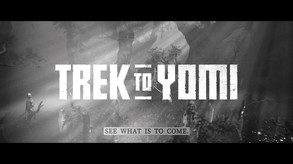
As a vow to his dying Master, the young swordsman Hiroki is sworn to protect his town and the people he loves against all threats. Faced with tragedy and bound to duty, the lone samurai must voyage beyond life and death to confront himself and decide his path forward.
Modeled estimate, not a reported figure. How we estimate →
Prices
Each in the currency that store quoted — not converted: the gap between two rows is the publisher's pricing, not an exchange rate.
Discounts
Every price cut of more than 20% we have observed, in each market that quoted one, with this game's chart position on either side of it. These are episodes, not a model: a sale is one event, and one event cannot tell you what the next one will do.
Reviews, worldwide (the counter carries no country): 1.14/day in the week to Jul 26 → 1.57/day in the week after.
For scale, across Steam · Top Sellers · Brazil over the last 30 days: the 25 chart moves that followed a price cut of more than 20% went a median of 10 places towards #1, and the 2,413 moves with no price cut behind them went 2 away. One store, one chart, one country — it is the only place we have enough observations to say even that.
Prices outside the United States have been collected since 6 August 2026 and chart positions since 19 July 2026, so a cut older than that has no market to compare and a market that joined later has no history yet. Nothing here is converted between currencies.
About
Genres
Add-ons
Each DLC is estimated with the same model as a game, then summed — a modeled figure, not reported DLC sales.
Sums Steam only; PlayStation, GOG publish no volume signal, so the true total is higher by an unknown amount.
| Store | Price | Audience | Score | Chart | Est. revenue |
|---|---|---|---|---|---|
SteamYou are here | $19.99 | 3.1Kreviews | 71% | — | $846.6K |
| $19.99 | 5.8Kratings | 78% | — | not modelled | |
Engagement
Reviews
Themes across 100 recent reviews and how positive each mention is. A keyword signal, not full sentiment analysis.
Reviews
[h2]Overall: 6/10[/h2] [h3]Story:[/h3] I actually really like the story. It's not the most groundbreaking narrative premise on paper, as it begins with a fairly straightforward revenge/vengeance plot, but it's the way this game executes that premise that really makes it stand out. The narrative feels incredibly grounded, raw, and emotionally provocative, all while using its simple foundation to explore much deeper themes like purpose, loss, and personal identity. While the relatively short runtime keeps the overall exploration of Shinto mythology and samurai philosophy pretty concise and tightly focused, I appreciated how effectively it uses that limited scope to develop Hiroki's character. The way [spoiler]his descent into/journey through Yomi serves as a physical manifestation of his internal torment, forcing him to confront the phantoms of his regrets, the consequences of his failures, and even the memory of his deceased master, is a captivating turn in the story that believably forces Hiroki to self-reflect.[/spoiler] I also feel like the narrative's examination of the psychological burden associated with living under the samurai code is particularly compelling. Rather than [spoiler]presenting a single correct path, the story constantly challenges Hiroki, and thus YOU, with competing ideals and expectations, forcing you to genuinely weigh three conflicting feudal values against one another. I felt like this moral ambiguity gave the narrative a surprising amount of depth and created meaningful opportunities for reflection long after the credits rolled. In fact, I wholeheartedly believe the multiple philosophical paths and endings[/spoiler] would warrant this game a great deal of replayability, if not for one massively problematic aspect that unfortunately undermines that potential. [h3]Gameplay:[/h3] That massively problematic aspect I just mentioned ended up being almost the entirety of the gameplay experience, or more specifically, the combat. I went in already aware of the negative reputation surrounding the gameplay, but I still tried to keep my expectations tempered and approach it with an open mind. Still, as early as Chapter 2, I realized I blatantly wasn't enjoying the combat, and despite gradually unlocking new combos/different ranged attacks throughout the game, encounters quickly began to feel repetitive. Now, I can find repetitive combat tolerable if the core mechanics are satisfying enough to carry the rest of the gameplay, but more often than not I felt like the combat here was, at best, boring and, at worst, incredibly frustrating. The earlier chapters aren't particularly egregious, but as the narrative progresses, the combat feels increasingly clunky, unresponsive, and poorly balanced. Even after getting comfortable with the parry system and learning enemy attack patterns, something about the overall feel of combat never truly clicked. Successful encounters rarely feel rewarding, and even if you're playing well, attacks often seem oddly stiff, lacking both impact and weight. The unfortunate reality is that even if you meet this game on its own terms, the combat still struggles to provide the sense of satisfaction that should come from mastering its mechanics. Instead, it often feels like you're fighting against the controls and overall design as much as you're fighting the enemies themselves, and that is the [b]SOLE[/b] reason I can't recommend this game in good conscious, despite otherwise bright spots. [h3]World:[/h3] I appreciated the world a lot. Not because of its depth or complexity, but rather because of the atmosphere it successfully creates through its variety of memorable set-pieces. This game constantly places you in interesting locations, whether it's [spoiler]a peaceful village, a war-torn battlefield, a burning settlement, or the supernatural landscapes of Yomi itself,[/spoiler] and each environment does a great job of reinforcing the narrative's somber/reflective tones. Level design wise, each chapter is essentially a long, scripted corridor that guides you along a singular route to progress the narrative, with occasional paths that deviate from the main route straight to a collectable. Under normal circumstances, this level of linearity might bother me, but I honestly didn't mind it here. In a 2.5D sidescroller, I think it's perfectly valid for the environment to serve primarily as an immersive backdrop rather than a complex space designed around exploration. Trek to Yomi gives you just enough optional interactions, secrets, and environmental details to appreciate its world without constantly making you feel like there should be more to discover. It's not a metroidvania, after all, and I never felt like the experience was diminished by it being a more focused, cinematic approach. [h3]Visuals:[/h3] Trek to Yomi's visuals are easily the biggest highlight of the entire game. Not necessarily because of its raw graphical fidelity (although the game certainly looks very good for it's size and scope) but because of its incredibly captivating cinematic direction. While I'm not personally familiar enough with classic Kurosawa films to comment on how accurately the game pays homage to those inspirations, what I can say is that, as a casual player who appreciates strong cinematography, this game is absolutely stunning. Every scene has a clear emphasis on composition and visual storytelling that consistently elevates even the simplest moments. Additionally, as someone who usually isn't the biggest fan of fixed camera angles but also doesn't outright hate them, I actually found myself really appreciating the artistic purpose they serve here. By locking the camera into carefully selected perspectives, this game allows you to fully absorb how the foreground silhouettes, mid-ground action, and seemingly dense background details are layered together to create atmosphere and reinforce the mood of each location. The black-and-white presentation, dramatic lighting, and frequent use of environmental framing makes almost every scene look like a moving photograph. It's one of the few games where I found myself motivated by both the narrative AND art direction to see the game through to the end despite very mediocre gameplay. [h3]Music/Sound Design:[/h3] The music/sound design is an aspect of this game that is much more subtle than the visuals or narrative, but it still plays its role exceptionally well because of how effectively it values suspense, texture, and era-appropriate instruments. The OST was never a standout component that left me rushing to look up tracks afterward, but it did consistently succeed at establishing narrative tension and enhancing the overwhelming sense of immersion that's already present through the cinematic presentation. Additionally, while I don't speak Japanese and can't really comment on the accuracy of the dialogue delivery, the performances themselves are clearly filled with genuine emotion, particularly Hiroki's. His voice actor conveys a tremendous amount of pain, determination, and vulnerability throughout the story, making it even easier to empathize with his hardships even during moments where dialogue is kept relatively sparse. Unfortunately, the same cannot be said about the English voice acting. I'm personally someone who believes games set in non-English countries should generally be played in the native language of their setting anyway, but that feeling was compounded significantly with this game because the English dub is straight up bad. The performances often came across as passionless, wooden, and strangely detached from the events unfolding on screen, which is especially jarring when compared directly to the intensity and conviction that Hiroki's Japanese voice actor brings to the role. If you end up picking this game up anyway, I would at least strongly recommend experiencing it in Japanese if you want the performances to complement the narrative rather than detract from it.
Media

Related
Related
Price dynamics, follower growth, revenue and sales trajectories with interactive tooltips
This and every other Pro feature is free until October 20, 2026. A free account is all it takes.
Every market we collect.
Stats
All-time low is the lowest price we've recorded for this game since we started tracking it.
Languages: English, French, German, Spanish - Spain, Japanese*, Korean, Portuguese - Brazil, Russian, Simplified Chinese, Traditional Chinese, Italian, Polish*languages with full audio support
| $4.99−75% |
| 68ratings |
| 80% |
| — |
| not modelled |
Matched by title — a reused name can pair the wrong games. * is a critic aggregate. Prices and positions are each store's United States storefront; Epic charts worldwide. Audience and Score too, except Steam's, which is worldwide.
Hours played at review time, across 100 reviews with recorded playtime.
positive critical· bar length = how often the theme comes up
[h2][b]Visual Fest + Boring Gameplay[/b][/h2] [quote][b] Rating: 6.5/10 [/b][/quote] The best part about this game is what you already see - Visuals & Japanese music. There is a complete story with multiple endings (4)! All chapters remain same but it was still a fine narrative. I recommend Japanese voice over English for authentic experience. Problem is.. whole game from start to finish.. all you have to do is [b]Parry, Attack. Parry, Attack. Parry, Attack. Repeat after me: Parry, Attack. Parry, Attack.[/b] Yeah! It gets so boring damn, especially in middle portion of the game. I'm glad they didn't ruin the experience further by keeping game short. Yes they do introduce new sets of attacks and enemies with time, but I didn't find them seamless enough to make the switch. You also gonna be pixel peeping in few scenes because of that fixed camera angle! Game isn't hard as you get plenty of health, checkpoints & parry window but IMO over the top free flow combat would have been more fun. Parry wasn't satisfying anyway. [h3]Overall its not a bad game. I felt like 7 but asked myself, will I ever even want to remember this gameplay? gave 6.5[/h3]
Что вершит судьбу человечества в этом мире? Некое незримое существо или закон, подобно Длани Господней парящей над миром? По крайне мере истинно то, что человек не властен даже над своей волей.
[b]Rating: [/b] ★★★ - Okay [b]Time Played:[/b] 6 hours [b]Difficulty:[/b] Normal [b]Gameplay:[/b] - Combat is 2.5D and locked to fixed camera angles per "shot," which looks gorgeous but sometimes works against you. Enemies can attack from off-screen edges and behind areas you can't see coming. - Parry/dodge timing feels inconsistent, especially against dual enemies where the game doesn't clearly telegraph which one to prioritize. - Move variety (sword stances, bow, kunai, gun) exists but the optimal strategy quickly becomes parry-then-heavy-attack on repeat for most enemies, so combat depth doesn't scale all that much with the game's length. - Combat encounters are copy-pasted in structure (small group, then a tankier "elite," repeat) which makes 6 hours feel padded rather than tight. [b]Story\Dialogue:[/b] - A revenge plot is straight from the Kurosawa playbook with almost no twist on it. - Branching "love vs honor vs vengeance" choices exist but have minimal impact on dialogue and none on core plot beats, so they feel decorative. - English voice acting is serviceable but flat, delivering exposition-heavy lines without much emotional weight. Japanese sounds emotionally charged but requires subtitles. - The framing device (dead protagonist recounting his life to a judge in the afterlife) is a nice structural idea that the actual writing doesn't fully earn. [b]Graphics\Music:[/b] - The best reason to play this game. High-contrast black and white presentation with in-camera film grain, lighting, and framing genuinely looks like a Kurosawa film in motion. - Environmental art direction (fog, rain, torii gates, burning villages) is consistently stronger than anything the combat or story delivers. - Score focuses on traditional japanese instruments and fits the tone well. - Sound design on hits and blocks carries a satisfying weight even when the underlying combat mechanics don't hold up. [b]Before you Play:[/b] - Treat it as an interactive movie first, action game second. Going in expecting Nioh\Sekiro-tier combat will disappoint you. - Learn patience and parry timing early on trash mobs before you hit the first elite enemy, since the difficulty spike does hit. - Play on a TV or large monitor if you can. The cinematography is genuinely the main selling point and it's wasted on a small screen. - Look in every nook and cranny for collectibles, health and stamina upgrades. They will help you progress. - Don't rush. It's a short game (5-7 hours) so there's no need to skip dialogue or cutscenes to save time.
absolutely beautiful game. gorgeous visuals, moving story. i'm playing a Kurosawa movie. surprisingly flexible combat. doesn't overstay its welcome. just right.
A Truly Cinematic Samurai Experience (Recommended) Trek to Yomi is less of a traditional video game and more of an interactive classic samurai film. Atmosphere & Visuals: The cinematic presentation is absolute perfection. The grainy, black-and-white art style and fixed camera angles make you feel like you are inside an authentic Akira Kurosawa movie. The environments capture and convey emotion effortlessly. Story: While the core narrative is a straightforward revenge tale, the visual aesthetics, pacing, and haunting environments make the emotional beats hit much harder than expected. Gameplay & Combat: Don't expect deep, complex, or overly demanding combat mechanics. The fights can feel repetitive and predictable at times, but this actually works in the game's favor—it allows you to focus on the story, mood, and incredible visuals without frustration. Structure: This is a strictly linear, corridor-style experience. There is zero risk of getting lost, which keeps the pacing clean and seamless. Verdict: If you are looking for a competitive, fast-reflex action game or a hardcore challenge, this is not for you. However, if you appreciate a unique artistic vision, stunning visual design, and a deeply atmospheric story, Trek to Yomi is a gem well worth playing.
Hidden Gem
Achei o jogo bastante cinematográfico, com grande foco na direção de câmera e uma clara inspiração nos filmes clássicos do gênero. Os cenários são muito bem construídos e visualmente bonitos. As constantes mudanças de perspectiva da câmera ajudam a deixar a exploração e os combates mais interessantes. A trilha sonora é boa, mas segue um estilo mais tradicional para a época, sem grandes destaques. A história também é bastante convencional, girando em torno de um enredo de vingança, algo comum nesse tipo de narrativa. O ponto que mais me frustrou foi a jogabilidade. Joguei na dificuldade normal e avancei por cerca de 80% da campanha sem grandes problemas, chegando até a pensar que estava no modo fácil. Porém, na reta final, o jogo passa a colocar dois ou mais inimigos muito fortes ao mesmo tempo em algumas batalhas, o que acabou tornando a dificuldade artificial. Quando um jogo aumenta o desafio apenas pela quantidade e pela força dos inimigos, especialmente em um título desse estilo, acho uma solução um pouco preguiçosa. No meu caso, passei muito mais tempo morrendo para um samurai que fica se teleportando do que para os próprios chefes. Também em alguns momentos o controle não responde quando você tenta mudar de lado ou defender. Paguei cerca de R$ 15 no jogo e, pelo preço, considero que valeu a pena. Recomendo comprá-lo em promoção, mas, pessoalmente, não é um título que eu jogaria novamente.
Визуал ну просто кино. Геймплей прошёл мимо этой игры. Если вы ИГРАЕТЕ в игры, то вам мимо. Если вы приходите за атмосферой и визуалом, то добро пожаловать.
My go-to example of how to make a beautiful game but with horrible gameplay. The attacks are slow af, the game is buggy. If you are here for the visuals, go watch a Seven samurai or some other Kurosawa movie. Skip the game.
Players by region
Where this game's players are, estimated from review languages.
Players also reviewed
The games this title's players most often review too — audience affinity.
Related
| Game | Estimated lifetime revenue | Reviews | Review score | Price |
|---|---|---|---|---|
| $541.6K | 2K | 97% | $6.99 | |
| $138.8K | 264 | 78% | $24.99 | |
| $275 | 1 | 100% | $9.99 | |
| — | 0 | — | — | |
| $190.9K | 218 | 46% | $34.99 | |
| $173.1K | 411 | 60% | $19.99 |
Related
| Game | Estimated lifetime revenue | Reviews | Review score | Price |
|---|---|---|---|---|
| $847.1K | 2.1K | 94% | $14.99 | |
| $845.6K | 3.8K | 89% | $8.99 | |
| $845.3K | 4K | 96% | $9.99 | |
| $848.6K | 1.2K | 85% | $19.99 | |
| $844.2K | 596 | 43% | $49.99 | |
| $843.2K | 1.5K | 90% | $24.99 |