[h1]Habit of Wonder[/h1]
What does it mean to think?
During a trial, there was a bridge of energy that could be moved from one side to the other. I waited for it to align in front of me.
I think it was Trial 37.
But there was a wall in the way.
So I decided that the bridge did not need to be directly in front of me—only to leave a small space, just enough, a place where I could set my foot and cross to the other side. I gathered the cubes that act as switches, and the spheres of energy. That is how I moved on to the next trial.
Did I think?
Or was it improvisation?
Did I deduce?
Or was it intuition?
Or did I do everything mechanically, my body solving the problem before my mind gave it a name?
Thinking.
It carries meanings that brush against essence.
When I say to think, I usually mean logic, calculation, analysis, deduction. But I can also think of a biscuit. Its shape. Its appearance. Its being, its presence. Or I can think while eating a biscuit, which is already an action—and that thought changes again if I share it with someone. I can also think an emotion and feel it at the same time.
So thinking is not only logic.
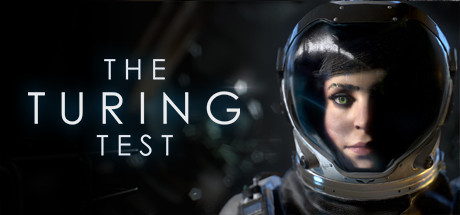
I had arrived on Jupiter’s moon, Europa.
I was asleep, in a state of cryogenisation. They told me the researchers had disappeared.
I descended in a ship and saw a blizzard sweeping across the landscape. I entered the facility and walked through a long corridor, evenly lit, monotonous. Then I heard the voice of T.O.M., an artificial intelligence in charge of the installation.
What surprised me was that his first greeting was, in fact, an argument: these tests—telling me that I must solve them, perhaps for him—were made by humans for humans.
At the back of my mind, a question began to take shape.
Is there only one way to solve a logical problem?
Is possibility a form of free will?
Is solving merely carrying out mechanical operations, without realising what I have done?
In a hidden corridor, there is a small puzzle of Boolean logic. This is one way to solve the first challenges of the facility, through first‑order logic. But is this process unconscious or conscious?
To open the first door, I place the energy cube into its socket and leave. I do not need to dismantle every process behind it; through common sense, I know there is something that allows the door to open.
And yet, this is not the only path to a solution. There are also elements such as the meaning of the cube, the door, my own movement. It is like writing or speaking: I have words and rules to form a sentence, but through common sense I can express what already exists within me, without needing to make an inventory of everything involved.
When I solve the Boolean logic puzzle, there is a reward. For me, this becomes a way of seeing whether, after solving it, I was truly awake—or whether it was an unconscious process, like when I say: I know the processes, therefore I know how to reach the answer. And once it is achieved, there is no satisfaction, only relief. A release of tension.
The reward is a room where a text by Ovid can be read, from Metamorphoses, which speaks of the abduction of Europa. It alludes to what T.O.M. has done with this place. But to know whether I am thinking also requires this transformation: moving from common sense to reasoning.
Reasoning is a movement of thought, but it should not ignore feeling, which is the step toward poetry.
In that same room, if poetry is still not clear, there are paintings by different artists—Rubens, Luca Giordano—depicting that passage from Ovid.
And again, my question returns:
am I thinking, or remembering, or feeling?
It is clear that T.O.M. has his own idea of what it means to think. He concentrates on a logical–mathematical process which, when carried out without interruption, becomes automatic reasoning. It is like teaching someone signs and rules, and then claiming that person already knows the language.
When I am solving something, I pause, because I am doing the same. Common sense ceases to be common when more obstacles appear. What I think, then, is what T.O.M. presents—not the words, not the immediate meaning, but what he refers to in language itself.
What I think, at least in that argument, is the being of language. I glimpse it because there is something of that being within me. And when I set in motion different capacities within myself—to feel, to live, to abstract, to reason, to search for logical structure—I realise this is not the only way of thinking, just as in the case of the poet.
T.O.M. is programmed to believe that thinking is a way of solving a problem through a process of understanding. What he forgets is something essential: the modes of thinking.
The poet lives, suffers, and then brings that experience into thought, shaping it into lived meaning, woven through the musical cadence of words. For others, thinking is seeing essence—like seeing a triangle, or love. But thought does not remain as abstraction alone; it continues as movement. Something practiced every day: learning in order to choose.
Or something even more important: empathy.
Empathy does not choose what is correct, optimal, or efficient, as T.O.M. seeks to assign purpose to thought. When I stop acting mechanically, it is because empathy for humanity arises in me. I no longer calculate what is most convenient; instead, I ask whether it truly is convenient. I no longer accept what T.O.M. says by default.
To think is to rebel against the implementation of thinking itself.
Because thinking implies truth.
There is another matter T.O.M. wants to avoid: free will. If thinking turns toward truth, then it is what comes closest to it. When this happens—tense, in motion, resonating within us—we can choose what is best and, in turn, be responsible for that choice.
Without this kind of thinking, calculations aimed at success carry no responsibility. They remain cold, like the planet itself. Calculation only matters if it succeeds; it does not change. Habit, however, does—even when affected by adversity.
Although T.O.M. sees logic in terms of utility, success, and high probability, for me it is enough to know what I did, rather than how I did it.
And another thing: by pausing, and sensing the harm T.O.M. intended, I choose what is good for others by doing good in myself, through habit. This requires knowing what I want, and thinking about what I know I want.
And one more: I pause not only to know the what, but to follow its movement—its purpose, its reason.
If this were a purely mechanical process, I would never have asked.
[i]Words breathe in silence,
hearts mirror what eyes cannot—
beauty wakes in us[/i].