
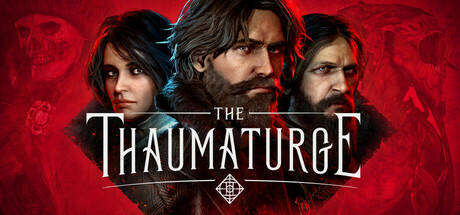
The Thaumaturge is a character-driven RPG with a rich story, morally ambiguous choices, and turn-based combat. In a city on the brink of change, use your mystical powers to read emotions, uncover motives, and command folklore-inspired demons — while resisting the temptation of your own pride.
Modeled estimate, not a reported figure. How we estimate →
Prices
Each in the currency that store quoted — not converted: the gap between two rows is the publisher's pricing, not an exchange rate.
Discounts
Every price cut of more than 20% we have observed, in each market that quoted one, with this game's chart position on either side of it. These are episodes, not a model: a sale is one event, and one event cannot tell you what the next one will do.
Reviews, worldwide (the counter carries no country): 1.71/day in the week to Sep 3 → 4/day in the week after.
About
A hero with a flaw
Wiktor Szulski is a thaumaturge, a master of mystical arts, who can peer into the hearts and minds of others, uncovering their deepest emotions, desires, and secrets. However, his powers also feed into his flaw of pride, which can present him with various opportunities or lead to negative consequences.

Untold mysteries waiting to be revealed
No secret or intrigue is safe when the thaumaturge is around. Your unique abilities will give you a great edge in solving detective investigations, becoming a savvy socialite or even dealing with the criminal underground. Explore the world using Wiktor’s perception, seeking personal secrets hidden in objects, that provide different perspectives on events that may seem obvious at first glance.
Taming mythical creatures
As a thaumaturge, you draw your power from the ability to summon salutors – mystical, folklore-inspired demons that inhabit the ethereal realm. Use their powers to manipulate your foes, sway the minds of allies, and fight opponents in turn-based tactical combat.

Unique turn-based combat
Engage in deep, tactical combat against various opponents – some physical, others more elusive. Wiktor's thaumaturgical abilities let you bend the rules of reality, summoning demons to unleash powerful attacks or gain strategic advantages.
A rich gallery of characters
The early 20th-century Warsaw is a multicultural metropolis with inhabitants from all walks of life. Among them, you’ll meet historical figures like the monk Rasputin or Tsar Nicholas II. The story also introduces you to a gallery of characters connected to Wiktor’s troubled past such as his well-versed sister Ligia or Abaurcy, a childhood friend who turned to a life of crime.

Features:
· Play an isometric RPG in which your choices will shape the final outcome of the story.
· Use your unique skills to influence and manipulate other characters.
· Tame the power of folklore-inspired demons called the salutors to gain an advantage when exploring the world and bringing adversaries to their knees.
· Experience unique turn-based combat and defeat your foes using both the physical attacks and skills of the tamed salutors.
· Meet a rich gallery of characters from the early 20th-century Warsaw.
Add-ons
Each DLC is estimated with the same model as a game, then summed — a modeled figure, not reported DLC sales.
Sums Steam only; PlayStation, Xbox, GOG, Epic publish no volume signal, so the true total is higher by an unknown amount.
| Store | Price | Audience | Score | Chart | Est. revenue |
|---|---|---|---|---|---|
SteamYou are here | $34.99 | 6Kreviews | 83% | — | $3.2M |
| $34.99 | 3.4Kratings | 86% | — | not modelled | |
Updates
Build ids and update times come straight from Steam's PICS — the same source SteamDB reads. Patch history grows as we record new builds.
Engagement
Reviews
Themes across 916 recent reviews and how positive each mention is. A keyword signal, not full sentiment analysis.
Reviews
JoJo's Bizarre Adventure meets a slavic Disco Elysium. This game is so ♥♥♥♥♥♥♥ cool yall
Krieg der Zwischenwelten Story: Die Metropole Warschau entpuppt sich als brodelnder Hexenkessel: Warschau ist von sozialen Unruhen geprägt, viele Einwohner lehnen sich gegen die Herrschaft der russischen Zaren auf. Mittendrin in diesem menschlichen Pulverfass: Wiktor Szulski, von Beruf Thaumaturge, man kann ihn sich am besten als übersinnlichen Detektiv vorstellen. Er kehrt im Jahre 1905 zur Beerdigung seines Vaters, nach Hause zurück. Die Umstände seines Ablebens sind mysteriös und obendrein ist dessen Zauberbuch verschwunden, also geht ihr beiden Mysterien auf den Grund. Behäbig, aber nicht uninteressant: Worüber man sich aber im Klaren sein muss: Die Geschichte, ist über weite Teile, extrem ruhig und charaktergetrieben, wenn es um wenig mehr geht, als herauszufinden, warum euer Vater sein Ende fand. Man stochert sehr lange im Dunkeln und muss schon Lust darauf haben, diesem „MacGuffin“ eine erkaltende Fährte nach der anderen hinterher zu spazieren. Ein Spektakel sieht jedenfalls anders aus. Viel eures Tagwerks findet auf den wunderhübsch rekonstruierten Straßen Warschaus statt, das sichtlich mit der Untertanenschaft für den russischen Zaren zu kämpfen hat. Das größte Problem von The Thaumaturge ist vermutlich, dass es wenig von Inszenierung versteht, weil das bisweilen sogar erschwert, der Handlung zu folgen. Es blendet Gespräche weg, noch bevor der schließende Satz zu Ende gesprochen ist. Oft werden sogar die Höhepunkte einer Szene nicht wirklich gezeigt. Wenn eine mehrstufige Quest gegen eine Bedrohung auf ein klares Crescendo hinsteuert, dass ich dann nicht sehen darf, oder mir Bildschirmtode wichtiger Figuren einfach nicht bewusstwerden, weil die Kamera nicht wirklich zeigt, was passiert ist, ist das keine Kleinigkeit. Die Dämonen, an meiner Seite: Eure stetigen Begleiter, die Dämonen (Salutoren genannt) spielen natürlich ebenfalls eine wichtige Rolle. Zu Beginn verfügt ihr nur über euren schweigsamen Stammbegleiter Upyr, aber nach und nach könnt ihr bis auf insgesamt acht Salutoren aufstocken. Selbige erhaltet ihr im Rahmen von Quests, wenn ihr sie dem ursprünglichen Träger, bei dem sie sich als Laster ausdrücken, abnehmen könnt (aber nicht müsst). Die Salutoren stehen in enger Verbindung mit den vier Attributen von Wiktor, nämlich Herz, Hirn, Hand und Zunge, die ihr nach und nach aufstocken könnt, um damit neue Angriffe und Modifikatoren freizuschalten. Die Salutoren stehen auch in den rundenbasierten Kämpfen zur Verfügung, wobei ihr tatsächlich auch alle nutzen könnt. Sie verfügen über zumeist magische oder physische Attacken und haben die Fähigkeit, Buffs von Gegnern zu beseitigen. Hinzu kommen interessante Synergien zwischen den Salutoren-Skills und Wiktors eigenen Angriffen. Kampfsystem: Die Kämpfe drehen sich vornehmlich darum, die Kampfreihenfolge zu beeinflussen und Buffs und Debuffs zu wirken oder von sich abzulenken oder den Willen eures Gegners durch Abtragen seines „Fokus“ zu dezimieren, bis der Feind offen für eine schwere Attacke ist. In jeder Runde dürfen sowohl Wiktor als auch einer seiner Salutoren eine Aktion ausführen. Und das so auf der Zeitleiste abzupassen, dass ihr möglichst wenig oder keinen Schaden nehmt, ist ziemlich motivierend. Ich mochte es dennoch, mich mit dem System auseinanderzusetzen, denn es ist schon ziemlich originell. Rätsel: Den Großteil der Spielzeit verbringt ihr aber damit, verschiedene Bezirke von Warschau zu erkunden. Euer wichtigstes Werkzeug dabei ist die spezielle "Tiefensicht", im Grunde so etwas wie ein Thaumaturgen-Radar. Damit erkennt ihr dann nicht nur den Weg zum nächsten Questziel, sondern macht auch besondere Hinweise in der Umgebung sichtbar. Diese Spuren können sich praktisch überall befinden und oft werden sie auch erst aktiviert, wenn ihr bereits andere Informationen entdeckt habt. Die Spurensuche hat aber auch ihren Reiz, denn jeder kleine Fund führt zu einer neuen Erkenntnis: Wiktor entdeckt massenhaft Erinnerungen, geheime Sorgen und unterdrückte Sehnsüchte, die man dann in unzähligen kleinen Textfenstern nachlesen kann. Hat man genügend dieser Hinweise gesammelt, bildet sich ein Gedankengang und Wiktor erlangt eine neue, wichtige Erkenntnis über die gesuchte Person. Eigentlich wäre das richtig spannendes Detektivhandwerk, doch leider dürft ihr hier nie selbst tätig werden: Das Kombinieren der gesammelten Hinweise geschieht vollautomatisch, ihr seid zum Zuschauen verdammt. Steuerung: Die Steuerung funktioniert sowohl mit Gamepad als auch mit Maus gut und ohne Probleme. Mit dem Gamepad spielt es sich fast einfacher als mit der Maus. Grafik: Warschau strotzt nur so vor stimmungsvollen Details, die gemütlichen Gassen, prachtvollen Plätze und schmuddeligen Hinterhöfe laden zum Erkunden ein. Allzu belebt wirkt die hübsche Kulisse aber leider nicht. Es gibt zwar massig NPCs auf den Straßen, die aber nur passiv herumstehen und keinerlei Tätigkeiten nachgehen. Dargestellt wird The Thaumaturge mit der Unreal Engine 5. Trotz der untypischen Perspektive nutzt The Thaumaturge eine ganze Reihe der erweiterten Fähigkeiten der UE5, darunter Lumen und Nanite. Mit an Bord sind obendrein TSR sowie die Upsampling-Verfahren der Grafikkartenhersteller in Form von DLSS, FSR und XeSS. Man sieht dem Spiel durchaus an, dass ein verhältnismäßig kleines Entwickler-Team am Werke war, insbesondere Figuren und deren Animationen sind etwas hölzern, hier und dort ist eine niedrig aufgelöste Textur. Das Partikelgestöber, in Form von Regen und Schnee ist hübsch, beißt sich allerdings ein wenig mit den angebotenen Upsampling-Verfahren. Am saubersten ist das Bild ohne Einsatz von TSR/DLSS/FSR/XeSS, während DLSS und XeSS eine etwas schwammigere Darstellung anstreben. Auch Lumen-Beleuchtung kommt zum Einsatz. Dies ist in erster Linie an der hübschen Ausleuchtung und vornehmlich in Innenräumen an der Globalen Beleuchtung respektive indirekter Beleuchtung und Verschattung ersichtlich. Synchronisierung/Sound: Es gibt keine deutsche Sprachausgabe, nur Untertitel, die gut geschrieben sind. Zwar kann die ordentliche englische Sprachausgabe noch einiges an Atmosphäre retten, doch die Inszenierung lässt gerade in den Zwischensequenzen zu wünschen übrig: Selbst in wichtigen Szenen läuft die Musikuntermalung oft nur unmotiviert im Hintergrund, es fehlt an Tempo, spannenden Perspektiven, flotten Schnitten. Fazit: The Thaumaturge versetzt mich in ein ungewohntes Szenario und glänzt dort mit einer originellen Geschichte mit vielen Wendungen, die eindrucksvoll und stimmungsvoll Elemente aus Detektivstory, Fantasy/Mystik und historischen Elementen verbindet. Dabei merkt man an jeder Straßenecke die Liebe zum Detail, welche die Entwickler in die Darstellung des Warschaus von 1905 gesteckt haben. Allein schon ein Blick in die große Kathedrale von Warschau lässt angesichts der Detailverliebtheit die Augen glänzen. Technisch läuft nicht immer alles rund und vor allem die trotz Unreal Engine 5 etwas emotionslose und steife Mimik und Gestik der Charaktere in den Dialogsequenzen sind bedauerlich. The Thaumaturge macht zu jeder Sekunde klar, dass sich die Entwickler vorgenommen hatten, ein originelles und eigenständiges Spiel zu gestalten. Die Grundidee des Thaumaturgen mit seinen Salutoren ist ebenso fein umgesetzt wie die taktisch anspruchsvollen Kämpfe. Die gut gesponnene Story überzeugt mit vielen Entscheidungsmöglichkeiten, die zumindest in Details und Nuancen ihre Konsequenzen haben, auch wenn der grobe Verlauf der Story bis zu einem der verschiedenen Enden nicht wesentlich beeinflusst wird. Unterm Strich ist The Thaumaturge ein originelles und fesselndes Rollenspielabenteuer geworden, das zwar nicht an Titanen wie Baldur’s Gate III heranreichen kann, aber zu jeder Sekunde gut unterhält.
Media

Related
Related
Price dynamics, follower growth, revenue and sales trajectories with interactive tooltips
This and every other Pro feature is free until October 20, 2026. A free account is all it takes.
Every market we collect.
For scale, across Steam · Top Sellers · Brazil over the last 30 days: the 26 chart moves that followed a price cut of more than 20% went a median of 7 places towards #1, and the 2,400 moves with no price cut behind them went 2 away. One store, one chart, one country — it is the only place we have enough observations to say even that.
Prices outside the United States have been collected since 6 August 2026 and chart positions since 19 July 2026, so a cut older than that has no market to compare and a market that joined later has no history yet. Nothing here is converted between currencies.
Genres
Stats
All-time low is the lowest price we've recorded for this game since we started tracking it.
Languages: English*, French, German, Spanish - Spain, Polish*, Russian, Simplified Chinese*languages with full audio support
| $34.99 |
| 789ratings |
| 76% |
| — |
| not modelled |
| $12.25−65% | 146ratings | 82% | — | not modelled |
| $34.99 | — | — | — | not modelled |
Matched by title — a reused name can pair the wrong games. * is a critic aggregate. Prices and positions are each store's United States storefront; Epic charts worldwide. Audience and Score too, except Steam's, which is worldwide.
Hours played at review time, across 921 reviews with recorded playtime.
positive critical· bar length = how often the theme comes up
Лайк за сеттинг и красоты Варшавы. Дизлайк за однообразную боёвку без глубины и вариативности (она скорее карточная, чем тактическая) и унылый геймплей, где вы 70% времени бегаете туда-сюда по небольшим локациям и прожимаете ПКМ для сканирования местности (аналог ведьмачьего чутья), остальное же время либо читаете диалоги (к слову, написаны они нормально), либо душитесь от боёвки. 5/10. За Империю!
The Thaumaturge has possessed me, quickly becoming one of my favourite games. Yet it’s not without flaws and certainly won’t appeal to everyone. You play as Wiktor Szulski, a native of Warszawa – or Warsaw, the capital of Poland, a kingdom that ceased to exist in 1795. Since the end of the Napoleonic Wars in 1815, despite two countrywide uprisings, Warsaw continues to be under Imperial Russian control. Use of the Polish language is restricted, the nation’s political and religious freedoms limited, all constantly kept in check by tsarist authority. In this difficult time, Wiktor (born to a Russian mother and Polish father) grows up in a privileged class of an oppressed nation. After a tragic incident, the teenage Wiktor is sent away by his father Stanisław to live in Paris. Fifteen years pass, the 1905 Revolution sweeps across the Russian Empire and Congress Poland is one of its rebellious hotspots. Circumstances force Wiktor to return to his hometown amidst all the chaos. Wiktor’s troubled relationship with his father remains a central point throughout this story. Not least due to the ‘gift’ that Wiktor inherited from Stanisław: the ability to form pacts with ‘salutors’, strange paranormal entities worshipped or feared across the ages by different cultures as deities and demons. Salutors allow Wiktor to invade the minds of other human beings and influence them. These arcane practices are known as ‘thaumaturgy’. Yet Wiktor suffers each time he tries to tame another salutor, so he seeks out the help of the mystic Rasputin. This is one of the few real persons featured in the game, where utter fantasy meets carefully researched history. Despite Wiktor’s sour disposition towards Warsaw, we can see the developers’ love for this city in how much care they put into creating such a stunning digital rendition of it. With its beautiful Old Town, Warsaw was known as ‘the Paris of the East’. Though there is plenty of amazing architecture to be found, the reality was not always as glamorous as the romanticised view seen in Bernardo Bellotto’s veduta. Fool’s Theory, the studio behind The Thaumaturge, did not shy away from the unsavoury aspects of life in an increasingly industrialised urban centre in the early 20th century. Here, the grandeur of splendid main streets and magnificent townhouses is juxtaposed with the squalor and poverty of Varsovian slums. Wiktor can find points of interest, where he might order a plate of hot pierogi or listen to a busker play the balalaika, inspiring him to share some thoughts with the player and pencil a quick sketch of the scene. All of this serves to create an enthralling atmosphere that is by far one of the game’s strongest points. The developers did take some creative liberties, such as including electric trams that would in reality only be introduced to Varsovian roads some three years after the game takes place. Small changes like this, however, are understandable and only help to capture the specific aura of this setting (nowadays, it would be impossible to imagine Warsaw – or indeed any larger Polish city – without trams). All of this results in a brilliant vision of Warszawa that feels authentic even in situations when it is not. It shows you a Warsaw that no longer exists; by this, I mean not only the countless buildings that would just a few decades later be destroyed during the German occupation, but also the city’s diverse society. In the Polish dub, characters speak using the Varsovian dialect that has basically died out following two world wars. This is exactly why I recommend players select Polish voice acting in the game’s settings, as most of the cast deliver a great performance. Given this unique background, Polish dialogue with bits of Russian, Yiddish, and German mixed in makes much more sense than English spoken with mismatched accents. Socio-politically, we are presented with a cross-section of the Mermaid City. You will come across decadent bourgeois youths and pompous Russian aristocrats, Polish revolutionaries and Okhrana secret police informants, socialist agitators and streetwise scoundrels, as well as Varsovian Jews from all walks of life. Fortunately, all of the important individuals are nuanced – no ethnic group is presented as solely good or evil. Even the various political groupings are shown in a fairly realistic manner. Ultimately, we are all human and thus flawed beings. Despite heavy themes of social unrest, ethnic strife, esotericism, and the occult, the game is quite a bit more accessible than some of its mysterious inspirations. It offers moments of levity via references to relevant memes or nods to humorous aspects of 21st century Polish culture. At the same time, it remains significantly more eloquent than the vast majority of video games out there. The Polish version is particularly well-written, at times nigh on poetic. Though this perhaps shouldn’t come as a surprise, as Fool’s Theory was founded by experienced specialists of the Polish games industry who previously worked on the Wiedźmin (The Witcher) series. As for gameplay, The Thaumaturge is a role-playing game with turn-based combat and looots of reading. The combat system, though it felt repetitive to me at first, gets better and more fun as you unlock more salutors and abilities. Although there are plenty of cool cutscenes and some of the brutal animations are delightfully grisly to witness, this is generally not a game for those who lack patience. It really does take its time to set the scene, build tension, mould character arcs, and create that engrossing atmosphere. Definitely for those who enjoy doing plenty of reading to deeply ground you in the world. There is a more investigative side to Wiktor’s powers as well. A detective-style gameplay element lets you analyse each area, picking up objects and discovering traces of feelings felt by those who last held them. This is reminiscent of isometric perspective adventure games, and Warsaw’s meticulously crafted environments only add to this delightfully old-school feeling. However, the mechanic itself is quite straightforward, so those expecting serious puzzles will be disappointed. Nevertheless, inquisitive players who like to explore every nook and cranny are rewarded with clues which allow Wiktor to draw conclusions that later unlock new options in dialogue and different conclusions to quests. The game’s weakest side is technical. Though the maps are beautiful and extremely detailed, some of the character models and animations look dated. The game crashed a couple of times for me and the frame rate can get choppy, but fortunately I experienced very little stuttering and it was all very much playable. Minor visual glitches (like an NPC floating in a sitting position slightly above his stool or Wiktor suddenly twitching his head a different way) happen occasionally. Some typos can be found in the game’s text, but not frequently. Other minor annoyances occur more regularly, e.g. higher resolution textures routinely taking half a second longer to load on some character models. Ultimately, none of that soured my experience with The Thaumaturge enough to really sully my opinion of it. From matters of women’s rights and strained family relations to secret societies and dreams of working class liberty, the game tackles fascinating dilemmas and topics both specific to Congress Poland and universal to the human experience. Historians, sociologists, and other geeks will love all this game has to offer. I did not even write about Wlazły and Syczyński’s stellar soundtrack, which is a marvellously eclectic mix of Polish/Slavic, Balkan, klezmer, and Caucasian influences with some blues and electric guitars thrown in. An appropriately remarkable concoction that perfectly encapsulates the city of contrasts. This is an eccentric game. If it falls within your interests or you simply enjoy obscure Eastern European games dealing with complex issues, then you’ll love it.
意外的挺好玩的,本质是个比较慢热偏文字剧情的crpg,人物刻画、文字描述、地图美术、包括异界种的设计这些都不错,配了一个中规中矩不太复杂的回合制玩法,有相当细致的结局分支拆分,而且很多是过程选项影响,流程里任务的选择结果也各不相同,反正选择不算丰富,但基本不会出现怎么选都一个结果的情况。在知道后续的情况下,还是挺有动力二周目打个理想结局的 最大的问题是部分选择需要属性加点到位,而属性加点的经验值来源很大一部分来自跑图收集,大量这种半强迫的收集极大的拖累了整体流程,刚到华沙的一段时间里差点给劝退 最后特别颁奖给好兄弟阿保利茨吧,这个黑道+幼驯染+小白脸的基友设定太典了,和主角完美形成没头脑+不高兴组合,结局还单独给了他分支。[spoiler] 就谁懂保卫处长堵门,下一秒基友一个大跳出来的救赎感啊 [/spoiler]
Game is very linear, additional quests are simple and doesnt really matter, there is a lot of fighting no matter if it is logical in that quest line or not. The story itself is something, you just dont care about every single character in the game. For most of the quests you just run around spamming right click and clicking stuff to proceed, I think it could have had more depth to it. So basically mediocre RPG, with very absurd and not interesting story.
✔ unique setting and atmosphere - Poland under Imperial Russia rule ✔ quality of writing in polish ✔ deep, believable, interesting characters and story ? combat is definitely secondary to the walking/talking/reading simulator part ? raising stats is really important, especially if you don't want to get locked out of options later on ✘ combat is so-so at best, somewhat repetitive and often unnecessarily tacked on ✘ uneven difficulty - it can spike so much for some fights that I had to lower difficulty for a big, otherwise it was numerically impossible to beat ✘ too much padding - the game is a great experience, why was it diluted like this?
I really wanted to like The Thaumaturge but it's just not clicking for me. There's a strong foundation but the game fails to deliver on the core aspects of the genre someone would buy a game like this for. My biggest complaint is the story. Any RPG should have a good setup that keeps the story moving forward: Find the water chip, find Yennefer, Find the man that killed you, etc. In The Thaumaturge the driving point of the story is to find your father's murderer (?) except we never meet the character's father and the protagonist absolutely loathes his father. Don't get me wrong even if the story setup is weak you can definitely create a good story, but the stakes are consistently so low that it feels more like I'm playing a Persona spin-off set in Poland where the main aim is to go around doing random tasks and talking to people. My second disappointment is the actual role-playing mechanics. With a maximum of 4 choices per dialog the chance to role play is already pretty low. Add to that fact that you're mostly just increasing 4 stats and stat checks are EXTREMELY rare it doesn't feel like there's a lot of choice to make. You're able to decide wether you want to reply in a prideful manner (which feeds your pride sin) but the mechanic isn't really explained so I don't actually know what it does. In general the role play feels like it boils down to deciding to be a ♥♥♥♥ or not. Unfortunately gameplay and quests aren't much better. Most tasks require to press "RT" to activate your Thaumaturge vision, find all the required objects in the environment to unlock observations which then unlock dialog options. It's a fun mechanic... For about an hour. Unfortunately that ends up being THE WHOLE gameplay outside of combat. You do it over and over for every single step of a quest. The game literally points you to where these interactables are so the gameplay literally boils down to: 1. Press RT 2. Go where the game tells you 3. Find the clue and interact with it 4. Press RT to find the next clue If there were hints to where clues are so that you wouldn't have to constantly be guided by an objective marker or if there was more chance of missing important things maybe it would work. But as it is... it doesn't and it's repetitive and boring. I did really like the combat, it's a fun take on turn-based RPGs and on the highest difficulty it's actually pretty challenging.
受不了,怎么游戏里也能看到大白天随地小便的人? 剧情后期有段强制过场动画:男主和好兄弟一起在华沙人来人往的大街边并排随地撒尿。 这个镜头是想表达兄弟情吗? --- 还有段主线强制剧情是男主和好兄弟晚上在性交易场合消费,但是没给钱,大白天被皮条客追到家里讨债,最后是男主姐姐付的钱…… 游戏有一些优点,但是上面说的2点过于逆天,对我来说这游戏已经是负分。
Gameplay got boring fairly quickly. if you're big into the atmosphere, go for it. otherwise, the story, while interesting, is pretty poorly executed and often doesn't logically handle you doing things in different orders. or give you good reasons for why you're doing what you're doing.
Active players
Estimated daily and monthly active players (DAU/MAU) modeled from peak concurrency.
Players by region
Where this game's players are, estimated from review languages.
Players also reviewed
The games this title's players most often review too — audience affinity.
Related
| Game | Estimated lifetime revenue | Reviews | Review score | Price |
|---|---|---|---|---|
| $230.3K | 1.7K | 80% | $7.49 | |
| $112 | 2 | 100% | $2.99 | |
| — | 0 | — | — | |
| — | 0 | — | — | |
| — | 0 | — | — | |
| — | 0 | — | — |
Related
| Game | Estimated lifetime revenue | Reviews | Review score | Price |
|---|---|---|---|---|
| $3.2M | 3.8K | 92% | $39.99 | |
| $3.2M | 5.6K | 97% | $19.99 | |
| $3.2M | 16.2K | 90% | $9.99 | |
| $3.2M | 5.2K | 80% | $24.99 | |
| $3.2M | 11K | 89% | $29.99 | |
| $3.2M | 11.4K | 90% | $7.99 |