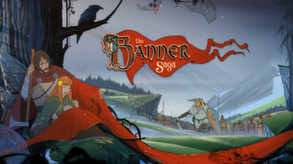
Live through an epic role-playing Viking saga where your strategic choices directly affect your personal journey. Make allies as you travel with your caravan across this stunning yet harsh landscape. Carefully choose those who will help fight a new threat that jeopardizes an entire civilization.
Modeled estimate, not a reported figure. How we estimate →
Prices
Each in the currency that store quoted — not converted: the gap between two rows is the publisher's pricing, not an exchange rate.
Every market we collect.
About
Add-ons
Each DLC is estimated with the same model as a game, then summed — a modeled figure, not reported DLC sales.
Sums Steam only; PlayStation, Xbox publish no volume signal, so the true total is higher by an unknown amount.
| Store | Price | Audience | Score | Chart | Est. revenue |
|---|---|---|---|---|---|
SteamYou are here | $24.99 | 16Kreviews | 89% | — | $11.1M |
| $24.49 | 3.7Kratings | 92% | — | not modelled | |
Updates
Build ids and update times come straight from Steam's PICS — the same source SteamDB reads. Patch history grows as we record new builds.
Engagement
Reviews
Themes across 838 recent reviews and how positive each mention is. A keyword signal, not full sentiment analysis.
Reviews
This is for all Banner Saga games. Yes you ABSOLUTELY should play all 3. Banner Sage stands unique among games I've played. It's hard to describe: a narrative "choices matter" adventure game with TBS battle elements completely undersells it. Banner Sage is a legend you get to write. It's a beautiful and heartbreaking story of loss, hope, and... well, the rest is up to you. When I first played it I really had no idea what I was in for, and I still can't exactly describe it, but it was beautiful to the point of tears. The game does an INCREDIBLE job of immersing you in the world. Every backdrop, every interaction with a person feels real and it feels like you're participating. What is a simple supply meter in other games here is your lifeblood, and that number went DOWN because you made a choice you are now questioning. The people fighting next to you on the battlefield are not units, but your friends that you've toasted with, argued with, and care for deeply. I'm honestly not sure where choices diverge except with immediate consequences. I would suggest you do not look up decision trees - don't treat this like a game, treat it like composing your hero's ballad of triumph, or perhaps tragedy. History and legend play a key role here - in fact that's the entire purpose of the banner mentioned in said saga - and you're literally weaving it as you move. As for the battles, they can get tough (I played "Normal"), but are doable. Don't go in expecting the traditional X-Com progression of weak to overpowered. The battles take place as story elements and can have incredible consequences. Like all things in Banner Saga, they are an additive part to the whole, and their stakes makes everything more intense. I find the skills and such balanced and every battle ultimately achievable. You'll get the hang of it eventually but there's a moderate curve to understanding how to fight in this game than in others. As for the presentation, the videos 100% display what it is. The whole game looks like that, a "Dragon's Lair" type smooth animation. I, personally, love it. And while it may not be your particular cup of tea, in honestly it's not usually mine, it works perfectly here. A game as unique as The Banner Saga needed a unique aesthetic and after playing it, I'm not sure the sharper lines of more traditional contemporary animation would have worked. The novel style sets you up mentally for the novel nature of the game. It does slow down a bit during the second and (part of the) third games. In those, the world becomes more complex and it feels like it might have been dragged out a little bit too long - the give/take momentum of the first gives way a bit to largely give. Maybe a better way to put it is that external conflicts turn into internal conflicts, resulting in a slower burn. But that's a minor gripe, and might actually be a positive for you. And for what it's worth, I truly believe the experience of deceleration is in large part because of just how phenomenal the opening chapter was. Listen, I'm biased. The Banner Saga hit me, and hit me HARD. I don't expect it to impact everyone the way it did me, but if you let yourself go on the ride, even just a little, you're going to find something real special. It's a gorgeous, compelling, challenging, heart-wrenching story which is ultimately yours to tell. There are not many experiences like this, and you owe it to yourself to try.
Media

Related
Related
Price dynamics, follower growth, revenue and sales trajectories with interactive tooltips
This and every other Pro feature is free until October 20, 2026. A free account is all it takes.
Genres
Stats
All-time low is the lowest price we've recorded for this game since we started tracking it.
Languages: English*, French, German, Spanish - Spain, Polish, Portuguese - Brazil, Russian, Italian, Japanese, Korean, Czech, Simplified Chinese*languages with full audio support
| $24.99 |
| 1.6Kratings |
| 86% |
| — |
| not modelled |
Matched by title — a reused name can pair the wrong games. * is a critic aggregate. Prices and positions are each store's United States storefront; Epic charts worldwide. Audience and Score too, except Steam's, which is worldwide.
Hours played at review time, across 841 reviews with recorded playtime.
positive critical· bar length = how often the theme comes up
Что за тупой деге нерат придумывал боевую систему? Вся очередность хода работает так: ходите вы - ходит противник - вы - противник - вы - противник. И плевать что у вас осталось 6 бойцов, а у врага один. Пока вы будете ходить 6 бойцами, враг будет ходить ОДНИМ! В нормальных пошаговых играх, где разработчик не упары вался солями и не тра хал собственную мать эта механика используется для боссов! Представьте, механика вас побуждает на то что вражеских бойцов убивать не нужно!!! Им нужно опустить здоровье до минимума (потому что чем меньше у юнита врага здоровья тем меньше он нанесет урона). И только когда вы опустите здоровье всех бойцов до минимума, только тогда, их можно убивать, в противном случае вы скорее дадите врагу преимущество, давая ходить его самому здоровому бойцу по 6 раз за раунд. У меня чувство что разработчики до своей убогой подделки ни разу в игры не играли
The Banner Saga - это одна из немногих сюжетно-ориентированных РПГ, где твои решения действительно влияют на прохождение. Последствия здесь могут застать вас врасплох, ударить ножом в спину и попытаться убить всех, кто вам дорог в этой игре. Ты, либо их стоически принимаешь и идёшь дальше, либо начинаешь всё сначала, принимая наиболее правильные решения. Тут нет привычного ручного сохранения, только ограниченное число автосейвов, не дающих тебе вернуться на час-два раньше. Это очень непросто принять, но... Оно того стоит. Ведь это действительно уникальная игра. Уникальная трилогия (хоть и крайне бюджетная). С запоминающейся, меланхоличной атмосферой безнадёги. С необычным лором, самобытным саундтреком и чарующим артом. С решениями, которые могут напрямую влиять на возможности во второй и третьей части (если воспользоваться опцией импорта сохранений). Но, к сожалению, этой трилогии катастрофически не хватает бюджета, чтобы стать по-настоящему шедевром. Здесь не озвучены диалоги, нет ручного передвижения по карте, не хватает анимаций и кат-сцен. Это не смертельно, ведь здесь достаточно увлекательная пошаговая боёвка, которая от части к части дополняется новыми особенностями. Она в своей основе простая, но мне не успела надоесть. Поэтому любителям пошаговых боёв - рекомендую попробовать. Подводя итоги, я не могу назвать игру однозначно шедевром, но меня она всё же очень зацепила, а её концовка меланхолично врезалась в память, как и последствия одного фатального решения, сделанного в первой трети игры... P.S. Саму трилогию брать рекомендую, только если возникнет желание узнать, чем всё закончится (но надо быть готовым к вылетам в третьей части и к тому, что последствия ваших решений будут вас преследовать и бить в самое больное место).
Interest game, little exposition and it is easy to lose named characters while the battle management is good. The main flaw, how f@**!!! long it takes for some of the cut scenes and movement in battles. I would be tempted to replay but I feel like I've sat here for several hours just waiting for the cut scenes to play of a static screen and a long train of men marching...
fellowship of the ring, basically
One of the best RPG grid-based games I've played. The animation on the cutscenes in excellent, the three games have a well thought out plot and good voice acting. I love the Norse-inspired world-building. It doesn't feel like a geneeric D&D clone, or a LOTR ripoff, there is thoughtful lore and world-building. The game is challenging without feeling frustrating, and it's in a class by itself in terms of the gameplay structure and quality.
I was extremely close to dropping this game for the severe arbitrary nature of 90% of your choices. Though I like a challenge, I found this game more enjoyable actually set to Easy difficulty. It doesn't lessen any of the tough decisions you need to make, while still allowing you to enjoy the degree of strategy that this game does have (it isn't FFT, but it's there...), while avoid an (IMO) unnecessary extra stress of insult [strike]to[/strike] of injuries. If you stick it thru long enough as I did, the story picks up and becomes enjoyable as it proceeds into the 2nd Saga. Be aware, it's not a long title (9 hours clocked for me on Saga 1).
If you like Supergiant's games, you'll definitely like this. I got this game sometime after playing the demo for The Pale Beyond, but only played it long after playing Pyre, which I greatly enjoyed. Onto the meat of the review. [b]LEGEND: love (╋), like (+), neutral (~), dislike (-), abhor (—)[/b] [b]╋ MUSIC[/b]; Downbeat acoustic soundtrack with vocals. My favorite track is "There Is No Bad Weather". [b]╋ VISUALS[/b]; 2D Graphics look amazing. The use of colors, parallax, linear motions, and reuse of similar sprites, is as beautiful as it is impressive. [b]╋ STORY[/b]; Themes of trade-off, limited agency, thanatology, perspective, normalcy bias, loss aversion. [b]╋ UI/UX[/b]; Spacebar, Enter, and Numpad Enter, all forward text. Many indie text-based games focused on story-decisions neglect to do this, which is hugely important for comfort and usability. [b]╋ UI/UX[/b]; I appreciate the quality and consistency of texts descriptive of character abilities and such. They are frontloaded with "how" followed by "what", very succinct. [b]╋ COMBAT[/b]; One thing Banner Saga has, which I love, is low numeric values. Into the Breach also has this. [b]+ STORY/VISUALS[/b]; On the map, you can read descriptions about places and roads. It doesn't get much use, and it's not necessary, but it's really awesome that the option is there. It makes the world feel more alive. [b]+ ECONOMY[/b]; Resting spends Supplies which you find, are gifted, or buy with Renown. "Renown" is the exchange currency you get by defeating enemies in combat. This was never an issue, and in fact, I found it a fun, interesting, smooth and "unproblematic" piece of design. [b]∽ COMBAT[/b]; I saw a reviewer claim the "last boss is broken after 10 years" and proceed not to qualify how. I had zero issues with the last boss, and everything proceeded smoothly. I saw another claim it was "obnoxiously difficult", this was false, at least for my playthrough. It seems that the game's design might have balancing/consistency issues. [b]∽ COMBAT[/b]; Your health is also your damage. I've sometimes wondered what it might be to have a system like that, but I always concluded it's a bad idea to deal less damage the less health you have. It's an extremizing mechanic. It's way harder, I dare say impossible, to pull of a "clutch" win when you're at low health. It works just fine here, it's not a problem. [b]∽ TIME[/b]; I was ready to play for 100hs, but my playthrough was around 15-16 hours. [b]∽ STORY[/b]; I had expected that characters could die in combat, but this is false. They can only die in story decisions, or else, when a combat encouter is explicitly relevant for a high-stakes situation. When a character loses in combat, they become injured, and need to rest for a few days. [b]- UI/UX[/b]; The game autosaves (quick slot) after every decision, and after every place (ordinary slot). I take two problems here: (1) this does nothing against save scumming, and (2) you have zero control over when to save. So, the player loses control over saving, and it does not even prevent savescumming. The saving system is actively detrimental. [b]- STORY[/b]; The introduction into the world of Banner Saga is a little confusing. Characters are introduced without their names, and without you even seeing them for a while, since it's only narration. It's unclear if the narrator is someone, or not really anyone. After you begin playing as Ubin, this mostly subsides, but it could have been better. [b]- STORY[/b]; I was expecting more swaps of perspective throughout. Instead, you play a little as Ubin, then a little as Hakon, and most of the game is centered on Rook. This would've been a neutral point, but the game literally opens by telling you that perspective-taking will be a huge deal; you are setup to be disappointed. [b]- UI/UX[/b]; The map takes too long to load. I would have used it more if it wasn't for this. [b]- UI/UX[/b]; GUI is inconvenient when it comes to accessing/leaving Combat Training, as well as (un)equipping the gear of characters, and especially when you wanna do that to someone who is currently apt for a level-up. [b]- UI/UX[/b]; Some of the stats are unexplained. I didn't know what "REST" is, or what "CRIT CHANCE" meant, and now that I've finished the game, still do not know. [b]- STORY[/b]; At least in this first game, I disliked how the approach to and use of divinity. As soon as you begin, you are told "the gods are dead" [sic]. It isn't clear what significance this has in the world, or those who live in it. There are "godstones", monuments to the gods. Throughout, you uncover a little more about the significance, but it's very little indeed. The only person who seems to care is Ubin, who is terrifically old, and even then, doesn't seem to care much. Characters mostly are ambivalent, or plainly oppositional. This theme is underexplored and underutilized. It feels more of a mundane reflection of the time period this was written, and less anything substantial for the world and story. I loved visiting the godstones, they are clearly meant to be of great, great significance, and that should be reflected more generally. The end of the game almost seems to foreshadow that this will become more relevant. I'm hoping this is improved in the future games I have not yet played. [b]- STORY/GAMEPLAY[/b]; Yrsa died in my playthrough. I don't care that this happened, as I was not invested in her, but the way it happened was awfully contrived: [spoiler] she suggests an attack which uses fire on a forest. If you do this, by the end, she vanishes, is presumed dead, and Ludin blames you for her disappearance[/spoiler]. Gunnulf is a character who I had to go out of my way to ensure he lived. If he dies, it's like nobody gives a ♥♥♥♥. Your character is more worried about the "treasure now at the bottom of the valley". Regardless, the decision sequence in which he may die is totally out of nowhere. You're traveling, and what should've been an ordinary decision about the caravan or whatever, is instead HIGHLY IMPORTANT!!!!!!!!! His death is so contrived, there is only one way to save him, you are practically forced to savescum and brute-forcedly exclude decisions. [b]— UI/UX[/b]; In case you accidentally skip something you did not mean to, there is no text log for you to view past messages. [b]— UI/UX[/b]; The character screen GUI is majorly whack. It is designed as if it were a mobile game UI. There is a Hint button you must press to get explanations for things on the screen, but instead of the descriptive tooltips being shown during mouseover, EVERYTHING is shown at once, which is horrifically bad for anyone trying to absorb new information. Not everything is explained either, mostly just the stats. [b]— COMBAT[/b]; By far, my biggest issue is that you can't undo movement actions. When Acting as a character, the first thing you do is Move, during which there are three steps in time: (1) before selecting a tile, (2) after selecting but before confirming, and (3) after confirming. If you're in step 2, or in step 3, you can't return to step 1. in many other strategy games, such as [b]Into the Breach[/b] and the iconic [b]Advance Wars[/b], you can, yes, do this, but not here. In the negative sense of the word, this is [b]archaic[/b]; providing neither enhancement, joy, nor challenge to the game. Additionally, contrast this with the fact this same 1-2-3 step process applies to Attacking, which you do after Movement, EXCEPT here, you can return to step 1 during step 2. You can't do that from step 3, but that is expected for attacks. At one point in my playthrough, I thought about why Banner Saga isn't much spoken about, and concluded that just as in movies, games like this — 2D, animated, story-heavy, all around artistic skill — are affected by the technologist-photorealist slop culture we've been having since the 2000s CGI boom. The games and studios that are, such as Supergiant themselves, are exceptions to this.
On paper I should like this. But I really had to make myself play this game to get through.
[h1] This is a review for the entire Banner Saga series. [/h1] The Banner Saga is an incredible series. Unlike many choice-driven games, the decisions you make actually carry weight. Small, seemingly meaningless choices can lead to massive consequences entire games later, making every decision feel tense and important. The worldbuilding is deep and unique, supported by a compelling narrative that I honestly have never seen executed this well before. Combined with the gorgeous hand-drawn art style and fantastic soundtrack, the series creates an atmosphere that feels special. [b] There are, however, two major flaws with the series: [/b] [h3] Combat: [/h3] The turn-based combat is both very fun and strangely designed at the same time. Damage is directly tied to a unit’s remaining health, and turns always alternate between you and the enemy. As a result, if you want to play “optimally,” you’re encouraged not to kill enemies immediately. Instead, the best tactic is to weaken every enemy to 1HP before finishing them off at the end. Otherwise, the strongest enemy units end up taking more turns. It’s a very odd system for a tactics game and sometimes makes combat feel more like solving a math puzzle than making strategic battlefield decisions. Despite that, the combat is still enjoyable enough that I can mostly overlook the weirdness. [h3] Banner Saga 3 Problems: [/h3] This is the real issue with the series. Banner Saga 3 is plagued with bugs and crashes. I personally have a very high tolerance for bugs but it is almost unplayable. Every loading screen feels like a gamble. I am not exaggerating when I say any time you encounter a loading screen, the game has a 1/4 chance of crashing/freezing. I had to replay a single battle FIVE TIMES just to make it past the post-fight loading screen. By the end, I probably had to redo nearly half the fights in the game at least once because of crashes. What makes this even worse is that Banner Saga 3 contains multi-phase battles with additional loading screens in between. If the game had manual saves, this would be manageable. Instead, you are forced to keep rebooting the game and brute-forcing your way through until you finally get lucky. The craziest part is that the first two games ran perfectly fine for me. Banner Saga 3 is not fundamentally different from them, which makes the state it was left in years after release feel completely unacceptable. The only reason I managed to push through Banner Saga 3 was because I was already deeply invested in the story and characters after the first two games.
Active players
Estimated daily and monthly active players (DAU/MAU) modeled from peak concurrency.
Players by region
Where this game's players are, estimated from review languages.
Players also reviewed
The games this title's players most often review too — audience affinity.
Related
| Game | Estimated lifetime revenue | Reviews | Review score | Price |
|---|---|---|---|---|
| $1.9M | 3.1K | 79% | $24.99 | |
| $2.6M | 3.8K | 90% | $24.99 | |
| $39.2K | 190 | 89% | $14.99 | |
| $895.7K | 3.2K | 81% | $9.99 | |
| $210.2K | 507 | 79% | $14.99 | |
| $279.2K | 567 | 71% | $19.99 |
Related
| Game | Estimated lifetime revenue | Reviews | Review score | Price |
|---|---|---|---|---|
| $11.1M | 35.5K | 75% | $14.99 | |
| $11.1M | 19K | 93% | $17.99 | |
| $11.1M | 12.1K | 86% | $49.99 | |
| $11.1M | 16.1K | 82% | $24.99 | |
| $11.1M | 12.7K | 86% | $29.99 | |
| $11.2M | 28.2K | 95% | $14.99 |