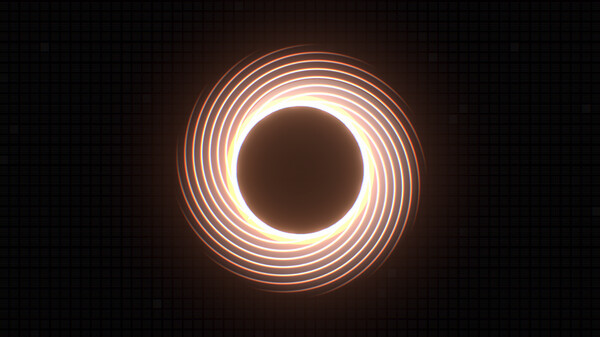
A unique mix of rhythm and incremental game, wrapped in bullet heaven chaos with short runs. Harvest resources, engineer your arsenal, tune your singularity through infinite geometric waves - and watch reality break around you.
Modeled estimate, not a reported figure. How we estimate →
About
Synthularity is a rhythm bullet hell roguelite where every run ends in death and every
death makes you stronger. Survive. Harvest. Evolve.
Survive the Waves
Move, dodge, and outlast endless waves of geometric enemies. Every enemy pulses
to the beat - learn the rhythm or die to it.
Engineer Your Build
A sprawling tech tree with branching upgrade paths. Create weapons, convert resources,
monitor your stats, and push your limits however you want.
Tune Your Experience
No two runs are the same. Shape your playstyle from the ground up - tweak spawn
rates, overclock your systems, and make the game yours.
Genres
Stats
All-time low is the lowest price we've recorded for this game since we started tracking it.
Languages: English**languages with full audio support
Reviews
Idle & Incremental Lovers recommends Synthularity: [i] The most awesome-looking upgrade tree I've ever seen, PCB-shaped. Nice neon aesthetic, fun runs with "choose 1 of 3" boss rewards, good mix of active and idle gameplay, great (customizable!) music. <3 [/i] + Navigating the printed circuit board, aka the upgrade tree, has never been so enjoyable. Great reveal animations when showing the way to the next nodes. + This is not a rythm game but music is really is a huge part of the whole experience, and the beat matching your attack speed make the runs feel punchy. + Talking about music, you can unlock a mixer module that allows you to control the volume for 6 different type of sounds and to attribute special effects to each one (echo, distortion, lowpass). Electronic music enjoyers are in for a treat! + The active part is great but idling is also part of the game, especially when you're hitting a wall. The unlockable autopilot module allows you to make a sandwich while the game plays itself. Customize the speed and radius of your cursor, and wait for all those precious currencies to be yours! + Along with PCB upgrades, in-runs roguelike-type choices keep the game interesting even during the first easy waves. - Some of these choices are upgrades based on flat numbers. They become completely useless in the mid and late game and just clutter your choices, which is a bit sad. *Why does neon glow? Because if it didn’t, we’d call it neoff.* Found this review helpful? Give it a thumb up and follow my curator page for more Idle & Incremental game recommendations : [url=https://store.steampowered.com/curator/46077092-Idle-Incremental-Lovers/]Idle & Incremental Lovers Curator page[/url]
Media

Related
Related
Price dynamics, follower growth, revenue and sales trajectories with interactive tooltips
This and every other Pro feature is free until October 20, 2026. A free account is all it takes.
number go up! color shape go around! Can't go wrong with it.
It's a great game to enjoy casually. It is an idle game that I have running even right now as I write this. The progression is slow, so it requires patience. The fun elements come from the increasing number of enemies, as well as the changes in colors, shapes, and music as you grow. It is as relaxing as watching a fish tank, so I recommend it to people with ADHD who have a lot on their minds.
You play as a black hole moving around the screen with your mouse, destroying shapes with a pulse. The pulse activates at regular intervals, and all you have to do is move the black hole over incoming shapes and follow them until they are destroyed, then collect the shards they release. The first few shapes can be destroyed with a single pulse, but the longer you survive, the stronger they become. Your run is also limited by energy, which constantly decreases. Once it reaches zero, you implode and have to start another run. This is an incremental game, which means you gradually become stronger by unlocking upgrades throughout an upgrade tree using the shards you collect. The mechanics are fairly familiar, as most upgrades are hidden until you purchase one of the available ones and reveal paths leading to new upgrades. What makes the game particularly interesting is the upgrade tree itself. It has a very cool presentation that feels genuinely unique compared to similar games. Although you control a black hole, the whole concept revolves around sound and music, so the upgrade tree looks more like an audio generating machine or some kind of electronic device. The upgrade nodes and paths resemble pins, chips, conductors, and other electronic components, giving the entire system a distinctive appearance. Some upgrades can be purchased once, while others can be upgraded multiple times. Each purchase, however, significantly increases the cost of the next one. The first upgrades increase things such as your damage, pulse firing rate, maximum energy, enemy spawn rate, and the number of rewards enemies drop. At first, the upgrade tree appears to have a limit or border around it, but this is purely visual. Once you purchase certain upgrades, new paths push through the boundary and reveal additional upgrade nodes beyond it. The upgrade system also introduces new features. For example, there is a spawner that lets you increase the spawn rate, as well as a generator that uses crystals to add additional weapons to your pulse. The generator offers five different shapes, or weapons, each with its own firing pattern. The circle, for example, releases a shockwave, while the hexagon fires projectiles. There are also five colors, each providing its own additional perk. White, for example, increases your base damage, while yellow triggers explosions. You have five weapon slots, allowing you to mix and match different shapes and colors. You can experiment with different combinations or even equip the same weapon in all five slots. However, it takes quite a while to unlock all the available options. Crystals are obtained from bosses when you defeat them for the first time. Bosses appear after a certain amount of time and are defeated in the same way as normal shapes, but each pulse drains significantly more energy. If you cannot keep up with a boss and run out of energy, you can die very quickly. The next time you defeat the same boss, you receive a perk instead of a crystal, which adds a small roguelite element to the progression. Every run follows the same general structure, with the goal being to survive long enough to defeat all the bosses. The bosses are essentially enormous versions of the five normal shapes. The first is a circle, followed by a triangle, and so on until you reach the star shaped boss. Each defeated boss unlocks a new shape, which then begins appearing randomly in all future runs. The progression becomes particularly interesting after the first five bosses, which all appear in white. Once they have been defeated, the game starts a new loop with the same five shapes, but this time they appear in a stronger red color. After defeating another five red shapes and bosses, you unlock the blue loop. There are five colors in total, each containing five bosses and corresponding shapes. Since previously unlocked shapes continue appearing, the screen eventually becomes filled with an impressive spectacle of different colored shapes. It can become surprisingly chaotic, especially during the later stages of a run. The new colors are not simply there to increase the difficulty. They also introduce new types of shards. Like many incremental games, your progression through the upgrade tree eventually becomes blocked by a new resource. In this case, you need shards of different colors to access certain upgrades. New colors only become available after defeating all five bosses from the previous color, so there is no way to skip ahead. This means you need to purchase most of the available upgrades and gradually build up your power before you are strong enough to survive the increasingly difficult bosses. The gameplay itself is not particularly complicated. You go on runs, collect shards, buy upgrades, become stronger, and then use that additional power to push further and defeat the next boss. Then you repeat the process until you eventually reach the end. Unlocking everything and earning all the achievements requires a lot of time, and the overall progression is somewhat longer than in most incremental games. If you want to save some time and do something else, there’s an auto mode where the black hole moves around the screen on its own, and no boss mode where you can simply grind for shards.
有成就 没中文 合成奇点 《合成奇点》是一款节奏弹幕类轻肉鸽游戏,每一轮游玩终将迎来死亡,而每一次死亡都会让你变得更强。求生,汲取,进化。 熬过敌潮 移动、闪避,在无穷无尽的几何敌人攻势下存活。所有敌人都会跟随节拍律动,顺应节奏方能生存,违背节奏便会殒命。 构筑你的配装 分支繁多的庞大科技树。打造武器,转化资源,查看各项属性,以你想要的方式突破自身极限。 自定义游玩体验 每一局体验各不相同。从零塑造你的游玩风格,调整敌人生成概率,超频各类系统,打造专属于你的游戏体验。
Decent. Had more playtime in demo, but i will return to it when i am in a mood for "idler". Works well on linux. Which is a big plus
Un juego tipo idle donde seremos como un agujero oscuro y empezarán a salir enemigos por pantallas que son formas geométricas, nuestro objetivo es acabar con ellos, poniéndonos encima y esperando a que el tempo haga su trabajo, siendo una jugabilidad lo mar de curiosidad. [h2]Al principio, pendejo no dura nada, luego con las mejoras la cosa cambia[/h2] El comienzo del juego puede ser algo lento, pues empezaremos con poca vida, y en 10 o 15 segundos se ha podido terminar la partida, pero lo importante de esa partida es ir agarrando cristales blancos, ya que serán la moneda para ir mejorando a nuestro agujero negro. Esas mejoras es tener más vida, regeneración de vida, y cosas por el estilo, haciendo que esa partida que hace unos minutos durase 10 o 15 segundos, acabes aguantando algo más, y poco a poco ir mejorando para, como dice Baity "comprar mejoras que te hagan ir mas rápido para luego comprar más mejoras que te hagan ir..." xDDDD [h2]Cada ciertos segundos saldrá un boss a ponernos las cosas dificiles[/h2] Cada cierta cantidad de segundos, como 10 segundos o similar, se abrirá un vórtice del que saldrá una figura pero en un tamaño mucho más grande, ese será el boss a batir, por lo general, tiene más vida y hace más daño que los pequeños que suelen aparecer por las esquinas, por lo que, te tocará mejorar hasta ser capaz de vencerlo, y en ese momento, a los 10 segundos de matarlo, aparecerá el siguiente, y es la manera de intentar ir avanzando. El orden en concreto es Círculo, Triangulo, Cuadrado, Hexagono y el último no se, es como un bocadillo de comic cuando gritan y ponen exclamaciones xDDDD, después de ese se vuelve al círculo pero variando su color [h2]Se puede poner en modo idle cuando consigamos desbloquear en su rama de habilidades[/h2] Los cristales están de distintos colores y según el color da acceso a nuevas habilidades, por lo general, esta medido para no ser fuertes de por sí, si no tener que ir subiendo gradualmente, cuando vencemos a un boss, sus minions empezaran a aparecer en el mapa, que es el boss pero más pequeños, y de esta forma, tras vencer al que tiene tantas esquinas, vendrán los círculos rojos en pantalla y de vencerlos darán cristales rojos. Es muy satisfactorio, yo por ejemplo me pongo en otras cosas y dejo el círculo en modo Idle, para que se ponga a dar vueltas en círculos y vaya golpeando con el tempo a los enemigos, y vaya reiniciandose así constantemente, hace nada, desbloquee también que no salgan bosses, y eso es útil para el modo idle y no tener que estar reiniciando constantemente la partida, ya que aunque es automatizado, se tarda como 10 segundos en reiniciar, y otros 10 segundos al matar un boss pues el juego espera que elijamos una habilidad y pasado ese tiempo, lo elegirá (creo que suele ser el de la izquierda) En general un juego muy entretenido y bueno, por su precio, no esta nada mal, tiene el precio de los clicker y este tiene su modo idle y su modo jugable, si os gusta los juegos de ir matando cosas para ir mejorando e intentar desbloquear todo lo que ofrece, os lo recomiendo :)
Engaging game, hard to stop once you start.
Synthularity combines rhythm-based bullet hell action with roguelite progression and idle-style resource development, producing an unusual hybrid that is as concerned with optimization as it is with reflexes. Developed and published by Inc Inc, it builds its identity around a repeating cycle of surviving dangerous geometric waves, collecting resources, improving an increasingly elaborate arsenal, and returning stronger after failure. Rather than treating death as a simple setback, progression makes each defeat part of the larger journey toward greater power and efficiency. The core action places movement and survival at the center of each encounter. Geometric enemies continuously close in while the player dodges through increasingly crowded situations. The defining feature is how enemy behavior is connected to rhythm. Threats pulse to the beat, encouraging players to recognize timing instead of responding exclusively through frantic reactions. Once the rhythm becomes familiar, encounters can develop an almost musical flow in which successful movement comes from anticipating when danger will intensify. This helps distinguish the game from bullet hell experiences that depend primarily on projectile density and raw reaction speed. Survival is only one half of the experience because resources gathered during play feed into a substantial progression system. A branching technology tree allows players to develop their capabilities in different directions, create weapons, convert resources, monitor statistics, and gradually improve overall efficiency. The result is a strong sense of persistent advancement. Even an unsuccessful attempt can contribute something useful toward later runs, making experimentation feel worthwhile rather than wasted. Build engineering provides much of the strategic depth. Instead of merely selecting whichever upgrade offers the largest immediate numerical increase, players are encouraged to consider how different improvements interact. Resource conversion and technological development add management elements that complement the arcade action. Players who enjoy analyzing statistics and optimizing interconnected systems may therefore find just as much entertainment between intense waves as they do during them. Another notable feature is the ability to modify aspects of how the experience behaves. Spawn rates can be adjusted and systems can be overclocked, giving players opportunities to influence both risk and potential progression. This creates an interesting relationship between difficulty and efficiency. Increasing the intensity can potentially accelerate development, but doing so also makes survival more demanding. These adjustable elements strengthen replayability because progression is not entirely dictated by predetermined upgrade sequences. The abstract presentation is particularly appropriate for this style of game. Colorful geometric enemies, psychedelic effects, space imagery, and increasingly chaotic patterns reinforce the idea of entering a technological singularity where conventional reality gradually becomes unstable. The minimalist shapes also allow the action to remain focused on movement and patterns rather than detailed character models or environmental storytelling. At its best, the combination of pulsing enemies and abstract visuals gives battles the appearance of an interactive audiovisual performance. Its mixture of idler mechanics and active bullet hell gameplay is arguably the most unusual part of the design. Incremental progression provides the satisfaction of watching numbers, resources, and capabilities steadily increase, while the survival gameplay prevents advancement from becoming completely passive. This combination should appeal especially to players who enjoy incremental games but want greater mechanical involvement. Dedicated arcade players, however, may need to embrace the management and progression layers because they are fundamental rather than incidental features. There are potential weaknesses associated with this structure. Endless geometric waves naturally risk becoming repetitive, particularly if players settle into highly effective upgrade combinations. The long-term appeal therefore depends heavily on whether technological choices, enemy patterns, resource decisions, and escalating difficulty continue producing interesting situations. A sprawling technology tree is valuable only when its branches encourage genuinely different approaches rather than creating the illusion of variety through minor statistical improvements. Steam Deck compatibility currently deserves some caution. There is no confirmed Steam Deck Verified or Playable rating available for the game at the time of this assessment. Its Steam information primarily identifies Windows support, so official Steam Deck compatibility should be considered unconfirmed rather than guaranteed. The relatively straightforward 2D presentation and gameplay concept suggest that it could potentially be suitable for handheld play, but that should not be interpreted as confirmation of compatibility. Players specifically purchasing for Steam Deck would be wise to treat support as uncertain until Valve testing or sufficient real-world compatibility information establishes otherwise. Overall, Synthularity offers an intriguing combination of rhythm, survival, resource management, incremental growth, and roguelite experimentation. Its strongest idea is not any individual mechanic but the way those mechanics reinforce one another. Surviving produces resources, resources enable technological advancement, technological advancement changes future runs, and adjustable systems allow players to manipulate the challenge further. The result is a potentially addictive progression loop that rewards both improving mechanical skill and understanding its underlying systems. For players attracted to unconventional genre combinations, extensive upgrading, abstract visuals, and increasingly chaotic survival challenges, it presents a distinctive concept with considerable room for strategic experimentation. Rating: 7/10
yes
Selling now
See how fast this game is selling right now — estimated copies and revenue per day from recent review growth.
Related
| Game | Estimated lifetime revenue | Reviews | Review score | Price |
|---|---|---|---|---|
| $16.4K | 81 | 63% | $5.24 | |
| $5.2K | 69 | 86% | $3.99 | |
| $279 | 4 | 50% | $3.00 | |
| $105 | 2 | 100% | $1.99 | |
| — | 0 | — | — | |
| — | 0 | — | — |
Related
| Game | Estimated lifetime revenue | Reviews | Review score | Price |
|---|---|---|---|---|
| $1.5K | 79 | 66% | $1.19 | |
| $1.5K | 95 | 38% | $0.99 | |
| $1.5K | 71 | 66% | $1.49 | |
| $1.5K | 58 | 76% | $1.99 | |
| $1.5K | 95 | 89% | $0.99 | |
| $1.5K | 50 | 66% | $1.99 |