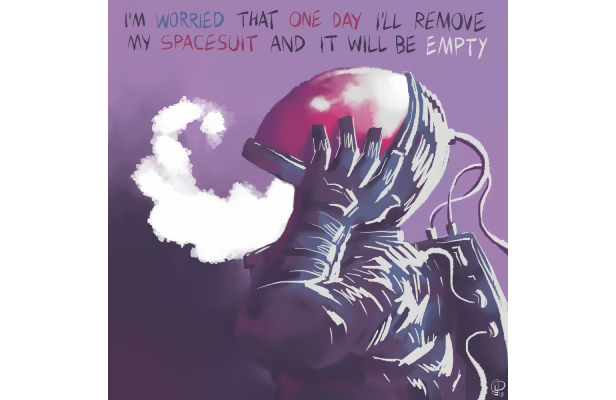
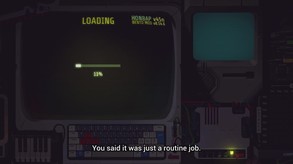
Every day is the same on the faraway Bento space-lighthouse - until a mysterious radio message breaks through. Evade the past, welcome oblivion, make the perfect Italian coffee. Still There is a psychological adventure game about grief, technical puzzles, wacky AIs and dark humour. How far is far enough?
Modeled estimate, not a reported figure. How we estimate →
Discounts
Every price cut of more than 20% we have observed, in each market that quoted one, with this game's chart position on either side of it. These are episodes, not a model: a sale is one event, and one event cannot tell you what the next one will do.
Reviews, worldwide (the counter carries no country): 0.14/day in the week to Sep 11 → 0.43/day in the week after.
About

Genres
Sums Steam only; GOG, Nintendo, Epic publish no volume signal, so the true total is higher by an unknown amount.
Engagement
Reviews
Themes across 50 recent reviews and how positive each mention is. A keyword signal, not full sentiment analysis.
Reviews
Just completed the game , and I must say that it was TOO emotionally heavy for me, and I would never buy this game if I knew so. I guess that there should be more warnings about that. There is no conventional "happy end". Authors, I have quite enough complex things in my life to get them from gaming experience as well. Also there are "rainbow" relations in this game, be aware (but this does not do anything for game).
Kort spel met een fantastisch verhaal dat me stiekem behoorlijk aangegrepen heeft.
норм
Media

Related
Related
Price dynamics, follower growth, revenue and sales trajectories with interactive tooltips
This and every other Pro feature is free until October 20, 2026. A free account is all it takes.
Reviews, worldwide (the counter carries no country): 0/day in the week to Jul 21 → 0.8/day in the week after.
For scale, across Steam · Top Sellers · Brazil over the last 30 days: the 26 chart moves that followed a price cut of more than 20% went a median of 7 places towards #1, and the 2,400 moves with no price cut behind them went 2 away. One store, one chart, one country — it is the only place we have enough observations to say even that.
Prices outside the United States have been collected since 6 August 2026 and chart positions since 19 July 2026, so a cut older than that has no market to compare and a market that joined later has no history yet. Nothing here is converted between currencies.
Stats
All-time low is the lowest price we've recorded for this game since we started tracking it.
Languages: English, French, Italian, German, Russian, Simplified Chinese
| $14.99 |
| — |
| — |
| — |
| not modelled |
| $14.99 | — | — | — | $0 |
Matched by title — a reused name can pair the wrong games. * is a critic aggregate. Prices and positions are each store's United States storefront; Epic charts worldwide. Audience and Score too, except Steam's, which is worldwide.
Hours played at review time, across 50 reviews with recorded playtime.
positive critical· bar length = how often the theme comes up
NEVER EAT MILK!
[h1][b]Recommended:[/b] Still There[/h1] Most of my Steam library are games I got through the Humble Bundle monthly choice subscription. Sure, I'll always pick games that look like something I'd be interested in playing, but even then, success if far from guaranteed. Luckily, [b]Still There[/b] falls squarely into the camp of games that both look interesting and turn out to actually be worth playing. The story of Still There centers around Karl Hamba, the operator of a space lighthouse called the Bento. After a mysterious radio call asking for help, Karl's isolated life of routine is interrupted by a series of events that will bring into question the Bento's purpose, Karl's role as the operator, and his very sanity. What follows is a meditation on love, loss, and forgiveness presented as an homage to classic LucasArts point-and-click adventures. Each problem that the Bento faces is a puzzle Karl has to solve by interacting with his environment, talking to the station AI, or using the radio to communicate with the few NPCs you get to meet. However, unlike the adventures of yore, solving puzzles in Still There requires less lateral thinking, and instead relies more on deciphering the station's technical manual. While this is definitely an interesting new take on the point-and-click adventure genre (as one reviewer described it, it feels like you're doing cosmic tech support), it does come with certain issues. In order to make the puzzles even remotely challenging, the manual is presented in a way I can only describe as obtuse. Most of the diagrams you'll have to consult are either not properly marked (like they would be if it was a real technical manual), or are marked in an unintuitive way. In fact, on several occasions, I was stuck and had to consult a walkthrough, only to realize my method of solving the problem was completely correct, and I was just reading the diagrams wrong. Fortunately, the game offers the option to skip some of the more difficult puzzles. But be warned - doing so will also prevent you from getting the associated Steam achievements. Aside from the somewhat unintuitive puzzles, another important aspect of the gameplay is the dialogue - both as a means of problem-solving and the primary way of delivering the narrative. Overall, the writing is pretty decent, doing a solid job of balancing the quirky humor with dark and emotional moments. Still, despite trying pretty hard, it never manages to hit the ol' feels quite like, say, To the Moon or Citizen Sleeper. All of this is tied together by an immersive score and charming, hand-drawn graphics. Since the vast majority of the game takes place inside the cramped interior of the Bento, the environment art does a really great job of creating a believable and lived-in space for our protagonist to interact with. There are also plenty of visual gags and Easter eggs to help lighten up the experience. Overall, while it heavily references the classic era of adventures, Still There is very much a unique title with a clear vision and innovative (if not super-intuitive) gameplay. On this merit alone, I would definitely recommend you at least try it. And if you find the story more rewarding than I did, all the better.
Still There transforms the loneliness of deep space into an intimate adventure built around technical puzzles, everyday routines, dark comedy, and a surprisingly emotional story. Developed by GhostShark and published by Iceberg Interactive, it places players in the role of Karl Hamba, the operator of The Bento, an isolated space lighthouse far removed from ordinary civilization. Karl has become accustomed to a repetitive existence of maintaining equipment, performing routine tasks, and interacting with the station's artificial intelligence. Everything changes when an unexpected emergency transmission interrupts that routine and forces him to confront circumstances he would rather keep buried. The Bento is much more than a backdrop for the story. Its confined rooms, complicated machinery, control panels, personal belongings, and strange assortment of everyday necessities create the impression of a functioning workplace that has gradually become Karl's home. The isolation is constantly noticeable, yet the game avoids making the environment lifeless. Preparing coffee, looking after a pet tuatara, playing chess, dealing with food, and completing mundane household activities help establish what Karl's normal life looks like before the larger mystery begins taking over. Puzzle solving is central to the experience. Instead of relying heavily on traditional inventory combinations, many challenges involve understanding machinery and following technical procedures. Players may need to inspect diagrams, operate switches, diagnose equipment, interpret controls, and determine how interconnected systems function. These puzzles complement the setting because Karl actually feels responsible for keeping a complicated station operational. Successfully repairing something can be rewarding precisely because the solution often requires understanding the equipment rather than simply clicking objects until something works. This approach also produces some of the game's most demanding moments. Certain interfaces are deliberately complicated, and instructions require close attention. Players who prefer straightforward puzzles or frequent guidance could occasionally become frustrated when a machine refuses to cooperate. The slower pacing further emphasizes observation over action. However, the complexity has a purpose: maintaining a remote installation is presented as actual work, and the repetitive procedures reinforce Karl's isolated lifestyle. Patient players are rewarded with puzzles that feel naturally integrated into the world. Gorky, the station's artificial intelligence, adds personality to an otherwise solitary existence. Conversations between Karl and Gorky provide humor, companionship, and occasional absurdity while preventing the story from becoming relentlessly depressing. The writing frequently moves between jokes and considerably heavier subjects, producing an unusual tone that suits the game's eccentric science-fiction setting. Even some of the station's most mundane systems are treated with enough humor to make routine interactions entertaining. The emergency transmission gradually pushes the story beyond ordinary station maintenance. What begins as an unsettling interruption develops into a mystery closely tied to Karl himself. The narrative becomes increasingly concerned with grief, memory, family, responsibility, and the temptation to escape painful experiences. Karl's decision to live in extreme isolation consequently gains greater significance as more of his past is uncovered. Rather than using space simply as an exotic setting, the game turns physical distance into a metaphor for emotional withdrawal. Its presentation strengthens this atmosphere. The illustrated visual style gives The Bento plenty of character, particularly through its machinery, clutter, displays, and smaller environmental details. There is always a convincing sense that Karl has spent considerable time inside this limited space. The contrast between the station's cramped interior and the enormous emptiness surrounding it makes his isolation particularly effective. Sound and music generally remain restrained enough to support the loneliness while becoming more prominent when the story requires additional emotional weight. The smaller optional interactions are equally valuable. Chess matches, coffee preparation, pet care, and other diversions may seem insignificant beside the central mystery, but they help make Karl believable. They demonstrate how someone might fill endless hours while stationed far away from other people. These activities also create moments of calm between complicated puzzles and emotionally difficult conversations, giving the narrative room to develop without constantly pushing the player toward another major revelation. Still There will work best for players comfortable with deliberate pacing and challenging mechanical puzzles. It is not an action-focused science-fiction adventure, nor does it attempt to provide a huge world to explore. Its strength comes from doing almost the opposite: restricting the player to a small location and using that confinement to explore one person's emotional condition. Some puzzles can become overly obscure, and the slow pace may test players primarily interested in the story, but the combination of mechanical interaction and narrative purpose gives the experience a strong identity. Steam Deck compatibility is officially categorized as Playable rather than fully Verified. Performance with the default graphics configuration is considered suitable, and the game can run successfully on SteamOS. However, handheld players should expect compromises. Some functionality is not fully accessible through the default controller configuration, touchscreen interaction or a community controller layout may occasionally be useful, and text entry can require manually opening the virtual keyboard. Some interface text may also appear small, while certain prompts can display keyboard, mouse, or non-Steam Deck controller icons. It is therefore functional on the Deck, but the experience is less seamless than a fully optimized handheld release. Overall, Still There is a distinctive narrative puzzle adventure that successfully combines complicated machinery with an emotionally grounded examination of isolation and loss. Its technical puzzles give the player meaningful responsibilities aboard The Bento, while its humor and ordinary routines keep the experience from becoming overwhelmingly bleak. Beneath the science-fiction mystery lies a personal story about whether running far enough away can ever truly separate someone from what they have lost. It is occasionally demanding and deliberately slow, but players who appreciate thoughtful storytelling and hands-on puzzles will find an unusually memorable journey. Rating: 8/10

It’s like pulling teeth. There’s gonna be a lot of words and possibly a couple of spoilers You’ve been warned. The puzzles are subpar, and not because they are too difficult or too easy, they are incongruous. Strange Horticulture has better puzzles. And don’t get me started on the “interactive” feature - you are given weird, illogical options and your choice doesn’t matter. You will arrive at the same place in the conversation (and the story), regardless. I got the impression that it is virtually impossible to understand what’s required of you unless you seek help. The manual itself is a torture device, I swear. And I have assembled multiple pieces of furniture from IKEA, including a couch. A couch, Karl! I also failed to grasp the meaning of that mini piano with one single octave. Playing music to the stars sounds poetic and intriguing until you actually do it. It's not even fun. It's stressful and annoying. This game is not adventurous, nor is it thought inducing. It is, however, emotional. Anger and disappointment are emotions, just not the ones I wanted to experience in this setting. The absence of dark humour I was promised probably added to that impression. I’m glad some people found the story moving, however, simply having a traumatic event at the core of your story does not automatically make it good. Still There, quoting Amy Santiago, is just plain boring. Let’s not forget the fact that it was created by men, so when you wonder why the female characters are so…so mechanical and inauthentic, here’s your answer. I can appreciate the idea behind the plot, but the idea is not enough. The story doesn't seem original or particularly interesting (yeah, I know how the game ends). Same old narrative of a poor, struggling man, unable to face reality and the consequences of his own actions, incredibly selfish, might I add, because why would he go to therapy to save his own life? Right? You want to reflect on the meaning of life, loss, mortality, while developing a routine and having meaningful (or not) conversations, there’s Spiritfarer. You want all of the above and puzzles that actually use logic and the experience you’ve already gained of the game, go play The Last Campfire. You want to work through your grief (or feel your emotions) and not engage in any interactions, play GRIS. If nothing else, it’s breathtakingly beautiful. Still There, in my opinion, is the opposite of wholesome.
Recommended: Still There
El juego no está tan mal, pero si te cuesta el inglés no te lo recomiendo, es una lástima que no esté traducido al español y eso que por lo que escuche la demo si está en español. Los puzzles son un poco complejos al menos para mi y que esten en inglés le sube la dificultad. Sino fuese por los walktrough no lo hubiese ganado. No le doy negativo porque tampoco es tan malo para darle pulgar hacia abajo. Pero la verdad que no lo recomiendo mucho por los puntos mencionados. Se hace demasiado lento el juego.
Super good and fun
Players by region
Where this game's players are, estimated from review languages.
Players also reviewed
The games this title's players most often review too — audience affinity.
Related
| Game | Estimated lifetime revenue | Reviews | Review score | Price |
|---|---|---|---|---|
| $904.8K | 2.5K | 84% | $24.99 | |
| $45.6K | 1.4K | 89% | $1.79 | |
| $9.2K | 226 | 88% | $2.99 | |
| — | 0 | — | — | |
| — | 0 | — | — | |
| — | 0 | — | — |
Related
| Game | Estimated lifetime revenue | Reviews | Review score | Price |
|---|---|---|---|---|
| $295.3K | 1.1K | 45% | $6.99 | |
| $295.3K | 3.1K | 88% | $2.99 | |
| $295.5K | 720 | 65% | $19.99 | |
| $295K | 2.1K | 62% | $4.99 | |
| $294.7K | 820 | 77% | $11.99 | |
| $295.9K | 981 | 82% | $14.99 |