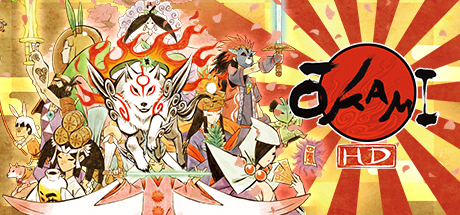
Experience the critically acclaimed masterpiece with its renowned Sumi-e ink art style in breathtaking high resolution.
Modeled estimate, not a reported figure. How we estimate →
Prices
Each in the currency that store quoted — not converted: the gap between two rows is the publisher's pricing, not an exchange rate.
13 of 15 markets; the rest we haven't asked for this title, not markets where it is unavailable.
Availability
We put this game to every storefront we collect. A market that answered not sold has told us something about the game; a market we never asked has not, and the two are never drawn the same.
Discounts
Every price cut of more than 20% we have observed, in each market that quoted one, with this game's chart position on either side of it. These are episodes, not a model: a sale is one event, and one event cannot tell you what the next one will do.
Reviews, worldwide (the counter carries no country): 1.29/day in the week to Aug 24 → 2.29/day in the week after.
For scale, across Steam · Top Sellers · Brazil over the last 30 days: the 26 chart moves that followed a price cut of more than 20% went a median of 7 places towards #1, and the 2,400 moves with no price cut behind them went 2 away. One store, one chart, one country — it is the only place we have enough observations to say even that.
Prices outside the United States have been collected since 6 August 2026 and chart positions since 19 July 2026, so a cut older than that has no market to compare and a market that joined later has no history yet. Nothing here is converted between currencies.
About
Genres
Updates
Build ids and update times come straight from Steam's PICS — the same source SteamDB reads. Patch history grows as we record new builds.
Engagement
Reviews
Themes across 871 recent reviews and how positive each mention is. A keyword signal, not full sentiment analysis.
Reviews
I've dropped this game no less than four or five times. Finally got around to forcing myself through and that about sums up my review. What surprised me most was how much I have to say about it, but in short: It is a charming game of beautiful art, a simple story with simple characters and combat I enjoyed but not without endless irritations and annoyances. The game plays out like the telling of a legend from so long ago and it has the art style to match. It is a timelessly beautiful and gorgeous stylization of sumi-e from the cel-shaded details of shrines and homes to the ink brushed backgrounds that refuge in the sky. The cartoonish charm was a very clear design intent and the artistry is worth the experience alone. So too, the story presented from the incipit narration is the telling of a folktale and as such is simple in its beats. The flawed hero, the slumbering beast, the spread of darkness like a miasma choking the land. And the saviour that vanquishes evil and brings light to the darkness. There isn’t any reason to expect more as I’ve seen often criticized but it does not attempt to be more than itself. Characters were for the most part goofy and in keeping with the theme, simple. The roster is large, each having an undeniable charm and memorable quirks to their design. Although as a medium of folklore, the simplistic tropes embodied by characters while purposeful unfortunately did not pan out uniformly. Others did very little to warrant any likability and I do not mean those who were written deliberately for meanness and duplicity but those for whom it served no purpose. If not outright buffoons, some are needlessly rude and endlessly arrogant. While intentional this very often disrupted my engagement. But that is my own opinion; others have expressed a love for all the characters and they are right. Of disrupted engagement, I am not typically sensitive to localization choices unless they are egregious. But in the English translation, Waka is French. Aside from his obviously foreign features, in the original Japanese version he deliberately speaks English to further exaggerate that foreignness which is culturally and thematically justifiable. In a game that teems with Japanese culture, artistry, and religion, which the map itself calls ‘Nippon’, we are antagonized by a Frenchman? For no other reason than that is antithetical to the English language? It was a very lazy choice of several alternatives that proved detrimental to the presentation of the story. But the worst of them all is Issun, the one character you are stuck with the entirety of your experience, proving to be the most insufferable of any character you’ll come across in a video game. Even in the more somber and harrowing scenes, he overtly fails to rein in his sleazy and sordid behaviour. An absolutely intolerable pest whose constant narration, interruptions, and condescension actively participates in ruining the experience and ruined it did. My greatest frustration however is the extent Okami goes to hinder the flow of gameplay. There is so much to engage with but at every possible instance it treats you like a toddler who’s about to have just a little too much fun. The unskippable cutscenes and multiple dialogue and narration prompts that get repeated ad nauseum for every minor action really turns the seconds into minutes and minutes into wasted hours. Scroll rolls and loading screens for such minute things: feeding animals, day-night changes, picking up items and getting their descriptions, the list is endless. Each. And. Every. Time. I would take an elevator and there would be no fewer than three entire separate scenes of dialogue and narration. I very quickly grew to hate the wanted lists: unskippable scroll roll, loading screen, unskippable intro for a fight that lasts a fraction of the time only for Issun to go through the same unskippable dialogue sequences. Each. And. Every. Time. You want to play the game, but it treats you like a baby with a crayon. And if drawing ink wasn’t without issue, should you digress slightly or need to start over, Issun interjects with the same condescending rote dialogue. Each. And. Every. Time. You are repeatedly presented the option to accept or refuse storyline requests but out of necessity required to accept in order to advance the plot. Whereas I can justify other elements I am critical of, I find such a contrivance of dialogue not only absolutely purposeless but its inclusion as storytelling confusing. It may seem like needless nitpicking but to have to engage with such a large roster of characters over a very long runtime, and Amaterasu’s constant intervening for the sake of Japan, it’s one of several gamified elements that really detract from Okami as folk-telling. And again, I can not emphasize enough, what makes such interactions unbearable is Issun always regurgitating the same quips, the same irritating interjections. After everything Ammy deals with over the course of a very long game it is for the entirety that Issun prompts the same incredulous reactions time and time again. On the matter of dialogue, the need to speak several times with the same person to get all the relevant information before the quest can be given is a constant frustration. Though an obvious problem has an obvious resolution, should you pursue the issue immediately after, you will find there is nothing actionable as you have not actually initiated the quest. Even after hours of playtime and acclimating to the game’s quirks, I still found myself having to backtrack when there was nothing to do. But can it really be the players fault when they spoke to the same character four times in a row but the game required five? All the while Issun with his stupid interjections. Combat is simple; by the end of act 1 encounters would last no more than half a minute at worst but I did enjoy the devil gate trials. This was compounded by the limited varieties of enemies most of which were merely reskins. And how many times are we made to deal with the Spider Queen, novel the first time, but after the fourth, fifth? Worst of all is the climactic boss of act 1, Orochi, the great fiend who attacked the celestial realm, etc etc. You dodge each head (if it even attacks), hit it when it's down. Repeat for all 8 heads. But you fight him, THREE TIMES throughout the game. And it’s the same worthless fight. Each. And. Every. Time. I don't think back fondly on my only complete playthrough, and it's one I will never repeat again.
Media

Related
Related
Price dynamics, follower growth, revenue and sales trajectories with interactive tooltips
This and every other Pro feature is free until October 20, 2026. A free account is all it takes.
13 on sale2 answered “not sold”0 we did not ask
The 2 “not sold” markets are read from the Steam price pass of Sep 17: that day the store answered for this game elsewhere and gave no price in those. The 13 priced markets are the same rows as the table above — each the latest price we hold, dated here when it is older than that pass. The 0 marked “not asked” were not put to this store at all — either it has no storefront there or we do not collect it yet, and neither is a statement about the game. A refusal is a refusal on one day; a store can list a title again tomorrow.
Stats
All-time low is the lowest price we've recorded for this game since we started tracking it.
Languages: English, French, German, Japanese
Hours played at review time, across 873 reviews with recorded playtime.
positive critical· bar length = how often the theme comes up
Brush paints life anew Sunlight chases ancient dark Nature sings again
- be dog :3 - bark :3 - piss on your enemies :3 pawesome!
esta chido
[h1]Ōkami is a truly unique experience...[/h1] a game where art, myth, and heart coexist in harmony. Its art style, the vibrant music, and the playful comedy all blend together beautifully. What held it back for me, was its overly episodic first half, a long stretch of random quests that made it feel unfocused. But once the story begins to tighten, everything changes. The narrative takes off into something deeply emotional and powerful, and all that early buildup finally makes sense. What makes Ōkami special isn’t just its gameplay or even its visual artistry — it’s the quiet spirituality behind it. You don’t just play as Amaterasu, the sun goddess in the form of a wolf; you become the witness of divine compassion itself. There are few games that make you feel what it might be like to be a god — not through power, but through empathy, patience, and love for all living things. The game lets you experience creation, care, and faith from a perspective both cosmic and deeply human. It’s subtle, wordless, and absolutely profound. Ōkami feels like a quiet masterpiece that reveals its depth only to those who stay with it. Beneath its colorful humor and cartoon charm lies something ancient and true — a reflection on the meaning of prayers and how it connects everything. It’s not just about restoring the world, but about remembering why we do. For me, it became one of those rare games on which I shed tears for.
I have been playing this game for what feels like 20 years. it happens to be the first game I have ever played. I highly recommend this game especially this version do to the update to the graphics. This is one of the most relaxing games you can play and absolutely love the scenes.
sure, the artstyle is truly one of a kind, the mechanics are innovative and so fun, the atmosphere and music are beautiful and immersive but • the story isn't that engaging on a grand scale • and is pretty dull on a small scale, when you engage with forgettable side characters • really slow and un-speedable dialogue boxes wouldn't be that much of an issue if they weren't repeating the same information over and over at least a couple of times, and the writing is unengaging at best and very long and so so cringe at worst • I don't like using this argument because I like to backtrack from time to time... but there's so much backtracking and the world is filled with fun at first but so repetitive activities.... I don't know guys, I'd love to love Okami and I can clearly see why one would do that, especially if it's their childhood game. I played for like 10 hours and I guess it's just not for me, I'd rather stick to the old zelda games..
ダメでした。 カメラワークが厳しすぎます。非常に見づらい上にかなり酔います。 開始3時間ぐらいで断念。 折角リメイクしたんだからここ直さないといけなかった。すごくもったいない ゲームの内容以前の問題でした
Ōkami HD is a remastered version of the original 2006 classic, delivering one of the most artistically distinct and emotionally resonant action-adventure games of its time to modern platforms. Developed originally by Clover Studio and later brought to life in high definition by Capcom, this version retains the heart of its original release while enhancing its visual fidelity and accessibility. Drawing inspiration from Japanese folklore, mythology, and traditional sumi-e ink painting, Ōkami tells the story of Amaterasu, the Shinto sun goddess, who takes the form of a white wolf and sets out to cleanse the world of darkness that has corrupted the land of Nippon. With gameplay rooted in exploration, puzzle-solving, combat, and an innovative celestial brush mechanic, the game blends storytelling and mechanics into a seamless artistic experience. The visual design of Ōkami HD is its most immediately striking feature. The world is rendered in a vibrant, living painting style that imitates traditional Japanese ink wash art, with bold outlines, flowing brush strokes, and dynamic color palettes that shift depending on the region, time of day, or weather. This aesthetic is not just surface-level beauty; it permeates every aspect of the game’s worldbuilding and user interface. The HD upgrade makes this already distinctive style even more impressive, with sharper lines, smoother animations, and support for modern resolutions that allow every detail to stand out without compromising the painterly effect. It’s one of the rare instances where a game’s visual style feels genuinely timeless, unaffected by the age of its technology. Ōkami’s gameplay structure is reminiscent of classic 3D Zelda titles. Players explore large open areas, interact with quirky NPCs, solve environmental puzzles, delve into dungeons, and engage in combat with supernatural foes. However, what sets the game apart is the Celestial Brush system—an innovative mechanic where players can pause the game and draw shapes on the screen to manipulate the environment. By drawing simple patterns—like a circle to summon the sun, a slash to cut through objects, or a swirl to summon wind—Amaterasu can alter the world in real time. This mechanic never feels like a gimmick; instead, it's thoughtfully integrated into every corner of the gameplay, from solving intricate puzzles to defeating enemies in creative ways. Combat in Ōkami is fluid and satisfying, with Amaterasu using divine instruments like the Reflector, Rosary, and Glaive to fight. Each weapon offers a distinct feel and strategy, and players can equip one as a main and another as a sub-weapon, allowing for experimentation and variety. The Celestial Brush can also be used during combat, adding a layer of interactivity and strategic depth. While battles start off simple, they evolve in complexity, especially when fighting bosses or facing multiple enemy types with different weaknesses. That said, the game is not particularly difficult, and seasoned action game veterans may find the challenge lacking. However, the joy of mastering brush techniques and the beauty of the combat animations more than compensate for the relatively forgiving difficulty curve. The story of Ōkami is deeply rooted in Japanese mythology and unfolds across a lengthy adventure that takes players through forests, mountains, cursed cities, and sacred shrines. Despite starting with a seemingly straightforward good-versus-evil setup, the narrative slowly reveals a much more layered and heartfelt tale about restoration, faith, sacrifice, and the cyclical nature of life and death. Amaterasu is a silent protagonist, but her personality shines through her animations and interactions—playful, noble, and at times comically aloof. Her tiny companion, Issun, a talkative and brash “wandering artist,” provides both comic relief and exposition, and over time develops a touching relationship with the goddess he rides on. The game isn’t afraid to shift tones, alternating between lighthearted humor, mythological grandeur, and moments of surprising emotional weight. The soundtrack is equally impressive, composed of traditional Japanese instruments blended with sweeping orchestral arrangements. Each region, character, and boss has its own musical theme, contributing to the game’s distinct sense of place and atmosphere. Tracks range from serene and meditative to triumphant and dramatic, always enhancing the emotional tone of the scene. It’s a soundtrack that stands on its own as a work of art, but within the game, it acts as the emotional glue that binds together the visuals, gameplay, and narrative. One of the few criticisms that can be leveled at Ōkami HD is the game’s pacing. While the story is rich and the world is vast, the game does occasionally linger too long in certain areas, with some dungeons or side quests feeling like filler. Dialogue can be repetitive at times, and although the charm of the characters often offsets this, there are moments when the game feels like it’s retreading familiar ground. The lack of true voice acting may also deter some players; characters communicate through expressive sounds and text dialogue, which may not appeal to everyone. Additionally, the controls for the Celestial Brush—though responsive—can occasionally be finicky, particularly when playing with a controller rather than a touch screen or mouse. Despite these minor flaws, Ōkami HD remains a rare gem in the action-adventure genre. It’s a game that prioritizes artistic expression and emotional storytelling over spectacle and realism, and in doing so, creates a uniquely immersive experience that few games have matched since. Whether you're a returning fan or a newcomer discovering it for the first time, the HD version provides the best way to experience this masterpiece. Its fusion of mythological depth, innovative mechanics, and breathtaking presentation makes it a timeless classic—one that continues to inspire game designers and enchant players nearly two decades after its original release. Rating: 9/10
Never played the original, but the HD-Port of this cult classic Action-Adventure works and looks great. Art Style and soundtrack both are simply gorgous. The plot with it's nods to japanese mythology, a likeable cast and some emotional moments is very charming too. Plus, you play as the majestic wolf goddess Amaterasu, who's inherently better than any human protagonist!
Active players
Estimated daily and monthly active players (DAU/MAU) modeled from peak concurrency.
Players by region
Where this game's players are, estimated from review languages.
Players also reviewed
The games this title's players most often review too — audience affinity.
Related
| Game | Estimated lifetime revenue | Reviews | Review score | Price |
|---|---|---|---|---|
| $15.5M | 12.4K | 87% | $49.99 | |
| $14.7M | 23.6K | 88% | $29.99 | |
| $11.2M | 10.3K | 89% | $49.99 | |
| $6.3M | 5.8K | 91% | $49.99 | |
| $70.2K | 1.1K | 89% | $2.99 | |
| — | 0 | — | — |
Related
| Game | Estimated lifetime revenue | Reviews | Review score | Price |
|---|---|---|---|---|
| $3.2M | 9.1K | 95% | $24.99 | |
| $3.2M | 115.6K | 24% | $1.99 | |
| $3.2M | 5.4K | 93% | $14.99 | |
| $3.2M | 4K | 72% | $24.99 | |
| $3.2M | 5.2K | 88% | $17.99 | |
| $3.2M | 6.5K | 86% | $24.99 |