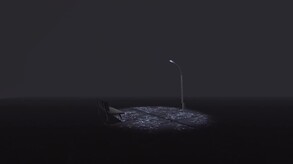
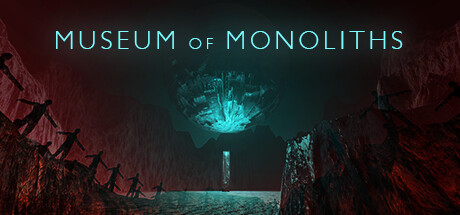
A slow burn walking sim with an interactive soundtrack and horror vibes. You explore abstract locations and create your own unique sound for each of them by moving around and using Monoliths.
Modeled estimate, not a reported figure. How we estimate →
Discounts
Every price cut of more than 20% we have observed, in each market that quoted one, with this game's chart position on either side of it. These are episodes, not a model: a sale is one event, and one event cannot tell you what the next one will do.
Reviews, worldwide (the counter carries no country): 0/day in the week to Aug 17 → 0.86/day in the week after.
For scale, across Steam · Top Sellers · Brazil over the last 30 days: the 26 chart moves that followed a price cut of more than 20% went a median of 7 places towards #1, and the 2,400 moves with no price cut behind them went 2 away. One store, one chart, one country — it is the only place we have enough observations to say even that.
Prices outside the United States have been collected since 6 August 2026 and chart positions since 19 July 2026, so a cut older than that has no market to compare and a market that joined later has no history yet. Nothing here is converted between currencies.
About
Genres
Engagement
Reviews
Themes across 54 recent reviews and how positive each mention is. A keyword signal, not full sentiment analysis.
Reviews
Філіп Гавкіт Люблюкрафт, у двадцятому столітті (або нам так здається) посилив у літературі, у дискурсі: поняття Жаского. Жахливого. Як прямий послідовник Алана Едгара П'ю. Інший медіум: важка електронна музика. Так звана, "темна музика". Третій, але точно не фінальний, бо суспільство (не) чекає на ШІ-революцію, Інтервенцію Бога-з-Машини, після ніцшеанської Смерти Бога -- третій етап -- відеоігри. Четвертий же контекст у Музеї Монолітів: ментальний криз трансцендентної людини. Викрикую лот п'ятдесятий: "І куди нам податися!?" / Чи залишається тільки йти... / *Дякую за вашу гру!
You walk from point A - B while being in very unusual, mysterious, eerie and fascinating locations. I wish there was abit more to it such as notes, texts, anything to cling onto to help you build an idea of what these locations are, how they are formed, what caused it to be like this etc. Anything to keep your mind full of questions while exploring these locations make them more interesting to speculate. It's about 1 hour long, 10 levels and it's a walking simulator with really interesting visuals which i always welcome.
Media

Related
Related
Price dynamics, follower growth, revenue and sales trajectories with interactive tooltips
This and every other Pro feature is free until October 20, 2026. A free account is all it takes.
Stats
All-time low is the lowest price we've recorded for this game since we started tracking it.
Languages: English, Ukrainian
Hours played at review time, across 54 reviews with recorded playtime.
positive critical· bar length = how often the theme comes up
Unique level design, visuals, and sounds make it worthwhile, but the overall experience would only benefit from a bit more interaction and direct storytelling.
I will be directly: as a game it sucks. And I would usually not recommend games on Steam, which are asking for money and are that short. But this work here isn't a game, it's a real artwork, which gives us an unpleasant feeling of our potential future. It's surroundings, surprises and the suiting background music choices are turning this "game" into an amazing experience, which is feeling like a dark prophecy emotion-wise. And yes, like some other reviewers complained there's no text at all here. But I think that works perfectly for this "museum", because those topics and the feelings alone are best spoken in an universal language: with vibes, our heart and visually. I can recommend this game to anyone, who wishes to "feel" the future. Enjoy your time-travel... PS: No achievements here.
Не люблю писать отзывы, но игра совершенно не понравилась. Тупо бегалка для непонятно чего, и зачем. Впервые запросил возврат средств. Никакого лора, ни единой записки. Хоть какой-то интерактив, кроме клацалки по какому-то камню. И все.... В общем, в топку
Museum of Monoliths is a compact and highly experimental first-person walking experience built around atmosphere, exploration, and reactive sound rather than conventional objectives. Developed by Podoba Interactive and published by Marevo Collective, it feels closer to wandering through a collection of interactive audiovisual installations than playing a traditional horror adventure. There is no elaborate combat system, inventory management, lengthy dialogue, or obvious progression structure. Instead, the experience depends on curiosity, environmental interpretation, and the unsettling sensation of being alone in places that seem deliberately designed to remain mysterious. The game is divided into ten abstract locations that are not directly connected to one another. Each functions almost like a separate exhibition room, complete with its own visual identity, atmosphere, and implied narrative. This structure works particularly well because the game never needs to justify how one environment connects geographically or logically with the next. Moving between them feels like progressing through a strange museum dedicated to impossible architecture, alien artifacts, dreams, and forgotten places. Some locations can appear peaceful at first, while others immediately create discomfort through darkness, unusual proportions, or imagery that suggests something significant happened there without explicitly revealing what it was. Its most distinctive feature is the interactive soundtrack. Sound does not merely accompany exploration; it responds to it. Moving through an environment can alter the audio composition, while interacting with the mysterious Monoliths can produce considerably larger musical changes. In some situations, the player's actions effectively determine which musical direction a location takes. This makes ordinary exploration more meaningful because walking toward a structure or investigating an unusual object can change not only what is visible but also what is heard. Slow drone music is particularly effective for this concept, gradually building an oppressive sonic presence without relying on conventional horror stingers. The absence of text is another important part of the design. There are no journals explaining what happened, no dialogue telling players how they should interpret a scene, and no extensive exposition establishing a definitive mythology. The environments themselves become the storytelling mechanism. Architecture, lighting, objects, sounds, and spatial composition provide enough suggestions for players to construct their own interpretations. This ambiguity gives the experience an almost dreamlike quality. It also means that anyone expecting a clearly explained plot with identifiable characters and a conventional conclusion may leave unsatisfied. The horror is similarly restrained. This is not primarily about fighting creatures or escaping constant pursuit. Its psychological tension comes from isolation, darkness, surreal environments, and the suspicion that something incomprehensible exists beyond what the player can immediately understand. The Lovecraftian influence is more noticeable through mood and scale than through obvious imitation. Strange structures and enormous spaces can make the player feel insignificant, while the evolving soundtrack reinforces the impression that the environment itself is reacting to their presence. Its short duration is both an advantage and a limitation. The complete experience is designed to last roughly an hour, so there is little opportunity for its central idea to become repetitive. Each of the ten locations can introduce a different atmosphere before the experience moves onward. At the same time, players looking for substantial mechanical depth or a lengthy adventure will naturally find the amount of content limited. Replay value mainly comes from revisiting locations, experimenting with Monolith interactions, and experiencing variations in their soundscapes rather than discovering a completely different campaign. Visually, the abstract presentation complements the minimalist gameplay. The environments do not need to resemble realistic locations because their purpose is primarily emotional. Unusual architecture, empty spaces, darkness, and surreal imagery establish an unsettling sense of place. The simplicity can occasionally make certain areas feel sparse, but that emptiness is frequently part of the appeal. Rather than filling every room with collectibles or explanatory details, the game gives its environments room to breathe, encouraging players to observe their surroundings without being constantly distracted by traditional objectives. The relationship between audio and movement ultimately provides the project with its strongest identity. Many walking simulators use music to establish mood, but here the player participates in shaping that music. The effect is subtle rather than mechanically complicated, yet it makes wandering feel more purposeful. Headphones are especially appropriate because small changes in ambience and drone become easier to notice, allowing the sound design to carry much of the psychological weight. Steam Deck compatibility deserves some caution. The Steam listing does not currently provide a clear official Steam Deck compatibility rating, and the available compatibility information I could verify does not establish confirmed Deck support for this specific title. Since the game is listed primarily for Windows, Steam Deck users would be relying on Proton rather than a native Deck version. Its straightforward first-person design suggests it may be a reasonable candidate for handheld experimentation, but it should be treated as unverified rather than guaranteed to work perfectly. Players specifically buying it for Steam Deck should therefore be prepared for possible configuration or compatibility issues. As an experimental indie project, this succeeds because it remains committed to one unusual concept instead of trying to imitate a conventional horror game. Its limited length, minimal mechanics, and intentionally vague storytelling will make it unsuitable for players seeking action, elaborate puzzles, or a clearly structured narrative. For those interested in surreal walking simulators, ambient drone music, psychological horror, and interactive art, however, it offers something genuinely distinctive. It turns movement into part of the soundtrack and makes each strange location feel like an audiovisual exhibit waiting to be interpreted. Its brevity and minimalist gameplay restrict its broader appeal, but the reactive sound design, surreal environments, oppressive atmosphere, and commitment to ambiguity create a memorable experimental journey that understands exactly what kind of experience it wants to deliver. Rating: 8/10
my dreams when i was 8
tl;dr A few points of interest, but not enough here to recommend. Museum of Monoliths tries to be like NaissanceE or Fugue in Void but it's not nearly as good as those other games. For the most part you are just walking through empty eastern European cityscapes or drab foothills with ruined buildings on top of them—not exactly compelling stuff. Every once in a while you come across a pair of monoliths that let you choose which ambient soundtrack you want to listen to while you walk; the soundtracks sound like low-rent György Ligeti but are nowhere near as memorable. The only interesting scene comes at the very end of the game and lasts about ten minutes. This section was clearly inspired by the stargate sequence in the movie 2001 and it does contain some intriguing visuals. I would like to play through this section again, but unfortunately the game does not have a chapter select menu. The only option is start a new game and I don't feel like slogging through the first 45 minutes again just to get back to that one good scene. One more thing: I have no idea why this game is tagged "horror" because there is nothing scary about it at all. I found it mostly boring outside of the last 10-15 minutes, and even then it is not scary, just a little weird. In summary, not terrible but not worth the asking price when much better games like NaissanceE or BABBDI are available for free. If you really want to try it, don't spend more than a dollar on it.
Cool little walking/atmospheric game with a musical element. The environments were interesting and a little creepy at times, especially with the rather atmospheric music that can be affected by your choices.
По-перше, це красіво. По-друге, це тривожно. По-третє - можна сказати, що це гра з трогання трави уві сні з температурою 37,2. Сподобалося. Рекомендую поціновувачам бед тріпів, в яких нема грошей на заборонені речовини, та є трошки на цю гру.
Selling now
See how fast this game is selling right now — estimated copies and revenue per day from recent review growth.
Players by region
Where this game's players are, estimated from review languages.
Players also reviewed
The games this title's players most often review too — audience affinity.
Related
| Game | Estimated lifetime revenue | Reviews | Review score | Price |
|---|---|---|---|---|
| $249K | 2.5K | 87% | $6.99 | |
| $2.4K | 31 | 81% | $3.99 | |
| $522 | 13 | 62% | $2.49 | |
| — | 0 | — | — | |
| — | 0 | — | — | |
| $9.2M | 27.7K | 88% | $19.99 |
Related
| Game | Estimated lifetime revenue | Reviews | Review score | Price |
|---|---|---|---|---|
| $5.1K | 74 | 47% | $4.99 | |
| $5.1K | 85 | 99% | $4.99 | |
| $5.1K | 56 | 82% | $4.99 | |
| $5.1K | 148 | 95% | $1.99 | |
| $5.1K | 65 | 86% | $3.99 | |
| $5.1K | 72 | 58% | $4.99 |