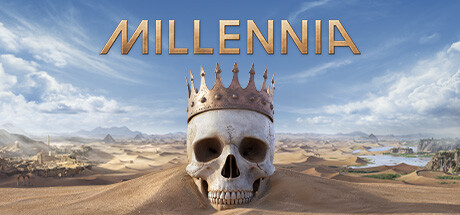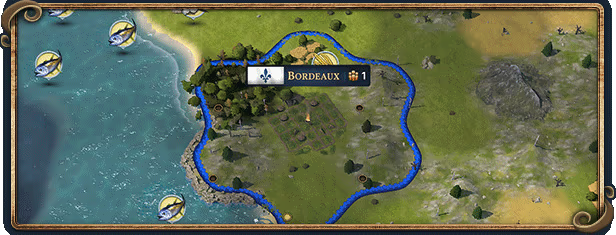
Create your own nation in Millennia, a historical turn-based 4X game that challenges your strategic prowess across 10,000 years of history, from the dawn of humanity to our possible futures.
Modeled estimate, not a reported figure. How we estimate →
Prices
Each in the currency that store quoted — not converted: the gap between two rows is the publisher's pricing, not an exchange rate.
Every market we collect.
Discounts
Every price cut of more than 20% we have observed, in each market that quoted one, with this game's chart position on either side of it. These are episodes, not a model: a sale is one event, and one event cannot tell you what the next one will do.
Reviews, worldwide (the counter carries no country): 0/day in the week to Sep 1 → 0.14/day in the week after.
About


Updates
Build ids and update times come straight from Steam's PICS — the same source SteamDB reads. Patch history grows as we record new builds.
Engagement
Reviews
Themes across 811 recent reviews and how positive each mention is. A keyword signal, not full sentiment analysis.
Reviews
It Is everything I like about civilization minus everything I don't like. The game does have some issues and gets repetitive, but the game is vary fun and I would recommend if you never played it
Had potential, but abandoned by the dev in a year. DO NOT BUY
Media

Related
Related
Price dynamics, follower growth, revenue and sales trajectories with interactive tooltips
This and every other Pro feature is free until October 20, 2026. A free account is all it takes.
Reviews, worldwide (the counter carries no country): 0.13/day in the week to Jul 21 → 0.2/day in the week after.
For scale, across Steam · Top Sellers · Brazil over the last 30 days: the 26 chart moves that followed a price cut of more than 20% went a median of 7 places towards #1, and the 2,402 moves with no price cut behind them went 2 away. One store, one chart, one country — it is the only place we have enough observations to say even that.
Prices outside the United States have been collected since 6 August 2026 and chart positions since 19 July 2026, so a cut older than that has no market to compare and a market that joined later has no history yet. Nothing here is converted between currencies.
Genres
Stats
All-time low is the lowest price we've recorded for this game since we started tracking it.
Languages: English, French, German, Spanish - Spain, Polish, Simplified Chinese, Russian
Hours played at review time, across 811 reviews with recorded playtime.
positive critical· bar length = how often the theme comes up
The game is abandonned
This game, so far as I can see deserves better, more thoughtful reviews. I admit I bounced off of it once due to some reason I can no longer recall. The UI is pretty good doing it's best to corral all the interflowing forces at work, from resources accumulated in domains, resources for culture, technology, resources of food, territory expansion, resources to build new expansions on your terrain versus new things within your cities/units. Overall within about 30 minutes I had it under control and understood all this. So you get cities, and units, and buildings in cities, and "buildings" outside of cities (resource harvesters and such), but the cool thing they did is there are Provinces that divide your nation, each with their own capital. So certain resources stay in side your individual regions unless you trade between them. There's also international trade. This is cool. The graphics are clean, with character, and readable! SOOOO much MORE readable than the crap I've had to face in, say AOW4... omfg. More readable than OldWorld, but OldWorld is a game that totally overcomes that failing , while AOW4 is just headache inducing. The graphics at highest level never bog down. They're, to me, above the threshold for serviceable but actually enjoyable and pleasant. They are NOT super realistic, but I do feel like there's a little world in there represented really well. And FPS is +++. The way battles play out is NOT cinematic. But they are very cool, to me because of this: Your armies and units serve as tactical expressions of your overall strategic level of playing. You set up what units will populate your armies, maybe add a leader to them, and then off they go to fight- but the deal is the TYPE of unit classes in your army tell you HOW they will fight in any battle. The actual Att/Def etc. of the unit tell you how well, but you've managed most of your tactics by how you made up your army (3-7 units depending on where you are in history). If you loaded it with archers, for example, your ENTIRE army is going to get to go first if they meet with no other support units, but pick out targets at random. Then the enemy gets to respond.... interesting. Your line units pick targets at random but MUST pick off other line units before they get to go for the support units, so they protect their own support units by sacrificing themselves, in a way.... and then the cavalry units go. They too have to pick off line units first, but... they ALWAYS pick the weakest dude... like poking a hole through the line. There's more too depending on other resources, but that is a very cool underlying system to combat. Clean, tactical without busying me too much and allows me to stay strategic without jsut throwing everyone at everyone. A "superior" army can get wiped out by careful tactics. Also terrain matters, so yeah. Plus the generals can get up to +50% attributes if they meet another army later game that has no general... Goo , simple system with portents that mean you better use it to your advantage. The ages and spirit of your nation ideas are cool and well executed. First person to the next age gets to decide what TYPE of age it will be (if they fulfilled certain criteria), and pick out their next spirit with a special bonus. All the others follow into the next age and can pick any spirit, but if it's already picked you don't get the special bonus. Your government type is another level of what sort of society you have, separate from your Spirit. The economy model is very cool- you decide what sort of basic resources and advantages each resource gets turned in to and this shapes your strategy as you go and decides what type of civilization you have. Overall this game is well thought out, well executed (at this point with patches, I didn't play it when it first released- I bounced off of that). I hope the AI can sort of play it against me in a good way, as that is about the only thing I would be concerned about- but this concern goers for every strat game, unfortunately. Well, maybe OldWorld hasn't let me down yet.
Пройдя где-то 2-3 партии разной длины, хочется сказать, что в Millennia действительно весело играть. -она не сильно затянутая, что весьма удивительно для игр такого жанра -механика альтернативных эпох со своими уникальными правилами, зданиями и юнитами делает игру более разнообразной и не такой прямолинейной -система улучшений клеток позволяет создавать на территории страны целые промышленные цепочки, влияющие на её развитие,в том числе и новые уникальные и дефицитные ресурсы из альтернативных эпох, которые больше никак не встретить (как эфир или инопланетные технологии). Конечно, наверное самой слабой стороной игры можно назвать графику (в особенности весьма странную визуализацию боёв (но это как по мне сделано настолько плохо, что просто восхитительно), но она всё же не настолько плоха, где-то на уровне пятой цивы, что может немного устаревшая планка но в любом случае за последнее десятилетие графика в стратегиях не особо-то улетела в стратосферу по качеству. В общем, я был приятно удивлен, и надеюсь, что игра будет дальше развиваться и всё же получит свою заслуженную аудиторию.
Millenia is a Civilization-style 4X game with a ton of great ideas and mechanical depth that more than overcomes its limited production values. It does expansive city building better than Civ6 and era-specific civilizations better than Humankind. The rest of this review is gonna get kind of in depth about the mechanical things that make Millenia special. If you haven’t played a 4X game before, I think Civilization 5 is a better starting point. So the first really smart thing Millenia does involves trade goods. When you build a farm on some rice, you don’t just get +3 food, you get a “Rice” good which can be consumed directly for food or can be consumed on a “Mill” tile to bake flour or a “Winery” tile to make wine, each of which give different benefits. There’s a lot of variety to the resources and the kinds of benefits they give, and developing the production chains of your cities is much more rewarding than other 4X games. It also ties neatly into the other aspects of the game, as new technologies or national spirits allow for different improvements. Speaking of National Spirits, they’re kind of like the Millenia equivalent of the “Play a different civilization every age” idea that was pioneered in Humankind. This solves the problem of “I like playing America, but they don’t get any special units until the Minutemen in the 1700s and the game is already 80% over”. Unfortunately, I found Humankind’s implementation of this idea muddled by a mix of temporary and permanent benefits and an esoteric concept of victory points. Millenia has a much simpler approach, “You get these benefits forever, but you might not want to send crusaders against tanks.” In my experience, National Spirits have also been very different and very strong. In one game, I started with the “Wild Hunters” which revealed the “Elephants” resource, providing me with a plethora of meat and ivory goods that I benefited from for the rest of the game. Nations without this national spirit simply wouldn’t see this resource. On another run, I selected the Crusader spirit, which unlocked units that had a ridiculous 2x strength modifier when fighting against nations with a different religion and a big culture bonus for conquering another religion’s birthplace. Getting a huge swing like this every couple ages is a lot of fun and helps keep the game fresh over multiple playthroughs. The last thing I want to gush about is the unique concept of variant ages. Basically, if the player in the technological lead meets certain criteria, they can trigger a sort of alternate timeline for history which tweaks the rules and technologies for that age. As an example, I accidentally triggered an “Age of Plague” during my first playthrough by neglecting sanitation in my cities. This killed a third of EVERY nations’ people and resulted in an era where every nation had to devote resources to building plague doctors and containing outbreaks. Later that game, a fascination with air balloons led the world into an “Age of Aether”, where a fantastic new energy resource from high in the clouds spurred a steampunk revolution. You always get the same general tools in variant ages, so the broad strokes of history remain the same, but unique twists give a lot of mechanical depth as well as some great narrative flavor. I also want to say that this game does the “inverted pyramid of complexity” very well. You start with a single city and a small set of mechanics that then gets varied and complex as you progress through the game. There’s a lot more systems and details I’m not expounding on, but they were mostly intuitive and presented at a manageable pace so I never felt overwhelmed. The Bad? In terms of negatives, the only one I can think of is that the production value is decidedly AA. Everything works well, but some things can feel… unimpressive. Combat in particular is mostly ugly models doing jank animations. It works to convery what’s happening, but looks bad. There’s also no enemy leaders, so you don’t get the same personal vendettas you would get in something like Civilization. I don’t remember much of the music, which I think means it was fine, but probably not going to win a Grammy like Civ5’s Baba Yetu. Regardless of the limitations of the game’s budget, there’s so much great design work here, and it pays off in explosions of creativity and excitement. I enthusiastically recommend it to any fans of the 4X genre and especially civilization fans who want to see familiar ideas remixed in new ways.
Got through to modern times and I ended up getting bored. Its a good game but I think its unpolished, Pros: - Good economy progression and mechanics, I like the concept of gather, create for specific buildings and you have to manage your resources per region - focus on outposts reminds me of civ 3 with the colonies. - less cartoon-y feel unlike civ 6 - easier to get into then humankind - alternate history, like age of aether was fun Cons: - warfare turn based automatic pop up, i end up skipping it every time and would rather have something more manual, like choosing the specific units to focus on or displaying an automatic battle in a faster way - ages are for the entire world instead of for specific civilizations, would like it if one civilization was in an age of plague and ended up bleeding their sickness to the neighboring regions instead of everyone being forced into the same age. - random events that don't really do much except get you to pay money to make them go away. - graphics are dated and probably could be a little more polished. - almost all 4x games do this but a lack of military strategy, I wish that you could have more options for units to defend themselves based on unit type, like archers having a feign retreat or making trenches in the modern era that end up messing with the tiles that are placed there. - military units are pretty basic in terms of attack and defense, - events for atomic bomb or space exploration, wonder events should be more spread out through the ages.
Not really... exciting to play, for either casual or experienced 4X players. Seems to have tried too hard to appeal to both crowds and suffered from it
This game didn't even last two years before the updates stopped, dead game. Don't bother with it. Stopped playing a couple days in after finding out you could revert your movement, this is a very bad mechanic that rewards you for making mistakes in a strategy game.
Very beautiful comeback. It was terrible on early access but now definitely better than Civ. This game should honestly have a lot lot lot more votes.
Active players
Estimated daily and monthly active players (DAU/MAU) modeled from peak concurrency.
Players by region
Where this game's players are, estimated from review languages.
Players also reviewed
The games this title's players most often review too — audience affinity.
Related
| Game | Estimated lifetime revenue | Reviews | Review score | Price |
|---|---|---|---|---|
| $7.4M | 6.9K | 83% | $39.99 | |
| $121.8M | 62K | 47% | $69.99 | |
| $14.5M | 9.9K | 80% | $19.99 | |
| $216.2M | 137.4K | 88% | $49.99 | |
| $5.4M | 3.1K | 84% | $24.99 | |
| $1.3M | 4.2K | 85% | $15.99 |
Related
| Game | Estimated lifetime revenue | Reviews | Review score | Price |
|---|---|---|---|---|
| $4.8M | 5.7K | 76% | $29.99 | |
| $4.8M | 9.2K | 63% | $21.99 | |
| $4.8M | 3K | 75% | $39.99 | |
| $4.8M | 3.5K | 76% | $49.99 | |
| $4.8M | 102.5K | 85% | $2.49 | |
| $4.8M | 26.1K | 98% | $12.99 |