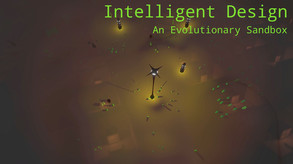
Polygons eating polygons eating polygons. An evolution sandbox where the genetics really are simulated. Seed a world, walk away, and come back to species neither of us designed. Watch populations boom, bust and go extinct. Best left on a second monitor.
Modeled estimate, not a reported figure. How we estimate →
Discounts
Every price cut of more than 20% we have observed, in each market that quoted one, with this game's chart position on either side of it. These are episodes, not a model: a sale is one event, and one event cannot tell you what the next one will do.
Reviews, worldwide (the counter carries no country): 0/day in the week to Sep 1 → 0/day in the week after.
Reviews, worldwide (the counter carries no country): 0/day in the week to Jul 21 → 0/day in the week after.
For scale, across Steam · Top Sellers · Brazil over the last 30 days: the 26 chart moves that followed a price cut of more than 20% went a median of 7 places towards #1, and the 2,400 moves with no price cut behind them went 2 away. One store, one chart, one country — it is the only place we have enough observations to say even that.
Prices outside the United States have been collected since 6 August 2026 and chart positions since 19 July 2026, so a cut older than that has no market to compare and a market that joined later has no history yet. Nothing here is converted between currencies.
About
In a universe driven by targets, a faceless corporation has employed you to create an evolving ecosystem you will never control.
Intelligent Design: An Evolutionary Sandbox is a god game with fully simulated genetics and evolution. Create species of plants, herbivores and carnivores, release them into a world, and then find out what evolution does with them.
Every organism's behaviour comes out of its genes. How tall will a plant grow? How fast can a herbivore run? How often does a carnivore go looking for prey? Those genes pass down generation after generation with random mutations, and there is nothing underneath them but the simulation. No tricks, no statistical approximations, no scripted events waiting to fire. Leave a world running long enough and species will speciate, boom, crash and go extinct without you touching anything
This is a slow simulation. Populations take generations to change. Your role is to seed a world, change something small, and come back later and see what happened. One of our players leaves it open on a second monitor during work, I leave it on my TV while I’m cooking. If you’re looking for objectives, scores and explosions this is not that kind of game (but we do make those).
You can engineer the genetics of organisms directly, but you should do that carefully, because once a genome is loose in your ecosystem it is very hard to control. And do you even know what those genes do? Getting a food chain to balance is satisfying. Watching that same food chain collapse in 2 minutes because you made the equivalent of a spelling mistake is, we’d argue, even more satisfying.
This is for you if: you have heard of SimLife, SimEarth, Creatures or Framsticks; you find a population graph more interesting than a quest marker; you are happy leaving a simulation running while you do something else.
This is probably not for you if: you want goals, a story or a win screen; you want something to happen in the first ten minutes; you want the game to tell you what its numbers mean. One of our own players put it in capitals “THIS IS NOT A QUICK GAME DON'T EXPECT STUFF TO HAPPEN FAST” a positive review)
Pill Bug Interactive is two people in Wales, Sean and Dave. We have been making games about systems that misbehave when you leave them alone for the best part of a decade, and we were nominated for a BAFTA Cymru along the way.
Engagement
Reviews
Themes across 40 recent reviews and how positive each mention is. A keyword signal, not full sentiment analysis.
Reviews
Jeux sympa.
Not my cup of tea. Couldn't get any ecosystem with animals going.
Wish I could refund.
Media

Related
Related
Price dynamics, follower growth, revenue and sales trajectories with interactive tooltips
This and every other Pro feature is free until October 20, 2026. A free account is all it takes.
Genres
Stats
All-time low is the lowest price we've recorded for this game since we started tracking it.
Languages: English**languages with full audio support
Hours played at review time, across 40 reviews with recorded playtime.
positive critical· bar length = how often the theme comes up
(game not complete at .5 hours of gameplay part of my review all my games effort) (short version) You can learn everything about this game in about 30 minutes or less. A good concept that really doesn't work, more of a watch number go up game. At $7 I'd say don't buy it until it's on sale, even then it's honestly just a "watch number go up" there are better free to play games like this like cookie clicker. Truly a grain of sand in the desert of gaming. (no long version needed)
Personally, I find this game confusing, which leads to me being bored due to a lack of understanding of what is going on. I know that a lot of time went into the game, but while it is probably good at showing evolution genetically, it does not do a good job of showing it physically. First off, the plants. Cylinders that grow. I've seen green, dark green, and blue with a hint of green. They spread seeds/spores (sometimes it looks more like spores) that either grow into a plant or disappear for eternity. Sometimes they disappear and you don't know if it's because they died due to old age or a herbivore ate the plant. Speaking of herbivores, they are basically oval-ish things that slide across the ground. I've noticed them either running in circles with one another, seeming to migrate, or pushing themselves against a plant (which I can only assume is them eating). For some reason I mainly find them in an area of the map that I did not put plants in, and they usually die off when my plants are still chilling at the same numbers they were at (or higher) when I added the herbivores. Carnivores, however, I haven't really played with. I was too bored and too annoyed at my herbivores for dying for seemingly no reason (it's not my fault they decided to migrate AWAY from the food). What I've seen is that they look the same as herbivores, just different colors. With what I have read, I would say that the developer just took the code for herbivores and modified it slightly to make it into a carnivore, but I don't know enough about code to know what would need to be changed to go from carnivore to herbivore and vice versa. Now, game-play. The controls are all done with your mouse, and are very annoying. To click a button, you use the left mouse button, which I am fine with. What I dislike is that I have to hold down the mouse wheel in order to move the camera around, you have to right-click to place stuff (which is annoying when you are used to right-clicking and holding to move the camera around), and you use the shift and "Ctrl" buttons on the left side of your keyboard to go up and down. I know that this game is complicated in what it does, and I know that a lot of effort was put into the game, but it doesn't feel like it should cost money due to how it is visually. I am glad I got it when it was on a promotion discount so I only had to pay $0.76, but I was still expecting more due to how the description presented the game.
A little bit of fun but ultimately I think it lacks replayability for any but the most hardcore players. A lot of the sliders feel like they had little effect ont he prosperity of the plant based on what random plants actually succeeded (with the exception of the efficiency sliders that always ended up as close to perfect efficiency).
Intelligent Design: An Evolutionary Sandbox, developed and published by Pill Bug Interactive, is a deeply simulation-focused title that challenges conventional ideas of what a “game” should be. Rather than offering a structured campaign, competitive modes, or clearly defined win conditions, it presents players with a living digital ecosystem governed by genetic inheritance, mutation, and natural selection. The experience places you in the role of a designer-scientist tasked with shaping and observing life within a contained world, functioning more as an experimental laboratory than a traditional entertainment product. At the core of the game lies a fully modeled genetic system that governs every organism within the environment. Creatures are not defined by preset templates but by genomes that dictate their traits—speed, size, energy consumption, reproduction rate, and more. These traits are passed down through generations, occasionally altered by mutation, resulting in evolutionary paths that emerge organically over time. Watching a population adapt to environmental pressures, thrive under favorable conditions, or collapse due to poor design decisions forms the central loop of the experience. It is less about active moment-to-moment control and more about long-term observation and strategic intervention. Players influence this ecosystem primarily by designing and modifying organisms before introducing them into the world. Genetic editing allows for detailed customization, encouraging experimentation with different trait combinations. A faster species may dominate initially, but it could also exhaust resources too quickly. A larger predator may prove powerful but struggle to sustain its energy demands. The simulation’s complexity means that outcomes are rarely predictable, and even minor genetic adjustments can ripple across generations in unexpected ways. This unpredictability is both the game’s most compelling feature and its greatest challenge, as players must accept that once life is introduced, it evolves beyond direct control. The sandbox structure reinforces the emphasis on experimentation. There are suggested goals and metrics to observe, such as world efficiency and population stability, but they are not presented as rigid objectives. Instead, players are encouraged to ask their own questions: What happens if herbivores evolve extreme speed? Can a balanced ecosystem exist without predators? How resilient is a genetically engineered super-species? The game rewards curiosity and patience, inviting players to treat the environment as a living research project rather than a challenge to conquer. Visually, Intelligent Design adopts a minimalist aesthetic. Landscapes and organisms are rendered in a functional style that prioritizes clarity over spectacle. This simplicity reinforces the simulation’s scientific tone, though it may feel sparse to players accustomed to visually rich sandbox titles. The interface, while comprehensive, can initially appear dense and unintuitive. Much of the experience involves reading data, analyzing genetic traits, and interpreting population statistics. For players comfortable with analytical tools, this depth adds authenticity. For others, it may create a barrier to entry. The pacing is deliberate and often slow. Evolution unfolds across simulated generations, meaning that meaningful changes may take time to manifest. The game does not rush progress or artificially accelerate results for dramatic effect. This measured tempo enhances realism but requires patience and sustained engagement. It is a title that benefits from observation and reflection rather than rapid interaction, making it particularly suited to players who enjoy systems-driven gameplay and long-term strategy. Community reception reflects this specialized appeal. Players fascinated by biology, emergent systems, and complex simulations often praise the game’s ambition and authenticity. They highlight the satisfaction of witnessing unpredictable evolutionary outcomes and appreciate the freedom to experiment without rigid constraints. Conversely, some players find the interface cumbersome and the lack of traditional gameplay elements limiting. The absence of structured narrative progression or immediate rewards can make the experience feel more like a digital experiment than a conventional game. Ultimately, Intelligent Design: An Evolutionary Sandbox occupies a unique niche within the simulation genre. It is less concerned with entertainment spectacle and more focused on modeling dynamic systems of life and adaptation. Its strength lies in its commitment to authentic genetic simulation and emergent behavior, offering a playground for experimentation that few games attempt. While its complexity and slow pacing may not appeal to every player, those drawn to scientific curiosity and systemic depth will find it a fascinating environment in which to observe, design, and reflect on the mechanics of evolution itself. Rating: 5/10
cool game
Absolutely godly concept. Unfortunately as of now, terribly executed. As other reviews have stated, the game is unpolished (to put it generously), and the UI is atrocious. The ambiance is a little unsettling, though given the finish of the game it's hard to say if this is intentional or not. The mechanics are fairly well researched though are not intuitive to the average player in the slightest. Did I mention the UI? A terrible neon green that consumes 90% of the screen. Also, pop-up text on the structures is backwards, and I cannot for the life of me figure out how to rotate the camera. I also could not find the "exit" option in game but that may just be on me. The authors of this game certainly have a vision though, and I'd love to see this game reach its full potential. This niche of games is chronically unexplored, unfortunately. If this game were to build on the eerie god game undertone as well as user mechanics I can see this being a thoroughly enjoyable game.
First off, the tutorial sucks and doesn't walk you through things. Next its ugly. Thirdly it get old, like, really fast. Theres not much fun to be had and you just look at blobs of black, green, blue, etc. I know I only played it for a short time, but it wasn't even entertaining to watch while you did nothing for 10 mins.
Selling now
See how fast this game is selling right now — estimated copies and revenue per day from recent review growth.
Players by region
Where this game's players are, estimated from review languages.
Related
| Game | Estimated lifetime revenue | Reviews | Review score | Price |
|---|---|---|---|---|
| $539.2K | 600 | 77% | $19.99 | |
| $426.7K | 938 | 94% | $11.99 | |
| $2M | 2.3K | 94% | $24.99 | |
| $151.2K | 829 | 66% | $6.24 | |
| $592.2K | 2.2K | 94% | $6.99 | |
| $48.8K | 65 | 82% | $12.59 |
Related
| Game | Estimated lifetime revenue | Reviews | Review score | Price |
|---|---|---|---|---|
| $33K | 172 | 98% | $9.99 | |
| $33K | 96 | 97% | $14.99 | |
| $33K | 98 | 98% | $14.99 | |
| $33K | 206 | 80% | $8.99 | |
| $33K | 139 | 99% | $14.99 | |
| $33K | 55 | 73% | $19.99 |