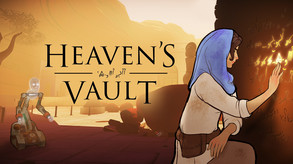
An archaeologist uncovers a lost history in an ancient space Nebula. Award-winning narrative adventure game with hieroglyphic language puzzles, from the creators of 80 DAYS.
Modeled estimate, not a reported figure. How we estimate →
Discounts
Every price cut of more than 20% we have observed, in each market that quoted one, with this game's chart position on either side of it. These are episodes, not a model: a sale is one event, and one event cannot tell you what the next one will do.
Reviews, worldwide (the counter carries no country): 0.43/day in the week to Aug 10 → 0.57/day in the week after.
For scale, across Steam · Top Sellers · Brazil over the last 30 days: the 25 chart moves that followed a price cut of more than 20% went a median of 10 places towards #1, and the 2,413 moves with no price cut behind them went 2 away. One store, one chart, one country — it is the only place we have enough observations to say even that.
Prices outside the United States have been collected since 6 August 2026 and chart positions since 19 July 2026, so a cut older than that has no market to compare and a market that joined later has no history yet. Nothing here is converted between currencies.
About
Sums Steam only; PlayStation, GOG publish no volume signal, so the true total is higher by an unknown amount.
| Store | Price | Audience | Score | Chart | Est. revenue |
|---|---|---|---|---|---|
SteamYou are here | $24.99 | 2.5Kreviews | 84% | — | $904.8K |
| $24.99 | 138ratings | 87% | — | not modelled | |
Engagement
Reviews
Themes across 68 recent reviews and how positive each mention is. A keyword signal, not full sentiment analysis.
Reviews
This games is so boring... The story is boring... The art is boring.. I had high hopes for this but unfortunately stopped playing it before the hour mark...
According to the achievements, only 27.9% of players completed this game. I think the other 72.1% died of boredom. The game seems to consist of tediously long journeys to find random artifacts to collect and attempt to translate the inscriptions on them. There is a story, but I couldn't really understand it. I think perhaps it needs to be played through several time to fully grasp it, but that's not going to happen for me. There's a lot of unvoiced dialogue to read too. It's a shame that this game turned out so poorly (in my opinion) as there's obviously been a lot of effort put into crafting it. I'd give it a 3/10.
Media

Related
Related
Price dynamics, follower growth, revenue and sales trajectories with interactive tooltips
This and every other Pro feature is free until October 20, 2026. A free account is all it takes.
Genres
Stats
All-time low is the lowest price we've recorded for this game since we started tracking it.
Languages: English**languages with full audio support
| $12.49−50% |
| 130ratings |
| 80% |
| — |
| not modelled |
Matched by title — a reused name can pair the wrong games. * is a critic aggregate. Prices and positions are each store's United States storefront; Epic charts worldwide. Audience and Score too, except Steam's, which is worldwide.
Hours played at review time, across 68 reviews with recorded playtime.
positive critical· bar length = how often the theme comes up
This game falls into that middle ground that I have trouble reviewing because it deserves something between a thumbs up and a thumbs down. I'm settling on the latter because, while I enjoyed the game, I don't know that I'd recommend it to others. [h2]What I liked[/h2] The central puzzle mechanic was fun. I liked finding new words and trying to decipher them. That's easily what drove me to finish the game. I liked building out the timeline of everything as I discovered it, though admittedly I didn't really go look at it too often. The mysteries you're working to solve are compelling, the world's well imagined, and while I get why some folks gripe about the dialogue options, I usually liked them. The art style was... fine. The whole after-image of your movement was cool, I guess. It's probably symbolic of something or plays into the theme in ways I didn't catch. [h2]What I didn't[/h2] The controls are terrible. You can only walk (or sail, also tedious). When you get to thresholds, it plays a little cutscene of you walking to the next place. Suppose you're trying to explore an area because apparently some artifacts require you to get right up on them and you accidentally hit that threshold. Now you're walking away with a little scene, then have to walk back with a little scene. Super tedious, and it led me to avoid scouring all corners of the map to find artifacts, which bums me out. You're compiling a vocabulary of an ancient language and an inventory of artifacts. Things you cannot do (or I couldn't figure out how to do): * see a list of all the items you have * see a list of discovered words (other than clicking through every single line of text discovered) * look at your discovered words in any useful way, e.g. all artifacts with X word on it, or all words containing Y glyph The game's "word lookup" mechanic is that when you're working out a phrase it'll show you 3 "related" words above your highlighted word. Often only 1 of them will seem relevant. Not infrequently, you might recall that you have a different, non-suggested related word you'd like to see and you're just out of luck there, bud. Click into the related word and you'll see the phrase it comes from, but not before playing a little cutscene, "Let me think to where else I saw that...." Again, tedious. Sailing felt so tacked on, dead time to have often pointless conversations. I didn't enjoy sailing but felt compelled to do it rather than engage autopilot, lest I miss a ruin on the route. Minor nit to pick, but the stakes felt pretty minimal. Every now and then a health/stamina bar pops up, but I'm pretty sure you face no consequences if it fully depletes (I had it happen once and it triggered the end of the scene, I suppose). Similarly, sometimes when sailing, you'll encounter rocks in the stream. Nothing happens if you crash into them. I don't know that I [i]want[/i] game over conditions in this game, though, so maybe this is an unfair criticism. [h2]Bottom line[/h2] The puzzle solving was fun. Navigating between the puzzles was pure tedium. I made it to New Game+ and am deliberating another playthrough to chase the achievements I missed (and decipher more words), so I definitely don't hate it. Still, do I [i]recommend[/i] this game? Can't say that I do.
I've only been playing it for a short while and already the UI and mechanics are incredibly nausating and off to me. I do like aspects of the mystery and the history. The main character Aliya has tons of personality to her and I love her but the robot Six seems to be slow to warm up to. Honestly I think It's a game better watched than played which is a pity because the game itself appears to be quite a slow burn and I'm already sick of the first world I went to and I was only there for like five minutes. I don't know how to describe it. Maybe I'll retract it if I play far more, maybe not.
I admit I'm angry right now. I already had to start over once. Then I got stuck, can't do anything. Tried everything I could think of but the camera is stuck, can't get anyone to talk to me, cant even get six to hopper us out. All of this because YOU CAN'T SAVE. Don't know if I have it in me to start over again. The really sad part is that I like the game. I enjoyed the search for passages. working out the meanings, and figuring out the past mystery. The flying could get annoying even letting the robot do it, it still went on too long. Maybe I'll give it another try but not for a while.
What drew me to Heaven’s Vault was the promise of working on language puzzles, but what kept me playing was my curiosity. In the vein of games like Outer Wilds or Tunic, the protagonist in Heaven’s Vault is the world, and the main objective is to string together a coherent narrative from fragmented and limited information. You control Aliya, an archaeologist, through point-and-click interactions in an open world. You can converse with other characters and the robot that follows you around. Mostly the robot, though. Examining artifacts often yields fragments of writing, transitioning the game to a close-up view of the glyphs, where you can play a minigame of assigning translations. Travel between locations happens via driving minigame, where you sail your spaceship through the cosmos. The sailing felt fiddly at first, but it made sense after sticking with it. Compared to Chants of Sennaar, the conlang puzzle in this game goes for depth rather than breadth. Unlike Sennaar, there aren’t that many giveaways for translations, and the confirmation is more sporadic. There’s not much going on linguistically, probably because it’s designed to be solvable without taking external notes. But there’s enough going on that it’s not trivial. And interacting with the world itself is sometimes a puzzle: like searching for places likely to have writing, or manipulating ancient machinery. It all contributes to the experience of solving a gripping mystery. It’s a good thing that the world is the main character of Heaven’s Vault, because the characters that get to have dialogue aren’t as well-written. Aliya’s actions are confusing and contradictory at times. Movement and travel is slow and repetitive, and I’ve found the slow walking speed to be insufferable multiple times. If you run into this, there do exist mods that’ll adjust the pacing to be less frustrating.
This game tries to be too many things at once, and then fails at all of them. It tries to be an explorer, platformer, point and click, language deduction all at the same time. The art style is really unique but the story is absolutely dull. The robot companion is awfully infuriating (I sold him at one point but apparently the game won't let me), and the mini game navigating to places should be made skippable which it is not; it is tedious, way too long, and not necessarily something that needs any skill but just a deary, and pointless thing between one destination to another . The random cuts,which takes away control from you, are sudden and too many. The translation part is actually fun but unfortunately that's like only 20% of the game.
Very unsure on this one yet, the movement controls are odd to me and I focus more on trying to figure out what key to press next than the story.
[h3]Heaven's Vault[/h3] [b]Heaven’s Vault[/b] (2019) caught my attention the moment it appeared on Steam. I’d already played another game by Inkle and loved the idea of deciphering an unknown language as the core of an adventure‑game. When the game was gifted to me, it jumped up my enormous Steam backlog, and I finally made time for it this summer. Mrs. Wongo and I played it together with me driving and her serving as the linguistics‑trained copilot. I’ll say upfront: Heaven’s Vault exceeded my expectations. I’d noticed Steam reviews trending more negative over the years, so I half‑expected disappointment. Instead, I found a creative story, complex dialog interactions, and a carefully designed narrative system that never devolves into manipulation or obvious branching tricks. It’s one of the rare choice‑driven games where the seams stay hidden. [h3]Graphics and Sound[/h3] [u]The art style[/u] immediately appealed to me. The game blends 3D environments with 2D foreground elements, creating a “motion comic” look that feels both deliberate and distinctive. The shading and color choices reinforce that aesthetic, and while it’s not entirely original, I can’t think of another game that looks or moves quite like Heaven’s Vault. The style perfectly suits the story of a patient, clever archaeologist unraveling mysteries across the Nebula. [u]The sound design[/u] is typical of a modern indie title, but the spoken dialog is sparse. Only Aliya, the main character, occasionally narrates; everything else is read silently. As a sound‑design choice, it’s a bit disappointing and likely budget‑driven. But the sheer volume of dialog is remarkable. I kept expecting repeated lines, mismatched responses, or the usual adventure‑game limitations — but Heaven’s Vault avoids nearly all of that. Its dialog system hides the puppeteer’s strings so effectively that you can talk to companions and NPCs as much or as little as you want without ever being reminded you’re “just playing a game.” It’s one of the most natural conversation systems I’ve ever seen. [h3]Gameplay[/h3] [u]Gameplay[/u] breaks into three major elements. First is the core exploration: walking through environments, finding artifacts, talking to NPCs, and chatting with your robot companion. It resembles a point‑and‑click adventure, but without the traditional “Get / Use / Look” verbs. Instead, you guide Aliya as she uncovers clues that lead to the next archaeological site in the Nebula — the game’s fictional sci‑fi world. Second is [u]travel[/u]. You pilot a ship that behaves like a wind‑bound sailing vessel, drifting along currents through the Nebula. Steering is simple and relaxing, and you can skip travel entirely if you prefer. While I personally found the sailing segments calming and atmospheric, they’re a divisive part of the game, with many players feeling the navigation slows the pacing or becomes repetitive. It’s also worth noting that not every location is available at all times, a design choice that some players find restrictive and which contributes to the broader debate about the game’s pacing. I enjoyed navigating the waterways, stopping to investigate artifacts scattered along the routes. Some Steam users report technical issues that prevent steering at all — a major source of negative reviews — but thankfully I had no such problems. Mrs. Wongo and I liked the gentle pace of exploration, especially because it fed into the third element: the [u]language puzzles[/u]. These puzzles show you phrases written in an unknown script. You drag and drop English words onto symbols, gradually learning which associations are correct. After seeing a word two or three times, the game confirms your guess. [u]This system was fascinating for us[/u]. The designers put just enough structure into the language to make deciphering fun without overwhelming the player. Early on, we speculated about symbols representing verbs, nouns, or adjectives, and slowly expanded our understanding until we could recognize new words and patterns with satisfying consistency. Occasionally the game throws advanced words at you, but never in a discouraging way. We spent hours reviewing unsolved inscriptions, learning the language together. It was a genuinely unique experience — one of my favorites of the year so far. [h3]Story[/h3] As the story unfolds, many mysteries remain unresolved. Choices shape Aliya’s relationships and the outcome of your specific narrative, but the game doesn’t expose multiple save files. No save‑scumming means you’ll need a full replay to see different branches. This can frustrate completionists, but it also gives weight to your decisions and deepens immersion. One of our favorite moments involved Aliya trapped in a cave filled with poison gas. We knew the game wouldn’t kill her — it’s not that kind of story — yet we were both gripped by the tension. Heaven’s Vault succeeds at making your choices feel meaningful and conveying genuine concern for the characters and the fate of the Nebula. [h3]Negatives[/h3] Some of the things I loved were also occasional drawbacks. The language puzzles, while brilliant, sometimes pulled us out of exploration and slowed down travel. And despite how much you learn, Aliya’s growing linguistic knowledge doesn’t seem to affect the story’s outcomes. That realization discouraged me from attempting a New Game+ playthrough; I’d want to see more of the narrative, but I’d also be drawn back into lengthy language puzzles that may not change anything. The lack of multiple save files adds to that hesitation. I also appreciated the world’s intentional opacity — no one in the game fully understands the Nebula’s history — but it left me unsure whether I uncovered the story the developers intended. After finishing, I watched videos and read spoilers that suggest the creators are perfectly happy with multiple interpretations and outcomes. Still, as with any interactive fiction, the freedom of choice means you might miss details that would enrich the experience. [h3]Overall[/h3] Evaluating my time with Heaven’s Vault, I’m hugely impressed. Its originality outweighs its flaws. The dialog system feels fresh, the story is unlike anything I’ve played, and the language puzzles are paced perfectly to keep you engaged. Inkle may not have reinvented the adventure genre entirely, but they certainly reframed what it can be. I’ll need more time to process where Heaven’s Vault ranks among my favorite games of all time, but for now, I’m giving it a [b]5 out of 5 that would make all the ancient gods proud[/b].
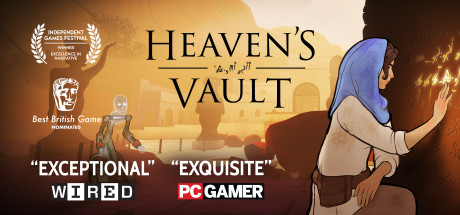
A few bugs, but beautiful and ambicious game overall.
Players by region
Where this game's players are, estimated from review languages.
Players also reviewed
The games this title's players most often review too — audience affinity.
Related
| Game | Estimated lifetime revenue | Reviews | Review score | Price |
|---|---|---|---|---|
| — | 130 | 80% | $12.49 | |
| $374.7K | 1.4K | 87% | $14.99 | |
| $145.3K | 612 | 82% | $14.99 | |
| $290 | 10 | 100% | $1.99 | |
| $2.7M | 11K | 98% | $17.99 | |
| $1.3M | 4.1K | 93% | $19.99 |
Related
| Game | Estimated lifetime revenue | Reviews | Review score | Price |
|---|---|---|---|---|
| $905K | 736 | 75% | $17.99 | |
| $903.8K | 2.5K | 98% | $14.99 | |
| $905.9K | 2.4K | 66% | $15.99 | |
| $906K | 2.9K | 79% | $9.99 | |
| $903.4K | 2.5K | 63% | $14.99 | |
| $903.4K | 2.9K | 88% | $14.99 |