
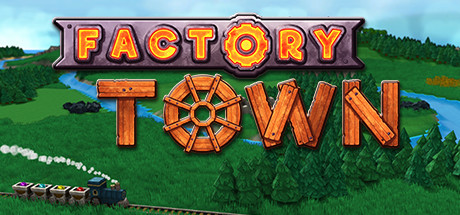
Build, automate, and optimize a giant factory on 3D terrain using conveyor belts, trains, chutes, pipes, and airships. Sell your goods to nearby villages to expand their borders, increase happiness, and unlock even better technology!
Modeled estimate, not a reported figure. How we estimate →
Prices
The United States storefront in every case, so this compares stores and not countries.
Prices
Each in the currency that store quoted — not converted: the gap between two rows is the publisher's pricing, not an exchange rate.
Every market we collect.
Discounts
Every price cut of more than 20% we have observed, in each market that quoted one, with this game's chart position on either side of it. These are episodes, not a model: a sale is one event, and one event cannot tell you what the next one will do.
For scale, across Steam · Top Sellers · Brazil over the last 30 days: the 26 chart moves that followed a price cut of more than 20% went a median of 7 places towards #1, and the 2,400 moves with no price cut behind them went 2 away. One store, one chart, one country — it is the only place we have enough observations to say even that.
Prices outside the United States have been collected since 6 August 2026 and chart positions since 19 July 2026, so a cut older than that has no market to compare and a market that joined later has no history yet. Nothing here is converted between currencies.
About

Genres
Sums Steam only; GOG publishes no volume signal, so the true total is higher by an unknown amount.
| Store | Price | Audience | Score | Chart | Est. revenue |
|---|---|---|---|---|---|
SteamYou are here | $19.99 | 4.5Kreviews | 91% | — | $3.4M |
| $19.99 | 50ratings | 82% | — | not modelled |
Matched by title — a reused name can pair the wrong games. * is a critic aggregate. Prices and positions are each store's United States storefront; Epic charts worldwide. Audience and Score too, except Steam's, which is worldwide.
Updates
Build ids and update times come straight from Steam's PICS — the same source SteamDB reads. Patch history grows as we record new builds.
Engagement
Reviews
Themes across 809 recent reviews and how positive each mention is. A keyword signal, not full sentiment analysis.
Reviews
It has a nice premise, looks beautiful, and for what it's worth I think this is a good game that's worth buying on sale if you enjoy the automation genre. However, as someone who 100% completed this game and was, for that reason, forced to interact with it for perhaps longer than I should have, I have a lot of negative things to say about it. The game starts pretty simple, and the first few campaigns are fun. You learn the basics and quickly set up some production lines. The fact that you are directly selling stuff to your villages is very satisfying, even though it's basically just throwing your items into a void and getting coins for it. But it's already easy to notice some cracks: the GUI is terrible and very inconsistent, and the controls aren't much better. At this stage, it honestly doesn't matter that much since each of your production lines will consist mostly of one building for each item crafted, which is enough. As you move on to the next stages of the game, it starts to get a bit more annoying. The first big obstacle for me was the production of iron. One or two smelters just weren't enough, and once I had to place a lot of them, the lack of a properly working blueprint system and the limited throughput of the available transportation methods became really apparent. There's a setup that somewhat works and is usually enough for the rest of the game, so I didn't have to worry about scaling any further. But then the endgame comes, and what a mess it is. There are four elements, and each requires incredibly boring and tiresome extraction methods. The worst part is that the recipes are exactly the same for stuff like research books and crystals, so every time I was done with one, I then had to do the same thing three more times using the bad GUI and controls, which became a pain. Copy-pasting production lines is close to impossible, and having to go through this process multiple times for each campaign (I played campaigns for achievements) really drained the life out of me. This game has many issues that make the endgame bad, and many mechanics are basically useless. For instance, trains and other endgame transportation methods are rarely worth using since belts and pipes are almost always the better choice. Any city-building fun that might have existed at the beginning just becomes about getting as many houses as possible so you can unlock more workers and hopefully have enough to not have to wait an hour for the current objective to complete. Overall, this ruined my experience with the game, and I'm glad it's over so I never have to touch it again. I'm still going to recommend it, because, as I mentioned before, unless you are looking to 100% complete it, you can stop whenever you like, and until that point, it will be a fun journey.
Media

Related
Related
Price dynamics, follower growth, revenue and sales trajectories with interactive tooltips
This and every other Pro feature is free until October 20, 2026. A free account is all it takes.
Stats
All-time low is the lowest price we've recorded for this game since we started tracking it.
Languages: English, French, Spanish - Spain, Simplified Chinese, German, Portuguese - Portugal, Russian, Traditional Chinese, Japanese, Portuguese - Brazil
Hours played at review time, across 811 reviews with recorded playtime.
positive critical· bar length = how often the theme comes up
There's something so satisfying about watching your townsfolk run back and forth and back and forth and back and forth and back and forth and back and forth and back and forth and back and forth and back and forth and back and forth and back and forth and back and forth and back and forth and back and forth and back and forth and back and forth and back and forth and
It definitely has the one-more-turn effect but like most conveyor belt simulator games it gets too close to my day job by end game. I never finished any of these type of games. 1. It has "humans" but they are easily replaced by conveyors quite early in game and then they are objectively better 2. Trains are lackluster and just investing in conveyors is better for short, medium and long term 3. Chutes are an unique idea and I loved it. Its like a cheap gravity powered conveyor that you can get in early game but remains viable throughout. 4. The support mechanic is similar to minecraft. You don't need pillars. So, that makes boats obsolete too as you can just build a floating conveyor over the water which is waaaay more efficient in short, medium and long term. 5. The campaign forces you to build things you don't really need. 6. Building upgrade is inspired by Anno series. Its like if Anno and Factorio had a lowpoly child.
Die erste Zeit ist das Spiel ganz nett. Aber die "Logik"-Verknüpfungen sind eine Katastrophe. Eine einfache Abfrage einer Bestandshöhe und eine daraus resultierende Aktion (z.B. ab einem Lagerbestand von 80 eines bestimmten Produkts soll ein alternativer Transportweg genutzt werden bzw. das Produkt für eine andere Produktion genutzt werden) ...ist mir nicht gelungen. Der Maßstab ist halt factorio. Dort waren alle möglichen Abfragen eher einfach abzubilden. Für factory town gilt: gewollt ist noch lange nicht gekonnt. Daher keine Kaufempfehlung, da der Frustfaktor aufgrund der nicht ausgereiften Logikverküpfungen zu hoch ist.
fun game. production feels more simple compared to factorio, but the 3D grid adds extra complexety to designing your conveyer belts etc. i feel like there is no way to "fail" in this game. while it is nice if you want to just chill and build some towns and villages, but it gives no real challenge (compared to PvP or people's needs in anno or external threats in factorio)
Pure production line micromanagement fun! Cheerful and simple graphics make everything easy to recognise while you stretch miles of conveyors, train track & mine cart runs. No 'tower defence' or forced timers makes this such a relaxing game that allows you to play at your own pace. The logic system can be a little tricky to understand but once you grasp the basics, micromanagement can range from controlling a single unit to 100's of materials. Even each pawn has to be placed manually and given routes. A true gem of a factory game that deserves a lot more recognition in the genre.
A relaxed Factorio-like/builder played on a 3D landscape with complex supply chains and charming music. There's three main 'systems' going on in Factory town: your towns/houses, which require deliveries of food and goods to both increase their happiness and pay out various currencies; research, which initially just involves delivering paper and books to schools, but quickly grows to involve combing books with other goods at a laboratory or magic tower to make specialized books that focus on a single subject or element; and mana, which involves mining crystals, refining them, then using the magical power inside them to create items, resulting in a depleted crystal that can be recharged and reused. Various tips worth mentioning as I made my way through the game's 8 campaign levels: * Wooden scaffolding can be affixed directly to the sides of buildings, and can take goods from (or have them delivered to) up to two blocks up. Not coincidentally, caravans require a two block ceiling to pass under something, so you can run belts directly from one building to another over your streets without blocking the traffic below. * Items in barns can be used directly by the player in building, so there's no need to ship things like belts, train tracks, stone, or fertilizer all the way over to the town square. * Hitting 'G' will take you to the underground layer(s). Pipes can be placed directly on this level, effortlessly connecting buildings. Extremely useful for connecting wells to farms and pastures without having ugly tubes running all over the map. As an added benefit, each type of pipe has its own layer, so you can stack different pipes without worrying about cross-contamination. * All buildings/roads/etc. are refunded 100% when removed, so don't hesitate to remodel/rework systems. The only real negatives I can think of are that, for a game that actively encourages vertical expansion, it can be very annoying or even impossible to click on or see what's going on in the lower levels of your town; and that some of the campaign goals feel a little excessive. For instance, the final level requires 400 blue star currency. Each 100 points of that currency requires 100-400 of four randomly picked, high-level goods, and - even when you have the goods available - takes a while to process. The requirement could have been reduced to 200 currency without cheapening my feeling of accomplishment. Overall, a neat little game - I enjoyed it enough to 100% the achievements.
見た目はシンプルに過ぎますが工業系としての基本は押さえてます 工業系・自動化・資源管理が好きな人にお勧め すごい長文になったので気になったところだけピックアップします。 【良い点】 ・立体的な工場が作れる ・機関車や船や飛行船などの乗り物がある ・細かいフィルタリングができたり、一通りの回路はあるのでプログラミングのごとく回路が組める たとえば、クロック回路を使って生産スピード(アイテム流量)を調査する回路を組むことも出来る(逆に言うと生産スピードが明示されてない?) ・スペースワープみたいなものがゲーム内で作れる 【どちらでもない】 ・移動ユニットに当たり判定があって渋滞が起きる ・住人に満足度しかない(飢えない・のど乾かない・老いない) ・稼いだコイン4種で自生してない植物を植えたり生産速度加速に使えたりします ・液体・蒸気・マナがある ・敵がいない ・良くも悪くも景観が工場にしか見えない街になりがち 【悪い点】 ・操作性はいまいちあと一歩(普通に操作可能ではある。快適性がもう一声欲しい) ・段差のせいで接続が上手くいかず手動で高さ調節が面倒(自動で足場が追加されない場合がある) ・ユニット一覧や収支情報ウィンドウなどが見づらくて管理しにくい ・最高効率的なライン構築がしにくい。大雑把に、足りなくなったら増産みたいな感じになりがち ・立体構造を構築したいのに画面の角度変更に制限があったりして見難い ・回路に関して少しプログラミングの知識が無いと厳しい面がある 総評として、操作性に少し不満はあるものの普通に遊べる自動化工業系ゲームです 効率を求めずに見た目が楽しい工場街を作ってます 中毒性は無いですが、完成したときの物流を眺めているだけで楽しいのでおすすめ
Nice Game with easy to understand mechanics. I like to compare it with Factorio as mother of automation genre. It has more types of transportation and the pathfinding ist sometimes stupid (if it comes to concurring routes). Therefor it is more complex to establish well functioning setups. I've also not figured out how exactly the ratios are. So in my eyes it is more for gamer who like to react on shortages or outputstacking than for gamers who love to calculate exactly the ratios. On the other hand it is simpler to oversee because mega factories are not possible. It is about little village industries.
For the TL;DR version, it's Factorio without the main character or attacking armies, but in full 3d so you can have one conveyor go over the other without the workaround of having some underground tunnels (although you do still get a pipe/mine layer underground). You can even stack buildings on top of buildings, although it looks silly. There's some very, VERY light town management elements, but it's severely underwhelming if you're looking for a city-building sim. This is a logistics automation game, not a city-builder. You can do some decorating if you want, but I hope you're into "sprawling conveyor belt spaghetti chic". Instead, there are houses that level up if you feed them. House level raises your worker cap, so it's kind of important, but if you're playing the game by making conveyor chains for everything, less so. Experience only goes up, but there is a "happiness" meter that fills up only temporarily as you supply needs like food, water, clothing, medicine, etc., with higher-order needs unlocking as house level progresses. Sadly, happiness doesn't really do much besides being a milestone you only need to achieve for a moment and hit the button to get the reward before it drops, to get a reward of... a higher house limit. There's an issue of your reward for sending workers to do jobs that fulfill needs like food is to get more workers you can send on more jobs to feed them, but none of that actually helps you achieve the goal. Workers can do anything in the game, even have complicated scripts of harvesting and delivering from multiple locations if you want, but because there's a worker cap in the game and workers are pretty slow, it's better to only use workers for harvesting and dropping raw materials onto a refiner or a chute that leads to a refiner. There is no day/night cycle, and workers never go home, so feel free to put all your houses on one island and then spawn workers on the far side of the moon with no path back, they'll work forever. Likewise, the game runs on that survival game physics-defying crafting logic where you can somehow mush a couple metal bars and a coconut together by hand at a "work bench" and get a working nuclear reactor. There is no power supply needed for the conveyor belts, and a sawmill built out of a few logs and some rocks can cut 2 logs per second into planks, but they have workers pulling infinite shifts to "power" it. Also, you can delete most buildings and get your resources for building them back (items on conveyors you mess with teleport to your town hall). You can even delete workers(!) and re"build" a new worker elsewhere(!), meaning that if you are doing this game in phases, it's entirely possible to deconstruct nearly everything and start your whole production line over from scratch, with only house levels not coming back immediately. Especially if you're trying to skimp on workers, just plain deleting the whole production chain for one product once you have enough of that thing is mercenary but an easy way to bypass a lot of the logistical snarls you might otherwise have late-game. Ultimately, the game is a big list of "make 50 of this thing so you can unlock the next thing so you can make 50 of them to unlock the next thing so you can unlock the thing you need to win the scenario." You might think it's a great idea to cram everything in tight early on to minimize supply lines, but a key strategy is remembering to leave yourself enough room to build all the other things you're going to build later on, as you start making products that require 4-5 raw materials, which will never [i]all[/i] be on the same side of the map, and will require around 20 building churning out all the intermediary products just for one product line. (Protip: as soon as you start a scenario, delete all the houses before they have any experience to lose, and rebuild the town with the houses in a single cluster away from any raw materials so houses don't fight for space with the factories. This also helps make sure you don't have difficulty having one school or store's access range reaches all your houses.) Inversely, many maps are designed with resources in the way of others, like trees blocking off access to a wheat field, and trying to destroy one to get to the other creates shortage problems, while trying to exploit both leads to cramped areas that require multi-level conveyor tricks to make supplies go over other buildings... There are 8 "scenario" levels with a pop-up box tutorial on the first level to guide you step-by-step through half a level, and they you're just tossed into the deep end to figure out the rest yourself. I'm fine as someone familiar with this kind of game, but someone less used to the genre may struggle. There is a "help" menu, which is woefully misnamed, because at best, you can reverse engineer the supply chain if you stick at it. (The system desperately needs to let you click to go to what the target object's help page says, and formulas that [i]consume[/i] the object to be listed so you can use the help menu to go [i]UP[/i] the supply chain, not just down.) Worse, the help menu simply has nothing to say about most objects besides what a building might produce or the sale value of an item. Minecarts, for example, have no introduction or description in the game AT ALL. I had to build one, only to find it didn't work. Apparently, after busting my butt to make the stupid things, it turns out they're slower than workers, they can only carry [i]specific raw materials only with no warning in the game they are limited and with no other mechanics acting like this[/i], and the hurdle of programming them is greater than just using more conveyor belts like I was already doing for everything else. It turns out that they're really meant for being driven by trains to make them go fast, but the game doesn't tell you that, it doesn't tell you anything but that you unlocked minecarts and minecart tracks [i]two whole scenarios[/i]/about 10 game hours before the steam engines that make them in any way useful. Then again, as mentioned, there's no combat. There's no time restraint. The workers don't even care if you don't feed them too much. (If you do, it involves assigning a worker to go pick food, deliver it to their own house, and then pay you a coin for telling them to forage food themselves. They have infinite coins to give, and without a REAL trade system to export things off the map (rather than a factory), the worker houses are kind of the sink to the economy to drain all the random consumer junk you produce.) It has bright, if simple graphics, and no real story. It can be relaxing... if you're not realizing that somewhere near ground floor there's a snarl in your conveyor traffic, and now you have to delete three floors of other conveyors just to get line of sight to the problem. If it weren't for how complex the logistics of the game can get, this would be a perfectly fine game for kids. Then again, I played games as a kid based on simplified wiring robots together, so maybe a certain subset of kids will love this sort of thing? That said, the lack of any real pressure can make replayability an issue. You just gain more stuff forever, and there's no reason to advance from the start again when much of how you're going to build is based off the map's win conditions and where the natural resources are located, so there isn't much sense that there's a reason to do anything differently. Of course, there [b]IS[/b] a Steam Workshop filled with level editor maps, so you can get more playtime that way. It's fairly cheap, it goes on sale, and it's definitely a niche type of game for those who like building [i]EFFICIENTLY[/i] whenever you have base-building in a game, so if you're that sort of person, this is just different enough from most of the other games in the genre that even if you don't stick with it long, you'll be satisfied enough you won't regret the purchase.
Active players
Estimated daily and monthly active players (DAU/MAU) modeled from peak concurrency.
Players by region
Where this game's players are, estimated from review languages.
Players also reviewed
The games this title's players most often review too — audience affinity.
Related
| Game | Estimated lifetime revenue | Reviews | Review score | Price |
|---|---|---|---|---|
| $13M | 11K | 90% | $34.99 | |
| $170.5K | 160 | 90% | $24.99 | |
| $1.6M | 2K | 80% | $24.99 | |
| $1.4M | 1.8K | 78% | $24.99 | |
| $1.4M | 1.3K | 85% | $29.99 | |
| $602.9K | 801 | 81% | $19.99 |
Related
| Game | Estimated lifetime revenue | Reviews | Review score | Price |
|---|---|---|---|---|
| $3.4M | 4.6K | 84% | $29.99 | |
| $3.4M | 17.8K | 49% | $7.99 | |
| $3.4M | 2.1K | 91% | $44.99 | |
| $3.4M | 43.8K | 88% | $3.99 | |
| $3.4M | 7.8K | 88% | $14.99 | |
| $3.4M | 8K | 90% | $19.99 |
