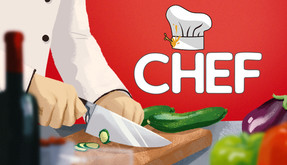
Chef is a Restaurant Management game in which you create your own character, acquire supreme cooking skills, customize restaurants, design unique menus, and devise innovative recipes with a realistic editor.
Modeled estimate, not a reported figure. How we estimate →
Prices
Each in the currency that store quoted — not converted: the gap between two rows is the publisher's pricing, not an exchange rate.
Every market we collect.
Discounts
Every price cut of more than 20% we have observed, in each market that quoted one, with this game's chart position on either side of it. These are episodes, not a model: a sale is one event, and one event cannot tell you what the next one will do.
Reviews, worldwide (the counter carries no country): 0/day in the week to Aug 27 → 0.43/day in the week after.
For scale, across Steam · Top Sellers · Brazil over the last 30 days: the 25 chart moves that followed a price cut of more than 20% went a median of 10 places towards #1, and the 2,413 moves with no price cut behind them went 2 away. One store, one chart, one country — it is the only place we have enough observations to say even that.
Prices outside the United States have been collected since 6 August 2026 and chart positions since 19 July 2026, so a cut older than that has no market to compare and a market that joined later has no history yet. Nothing here is converted between currencies.
About
Genres
Engagement
Reviews
Themes across 53 recent reviews and how positive each mention is. A keyword signal, not full sentiment analysis.
Reviews
Before you buy this game understand that the chefs do not carry ingredients between stations. Waiters don't carry trays of food to the table. Visually they were lazy as hell. The characters walk up to their stations and then the ingredients appear. The only reason you know its the food you are expecting is because there is a little popup picture of it as they are making it. The only time it even looks like the food you were designing in the recipe menu is when its gets to the customer's plate. So you are watching your chefs and waiters bounce around from station to station, and food magically appearing when they get to the right station. They may be technically "carrying" it but you get no visual cues. Ok so its immediately 10 times worse than Overcooked off the bat. You'll design recipes that you think you're going to get watch be made and serve, but if the recipe is Grill something and then add some vegetables, you're jsut going to see your chef walk to the grill, food appear at the grill for 5 seconds, walk to the counter, chop nothing at the counter, and then the food just magically appears done at the kitchen window. That isn't satisfying. You designed a recipe and instead of your recipe directly translating to different actions in the kitchen, you get "grill + prep" acted out on screen. You dont get "Grill chicken and chop veggies" or even better "marinate chicken, then Grill chicken to crispy edges, chop veggies then saute carry both to plate and then make it look presentable" no your characters acts out these actions very specifically "Grill + prep" they dont visually carry anything between stations and you dont see the food until its a sticker on the customers table that disappears in 5 seconds. Good highlights? Apparently the management is complicated but most people could take or leave that anyways. The recipe creator is not a common feature I've seen in other games but its the most disappointing feature because of my earlier complaints. You start with a basic food picture, then add ingredients to give it the actual traits that the food will have. Then when running the restaurant, since the cooking and visuals are so cheap, your recipe you spent on time on designing with 10 different ingredients, turns into "grill + prep" and the exact same sticker from the menu shows up on your customers plate. So even though recipe building really is just the game doing some math using the ingredient sliders, it is fun to buidl the recdipes. Until you see how your decisions mattered very little in the actual cooking process and you were basically just playing food barbie.
Media

Related
Related
Price dynamics, follower growth, revenue and sales trajectories with interactive tooltips
This and every other Pro feature is free until October 20, 2026. A free account is all it takes.
Stats
All-time low is the lowest price we've recorded for this game since we started tracking it.
Languages: English, Italian, Russian, French, Portuguese - Portugal, Polish, Japanese, Simplified Chinese, Korean, Turkish, German, Portuguese - Brazil +3 more
Hours played at review time, across 53 reviews with recorded playtime.
positive critical· bar length = how often the theme comes up
Unpolished and overcomplicated.
Very fun but needs a button to automatically put the skills on the workers cuz its a pain assigning 45 skill points to 40 employees but otherwise I hope Chef 2 comes out at some point id buy it
Good enough for its current sale price (3€) and also a decent modern take on the classic Restaurant Empire series.
Fun game but it has worse mechanics than the now 20-year old restaurant empire. Not saying the devs should copy and paste from that game, but I think taking a few mechanics from that and improving upon them would go a long way. Just my opinion...
This is a very linear game, almost everything has to be done a certain way or you fail. Even making money is difficult especially at the start. The idea to make your own recipes is neat but again, it is very linear, you can't get crazy or overly creative with it. The game has almost no customization to speak of, all buildings are premade and the space you get is what you get. Sure you can decide where to place things but that is the extent of it and it has very little bearing except when you try to maximize small spaces by cramming in as many things as you can. I don't see the charm in this one, and I love management games.
I cooka
Feels real unpolished sadly :(
Chef: A Restaurant Tycoon Game is a deeply systems-driven management simulator that attempts to capture not just the fantasy of running a restaurant, but the complexity and nuance behind it. Developed by Innervoid Interactive and published by Digital Tribe, it stands apart from more streamlined tycoon games by giving players an unusual degree of freedom. Instead of guiding you through a tightly structured progression, it presents a broad sandbox and asks you to define success on your own terms, whether that means building a culinary empire or crafting a niche dining experience. From the moment you begin, the game emphasizes control and personalization. You are not simply placed into a prebuilt scenario—you construct your restaurant from the ground up, making decisions about layout, décor, kitchen equipment, and staffing. This freedom extends to the overall identity of your establishment, allowing you to shape it into anything from a high-end gourmet venue to a casual, budget-friendly eatery. The design tools are robust enough to support a wide range of creative approaches, and this sense of ownership becomes one of the most compelling aspects of the experience. Where the game truly distinguishes itself is in its approach to food creation. Rather than relying solely on predefined recipes, it offers a detailed system for building your own dishes, selecting ingredients and balancing flavor profiles to create something unique. This mechanic transforms the game from a standard management sim into something closer to a culinary sandbox, where experimentation plays a central role. The dishes you design are not just cosmetic—they directly influence customer satisfaction, pricing, and the reputation of your restaurant. This interconnectedness gives weight to every decision, making success feel earned rather than automatic. Running the restaurant itself involves managing a wide range of systems that constantly interact with one another. Hiring staff, maintaining cleanliness, controlling costs, and optimizing service flow all become part of your daily routine. Each decision carries consequences, and the game does a good job of making even small choices feel significant. Balancing quality and profitability is an ongoing challenge, especially as your restaurant grows and demands become more complex. There’s a satisfying rhythm to this process once you understand the systems, as improvements begin to compound and your establishment starts to take shape. However, the same depth that makes the game engaging can also make it difficult to approach. The lack of a strong onboarding process means that new players are often left to figure things out on their own, which can lead to confusion during the early stages. Without clear guidance, it’s easy to feel directionless, experimenting with systems without fully understanding their impact. This open-ended structure may appeal to players who enjoy learning through trial and error, but it can be frustrating for those who prefer more structured progression. Technical issues also play a role in shaping the experience. While the game’s systems are ambitious, they are not always supported by a polished interface or stable performance. Staff behavior can sometimes be inconsistent, and managing larger operations can feel cumbersome due to interface limitations. These issues don’t completely undermine the game, but they do introduce moments of friction that can disrupt the otherwise satisfying flow of management. Despite these shortcomings, there is a strong sense of ambition throughout the game. It aims to provide a level of depth and customization that few other restaurant simulators attempt, and in many ways, it succeeds. The freedom to experiment with both business strategy and culinary creativity gives it a unique identity within the genre. It’s a game that rewards patience and curiosity, offering a rich experience for those willing to engage with its systems. At the same time, it’s important to recognize that this is not a universally accessible title. Its complexity and lack of guidance can make it feel overwhelming, particularly for players unfamiliar with detailed management sims. The experience requires a willingness to invest time and effort, and it doesn’t always provide immediate rewards for doing so. For some, this will be part of its appeal; for others, it may be a barrier. In the end, Chef: A Restaurant Tycoon Game is a thoughtful and ambitious simulation that prioritizes depth over accessibility. It offers a level of creative freedom that is rare in the genre, particularly in how it handles menu design and restaurant customization. While technical issues and a steep learning curve hold it back from broader appeal, it remains a rewarding experience for players who enjoy experimenting with complex systems and building something uniquely their own. Rating: 7/10
saved my marriage
Selling now
See how fast this game is selling right now — estimated copies and revenue per day from recent review growth.
Players by region
Where this game's players are, estimated from review languages.
Players also reviewed
The games this title's players most often review too — audience affinity.
Related
| Game | Estimated lifetime revenue | Reviews | Review score | Price |
|---|---|---|---|---|
| $6.1M | 6.8K | 94% | $29.99 | |
| $5.8M | 7.6K | 94% | $22.99 | |
| $2.8M | 3.8K | 95% | $24.99 | |
| $2.2M | 2.4K | 94% | $29.99 | |
| $343.1K | 590 | 69% | $14.99 | |
| $287.8K | 289 | 90% | $22.99 |
Related
| Game | Estimated lifetime revenue | Reviews | Review score | Price |
|---|---|---|---|---|
| $1M | 1.7K | 88% | $34.99 | |
| $1M | 7.7K | 94% | $5.19 | |
| $1M | 1.9K | 81% | $14.99 | |
| $1M | 2.1K | 94% | $24.99 | |
| $1M | 3.1K | 92% | $13.99 | |
| $1M | 959 | 72% | $39.99 |