Another Farm Roguelike is a 2D farming & crafting game with rougelike elements where your job is to earn as much money as possible to pay the rent. Start from scratch and build the most profitable farm you can make as soon as possible. Work hard to be able to afford the rent.
Modeled estimate, not a reported figure. How we estimate →
Discounts
Every price cut of more than 20% we have observed, in each market that quoted one, with this game's chart position on either side of it. These are episodes, not a model: a sale is one event, and one event cannot tell you what the next one will do.
Reviews, worldwide (the counter carries no country): 0/day in the week to Aug 25 → 0/day in the week after.
For scale, across Steam · Top Sellers · Brazil over the last 30 days: the 26 chart moves that followed a price cut of more than 20% went a median of 7 places towards #1, and the 2,400 moves with no price cut behind them went 2 away. One store, one chart, one country — it is the only place we have enough observations to say even that.
Prices outside the United States have been collected since 6 August 2026 and chart positions since 19 July 2026, so a cut older than that has no market to compare and a market that joined later has no history yet. Nothing here is converted between currencies.
About
Genres
Engagement
Reviews
Themes across 46 recent reviews and how positive each mention is. A keyword signal, not full sentiment analysis.
Reviews
[h3]무결성 / 유저 경험 : ★★★☆☆ (3/5) [/h3] [b]오브젝트 수에 따른 프레임 저하[/b] [h3]난이도 / 진입 장벽 : ★★☆☆☆ (2/5) [/h3] [b]알 수 없는 제작트리[/b] [h3]콘텐츠 볼륨 / 호불 : ★★☆☆☆ (2/5) [/h3] [b]회차당 약 5시간 로그라이크[/b] [h3]몰입 요소 / 흥미도 : ★★★☆☆ (3/5)[/h3] [b]효율관리, 운[/b] [h3]땅에서 무엇을 할지 고민하게 만드는 게임[/h3] 매 주 땅에 대한 임대료를 지불하는데 땅을 가지고 무엇을 해서 돈을 벌지 시작 캐릭터 특성과 주기적으로 굴리는 스킬을 기반으로 가장 효율적인 방법으로 돈을 버는 생산 기반 로그라이크 게임이다. 너무 짧지도 길지도 않은 느낌의 플레이타임이다. 반복 플레이도 재미 없지는 않으나 무한대로 할만큼 콘텐츠가 많지는 않다. 다만 초반에는 조금 식은땀을 흘릴 수 있는게 어떤 아이템이 필요한지는 표시되지만, 어디서 얻을 수 있는지는 알 수 없다. 따라서 일단 모든 건물들을 올려보고 어떤 아이템들이 상호작용 되는지 확인해봐야 하는 번거로움이 있다.
It suffers from lack of a tutorial and no control page to tell you which keys you can use and what for. Even tho its price was very low, I think I'd rather pay 5x what I payed and have a tutorial than pay a low price and have a bad first experience I like the gameplay, its just a shame it has bad on boarding. ------------------------------------------------------------ Edit: I tried the Demo for the sequel to this game. It has a tutorial with similar mechanics and the same art. But... The the sequel feels different. More limiting. It might just be that its a demo, but I found it didn't keep my interest very long. I think my brain likes this version better, less restrained. But still wish it had a tutorial of some kind, even if just a text box :D I like early access games, so tend to enjoy less restrictions.
Media

Related
Related
Price dynamics, follower growth, revenue and sales trajectories with interactive tooltips
This and every other Pro feature is free until October 20, 2026. A free account is all it takes.
Stats
All-time low is the lowest price we've recorded for this game since we started tracking it.
Languages: English**languages with full audio support
Hours played at review time, across 47 reviews with recorded playtime.
positive critical· bar length = how often the theme comes up
yes
TLDR: Very grindy and a time killer. But if you don't enjoy monotonous grinding it'll get old fast. Lacks real challenge. But it's cheap so yeah. It has genuine issues I have with it but most negative reviews are BS. I think it's great. It has it's issues but it's not a money grab or abandoned imo. It's 3 dollars and just a time killer if you got nothing better to do and enjoy grinding games but want something new. I prefer the artstyle + grindy nature of this version compared to the new. But the newer one seems more structured and designed closer to a roguelike formula. I love making ten million machines to create items and watch the game have a stroke. It could be better optimized (like the newer one likely is). But I think this version is better if you just want to jump into things without needing to spend hours to unlock basic stuff. However there isn't really good difficulty/challenge to this game. So you aren't really encouraged to try other strategies because you can make anything work even without synergy imo. This sadly applies to the challenges as well overall I'd say. I don't think you should need to play a challenge to try a new build or strategy. A challenge should provide much more unique gameplay or some unique gimmick instead of just limiting your options. (Which it arguably doesn't even do a good job at) Many abilities are completely useless if you know how to play and rush early game. And other just are so passive that it doesn't provide any unique interactions. The appeal of this game is less of a roguelike and more of a monotonous grind and sell things at the right time to maximize profits.
Jogo simples e repetitivo, mas divertido. Compre em promoção.
Really cheap and surprisingly good game, wouldn't necessarily recommend but its so cheap that I may as well recommend it
Died watering virtual turnips. My real plants filed for emotional support.
como lo dice el titulo, es otro juego de granja mas, pero cortito y disfrutable, pero poco rejugable a menos que quieras tener algo que hacer un dia
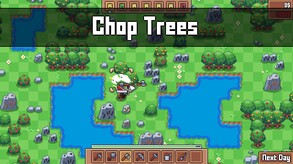
Another Farm Roguelike, developed and published by Zabbo Games, is a farming-themed strategy roguelike that deliberately abandons the slow, comforting rhythm usually associated with the genre. Instead of tending crops at a leisurely pace or building relationships in a pastoral world, it compresses the entire farming experience into a fast, system-driven loop where every decision is about efficiency, optimization, and survival under pressure. The result is a game that feels less like a simulation of rural life and more like a strategic puzzle disguised as one. The most immediate difference lies in how the game is played. There is no controllable character walking through fields or interacting with objects in real time. Everything is handled through a top-down interface where players directly manage the farm using a cursor. Crops are planted, buildings are constructed, and upgrades are selected through quick inputs, removing downtime and keeping the focus entirely on decision-making. This design creates a rapid pace where actions flow one into another, making each moment feel purposeful and tightly connected to the overall goal. At the center of the experience is a roguelike structure that defines progression. Each run begins with a modest setup and a clear objective: build a profitable farm capable of meeting escalating financial demands. As the run unfolds, players choose upgrades, unlock new tools, and adapt to randomized elements that shape the available strategies. No two runs are exactly the same, and success depends on how effectively players respond to the options presented. This unpredictability keeps the gameplay engaging, as it constantly challenges players to rethink their approach rather than rely on a single optimal strategy. The depth of its systems is one of the game’s strongest features. Beneath the simple presentation lies a network of interconnected mechanics involving crop selection, building placement, resource flow, and upgrade synergy. Different starting classes and perks can dramatically change how a run develops, encouraging experimentation and long-term mastery. Over time, players begin to recognize patterns and refine their strategies, turning early confusion into deliberate, calculated play. This sense of growth comes not from narrative progression, but from a deeper understanding of the systems themselves. However, this complexity also introduces a steep learning curve. The game provides only minimal guidance, leaving players to discover its mechanics largely through trial and error. Early attempts can feel overwhelming, especially when faced with strict financial targets and limited resources. Failure is frequent in the beginning, and while it serves as a learning tool, it may discourage players who prefer a more gradual introduction to new systems. The pacing, which rarely slows down, adds to this intensity, making the experience feel demanding from start to finish. Unlike traditional farming games, there is little emphasis on atmosphere or storytelling. There are no characters to interact with, no overarching narrative to follow, and no sense of a living world beyond the farm itself. This absence reinforces the game’s focus on mechanics, but it also limits its emotional engagement. The experience is driven entirely by systems and outcomes, which may appeal to players who enjoy pure strategy but feel lacking for those seeking immersion or narrative context. Visually, the game adopts a clean and functional pixel art style that prioritizes readability. The interface is dense with information, but it is organized in a way that allows players to quickly assess their situation and make decisions. While the presentation lacks the charm and detail of more traditional farming titles, it serves its purpose effectively, keeping attention on the gameplay rather than the environment. The audio design follows a similar approach, with energetic music that complements the pace but can become repetitive during longer sessions. Replayability is a major strength, driven by the variety of builds, randomized elements, and different modes available. Players can experiment with new strategies, explore alternative approaches, and refine their performance over multiple runs. Additional modes that reduce or remove time pressure provide a more relaxed way to engage with the systems, offering some balance to the otherwise intense core experience. Despite its strengths, the game’s relentless focus on efficiency can become exhausting over time. The lack of downtime, combined with the pressure to meet objectives, creates an experience that is mentally demanding rather than relaxing. Repetition can also set in once players become familiar with the core loop, as the fundamental structure remains consistent even as variables change. Minor interface quirks and a general lack of polish further highlight its indie nature. Ultimately, Another Farm Roguelike is a bold and unconventional take on farming games, one that replaces comfort and routine with speed and strategy. It offers a deep and rewarding system for those willing to engage with its mechanics, but it does so at the cost of accessibility and traditional appeal. For players who enjoy optimization, experimentation, and roguelike progression, it provides a compelling and engaging experience. For others, its intensity and stripped-down design may feel overwhelming. Rating: 7/10
Addicting
Players by region
Where this game's players are, estimated from review languages.
Related
| Game | Estimated lifetime revenue | Reviews | Review score | Price |
|---|---|---|---|---|
| $33.3K | 80 | 81% | $11.99 | |
| $82.1K | 71 | 92% | $29.99 | |
| $40.1K | 111 | 81% | $11.99 | |
| $35K | 83 | 65% | $11.99 | |
| $40.2K | 180 | 84% | $5.99 | |
| $9.2K | 26 | 62% | $9.99 |
Related
| Game | Estimated lifetime revenue | Reviews | Review score | Price |
|---|---|---|---|---|
| $47.3K | 60 | 85% | $12.72 | |
| $47.3K | 87 | 87% | $12.99 | |
| $47.3K | 102 | 91% | $12.99 | |
| $47.3K | 134 | 72% | $19.99 | |
| $47.3K | 117 | 89% | $11.99 | |
| $47.3K | 224 | 99% | $9.99 |