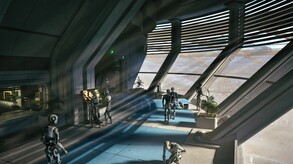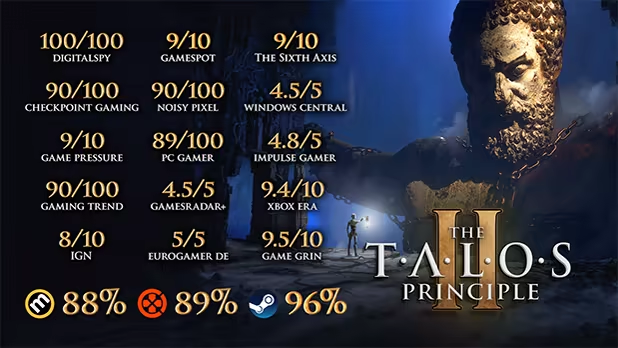
The Talos Principle 2 is a thought-provoking first-person puzzle experience that greatly expands on the first game's philosophical themes and stunning environments with increasingly mind-bending challenges.
Modeled estimate, not a reported figure. How we estimate →
Prices
Each in the currency that store quoted — not converted: the gap between two rows is the publisher's pricing, not an exchange rate.
Discounts
Every price cut of more than 20% we have observed, in each market that quoted one, with this game's chart position on either side of it. These are episodes, not a model: a sale is one event, and one event cannot tell you what the next one will do.
Reviews, worldwide (the counter carries no country): 2.57/day in the week to Jul 23 → 4.57/day in the week after.
About

Add-ons
Each DLC is estimated with the same model as a game, then summed — a modeled figure, not reported DLC sales.
Sums Steam only; PlayStation, Xbox, GOG, Epic publish no volume signal, so the true total is higher by an unknown amount.
| Store | Price | Audience | Score | Chart | Est. revenue |
|---|---|---|---|---|---|
SteamYou are here | $29.99 | 13.4Kreviews | 95% | — | $9.4M |
| $29.99 | 3.1Kratings | 91% | — | not modelled | |
Updates
Build ids and update times come straight from Steam's PICS — the same source SteamDB reads. Patch history grows as we record new builds.
Engagement
Reviews
Themes across 905 recent reviews and how positive each mention is. A keyword signal, not full sentiment analysis.
Reviews
İlk oyunu sevdiyseniz, devam oyunu beklentilerinizi rahatlıkla karşılıyor. Bulmacalar yine lazerler, dönüştürücüler ve önceki oyundan tanıdık araçların yanında zihin aktarımı, yerçekimi silahı gibi yeni mekaniklerle sürekli çeşitleniyor. Her yeni mekanik önce tek başına öğretiliyor, ardından diğerleriyle birleşerek oldukça zorlayıcı bulmacalar ortaya çıkarıyor. İlk oyuna kıyasla bu kez bulmacalardan çok dünyanın kendisine ve karakterlerle kurulan diyaloglara ağırlık verilmiş. Keşif hissi çok daha güçlü. Ormanlar, çöller, karlı bölgeler ve devasa antik yapılar öylesine güzel tasarlanmış ki bazen bulmacaları bir kenara bırakıp sadece etrafı dolaşmak istiyorsunuz. Manzaralar, atmosfer ve müzikler bu hissi oldukça iyi destekliyor. Hikayesi ise sadece bulmacaları birbirine bağlayan bir bahane olmaktan çok daha fazlası. Yapay zeka, bilinç, insanlığın geleceği ve medeniyet üzerine düşündüren sorular sorarken, farklı karakterlerin bakış açıları sayesinde tek bir doğru cevap dayatmıyor. Diyaloglar zaman zaman uzun hissettirse de anlattığı hikaye ve kurduğu dünya merak uyandırmayı başarıyor. Bulmacaları ilk oyuna göre biraz daha kolay olsa da, dünyası, atmosferi ve hikayesiyle bunu fazlasıyla telafi eden, bulmaca türünün en iyi oyunlarından biri.
Media

Related
Related
Price dynamics, follower growth, revenue and sales trajectories with interactive tooltips
This and every other Pro feature is free until October 20, 2026. A free account is all it takes.
Related
| Game | Estimated lifetime revenue | Reviews | Review score | Price |
|---|---|---|---|---|
| $9.4M | 16.7K | 82% | $24.99 | |
| $9.4M | 11.4K | 81% | $29.99 | |
| $9.4M | 19.1K | 94% | $14.99 | |
| $9.4M | 17.6K | 97% | $24.99 | |
| $9.4M | 13.8K | 98% | $19.99 | |
| $9.4M | 14.8K | 73% | $29.99 |
Related
| Game | Estimated lifetime revenue | Reviews | Review score | Price |
|---|---|---|---|---|
| $35.5K | 69 | 93% | $19.99 | |
| $56 | 2 | 0% | $1.79 | |
| — | 0 | — | — | |
| — | 0 | — | — | |
| — | 0 | — | — | |
| — | 133 | 92% | $8.99 |
Every market we collect.
For scale, across Steam · Top Sellers · Brazil over the last 30 days: the 25 chart moves that followed a price cut of more than 20% went a median of 10 places towards #1, and the 2,413 moves with no price cut behind them went 2 away. One store, one chart, one country — it is the only place we have enough observations to say even that.
Prices outside the United States have been collected since 6 August 2026 and chart positions since 19 July 2026, so a cut older than that has no market to compare and a market that joined later has no history yet. Nothing here is converted between currencies.
Genres
Stats
All-time low is the lowest price we've recorded for this game since we started tracking it.
Languages: English*, French, German, Spanish - Spain, Japanese, Korean, Polish, Portuguese - Brazil, Russian, Simplified Chinese, Traditional Chinese, Turkish*languages with full audio support
| $29.99 |
| 811ratings |
| 88% |
| — |
| not modelled |
| $8.99−70% | 133ratings | 92% | — | not modelled |
| $29.99 | — | — | — | not modelled |
Matched by title — a reused name can pair the wrong games. * is a critic aggregate. Prices and positions are each store's United States storefront; Epic charts worldwide. Audience and Score too, except Steam's, which is worldwide.
Hours played at review time, across 906 reviews with recorded playtime.
positive critical· bar length = how often the theme comes up
I very much recommend this game to normies, but really this is a negative review because I want to rant. First of all, positives - amazing soundtrack, good (and lots of) live voice acting, extremely impressive amount of "choices matter" micromoments in dialogue and story, some (!) puzzles are quite something. Negatives... oh boy, where to begin. In hilarious parallel with another universally praised sequel, Hades 2, I loved the first game and the second one repeats many of the same game mechanics bit by bit... but this time, if compared to the original, without a decent enough in-universe justification, which hurts the immersion very, very much. Late-game reveal (no spoilerino) is supposed to "fix" that, but even then things don't sit right, mostly due to characters' reactions and contributions to the plot development, which brings us to the bigger gripe... Writing is actually terrible. The robot society as a whole and almost all of the characters are not only uninteresting, but also not believable, at all. From gameplay design pespective, as much as they were included, they also had to be given a lot more stuff to do - to keep the illusion going. But they are useless, they are annoying, they are written as smart but in reality they are stupid, and they are not believable as real characters. The only decent characters are couple of sides - Helga is awesome, Hermanubis is consistent, and Jeremy is a real believable prick (jesus christ who put frigging Gehenna Admin into the Golden Disk?? thanks a lot guys). All the running and empty pseudointelligent dialogue almost makes you forget it's a puzzle game, so I'll mention them last. Puzzles are too easy overall, even the bonus ones. Some of them are great, but compared to the first game, I'm a bit disappointed. So many new puzzle mechanics that are barely used makes me wish for more (note: I didn't get the DLC yet, maybe I'll have to). My guess is they wanted this game to be more accessible and mainstream, and I hope they succeeded in that regard, but I'd still would like more challenging content. "Tutorial"-style puzzles that introduce you to new mechanics are done greatly though. Golden stars get a separate mention - they are truly awful. Pandora's might remind you of the worst point'n'click games in terms of "you know exactly what you need and how to use it, but please scour through this whole 100 hectare area to find it somewhere". Prometheus's are boring af (yay more running). Sphinx's are either too easy or too boring, again (and devs, why, why I can't zoom in on the picture in my tab menu?? have you played your own game?) And finally, tech. optimization... It wouldn't be a problem on more powerful specs, but it's very inconsistent, game is gorgeous and doesn't ask for much in most zones, but some are straight up killing weaker GPU (I'd like to name desert zones and sadly/weirdly enough, New Jerusalem, which probably made more than 1 person refund because that's where you start the game). Go figure.
¡Es juegazo! lo recomiendo, amplía un poco las mecánicas del 1 y la exploración se expande dando la sensación de un mundo más abierto y no tan lineal, ahora si más que nunca se mete en contextos filosóficos junto a dudas existenciales, es como que coge todo lo del juego anterior y lo mejora, gráficamente también es muy notable y tiene buen rendimiento, lo único malo es que por temas de presupuesto es lógico que no venga con voces al Español porque son demasiadas líneas de dialogo a traducir, en ese aspecto no me puedo quejar tampoco, pero te adaptas rápido con los subtítulos, no es algo tampoco que sea molesto.
Enjoyed the megastructure and brutalist architecture a lot in this game. Difficulty in puzzles felt random instead ramping up over time. Had to resort to guides on multiple occasions. Overall enjoyed.
if you like games with annoying long cutscenes and NPCs that take all the mystery out of everything, this is for you. When you arrive to a cool scene, the NPCs make sure you know it by saying "wow look at that!". It's so devoid of any nuance. You couldn't try harder to make something more lame. The puzzles are OK, but there's nothing special about them and the world is huge for no reason yet incredibly absent of real content. For example in one of the first areas I went down some stairs into an ancient building, conveniently the NPC told me "go explore that building", thanks genius, I wasn't sure what to do. So I did as I was told and there were 3 rooms. One had a big button, you press it and get a schematic. The others were empty. I mean, full of things, you just couldn't interact with any of it - it was all just cosmetic emptiness. So kept going until the 3rd puzzle in act one, then realized this entire huge world and all the running was just for nothing. There's nothing interesting around any corner, no hidden magic of the world like the witness. Just run as fast as possible to the next huge lifeless puzzle area. And the WHOLE TIME the NPCs are jabbering immersion breaking lameness. 0/5 stars. uninstalling.
Overall, doesn't feel as good as the first game : - the puzzles aren't as interesting and overall easier - there's a lot of walking to get from point A to B, much more than in Talos 1 - the philosophical aspect isn't as developped and deep - the characters aren't as memorable as the compter and elohim from the first game - loading screens, loading screens, loading screens... they break the immersion too much Unfortunately, i can't recommend this one, whereas the first game is one most people should play in my opinion.
I absolutely loved the first Talos Principle game, but this is just terrible. The characters are so annoying that I don't want to pay attention to the story at all, but even then the puzzles are worse than the first game. And ray-traced global illumination makes terrible artifacting visible everywhere. I couldn't get the game to run smooth at minimum settings on my laptop with an RTX 3060. I tried to play through the game, but I gave up at the gravity switching devices. I normally don't get motion sick in games, but those really got to me.
Pretty good. I enjoyed 1 more personally. I think this games biggest flaw is there is WAY too much walking around. Maps are too big for no reason. Puzzles and story felt less rewarding over all than the first game. 7.5/10
The Talos Principle 2 is probably my favorite puzzle game and the follow up to The Talos Principle. The game starts with a short recap of the first game. Humans are extinct but before they vanished they created a simulation to create an artificial intelligence that has the same mental capacity and potential that humans had. The player solves various puzzles to escape the simulation and start a new civilization. The second game is set centuries later, the original player character, now called Athena, created other robots like herself and built a city called New Jerusalem in which all the human robots live. To honor their creators, they took on the name of humans and live on their legacy. You are the last robot to ever be created calles 1000 or 1k for short. On the day of your creation a holographic being appears and invites the citizens of New Jerusalem to a nerby island to claim something called "the flame". You and a bunch of other humans start an expedition to the island where they find a giant pyramid that they dub the megastructure. They also discover a travel system that connects to several nerby locations and when they explore the first location they realize that the entire island is full of puzzle rooms similiar to the simulation. And this is where the actual game starts, as you can expect, this is a puzzle game just like the first one but it also adds some light adventure elements to the game. But since the meat of the game are the puzzles, let's start there. As in the first game, puzzles are a mix of lasers, pressure plates, jammers and fans to open force fields until you can reach the goal. Almost all the tools from the first game have returned and the first minutes of the game lets the player in fact solve some puzzles of the simulation before leaving it to explore New Jerusalem. The puzzles on the island are an evolved form of the original puzzles. Each region introduces a new element and the puzzles of that location are usually themed after that new element, making good use of it. The first few puzzles are usually there to introoduce players to the new element and understand how it works, afterwards the puzzles become harder when that new element is used in new and interesting ways, often in combination with older elements from other locations. For example, the very first location expands the standard laser puzzles in which you have to redirect lasers to receivers of the same color. TPP1 only had red and blue lasers but TPP2 introduces green as color. But instead of just adding a green colored laser socket, in order to get green you have to combine red and green with the new RGB connector tool. But that tool not only creates green from red and blue, if you combine green (from another RGB connector) with one of the other two colors, you get the color that you didn't use. This creates much more interesting puzzles than the first game in which you have to figure out how to get specific colors exactly where you need them. A good change from the first game is the removal of some of thje more annoying elements, mainly bombs and turrets. These were no fun in my opinion, they were an obstacle created to stop players from solving puzzles and you often had to disable them in order to progress. What made them so annoying was that if you got killed, you had to restart the entire puzzle, so a slight misstep meant you had to do all the steps again until that point. This game has no such issues, you cannot die during puzzles and most puzzles are designed in away that you cannot lock yourself out of the solution if you mess up. There are a few cases where it's still possible and you have to reset, but since the puzzles overall are more compact than the first game you don't receive such big setbacks as before. While the puzzles are overall smaller, the game itself is much bigger. There are 12 explorable regions full of puzzles, each one contaioning 8 main puzzles, 2 hidden "lost puzzles", two star puzzles and a gold puzzle that opens up once yopu finished all the standard puzzles. Each location is massive but they are cleverly interconnected with signs pointing you towards the next puzzle. It will route you through the entire region and eventually loop back to the beginning where you have to create tetromino bridges to reach and activate the tower of each region. You have to solve 8 main puzzles but two can be replaced through one of the lost puzzles if you found them, those are overall harder to solve however. The star puzzles are very different this time. There are two statues on each location that require to solve a unique puzzle unmlike the main puzzles. SPhinx statues require you to find and activate hidden switches with a small picture being the only hint you get. Prometheus statues require you to find a small particle cloud and follow it back to the statue. This requires some platforming and sometimes you have to find a way to reach the cloud in an inaccessible location. The Pandora statues are the hardest, they require you to connect a laser to the statue but these lasers have to come from the main puzzles and you have to find out how. After you solves three regions, you are allowed to enter the megastructure in which you will face more puzzles but this time on a larger scale and inside a large labyrinth. These can be a bit trickier because they don't exactly follow the same rules as the standard puzzles even if they use the same elements. Outside of solving puzzles you can find and talk to your expedition members. They won't solve any puzzles for you or provide tips but they add more to the story of the game and depending on your dialog choices you will influence the story and ending of the game. Like before, this is all very philosophical with questions about what makes us human but more importantly, should we be allowed to expand humanity on the risk of destroying nature. Purpose and growth are big themes of the game. A lot of the story is told through text files, just like before, but you don't have to read them all to advance the story and having actual NPCs you can talk to this time is a refreshing change and makes the game flow much more naturally. A highlight of the game in my opinion is the exploration of New Jerusalem in the beginning, it's a big open city with several structures to explore, many NPCs to talk to and even some fun games to play. All of this is optional but it adds more charme to the game. After finishing every puzzle you unlock golden puzzles that are incredibly hard which is why they only appear at the end of the game. These are optional but unlock a better ending for the game so if you are invested into the story or simply want to challenge yourself with harder puzzles, this is the way to go. Just like the first game, the atmosphere is top notch. Beautiful landscapes and a soothing soundtrack make exploring the regions of the island a fun endavour. However, get used to a lot of walking because some regions are extremely big. I think a quick travel men that lets you move directly to puzzles you have already seen would have been welcome here. Overall I think this is a great game for any puzzle game and a perfect step up from its precedessor. If you liked the first game you will fall in love with the sequel too.
A very lackluster sequel to one of the most awe-inspiring puzzle games ever made. It's as if someone sat down and said "Let's make the same game again, what story can we disguise the puzzles with?" and then started working on it without having any thought as to if it would be enjoyable to have the exact same experience again. But worse. In this game, instead of exploring a mysterious world on your own, finding your purpose, probing at all the loose ends and checking every corner of the world, you get a very clear objective: Solve puzzles. That's your purpose. Why are the puzzles there? No one knows. It's never explained. Don't try to explore on your own, just solve the puzzles. There is an underlying story that *does* fit the narrative of a sequel, but they never pull it off. It never feels like anything clicks. Every character in the game is annoying and soulless, and the main narrative doesn't reach a conclusion. There is so much effort put into the game and I just felt constantly annoyed at how sluggish everything felt. If you haven't played the original, go play it NOW. But I can unfortunately not find a reason for you to play this sequel.
Active players
Estimated daily and monthly active players (DAU/MAU) modeled from peak concurrency.
Players by region
Where this game's players are, estimated from review languages.
Players also reviewed
The games this title's players most often review too — audience affinity.