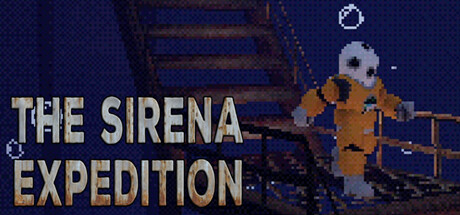
The Sirena Expedition is a haunting and beautifully restrained experience developed and published by Giraffe Cat that blends puzzle-platforming with atmospheric horror and subtle storytelling. Set in an abandoned underwater research facility, the game invites players to explore a claustrophobic maze of machinery, flickering lights, and echoing corridors, all rendered in a distinct retro 3D aesthetic reminiscent of early PlayStation titles. Rather than relying on overt scares or combat, it builds its tension through sound, environment, and the quiet dread of isolation. It’s a short game—roughly an hour long—but every moment is crafted with care, using minimalist design and evocative visual storytelling to create an atmosphere that lingers long after the credits roll.
From the first steps into the submerged installation, the game establishes an oppressive sense of place. The low-resolution textures and rigid polygonal models evoke nostalgia for classic survival horror while simultaneously using that simplicity to unsettle. The environment feels tactile yet distorted, as if viewed through water or memory. Sound design plays an equally important role: the constant hum of machinery, the faint creak of metal under pressure, and the muffled thuds of distant activity all create a believable illusion of depth and confinement. The visual style may appear archaic at first glance, but the imperfections—the jitter of light, the fuzz of textures, the flicker of reflections—contribute to the immersion. Every corridor and empty room feels alive with history, and even when nothing happens, the silence carries weight.
Gameplay in The Sirena Expedition centers on exploration and environmental puzzles rather than combat or survival mechanics. The protagonist is a lone researcher investigating what remains of the facility, and progression comes from solving small, interlinked puzzles that unlock new areas. Early on, these puzzles involve simple platforming and object manipulation—moving crates, flipping switches, navigating tight spaces—but as the player delves deeper, the game introduces its central mechanic: teleportation. This ability allows you to swap places with specific objects, forcing you to think spatially about the environment and your own position within it. It’s a clever addition that redefines how you approach traversal, and while not every puzzle fully capitalizes on its potential, it adds a welcome layer of complexity. The game’s pacing is deliberate, letting you absorb its mood and piece together its mysteries at your own rhythm.
The storytelling in The Sirena Expedition is understated and fragmented, communicated through environmental details rather than dialogue or cutscenes. You find traces of the people who once worked there—notes, data logs, remnants of research—and slowly begin to understand the scope of the disaster that unfolded. The narrative avoids exposition, trusting the player to infer meaning from what they observe. It’s a technique that makes the world feel authentic, as though you are truly discovering rather than being told. This restraint also amplifies the tension; the absence of explicit monsters or enemies lets your imagination fill in the blanks. The true horror of the game lies not in what it shows, but in what it implies—the realization that the facility itself may be something more than metal and machinery, and that you might not be as alone as you think.
Technically, the game is impressive for its small scale. It runs smoothly and achieves its visual goals with precision. The retro style isn’t a gimmick but a design choice that enhances the experience, and the lighting effects are used masterfully to create contrast and mood. The transitions between light and darkness, between narrow hallways and open chambers, evoke genuine tension. The camera movement and subtle depth of field distortions give the sense of viewing through an old lens or a malfunctioning visor, reinforcing the theme of distortion—both visual and psychological. The music, when it appears, is sparse and melancholic, punctuating moments of revelation or emotional resonance without overwhelming the atmosphere.
While The Sirena Expedition is remarkably polished for a solo or small-team indie effort, its brevity and simplicity might not appeal to everyone. The experience can be completed in about an hour, and for some players, that may feel too short. The puzzles, though engaging, never reach a level of complexity that challenges seasoned puzzle-game fans. A few areas can feel slightly repetitive, particularly in the middle section where environmental variety gives way to more mechanical corridors. However, these criticisms pale in comparison to the overall strength of its design. The compact runtime ensures that every minute serves a purpose, and the game ends before its mechanics or atmosphere have a chance to grow stale. It’s a focused piece of work—one that understands exactly what it wants to achieve and accomplishes it with confidence.
What ultimately makes The Sirena Expedition stand out is its ability to evoke emotion through minimalism. It captures the lonely awe of exploring an unknown world, the quiet dread of realizing something has gone terribly wrong, and the bittersweet beauty of discovery in desolation. It draws on the visual language of classic survival horror but strips away combat and excess, distilling the experience into pure atmosphere and curiosity. The result is not a traditional horror game, but something more contemplative—an elegy for forgotten places and the people who disappear into them. Its short length and focused scope make it ideal for a single, immersive sitting, where the lights dim and the sound of the ocean presses against your ears.
In the end, The Sirena Expedition is a small masterpiece of environmental storytelling and mood. It demonstrates how limitation can become strength, how a handful of polygons and a carefully tuned soundscape can create a sense of scale and emotion far greater than their parts. It’s the kind of game that doesn’t need jump scares or grand narratives to leave a mark—it only needs you to step inside, descend into the depths, and listen to the silence. For players who appreciate atmosphere, subtle horror, and thoughtful design, it’s an unforgettable journey into the deep.
Rating: 7/10