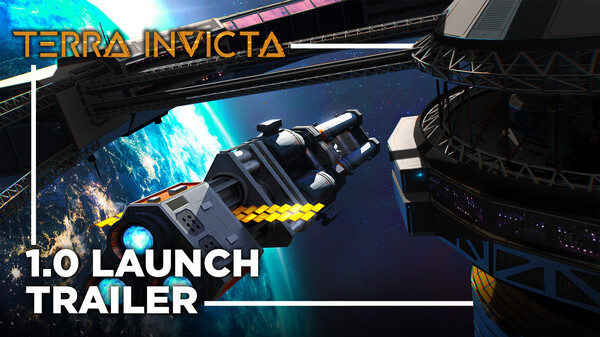
An alien invasion has fractured humanity into seven ideological factions each with a unique vision for the future. Lead your chosen faction to take control of Earth’s nations, expand across the Solar System, and battle enemy fleets in tactical combat.
Modeled estimate, not a reported figure. How we estimate →
Prices
Each in the currency that store quoted — not converted: the gap between two rows is the publisher's pricing, not an exchange rate.
Discounts
Every price cut of more than 20% we have observed, in each market that quoted one, with this game's chart position on either side of it. These are episodes, not a model: a sale is one event, and one event cannot tell you what the next one will do.
About
An extraterrestrial probe is detected approaching Earth. Unknown to humanity, an alien force has arrived in the far reaches of the icy Kuiper Belt and has begun mining a dwarf planet to prepare for an invasion.
With Earth’s nations unable to unite to address the alien arrival, transnational groups of like-minded political, military, and scientific leaders develop covert channels to coordinate a response. With the aliens' motives uncertain, factions emerge, driven by hope, fear, or greed.
You will control one of these factions.
The Resistance works to form an alliance of nations to mount a coordinated defense.
Humanity First vows to exterminate the aliens alongside any who sympathize with them.
The Servants worship the aliens and believe they will solve all the troubles of the world.
The Protectorate advocates negotiated surrender as the only means to avoid annihilation.
The Academy hopes the alien arrival heralds the opportunity to form an interstellar alliance.
The Initiative seeks to profit from the chaos and destruction.
Project Exodus plans to build a massive starship and flee the Solar System.

A distant anomaly, a mysterious crash site, and a spike in reported disappearances. Could this truly be humanity's first contact with extraterrestrial lifeforms? As your field agents investigate sightings and your scientists race to explore new fields of research, you will slowly learn the truth behind the alien arrival.
From early sightings and UFO crash sites to rampaging alien megafauna and robotic armies, it will rapidly become clear that the other six human factions are not your sole competition. Throughout the game, illustrated events will present you with difficult choices as you investigate growing alien activity on Earth. Uncover the mystery of the aliens’ origins and motives – unless, of course, you are Humanity First, and all that matters to you is extermination.
Terra Invicta has a global research system that creates opportunities for both competition and cooperation. Shared scientific advancement unlocks private engineering projects. Factions can choose to focus on private projects, at the cost of weakening Earth as a whole and ceding influence over global research direction to other factions with different priorities. Left unchecked, factions like the Servants or the Initiative may steer the world’s efforts toward developing methods of social control, rather than propulsion or weapon systems.

You begin on Earth as the head of a shadowy organization devoted to your chosen ideology. The aliens are coming – soon – but your first enemies (and perhaps allies) will be other human factions.
Lead a faction united by ideology, rather than a nation defined by territory. This is a stark change from most strategy games – in Terra Invicta, you will not paint the map with the colors of some chosen nation. Instead you will rule from the shadows and compete with other factions for control points representing a region's military, economic, and political leadership.
Geopolitics is your sandbox – unite or break apart nations as best serves your ends, while using those under your influence to conduct proxy wars against the other six factions. Earth’s regions are modeled in detail, from educational levels and unrest to GDP and inequality. Gaining command over regions with great monetary wealth and military power can allow you to implement your will on Earth, but the war for the Solar System will not be won without also securing regions containing space launch facilities.
Enact your will through a council of politicians, scientists, and operatives sent around the world (and even into space). The starting abilities of these councilors will improve through gaining experience and acquiring control over powerful organizations like intelligence agencies or wealthy corporations. A veteran commander may make the perfect choice to lead a tactical team under the council’s direction, while an experienced diplomat works to secure the funding needed to resist the alien invasion.
Seek out like-minded populations and politicians and take actions to convert followers of opposing ideologies. Public opinion is modeled along multiple axes – the Servants’ alien worship and the Protectorate’s advocacy of negotiated surrender may largely align in terms of support or opposition to the aliens, but events that show the aliens can be defeated have the potential to convince followers of the Protectorate that resistance is a realistic choice.

Terra Invicta bridges the gap between our modern-day world and the vast interstellar empires of other space strategy games, asking you to take humanity’s first steps in colonizing our Solar System, where over 300 asteroids, moons, and planets in constant motion create an ever-changing strategic map.
Start your campaign in the modern day and build your capabilities from the ground up, or begin in the near-future and push into the final frontier from the very start – build space stations and planetary bases, quickly gain control of the inner Solar System, and prepare for the existential threat growing at the far reaches of the system.
Take your faction beyond the confines of Earth, building space stations to act as shipyards and fuel depots, constructing mining stations to acquire advanced resources, and establishing bases to serve as research or construction facilities. Terra Invicta zooms into the strategic geography of the Solar System, presenting space not as a series of isolated stars that you order units to move to and from, but rather a rich and varied landscape of asteroids, moons, dwarf planets, gas giants, and other celestial bodies creating texture and tactical opportunities at every turn.
The expansive map is constantly shifting as celestial bodies orbit the Sun. This means your space stations and forward operating bases are constantly moving as well, forcing you to plan accordingly and adapt to the evolving circumstances – your colonies among the Jovian moons could find that a once-distant alien military outpost or Initiative privateering base has suddenly become a close neighbor.

Terra Invicta explores what might be – how colonies on Mars might function, what plausible engines could power our spaceships, and the nature of how space colonization and warfare might proceed. Players may find themselves establishing a mining base on the asteroid 16 Psyche after noticing it is rich in metals – and then learn that in our world NASA planned The Psyche Mission for the same reason.
Exploring and eventually colonizing space will require access to many resources: water for life support and propellant, metals for manufacturing, fissiles for nuclear drives and weapons, and more. At the start, you’ll have no choice but to acquire such resources on Earth and suffer the high cost of using rockets to escape Earth’s gravity, but over time you’ll increasingly choose to instead rely on asteroid mining and other means of securing local supply.
Spaceship design in Terra Invicta draws from the best of scientific speculation and hard science fiction. You can design your own ships, selecting from an array of weapons, drives, and other modules to place on a variety of hulls, ensuring each ship has the right mix of fuel capacity, maneuverability, and other capabilities.
Tactical combat is built around a realistic simulation of Newtonian physics, where momentum and maneuver in 3D space are just as important as the firepower your ships carry. Fire missiles and use point defense cannons to destroy incoming projectiles; build up momentum then swing hard to bring the enemy into your firing arcs; or grapple with the difficult decision to retract radiators and sacrifice heat dissipation to achieve better armor against an incoming enemy barrage.

Terra Invicta is built with modding support in mind, and much of the game is accessible to modders without a coding background. We hope that the Solar System setting and geopolitics simulation will provide a useful framework for modders to realize their own creative visions.
Add-ons
Each DLC is estimated with the same model as a game, then summed — a modeled figure, not reported DLC sales.
Sums Steam only; Xbox, GOG, Epic publish no volume signal, so the true total is higher by an unknown amount.
| Store | Price | Audience | Score | Chart | Est. revenue |
|---|---|---|---|---|---|
SteamYou are here | $19.99−50% | 9Kreviews | 80% | — | $14.5M |
| $39.99 | 273ratings | 58% | — | not modelled | |
Updates
Build ids and update times come straight from Steam's PICS — the same source SteamDB reads. Patch history grows as we record new builds.
Engagement
Reviews
Themes across 985 recent reviews and how positive each mention is. A keyword signal, not full sentiment analysis.
Reviews
Terra Invicta est une bonne simulation complexe des nations terrestres et du système solaire. Pour commencer, quelle faction choisir ? Le jeu recommande de commencer par la Résistance. J'ai donc commencé par une partie normale avec tutoriel avec la Résistance que j'ai remporté presque 100 ans après le crash d'OVNI qui marque le début de la partie. Au moment d'écrire cette évaluation j'ai aussi remporté une partie au niveau difficile avec le Protectorat après seulement 20 ans. Clairement, pour le côté narratif, je recommande de commencer par la Résistance, car l'histoire des extraterrestres est bien expliquée. Avec le Protectorat, j'ai l'impression que les scénaristes partent du principe que vous avez déjà joué avec la Résistance avant, certains concepts ne sont pas expliqués. Par contre, ma partie avec la Résistance a été beaucoup plus longue que celle avec le Protectorat, et pas seulement parce que je découvrais le jeu avec la Résistance : les factions anti-extraterrestres doivent s'aventurer au fin fond du système solaire, ce que les factions pro-extraterrestres n'ont pas forcément besoin de faire. Au début des scénarios 2022 et 2026, la situation de chaque nation est basée sur des données réelles comme le PIB, la population ou le niveau démocratique, ces valeurs évoluent grâce à un système de priorités complexe mais sont aussi affectées par différents évènements. Je ne me souviens plus si je le faisais au tout début, mais j'ajuste systématiquement les priorités en fonction de chaque nation, ça fait pas mal de micromanagement mais c'est souvent nécessaire pour empêcher l'agitation de trop augmenter et risquer de perdre une nation à cause d'un coup d'état ou d'une révolution. Les conseillers ont une profession qui définit une partie de leurs traits et leurs compétences. Cet aspect du jeu est en tour par tour, toutes les quelques semaines il y a des phases d'affectation des missions pour toutes les factions. Les missions offensives ont une probabilité de réussir qui dépend de nombreux paramètres et qui peut évoluer parfois radicalement après le lancement de la mission, à la fin de chaque mission un résumé indique si c'est une réussite, un échec ou une annulation (volontaire ou pas), la probabilité de réussir réelle et le "lancer de dés" obtenu. Certaines missions se terminent rapidement, d'autres prennent plus de temps, mais je trouve dommage qu'on ne puisse pas donner plusieurs missions courtes d'affilée à un conseiller dans la même phase de mission. En début de partie c'est sympa, on voit les rendements de notre faction augmenter, mais en fin de partie, quand on contrôle pas mal de nations et qu'on a pour objectif de détruire des bases extraterrestres lointaines et que la plupart des missions qu'on affecte aux conseillers sont de défendre les intérêts d'une nation parce que la précédente défense des intérêts a expiré c'est un peu ennuyeux, surtout que si on ne le fait pas les autres factions risquent d'en prendre le contrôle. Heureusement la fréquence des phases d'affectation des missions diminue au cours de la partie et s'adapte ainsi au rythme des longs voyages spatiaux. La partie est rythmée par des évènements variés qui peuvent concerner la Terre, les conseillers, les habitats, les vaisseaux ou encore les corps célestes que l'on colonise, certains évènements sont positifs, d'autres sont négatifs, la plupart offrent plusieurs choix mais je trouve dommage que certains évènements qui pourraient se répéter soient uniques, les évènements en fin de partie manquent un peu de diversité. Le système de recherche de technologies est complexe, le fait d'avoir des technologies communes et des projets de faction débloqués par ces technologies est intéressant, de plus les technologies sont classées en plusieurs catégories, on peut avoir des bonus en fonction des catégories, ces bonnus sont réduits si on recherche plusieurs technologies de la même catégorie en même temps. En dehors de la Terre, les factions construisent des habitats (les stations en orbite et les bases à la surface), il y a pas mal de modules et d'emplacements pour personnaliser les habitats en fonction de ce dont on a besoin, certains ont un usage très spécifique. Par contre on est amené à construire des dizaines voire des centaines d'habitats, quand on débloque une amélioration d'un module (en particulier si c'est un module qui fournit de l'énergie) c'est fastidieux de parcourir tous les habitats, surtout si certains sont construits différemment ou qu'on n'a pas assez de ressources pour tous les améliorer. Une fois que votre faction dispose d'un quai spatial, vous pouvez commencer à construire des vaisseaux. Le concepteur de vaisseaux est l'un des aspects qui m'a particulièrement donné envie d'essayer ce jeu. Il y a beaucoup de paramètres à prendre en compte, bien sûr chaque classe de vaisseau que l'on crée a un rôle à jouer donc on choisit des équipements adéquats, mais dans tous les cas il faut prendre en compte la masse, l'accélération et le delta-V (concept expliqué dans le codex du jeu). Pour les batailles spatiales, vous pouvez d'abord voir la résolution automatique (je m'en tiens souvent à ça pour les combats triviaux), celle-ci est souvent moins favorable que la résolution manuelle ce qui est pour moi un point positif. Même en cas de victoire annoncée, il m'arrive de lancer la résolution manuelle pour essayer de remporter le combat en utilisant moins de munitions ou en subissant moins de dégâts qu'avec la résolution automatique. Par exemple, la résolution automatique a jugé nécessaire de vider la soute à missiles d'un de mes vaisseaux qui en avait 96 sur un vaisseau seul qui n'avait aucun système de défense et peu de blindage, alors qu'il en suffisait d'environ 5 pour l'abattre. Les batailles peuvent sembler complexes, avec des flottes entières qui peuvent se déplacer dans les trois dimensions, mais la plupart du temps, si les deux flottes qui s'affrontent sont à peu près équilibrées, bien choisir ses conditions de départ suffit, et au pire vous pouvez toujours laisser le contrôle de la flotte ou de certains vaisseaux à l'IA (ou le reprendre) à tout moment. En plus du gameplay il y a aussi un aspect narratif que j'ai apprécié. Chaque faction a son dirigeant et son histoire que l'on découvre en accomplissant des objectifs, certains objectifs pour découvrir l'histoire des extraterrestres sont cachés et parfois optionnels. Tout n'est pas parfaitement équilibré et je pense que c'est fait exprès. Avant de faire certains choix, prêtez attention aux détails et comparez les options qui s'offrent à vous ou vous pouvez vous faire avoir. Ce n'est pas parce que quelque chose semble prestigieux que c'est forcément mieux que quelque chose qui attire moins l'attention. L'IA, pour finir. J'ai trouvé les factions pro-extraterrestres beaucoup plus agressives que les autres, et j'ai l'impression que les factions anti-extraterrestres ne font pas assez d'efforts pour gagner (d'un autre côté le Temple céleste est avantagé car aidé par les extraterrestres). Au cours de ma partie avec le Protectorat, le Temple céleste a carrément revendiqué Mars, détruisant systématiquement toutes les bases et stations ne leur appartenant pas. Quant aux extraterrestres, leur agressivité dépend de vos actions contre eux et le Temple céleste.
Media

Related
Related
Price dynamics, follower growth, revenue and sales trajectories with interactive tooltips
This and every other Pro feature is free until October 20, 2026. A free account is all it takes.
Every market we collect.
Reviews, worldwide (the counter carries no country): 16.29/day in the week to Jul 30 → 14.14/day in the week after.
For scale, across Steam · Top Sellers · Brazil over the last 30 days: the 26 chart moves that followed a price cut of more than 20% went a median of 7 places towards #1, and the 2,400 moves with no price cut behind them went 2 away. One store, one chart, one country — it is the only place we have enough observations to say even that.
Prices outside the United States have been collected since 6 August 2026 and chart positions since 19 July 2026, so a cut older than that has no market to compare and a market that joined later has no history yet. Nothing here is converted between currencies.
Genres
Stats
All-time low is the lowest price we've recorded for this game since we started tracking it.
Languages: English*, French, Spanish - Spain, Japanese, Simplified Chinese, Traditional Chinese, German, Polish, Portuguese - Brazil, Italian, Czech, Korean +2 more
| $19.99−50% |
| 113ratings |
| 80% |
| — |
| not modelled |
| $39.99 | — | 92% | — | not modelled |
Matched by title — a reused name can pair the wrong games. * is a critic aggregate. Prices and positions are each store's United States storefront; Epic charts worldwide. Audience and Score too, except Steam's, which is worldwide.
Hours played at review time, across 987 reviews with recorded playtime.
positive critical· bar length = how often the theme comes up
Прикольная заготовка для игры. НО... 1 Шкала развития государства, где на одном конце тоталитаризм, а на другом демократия, и все остальные системы между ними расположены, это глупость. Демократия ближе к тоталитаризму, чем к автократии, так как обе они строятся на вовлеченности в политический процесс, в одном случае добровольном, в другом принудительно. А автократия на неучастии и отстраненности людей от политического процесса. 2 То что я могу одним убеждением, захватить власть в любой большой стране и перенаправить все денежные потоки, в один момент, например, с наживы и военки, на экологию, просто отрицает само существование таких понятий как утвержденный на год бюджет, я уж не говорю об интересах внутренних элит. 3 Нигде не хранящийся запас ресурсов в космосе доступный в любой точке солнечной системы глупость. 4 Почему солнечные зеркала в точке лагранжа марса дают прирост энергии на поверхности планеты и спутников, а в точке лагранжа земли не дают прирост у спутников на низкой орбите земли? Хотя эти зеркала все равно глупость и не должны так работать. 5 Почему супер технологичный корабль пришельцев, доставляющий их оперативников на землю, с кучей дельта в, не может сесть и высадить его, или хотя бы не имеет спускаемую капсулу, а просто весь шмякается об землю, и мы даже не можем ничего найти на месте крушения? И так десятки раз!
I enjoy the core of the game, I put 500 hours into it for a reason, but the game is boring at moments to the point I cannot say I'd reccommend it. My early runs I was bad, didn't understand the mechanics, so took 60 years, last 10 being just cleanup. Then next run, higher difficulty, more learned, 50 years. Next run, even higher difficulty, 40. Next, no higher difficulty to go to, but nonetheless, 30. And while yes, I've taken a lot less time with each run, the core problem of the game is that the first 10-15 years of the game, so Earth game, and space game, everything happens. You settle your nations, set up outposts all across the solar system, from mercury to the kuiper belt, push the aliens from the gas giants. If you're worse, you just take a bit longer to get to that point, but any game eventually just ends at 'Kick the aliens for 15 years while they pose 0 threat to match arbitrary win conditions to click the Win button'. Finally, with my last run, that being my 7th (victorious) one, I've just found I'm using every strategy, meta, rush tech, to just end the game faster. I was actively maximizing in order to spend less time with the game, because it starts off strong, but devolves into a miserable and boring slog, and like, optimizing to end the game faster because I'm not having fun past first 20 hours of the run, ♥♥♥♥ that. It's a very immersive and interesting game, and honestly I like things many complain about like the detail with drives, weapons or such, but the game is just, first few games get slapped around by the aliens because you know nothing, learn something, crush the aliens consistently with early tech because they're honestly not that scary at all even at high difficulties, then do space laundry for a decade because arbitrary tech, enemy presence and travel times are holding you hostage.
потратил 90 часов на корабль первый корабль,который дальше орбиты планеты не может улететь,прищельны сбили все станции,захватили мега страну и теперь шлют со своими марианетками войска к границам,а ещё...Я ЗАДОЛБАЛСЯ ОТСТРАИВАТЬСЯ!не вижу логики в том,что одна вражина войск на своей террритории,может защищаться от 8 моих.не вижу логики в 10 версиях двигателях,на которых надо 2 тонны ресурсов,чтобы только на орбите повисеть.если бы мог,запросил возрат денег,но я потерял уже время,в обоих смыслах,а удовольствия 0. Даже Стеларис и Эндлесс спейс так не тянулися,как эта фигня. я уже устал от этой игры,а даже толком в космосе не повоевал. Так что,если вы не имеете нечего против,чтобы потратить минимум 300 часов на одну катку- НЕ ПОКУПАЙТЕ.ЭТУ ИГРУ!
首先,这个题材还是比较新颖的。但是,整个游戏狗屎般的新手指引,还有游戏内的AI的深深的恶意的,哪怕是选的简单难度,跟着攻略玩下来,整个人内心都是奔溃的。建议正常想轻松玩玩游戏放松的人别碰这游戏。太TM折磨人了。评论完直接卸载。再也不见
X-COM meets Crusader Kings 3 meets menu hell. Maybe the steepest learning curve of any game in the genre, it helps to know what your plan is before starting a run which meana going in blind means you're not spending your time efficiently and can get left behind. Very slow paced game that has a lot of "hurry up and wait" moments, but overall I find the payoff worth it when your plans come together. Something so satisfying about winning your first space battle with a ship you researched and designed personally.
Disregard all advice from "gamers", this is a true Gem. I have played it like a rouge game fail learn get better. It has a vast amount to learn, which I love. It will not hold your hand, Which I love. It will make you think about 5 years in advance ( 20-30 hours of real time), I love it. The tech tree, and the general controls are absurdly weird and hard, But this gives the game a gritty feel of passing everything by the "skin of your teeth" Brilliant.
[h1]В регионе "КИЕВ" (Россия) был обнаружен ОБЪЕКТ ПРИШЕЛЬЦЕВ[/h1] Игра для челиксов, которым нравится аутировать по 9 часов, исследуя цифры и занимаясь всяким гриндом. [hr][/hr] [h2]Что тут есть?[/h2] [b]• Симуляция Земли и каждой страны[/b] - Газиллион всяких исследований [i](спойлер: из них нужна только половина — остальное чистая вода)[/i] - Военные преступления - Экономика, где вам понадобится забить на людей и думать над вопросом «как разъебать пришельцев?» → теперь миллионы китайцев строят космические антенны и лаборатории, а США помогает им аннексировать Лаос, Вьетнам и Монголию - Мини-Kerbal Space Program: «собери себе консервную банку и назови это SPACE SHIP» [hr][/hr] [h2]Геймплей[/h2] Вся игра сводится к сноуболлингу. Вы дрочите всякие цифры и бонусы, чтобы разогнаться — для того чтобы разогнаться ещё больше. На страны Земли вы смотрите тупо как на источники ресурсов. Не пытайтесь «построить рай». Нужны деньги? Включаете режим коррупции и вытаскиваете из Канады весь кэш. Глобальное потепление уменьшает ВВП Китая (а значит, меньше космо-антенн)? США подвергает Гренландию ядерному терраформингу, чтобы поднять в атмосферу пыль и остудить планету. [b]Люди — лишь цифры. Как и ВВП. Счётчик военных преступлений — просто число на экране.[/b] Все камни в космосе тоже ресурсы. На них вы строите летающие железки. Переиграть пришельцев в бою вплоть до самого лейт-гейма не получится — поэтому люди берут числом. [i]Мой типичный корабль обороны: грубая жестянка с ракетами и 40-мм пушкой. Заварите экипаж внутри. Выход им не понадобится. Постройте таких штук 40. Поставьте в очередь строительства ещё столько же. Этого хватит на пару-тройку боёв.[/i] [hr][/hr] [h2]3,5 этапа игры[/h2] [h3]Ёрли-гейм[/h3] Борьба в луже из грязи за самые чёткие страны. Постройка первых шахт — на Луне, на Марсе, на астероидах. Сбить пришельцев / убить / взять в плен. Обычный вторник. [b]На самом деле самая бодрая часть игры.[/b] Всё что вы тут делаете — тянете время и исследуете штуки покруче. [h3]Мид-гейм[/h3] Вот здесь начинается настоящая дрочь. Игра топит в микроменеджменте. Каждая база. Каждый корабль. Флот. Советник. По сути вы всё так же тянете время, но уже стараясь укусить больнее. Собираете первый флот из больших банок и начинаете грядущую борьбу с пришельцами. Этот этап [b]может длиться годами[/b]. Может, даже десятилетиями. Строительство — год. Большой корабль на топовом заводе — полгода. Полёт на Юпитер — 30 недель. Большая часть двигателей и реакторов — примерно одно и то же фуфло. [h3]Лейт-гейм[/h3] Как только вы прочно обосновались на поясе Койпера — считайте, игра выиграна. Обычно вы уже добываете и производите больше. [b]ВСЕГО-ТО И НУЖНО — ДОСТИЧЬ УСЛОВИЯ ПОБЕДЫ.[/b] Я просто взревел, когда осознал, что мне нужно зачистить все базы пришельцев и поставить хабы Т3. Это просто [b]ГОДЫ[/b], ♥♥♥♥♥. Лететь к условному Плутону — год. А ведь нужно привезти с собой большой флот: у пришельца там припаркована куча дакки. Не дай бог принёс недостаточно — [b]СТРОЙ И ЛЕТИ ЗАНОВО.[/b] [hr][/hr] [h2]Вердикт[/h2] [b]Пожиратель времени.[/b] В игре есть свой кайф, но готовьте мозжечок — охуеете от перегруза. Да, и ещё: оптимизирована игра весьма посредственно. [b]Будет лагать.[/b]
It's a fantastic game with very deep systems, and I do recommend it if you enjoy that sort of thing as there is nothing quite so comprehensive in the strategy genre out there, but there are still issues. First, I have a good computer (with solid cooling and slight overclocking), but I cannot play on full solar system because the performance tanks once the asteroids begin being colonized, so I can't imagine the framerates on lesser systems even on lower solar system densities, so optimization can use some work. Second, the Earth gameplay does get tedious without mods. The spy vs spy whackamole game is enjoyable before you have snowballed, but once you have, its just annoying to need to constantly chase down enemy councilors. The devs have stated they have no plans to change how late game Earth works, but I strongly disagree with that.
心累了,不管怎么调节怎么维护地球内斗依旧,毁灭吧,赶紧的,外星钛君,米娜桑,This way
Selling now
See how fast this game is selling right now — estimated copies and revenue per day from recent review growth.
Active players
Estimated daily and monthly active players (DAU/MAU) modeled from peak concurrency.
Players by region
Where this game's players are, estimated from review languages.
Players also reviewed
The games this title's players most often review too — audience affinity.
Related
| Game | Estimated lifetime revenue | Reviews | Review score | Price |
|---|---|---|---|---|
| $7.4M | 6K | 83% | $39.99 | |
| $3.3M | 6.9K | 83% | $14.99 | |
| $216.2M | 137.4K | 88% | $49.99 | |
| $5.4M | 3K | 84% | $24.99 | |
| $4.8M | 3.8K | 67% | $39.99 | |
| $276.4K | 291 | 78% | $29.99 |
Related
| Game | Estimated lifetime revenue | Reviews | Review score | Price |
|---|---|---|---|---|
| $14.5M | 14.6K | 92% | $25.99 | |
| $14.4M | 31.4K | 96% | $19.99 | |
| $14.4M | 52.9K | 96% | $19.99 | |
| $14.6M | 8.8K | 41% | $59.99 | |
| $14.4M | 27K | 98% | $19.99 | |
| $14.6M | 27.9K | 81% | $29.99 |