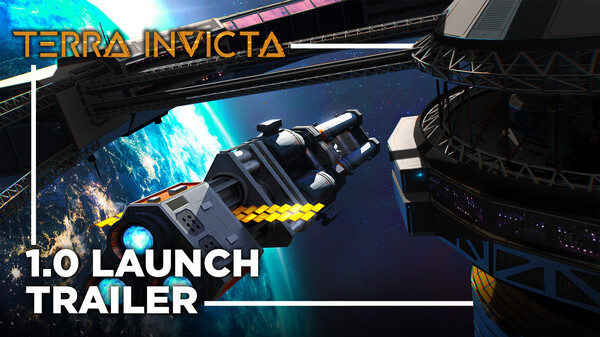
An alien invasion has fractured humanity into seven ideological factions each with a unique vision for the future. Lead your chosen faction to take control of Earth’s nations, expand across the Solar System, and battle enemy fleets in tactical combat.
Modeled estimate, not a reported figure. How we estimate →
Prices
Each in the currency that store quoted — not converted: the gap between two rows is the publisher's pricing, not an exchange rate.
Discounts
Every price cut of more than 20% we have observed, in each market that quoted one, with this game's chart position on either side of it. These are episodes, not a model: a sale is one event, and one event cannot tell you what the next one will do.
About
An extraterrestrial probe is detected approaching Earth. Unknown to humanity, an alien force has arrived in the far reaches of the icy Kuiper Belt and has begun mining a dwarf planet to prepare for an invasion.
With Earth’s nations unable to unite to address the alien arrival, transnational groups of like-minded political, military, and scientific leaders develop covert channels to coordinate a response. With the aliens' motives uncertain, factions emerge, driven by hope, fear, or greed.
You will control one of these factions.
The Resistance works to form an alliance of nations to mount a coordinated defense.
Humanity First vows to exterminate the aliens alongside any who sympathize with them.
The Servants worship the aliens and believe they will solve all the troubles of the world.
The Protectorate advocates negotiated surrender as the only means to avoid annihilation.
The Academy hopes the alien arrival heralds the opportunity to form an interstellar alliance.
The Initiative seeks to profit from the chaos and destruction.
Project Exodus plans to build a massive starship and flee the Solar System.

A distant anomaly, a mysterious crash site, and a spike in reported disappearances. Could this truly be humanity's first contact with extraterrestrial lifeforms? As your field agents investigate sightings and your scientists race to explore new fields of research, you will slowly learn the truth behind the alien arrival.
From early sightings and UFO crash sites to rampaging alien megafauna and robotic armies, it will rapidly become clear that the other six human factions are not your sole competition. Throughout the game, illustrated events will present you with difficult choices as you investigate growing alien activity on Earth. Uncover the mystery of the aliens’ origins and motives – unless, of course, you are Humanity First, and all that matters to you is extermination.
Terra Invicta has a global research system that creates opportunities for both competition and cooperation. Shared scientific advancement unlocks private engineering projects. Factions can choose to focus on private projects, at the cost of weakening Earth as a whole and ceding influence over global research direction to other factions with different priorities. Left unchecked, factions like the Servants or the Initiative may steer the world’s efforts toward developing methods of social control, rather than propulsion or weapon systems.

You begin on Earth as the head of a shadowy organization devoted to your chosen ideology. The aliens are coming – soon – but your first enemies (and perhaps allies) will be other human factions.
Lead a faction united by ideology, rather than a nation defined by territory. This is a stark change from most strategy games – in Terra Invicta, you will not paint the map with the colors of some chosen nation. Instead you will rule from the shadows and compete with other factions for control points representing a region's military, economic, and political leadership.
Geopolitics is your sandbox – unite or break apart nations as best serves your ends, while using those under your influence to conduct proxy wars against the other six factions. Earth’s regions are modeled in detail, from educational levels and unrest to GDP and inequality. Gaining command over regions with great monetary wealth and military power can allow you to implement your will on Earth, but the war for the Solar System will not be won without also securing regions containing space launch facilities.
Enact your will through a council of politicians, scientists, and operatives sent around the world (and even into space). The starting abilities of these councilors will improve through gaining experience and acquiring control over powerful organizations like intelligence agencies or wealthy corporations. A veteran commander may make the perfect choice to lead a tactical team under the council’s direction, while an experienced diplomat works to secure the funding needed to resist the alien invasion.
Seek out like-minded populations and politicians and take actions to convert followers of opposing ideologies. Public opinion is modeled along multiple axes – the Servants’ alien worship and the Protectorate’s advocacy of negotiated surrender may largely align in terms of support or opposition to the aliens, but events that show the aliens can be defeated have the potential to convince followers of the Protectorate that resistance is a realistic choice.

Terra Invicta bridges the gap between our modern-day world and the vast interstellar empires of other space strategy games, asking you to take humanity’s first steps in colonizing our Solar System, where over 300 asteroids, moons, and planets in constant motion create an ever-changing strategic map.
Start your campaign in the modern day and build your capabilities from the ground up, or begin in the near-future and push into the final frontier from the very start – build space stations and planetary bases, quickly gain control of the inner Solar System, and prepare for the existential threat growing at the far reaches of the system.
Take your faction beyond the confines of Earth, building space stations to act as shipyards and fuel depots, constructing mining stations to acquire advanced resources, and establishing bases to serve as research or construction facilities. Terra Invicta zooms into the strategic geography of the Solar System, presenting space not as a series of isolated stars that you order units to move to and from, but rather a rich and varied landscape of asteroids, moons, dwarf planets, gas giants, and other celestial bodies creating texture and tactical opportunities at every turn.
The expansive map is constantly shifting as celestial bodies orbit the Sun. This means your space stations and forward operating bases are constantly moving as well, forcing you to plan accordingly and adapt to the evolving circumstances – your colonies among the Jovian moons could find that a once-distant alien military outpost or Initiative privateering base has suddenly become a close neighbor.

Terra Invicta explores what might be – how colonies on Mars might function, what plausible engines could power our spaceships, and the nature of how space colonization and warfare might proceed. Players may find themselves establishing a mining base on the asteroid 16 Psyche after noticing it is rich in metals – and then learn that in our world NASA planned The Psyche Mission for the same reason.
Exploring and eventually colonizing space will require access to many resources: water for life support and propellant, metals for manufacturing, fissiles for nuclear drives and weapons, and more. At the start, you’ll have no choice but to acquire such resources on Earth and suffer the high cost of using rockets to escape Earth’s gravity, but over time you’ll increasingly choose to instead rely on asteroid mining and other means of securing local supply.
Spaceship design in Terra Invicta draws from the best of scientific speculation and hard science fiction. You can design your own ships, selecting from an array of weapons, drives, and other modules to place on a variety of hulls, ensuring each ship has the right mix of fuel capacity, maneuverability, and other capabilities.
Tactical combat is built around a realistic simulation of Newtonian physics, where momentum and maneuver in 3D space are just as important as the firepower your ships carry. Fire missiles and use point defense cannons to destroy incoming projectiles; build up momentum then swing hard to bring the enemy into your firing arcs; or grapple with the difficult decision to retract radiators and sacrifice heat dissipation to achieve better armor against an incoming enemy barrage.

Terra Invicta is built with modding support in mind, and much of the game is accessible to modders without a coding background. We hope that the Solar System setting and geopolitics simulation will provide a useful framework for modders to realize their own creative visions.
Add-ons
Each DLC is estimated with the same model as a game, then summed — a modeled figure, not reported DLC sales.
Sums Steam only; Xbox, GOG, Epic publish no volume signal, so the true total is higher by an unknown amount.
| Store | Price | Audience | Score | Chart | Est. revenue |
|---|---|---|---|---|---|
SteamYou are here | $19.99−50% | 9.9Kreviews | 80% | — | $14.5M |
| $39.99 | 273ratings | 58% | — | not modelled | |
Updates
Build ids and update times come straight from Steam's PICS — the same source SteamDB reads. Patch history grows as we record new builds.
Engagement
Reviews
Themes across 981 recent reviews and how positive each mention is. A keyword signal, not full sentiment analysis.
Reviews
Before anything else: use the wiki. It is incredibly detailed, and without it (and without Claude to help with analysis and searching for information online) I would have struggled to nail down many of the game mechanics. But boy, do I love this game. I think about Terra Invicta for hours outside of when I'm actually playing it - it is just so damn interesting. It is a strategy game, yes, but strategy across so many beautiful dimensions and levels. The early game is a spy thriller of secret societies and chess-like manoeuvring. The mid game is about becoming intimately acquainted with the solar system and the physics constraining your attempts at guerrilla warfare. The late game is space opera fused with the reshaping of human history and future. Some have criticised this game for "tech-bloat" and excessive logistics work. As the saying goes: amateurs study strategy, professionals study logistics. I have never played a game that cares as deeply about realism as Terra Invicta does - it seems to be the developers' guiding star, and it is what makes this game stand head and shoulders above its competitors. The so-called tech-bloat exists because in the real world, some technologies are dead ends, and you rarely know what is truly valuable until you have had the chance to try it. To illustrate the attention to detail of this game: when you bombard a target from orbit with a railgun firing physical slugs, the game models your orbital velocity, the gravitational effect on the projectile, air resistance (where the planetary body has an atmosphere), terminal velocity as a function of the slug's mass, and many factors beyond that - ultimately arriving at a figure in megajoules of kinetic energy, which translates directly into damage. And that is just one tiny corner of the game. That is the level of care for realism the developers bring to it. If that sounds genuinely exciting to you, you will love this game. If realism is not something you care about, feel free to skip it and play something else.
Media

Related
Related
Price dynamics, follower growth, revenue and sales trajectories with interactive tooltips
This and every other Pro feature is free until October 20, 2026. A free account is all it takes.
Every market we collect.
Reviews, worldwide (the counter carries no country): 16.29/day in the week to Jul 30 → 14.14/day in the week after.
For scale, across Steam · Top Sellers · Brazil over the last 30 days: the 26 chart moves that followed a price cut of more than 20% went a median of 7 places towards #1, and the 2,400 moves with no price cut behind them went 2 away. One store, one chart, one country — it is the only place we have enough observations to say even that.
Prices outside the United States have been collected since 6 August 2026 and chart positions since 19 July 2026, so a cut older than that has no market to compare and a market that joined later has no history yet. Nothing here is converted between currencies.
Genres
Stats
All-time low is the lowest price we've recorded for this game since we started tracking it.
Languages: English*, French, Spanish - Spain, Japanese, Simplified Chinese, Traditional Chinese, German, Polish, Portuguese - Brazil, Italian, Czech, Korean +2 more
| $19.99−50% |
| 113ratings |
| 80% |
| — |
| not modelled |
| $39.99 | — | 92% | — | not modelled |
Matched by title — a reused name can pair the wrong games. * is a critic aggregate. Prices and positions are each store's United States storefront; Epic charts worldwide. Audience and Score too, except Steam's, which is worldwide.
Hours played at review time, across 983 reviews with recorded playtime.
positive critical· bar length = how often the theme comes up
(This is a no but less because the game is truly bad so much as the Dev Team's priorities are very out of wack.) Quick Summary: Terra Invicta is a very deep game that tries to "realistically" simulate an alien invasion scenario. Everything follows what we know of physics (with a single exception designed to make the narrative flow). Space warfare is designed around hyper-realism- all the weapons are based on things that are believed to be plausible in reality. It's very much a "rational fic" setting were everything is supposed to make sense. Setting aside the Servants and the Protectorate, you have your choice of several different flavors factions with different views on how to react to the alien invasion. Gameplay mostly doesn't change that much between factions, and while victory conditions and narrative events differ somewhat the game is more or less the same. The Academy doesn't play measurably different from the Humanity First, except for a few factional buffs. On Earth you have 5-6 agents playing a turn based game with actions scheduled to occur at various points in 2 week cycles while in Space you can tell you ships to do things at any time. The game- on "Brutal" difficulty- basically revolves around maximizing your returns on resources by straining as much as possible (chiefly mining and research bonuses) in order to win a war of attrition against constant waves of alien warships. How much stuff you have in space is tightly limited by a "Mission Control" with (operational) mines having additional numerical restrictions. There are a million other subtleties like how research works but that's a very 100ft summary. The core gameplay loop is genius and is radically different from anything else you'll see in the Grand Strategy space. The problem (in my view) is Pavonis is still very much a modding team and not a true game dev team. Very basic QOL is almost totally absent which slows down the game a lot and makes it tedious and the Devs don't really respond to comments about QOL features instead focusing on ways that they view the game as too easy or exploitable. It's very common sentiment amongst the game's Reddit Community that space battles (which use an RTS system) are a slog with really bad controls but the UI for ship battles is as far as I can tell unchanged from initial release. That's just the tip of the iceberg though for me a death by a thousand cuts * Naming your ships- my god this triggers me. If you change the name of a space ship, then click off the text bar the ship's name autoreverts. You have to click save. It's tiny but it's an obnoxious feature that you really notice and it's emblematic of the game's larger problems * The templating system- the way your bases and stations work there are a fixed (per tier, there are 3) number of slots for modules. Where you place a module basically doesn't matter (mines have a fixed position but you can place them where ever). But the templating system saves the exact location of every module [i] even though it is essentially [/i]; if I want a base that is a Farm, an Ops Center, 5 Skunkworks, and 4 Nuclear Reactors. But if I have a base with say a Farm, an Ops Center, 3 Skunkworks, and 4 Nuclear Reactors and they're in a different configuration instead of just building 2 more Skunkworks in the empty slots the game will rebuild any module not in the correct position so you end up manually building your bases more than you should have to. * Revenues- there are various techs that say, give you 15% more water from mines. For optimization purposes I'm often wondering how much water that would give me. Except the game only gives you water "profit" and not "revenue". I can see how much water I'm producing on net in a month, but there's no way to tell how much I'm losing on upkeeps. If you want to tell this exactly you have to literally spreadsheet it out; I end up basically eyeballing something I should be able to tell in about 5 seconds * The skirmish mode has to load ship templates from a save file- this is very important because the only way to really learn ship match ups is through trial and error. So if I want to actually edit my match ups . And that's just for testing a human v human spaceship match up. AND THERE'S ZERO WAY TO FORCE ALIEN CRAFTS TO USE A SPECIFIC DESIGN. In effect, if I want to get a sense of what weapons I should use against what craft and at what stage of the game I have to play I have to play multiple hundred hour campaigns- and these things get rebalanced on a dime. That's actually devastating because you're research order often depends on what weapons, engines, and armor are worth researching at what times and when you can afford to spend research on longer term projects that will help you strategically. * Hidden tech tree- for (somewhat understandable) reasons the tech tree hides certain techs to avoid spoilers. But if you're playing a second time there isn't a start option to just reveal everything. This isn't a giant annoyance but it's a oversight * (Apparent) Lack of modding support- pursuant to all previous points, none of this would be a problem if the game had a modding scene to speak of as most of these points could be fixed pretty trivially. But for a game made by modders there doesn't seem to be a whole lot of useful mods All this sounds really specific but you really feel this if you're trying to keep everything optimized it kills what is otherwise really ingenious game design. There's clearly a lot of energy going into this game but it feels like a lot of the changes are focused on ratching up the difficulty at the cost of comfort (making releasing and unifying nations more challenging) rather than on QOL fixes and fun stuff like adding narrative events to make the world feel alive. Which is really a shame. Edit: Further reflections One of the issues of the game as it is right now is also that you can make a mistake 6 hrs ago and have it essentially cost you the game (not literally as it is very hard to totally lose, but to suffer a setback that literally wastes hours of work). I recently encountered an annoying behavior where the AI sends out several fleets in rapid secession which effectively hides the number of ships they are sending at you. Story short I didn't invest enough in my fleet and console commanded myself a win simply because I made a mistake a few month ago in game time. This is really not friendly to beginners.
Derartige Spiele liebe ich. dieses jedoch ist so unglaublich schwer, daß es mit meiner Spielweise völlig unspielbar ist. Die Logik in diesem Spiel ist für mich ein Rätsel. Obwohl man selbst gegen die Aliens kämpft, arbeitet wirklich jede Fraktion gegen den Spieler. Auch humanity First von denen man erwarten würde, daß sie gegen die untertanen und die akademie kämpfen würden, tun die entweder gar nichts oder kämpfen an der Seite der Untertanen gegen dich. Geht es daran in den Weltraum aufzubrechen, sichern sich die gegnerischen Fraktionen bereits die besten Plätze noch lange bevor deine Erkundungssonde, die du direkt nach Erforschung der entsprechenden Technologie losgeschickt hast, überhaupt eingetroffen ist. Wie geht das? Das will ich auch können!!!! Generell scheint die KI bei den Missionen immer Vorteile gegen dich zu haben. Während dein Gegner scheinbar mit Leichtigkeit Technologie und Einrichtungen, stiehlt, sabotiert, einnimmt oder was auch immer, ist es mit deinen Ratsmitglied, selbst wenn man es auf die höchste der entsprechenden Fähigkeitsstufe gebracht hat, zum Teil unmöglich das selbe zu tun. am merkwürdigsten finde ich die Ratsmitglieder untersuchen Mission. Falls es mal zufällig gelingt ein gegnerisches Ratsmitglied zu untersuchen, gehen diese meistens sofort danach in Deckung und genau dieses Ratsmitglied kann in der selben Runde scheinbar noch eine 2. Mission durchführen. Im umgekehrten Fall, wenn du mit deinem Ratsmitglied in Deckung gehst, kannst du keine weitere Mission durchführen. Sobald mit diesem Ratsmitglied eine andere Mission durchgeführt wird, haben alle Fraktionen dieses Ratsmitglied sofort wieder auf dem Schirm, während es für dich harte mühsame Arbeit ist die gegnerischen Ratsmitglieder überhaupt ausfindig zu machen. Die KI hat bei der Entscheidungsfindung ohnehin schon Vorteile, da muss sie das nicht auch noch bei den Spielmechaniken haben! Wer damit zurecht kommt, ... herzlichen Glückwunsch! Ich kanns nicht! Der Spieler sollte mit Anzahl der Aktionen und Möglichkeiten der KI auf Augenhöhe begegnen können. Klar, daß die Aliens technologisch weiter sind, aber auch sie sollten pro Runde nur eine Aktion pro Agent haben dürfen.
Was mit an dem Spiel sehr gefällt ist die Komplexität. Der Forschungsbaum ist riesig, das Sonnensystem detailliert und die Möglichkeiten im Schiffbau fast unendlich. Es zwingt einen weit voraus zu planen und bestraft auch Dumm- und Faulheit konsequent. Das Spiel mit den Agenten und dem Beeinflussen der Nationen ist auch gut gemacht. Im Grunde ein sehr schönes Spiel wenn da eine Sache nicht wäre. Daumen runter gibt es wegen der unverschämt dreist cheatenden KI. Beispiel: Wenn man mit 80-90% Unterstützung in der Bevölkerung und einem Agenten mit einem 25ger Skill (max Skilllevel) einen ungeschützten Knoten weder schwächen noch angreifen kann (0% Chance wegen wirtschaftlicher Macht der Nation) wie kann dann die KI mit 5-10% Unterstützung und einem Agenten mit einem Skill zwischen 5 und 12 geschützte Knoten einfach erobern? Mich störts nicht wenn die KI ein paar Boni bekommt weil eine KI zu programmieren die bei derart vielen Möglichkeiten gut mithalten kann wirklich schwer ist. Aber die KI derart cheaten zu lassen und sie grundlegende Mechaniken komplett aushebeln zu lassen ist einfach nur schlecht und zerstört zumindest mir den Spielspaß.
Very autistic game for space nerds. It's nice to have a game where ploting [strike] survival [/strike] world domination for 30 hours is something normal and not a deranged concept worthy of a clickbait youtube video. Also this game is literally a 1 to 1 of Liu Cixin's book "dark forest" so if you liked that book and the series you're welcome.
Для ЛЛ: если Вы - любитель всевозможных глобальных стратегий в космосе с кучей всевозможных механик - Вам точно сюда. А теперь для тех, кто хочет больше подробностей. Игра начинается с того, что люди, после стольких бесчисленных попыток в своей истории, фиксируют сигнал, который явно был искусственного происхождения. Однако многие от него отмахиваются, считая простой ошибкой, пока на Землю не врезается инопланетный корабль. С этого момента вся жизнь человечества полностью меняется. Мир захлёстывают гнев, паника и любопытство, что приводит к крупнейшему расколу общества в истории. На фоне этих событий, словно из ниоткуда, возникает множество наднациональных организаций и фракций, которые стремятся закрепиться и удержать власть в этом хаосе. Собственно, за одну из этих фракций Вы и будете играть (о них чуть позже). Всего в игре 3 начальные даты: 2022, 2026 и 2070 гг. От этих дат сильно зависит как политический климат на планете, так и развитие некоторых технологий, в том числе касающихся межпланетных перелётов. Хотя, как показывает практика, подавляющее большинство играют либо с 2022, либо с 2026. Вне зависимости от даты старта, Вам предстоит первый этап игры, который, по сути своей, растянется практически на всю игру: захват, удержание и развитие государств на Земле при помощи советников со своими уникальными чертами и характеристиками. Да-да, несмотря на появившийся потенциально экзистенциальную угрозу, страны никуда не делись, как и их войны, конфликты, союзы, народные волнения и так далее. Причём у каждого государства есть свои показатели, коих тут предостаточно - начиная от показателя демократии, уровня образования и всеми любимого ВВП, заканчивая количеством армий, наличием ядерного оружие и уровня сплочённости общества. Все эти показатели можно менять при внедрении в страну в большую или меньшую сторону, в зависимости от ваших планов на конкретное государство. Что интересно, не всегда самые высокие значения являются наилучшими. В некоторых ситуациях тоталитарное общество приносит больше выгоды, чем демократическое, а высокие и низкие уровни сплочённости одинаково вредят производству науки и т.д. Вариаций масса. А добавьте теперь вечную грызню между фракциями, которые воруют друг у друга точки контроля, убивают или вербуют советников противника и просто устраивают диверсии на космодромах (ключевые постройки в рамках игры так-то), да ещё и пришельцы суету наводят, а со временем всё более активно. И борьба за Землю характеризует всё начало игры и большую часть середины. Дальше Вы уже, скорее всего, захватите львиную её часть (во всяком случае, Северную Америку, Европу и Китай) и планета хоть и останется вашим основным ядром, но фокус переключится на происходящее в космосе. Собственно, считаю необходимым немного рассказать про фракции, за одну из которых Вы и будете играть. Если не считать пришельцев (за них играть нельзя), в игре существует 7 организаций. Каждая имеет собственные особенности: идеологию, миссии (включая основную ключевую), уникальные выборы в некоторых событиях, отдельные технологии и многое другое. Мы кратко рассмотрим каждую. 1. Слуги. Слуги считают, что пришельцы пришли помочь человечеству в той или иной форме, и стремятся ВСЕМИ доступными способами поддержать инопланетян, чтобы те захватили власть над Землёй. По всеми я подразумеваю буквально всеми. Это фракция у меня совершает больше военных преступлений, чем все остальные вместе взятые (в игре есть счётчик). Это одна из двух фракций, которой помогают пришельцы и единственная фракция, которая не может с ними воевать напрямую, полностью подчиняясь. И Слуги, пожалуй, единственные, кого ненавидят все остальные в игре. Против них сплачиваются буквально все остальные организации в определённый момент в игре (абсолютно никто не хочет такого сильного влияние инопланетян). Несмотря на это, благодаря уникальным взаимодействиям с пришельцами, это фракция считается наиболее простой. 2. Протекторат. Протекторат стремится выполнить требования пришельцев, но, по возможности, сохранить максимум суверенитета и автономии для человечества. Весьма неоднозначная фракция, которую крайне не жалуют в сообществе "Терры", тем не мнее она существует и за неё можно играть. Это вторая фракция, которой могут помогать пришельцы при определённых условиях. Однако Протекторат, в отличие от Слуг может и воевать с пришельцами, когда это необходимо. Сложность 2 из 5. 3. Академия. Академия - объединение учёных со всего мира, которые хотят наладить контакт с пришельцами и договориться хотя бы о перемирии, а в дальнейшем, потенциально, и до союза. Это третья и последняя фракция (помимо Слуг и Протектората), способная к прямому диалогу с инопланетянами. Однако никакой помощи и ресурсов от них Академия не получает, полностью полагаясь на собственные силы. Никто так же не запрещает воевать с пришельцами. Со старта Академия владеет одной из двух станций на орбите Земли - МКС, что даёт некоторые преимущества и штрафы со старта. Считается самой сложной из всех фракций. 4. Проект Исход. Хотят переселить всё человечество с Земли на другие планеты при помощи корабля-ковчега. В принципе, на этом всё. Очень тихая и спокойная фракция, как по сюжету, так и по отыгрышу, что ИИ, что игрока. Хотя к пришельцам испытывает безразличие, может иногда даже напасть на них. Но происходит это крайне редко. Всё-таки их главная задача спастись от инопланетян, а не провоцировать их. Вторая фракция, которая имеет со старта во владении космическую станция - Тяньгун. Сложность 2 из 5. 5. Инициатива. Это прям эталонные капиталисты из Киберпанка. Эта фракция стремится получать максимум выгоды, богатства и власти в период паники, хаоса из-за пришельцев. В целом, вся их сюжетная ветка и построена вокруг этого, а также изучения попыток подчинения населения. В целом, к инопланетянам они так же, по большей части, практически безразличны. Сложность средняя, 3 из 5. 6. Сопротивление. Стремятся, как понятно из названия, сопротивляться любой инопланетной деятельности в пределах Солнечной системы. В принципе, это буквально партизаны, которые стремятся уничтожить всех пришельцев именно в этих пределах, чтобы человечество само выбирало своё будущее. Это, кстати, базовая фракция для прохождения обучения. Сложность тоже средняя. 7. Человечество превыше всего. Классические фанатичные ксенофобы. Цель - уничтожить ВСЕХ пришельцев и тех, кто их поддерживает (Слуги и Протекторат). Как в Солнечной системе, так и за ней. Чтобы никто и никогда больше не угрожал человечеству с других звёзд. Самая агрессивная фракция по отношению к пришельцам, но с ней вполне реально договориться или сосуществовать, если Вы не Слуги/Протекторат. Сложность 4 из 5. Ближе к середине игры Вы уже начнёте постепенно перебираться с Земли в космическое пространство. Начнётся всё с околоземной орбиты в виде станций, которые придётся строить и выводить с поверхности планеты, а далее - добыча ресурсов на Луне, Марсе, астероидах в поясе и так далее, строить первые космические корабли и сражаться за ценные месторождения с другими группами. Ваша задача как можно лучше и тщательнее подготовиться к полноценному прибытию пришельцев на Землю, вне зависимости от избранной фракции. Конец же игры довольно растянут по времени и сводится к выполнению вашего основного квеста. А это может занять целые десятилетия. Итак, подводя итоги, думаю, стоит перечислить плюсы и минусы игры. ПЛЮСЫ. + Проработанная стратегия, в которой множество механик, зачастую неочевидных. На освоение некоторых может уйти не один десяток часов. + Вариативность прохождения за различные фракции. + Уникальный и редкий жанр "Инопланетного вторжения", который мы редко видим в глобальных стратегиях. + Приятная музыка. + Возможность геноцидить инопланетян (опционально). МИНУСЫ - Затянутый финал. - Оптимизация. Под конец может сильно тормозить и лагать. - Очень неудобный, тяжёлый и громоздкий интерфейс, к которому надо привыкать. - Отсутствие мультиплеера (мой личный минус). В общем, всем любителям космических 4х рекомендую.
游戏题材新颖,游玩体验糟糕!重复操作性高!价格偏高!
As promised, here is the revised review of the game after 100h. In general, Terra Invicta is a deep, very immersive game, with a lot of fun mechanics that will keep you engaged since minute 1 if you like grand strategy. However, during the course of the game I've found so many things that need to be improved that lowered my initial excitement about the game, but overall the experience is quite good! For those considering buying the game: if you like slow paced, deep, decision-matters real strategy, go for it. But be ready to lose. Don't expect a win-all-the-time kind of game. Let me explain in detail my recommendation: WHAT I LIKE - The game is very fun when well oriented. This is the most important thing! - Ideal for long sessions, can consume hours without you noticing it. - There are several paths that can take you to victory, and a lot of decisions to be made: USA? EU? India? China? I personally went for the EU in my first gameplay, which is not the easiest path, and had a blast. - A lot of choices for advisors, and many viable strategies to win (or to lose, don't forget consequences will come far after you make a choice). - Deep planning: you'll need a notebook and plan accordingly. Which I personally love (used to do this a lot in EU4 and other complex games). - Slow paced battles, long wars. Very realistic, despite exhausting at times. - Earth, Moon, Mars, asteroids… there are many things to cover and plan each turn. Ensure you like doing a lot of different things (it may become repetitive in endgame, look below). - War is slow, but rewarding if you are patient, both in Earth and in the Solar System. - The game rewards experimentation. I discovered my own missile doctrine for mid-game through trial and error after reading some guides about what worked for others. The same in end-game for bigger ships. It takes time, but you get to understand how to create cost-efficient and powerful ships if you are patient. WHAT I DISLIKE - Combat really needs improvement. You see that the devs threw in a lot of love into the system, but can be exhausting and boring, mainly when you have to manage many ships. Auto-battle is normally something, but the game penalizes you in certain scenarios if you don't play manually. - Mechanics are complex for many things, then they tend to be very simple in key aspects breaking realism: in endgame the aliens may destroy 2 of your fleets and leave a base undefended. As their "hate meter" goes down for this destruction, your base isn't attacked. I totally get it's done for balance and to avoid player frustration, but... - The pattern is "inconsistent depth": granular combat vs binary hate meter, deep research vs basic diplomacy with only NAP and Intel Exchange, layered economy vs hidden critical info. - Critical information is hidden. Region size in km², for example, is not shown in-game (you need the wiki to know army crowding penalty thresholds). MC contribution per hab is opaque (you end up understanding only the mines consume it but nothing clearly says it). Apparent loyalty vs real loyalty requires investigation missions to verify, and once you investigate the device to fix it in my case I experienced a bug, keeping the loyalty static despite doing more than 10 successful inspire missions. - Tech asymmetry vs aliens is brutal and poorly telegraphed. Your missile doctrine works fine against humans and light alien ships, then suddenly collapses against alien Cruisers and Battlecruisers because their PD is two tiers ahead. The game doesn't warn you that your fleet is potentially obsolete nor teaches you how to understand this before a battle. You only find out when you lose all your ships in a single encounter. - The UI needs improvement. And with the passing of turns, clunky. I've tried playing on several computers (my MateBook with Linux via Proton, my ROG Ally and even GeForce Now) and it's clunky and heavy everywhere. - Micromanagement in endgame can be tiring, shortening your sessions (because you get bored). After 96h I found myself opening the game and closing it again after 20 minutes because the amount of clicking required to maintain everything was no longer fun. And coming back in a couple of days with replenished mental energy. - Many texts of investigations you completed are AI enlarged… clearly. Would be best if summarized. They provide nothing useful to the game. WHAT I MISS - More diplomacy options. Right now it is extremely simple: non-aggression pact, intel sharing and trade, that's all. No coordinated attacks, no control points exchange, no joint operations. With 7 factions in play, the diplomatic layer should be one of the most engaging systems of the game, and it ends up being few checkboxes. - Better automation systems. It would be great to be able not just to "automate" an Advisor (that will 99% of the time protect interests, and when there is none to protect, provide advice), but for example automate a specific task with priorities like: steal projects from enemy when possible, if none available, destroy alien assets, if not, look for agents. This would be a QoL feature that would drastically change the game, as you are in the middle of many battles in endgame and you don't want to interrupt to manually assign 5 missions each turn. - Orgs. They don't explain how important they are. In my first 30 hours I didn't realize that +3/+5 Admin orgs are game-changing. The tutorial mentions Orgs once and moves on, therefore you miss massive efficiency gains during early-mid game (as you don’t have that much resources to correct when you realize), penalizing the new player experience a lot. - Tutorial and guidance. You have some sort of initial tooltips explaining the UI and very simple things, but nothing about the layers that actually matter (MC management, hate floor mechanics, claims, faction ideological distances, research contribution effects on project unlock chance, etc.). Overall: an unpolished gem. But a gem after all! If it gets polished in future patches, it will be a masterpiece. My main concern is if the devs are going to focus in improving the current game (as No Man’s Sky devs did) or just jump into DLCs. Right now, my rating would be a solid 7/10. Considering that for me EU4 would be a 9/10, not bad at all for a small studio like Pavonis. Hope this review helps! And in case of doubt, buy the game and try for yourself. You will be helping a group of independent devs that truly deserve your purchase. PS: keeping my original post below after some hours of gameplay for reference. — Still very early in my first campaign, but my first impressions, despite the fact that I already know I'm not winning in my first attempt, is that this game is the foundation of a masterpiece. You can see my 1500+ in Europa Universalis IV and similar games, and I feel that the complex mechanics of Terra Invicta are perfect for experienced grand strategy gamers. Absolutely worth the price. PS: I'll update this review once I reach 100 hours in the game.
tl;dr:很喜歡這款遊戲,雖然有硬傷也有可以優化的地方,但是稀缺性和瑕不掩瑜的事實讓這遊戲很值得讓硬核玩家玩。 先說硬傷,學習週期太長,同時遊戲指引不足。和P設的《羅馬》很相似,太多的深而廣的內容讓學習變得很痛苦,而且沒有什麼回饋。遊戲大體分成三個階段:地球階段,要和一群死媽作弊AI鬥智鬥勇,這個部分有點雞肋,一方面「優先事項」帶來的影響很小(我用了很久才弄明白這是什麼),另一方面吞併、合併之類的玩法也很麻煩,要先變成盟友、然後建立盟友、而且還要變成「無敵意」地區才可以合併(其實就是政府體制要更高),如果靠武力基本上同等級的根本不可能成功佔領。太空階段,這遊戲的精髓,但是有太多讓這局存檔失敗的風險了,太空力不夠,忘記建立防衛軍結果被人一鍋端,太空站的效果也很不明確,最麻煩的是要同時兼顧地球和太空的事情,要一個一個殖民地建東西(還沒有快捷鍵)的同時注意地球別被司馬AI偷家了。最後的星戰階段,「什麼是好船?」不知道,「什麼是delta-V和加速度?」不知道,「防衛模式、導彈進攻模式、進攻模式是什麼?」不知道,學習週期十分漫長。 重點是地球、殖民地、太空戰艦是要同時兼顧的,你要讓你的特使打外星人的同時規劃那些卡的不行殖民地,然後去微操那些太空垃圾,全部東西合在一起讓這遊戲的學習週期變得十分漫長,同時需要兼顧的東西太多了,一個忘掉就會直接暴死,三個階段其實已經是三款獨立的遊戲了,地球階段可以是「發現有外星人的傳言,然後要一邊操縱地緣政治的同時研究對抗外星人的科技,像鋼4一樣建立軍隊,像EU4一樣搞內政」,太空階段可以是和外星人鬥智鬥勇,佔領盡可能多的殖民地等等。把所有東西合在一起是這遊戲的硬傷,更莫論那幾十款推進器、導彈、反應堆、武器有什麼區別了,研究這些根本就是個惡夢。 而且複雜不是問題,優化差才是,從地球切換到太陽系會卡的不行,不小心點到殖民地又要卡,點開建造介面又要卡,設計戰艦、建造戰艦要卡,卡頓讓這遊戲的趣味要打上折扣,而且各種操作還十分繁瑣,造船要一個船塢一個船塢得點,殖民地要一個一個建築建造,不能用enter直接確定等等等等。太空戰鬥更是一個複雜到不能再複製的機構,我已經無法吐槽了。要解決也很簡單,加上各種快捷鍵,不要用太空用類似在戰略室的地圖…… 但是這遊戲還是十分好玩的,哪怕是太空模擬器也已經足夠了。而且各種科學腦洞也看得喔我津津有味,如果可以像CK3一樣加上各種註釋那這遊戲會變得更容易入手的。
I give this a positive review but mostly because of the potential this game has and not for what it currently is. I hope with further DLCs ,updates or MODs this potential can be unlocked. The game has basically three components: -The geopolitical Earth part -The space economy layer -Space Fleet building and space battles There is no question that the geopolitical Earth part is by far the strongest bit and most of fun of the game at least until the mid-game. It is also where you spend most of the start of the game. Once you figured out how to play the geopolitical layer which takes a lot of time, many attempts or research from guides or watching other players. Unfortunately later in the game it morphs from being very interesting to becoming a bit tedious in basically trying to defend your influenced mega countries against the AI magical RNG roll The space economy layer is which I was most excited about initially when I read about TI I have to admit I found it a massive let down. Initially it is exciting to be in Space race to get to your first Luna, Mars or Asteriod outposts but it becomes very liveless very quickly basically once you have minning outpost going to just pump out all the materials in big enough quantities, there is not much more to it. There is no real exploration and not much further use for your surface outpost except for extracting resources. It also does not help that the player gets punished for expanding quickly while the AI players basically does not seem to suffer from that and basically spread to every body possible in the inner solar system. The last component fleet building and the turn-based space combat are probably the most tedious and boring bits of the game it does not help that there is simply just too many spaceship components of which 80% of are pretty useless which is just annoying once you find out that basically your first few ships you proudly might have build are good for nothing. Only onces your progressed deep enough in the rechtree it is actually worthwhile to build ships at all. Except for certain speed runs if you want to reach outer solar system more quickly than the competition. The game also tends to punish you when you expand or build up too quickly in this department
Active players
Estimated daily and monthly active players (DAU/MAU) modeled from peak concurrency.
Players by region
Where this game's players are, estimated from review languages.
Players also reviewed
The games this title's players most often review too — audience affinity.
Related
| Game | Estimated lifetime revenue | Reviews | Review score | Price |
|---|---|---|---|---|
| $7.4M | 6.9K | 83% | $39.99 | |
| $3.3M | 6.9K | 83% | $14.99 | |
| $216.2M | 137.4K | 88% | $49.99 | |
| $5.4M | 3K | 84% | $24.99 | |
| $4.8M | 3.8K | 67% | $39.99 | |
| $276.4K | 291 | 78% | $29.99 |
Related
| Game | Estimated lifetime revenue | Reviews | Review score | Price |
|---|---|---|---|---|
| $14.4M | 31.4K | 96% | $19.99 | |
| $14.5M | 14.6K | 92% | $25.99 | |
| $14.4M | 52.9K | 96% | $19.99 | |
| $14.4M | 27K | 98% | $19.99 | |
| $14.4M | 18.2K | 81% | $34.99 | |
| $14.6M | 8.8K | 41% | $59.99 |