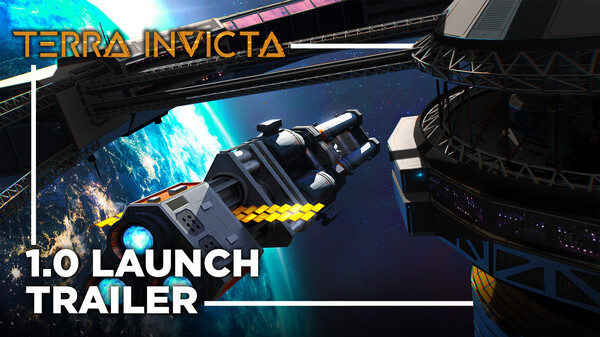
An alien invasion has fractured humanity into seven ideological factions each with a unique vision for the future. Lead your chosen faction to take control of Earth’s nations, expand across the Solar System, and battle enemy fleets in tactical combat.
Modeled estimate, not a reported figure. How we estimate →
Prices
Each in the currency that store quoted — not converted: the gap between two rows is the publisher's pricing, not an exchange rate.
Discounts
Every price cut of more than 20% we have observed, in each market that quoted one, with this game's chart position on either side of it. These are episodes, not a model: a sale is one event, and one event cannot tell you what the next one will do.
Reviews, worldwide (the counter carries no country): 16.29/day in the week to Jul 30 → 14.14/day in the week after.
For scale, across Steam · Top Sellers · Brazil over the last 30 days: the 25 chart moves that followed a price cut of more than 20% went a median of 10 places towards #1, and the 2,413 moves with no price cut behind them went 2 away. One store, one chart, one country — it is the only place we have enough observations to say even that.
Prices outside the United States have been collected since 6 August 2026 and chart positions since 19 July 2026, so a cut older than that has no market to compare and a market that joined later has no history yet. Nothing here is converted between currencies.
About
An extraterrestrial probe is detected approaching Earth. Unknown to humanity, an alien force has arrived in the far reaches of the icy Kuiper Belt and has begun mining a dwarf planet to prepare for an invasion.
With Earth’s nations unable to unite to address the alien arrival, transnational groups of like-minded political, military, and scientific leaders develop covert channels to coordinate a response. With the aliens' motives uncertain, factions emerge, driven by hope, fear, or greed.
You will control one of these factions.
The Resistance works to form an alliance of nations to mount a coordinated defense.
Humanity First vows to exterminate the aliens alongside any who sympathize with them.
The Servants worship the aliens and believe they will solve all the troubles of the world.
The Protectorate advocates negotiated surrender as the only means to avoid annihilation.
The Academy hopes the alien arrival heralds the opportunity to form an interstellar alliance.
The Initiative seeks to profit from the chaos and destruction.
Project Exodus plans to build a massive starship and flee the Solar System.

A distant anomaly, a mysterious crash site, and a spike in reported disappearances. Could this truly be humanity's first contact with extraterrestrial lifeforms? As your field agents investigate sightings and your scientists race to explore new fields of research, you will slowly learn the truth behind the alien arrival.
From early sightings and UFO crash sites to rampaging alien megafauna and robotic armies, it will rapidly become clear that the other six human factions are not your sole competition. Throughout the game, illustrated events will present you with difficult choices as you investigate growing alien activity on Earth. Uncover the mystery of the aliens’ origins and motives – unless, of course, you are Humanity First, and all that matters to you is extermination.
Terra Invicta has a global research system that creates opportunities for both competition and cooperation. Shared scientific advancement unlocks private engineering projects. Factions can choose to focus on private projects, at the cost of weakening Earth as a whole and ceding influence over global research direction to other factions with different priorities. Left unchecked, factions like the Servants or the Initiative may steer the world’s efforts toward developing methods of social control, rather than propulsion or weapon systems.

You begin on Earth as the head of a shadowy organization devoted to your chosen ideology. The aliens are coming – soon – but your first enemies (and perhaps allies) will be other human factions.
Lead a faction united by ideology, rather than a nation defined by territory. This is a stark change from most strategy games – in Terra Invicta, you will not paint the map with the colors of some chosen nation. Instead you will rule from the shadows and compete with other factions for control points representing a region's military, economic, and political leadership.
Geopolitics is your sandbox – unite or break apart nations as best serves your ends, while using those under your influence to conduct proxy wars against the other six factions. Earth’s regions are modeled in detail, from educational levels and unrest to GDP and inequality. Gaining command over regions with great monetary wealth and military power can allow you to implement your will on Earth, but the war for the Solar System will not be won without also securing regions containing space launch facilities.
Enact your will through a council of politicians, scientists, and operatives sent around the world (and even into space). The starting abilities of these councilors will improve through gaining experience and acquiring control over powerful organizations like intelligence agencies or wealthy corporations. A veteran commander may make the perfect choice to lead a tactical team under the council’s direction, while an experienced diplomat works to secure the funding needed to resist the alien invasion.
Seek out like-minded populations and politicians and take actions to convert followers of opposing ideologies. Public opinion is modeled along multiple axes – the Servants’ alien worship and the Protectorate’s advocacy of negotiated surrender may largely align in terms of support or opposition to the aliens, but events that show the aliens can be defeated have the potential to convince followers of the Protectorate that resistance is a realistic choice.

Terra Invicta bridges the gap between our modern-day world and the vast interstellar empires of other space strategy games, asking you to take humanity’s first steps in colonizing our Solar System, where over 300 asteroids, moons, and planets in constant motion create an ever-changing strategic map.
Start your campaign in the modern day and build your capabilities from the ground up, or begin in the near-future and push into the final frontier from the very start – build space stations and planetary bases, quickly gain control of the inner Solar System, and prepare for the existential threat growing at the far reaches of the system.
Take your faction beyond the confines of Earth, building space stations to act as shipyards and fuel depots, constructing mining stations to acquire advanced resources, and establishing bases to serve as research or construction facilities. Terra Invicta zooms into the strategic geography of the Solar System, presenting space not as a series of isolated stars that you order units to move to and from, but rather a rich and varied landscape of asteroids, moons, dwarf planets, gas giants, and other celestial bodies creating texture and tactical opportunities at every turn.
The expansive map is constantly shifting as celestial bodies orbit the Sun. This means your space stations and forward operating bases are constantly moving as well, forcing you to plan accordingly and adapt to the evolving circumstances – your colonies among the Jovian moons could find that a once-distant alien military outpost or Initiative privateering base has suddenly become a close neighbor.

Terra Invicta explores what might be – how colonies on Mars might function, what plausible engines could power our spaceships, and the nature of how space colonization and warfare might proceed. Players may find themselves establishing a mining base on the asteroid 16 Psyche after noticing it is rich in metals – and then learn that in our world NASA planned The Psyche Mission for the same reason.
Exploring and eventually colonizing space will require access to many resources: water for life support and propellant, metals for manufacturing, fissiles for nuclear drives and weapons, and more. At the start, you’ll have no choice but to acquire such resources on Earth and suffer the high cost of using rockets to escape Earth’s gravity, but over time you’ll increasingly choose to instead rely on asteroid mining and other means of securing local supply.
Spaceship design in Terra Invicta draws from the best of scientific speculation and hard science fiction. You can design your own ships, selecting from an array of weapons, drives, and other modules to place on a variety of hulls, ensuring each ship has the right mix of fuel capacity, maneuverability, and other capabilities.
Tactical combat is built around a realistic simulation of Newtonian physics, where momentum and maneuver in 3D space are just as important as the firepower your ships carry. Fire missiles and use point defense cannons to destroy incoming projectiles; build up momentum then swing hard to bring the enemy into your firing arcs; or grapple with the difficult decision to retract radiators and sacrifice heat dissipation to achieve better armor against an incoming enemy barrage.

Terra Invicta is built with modding support in mind, and much of the game is accessible to modders without a coding background. We hope that the Solar System setting and geopolitics simulation will provide a useful framework for modders to realize their own creative visions.
Add-ons
Each DLC is estimated with the same model as a game, then summed — a modeled figure, not reported DLC sales.
Sums Steam only; Xbox, GOG, Epic publish no volume signal, so the true total is higher by an unknown amount.
Updates
Build ids and update times come straight from Steam's PICS — the same source SteamDB reads. Patch history grows as we record new builds.
Engagement
Reviews
Themes across 980 recent reviews and how positive each mention is. A keyword signal, not full sentiment analysis.
Reviews
如果你是在寻找《钢铁雄心4》与《群星》之间的作品,那么恭喜你,找错地方了。 地球不屈这款游戏的野心是巨大的——在整个太阳系发展扩张,击败外星人,这些想法都很丰满。但实际上,制作组把它做成了庸俗的美国连续剧与无聊的地缘意淫的结合体。 先从太空部分,也就是还算说的过去的那部分开始说起。太空的发展还算符合物理,但外星人的发展过于缓慢且刻意,不过这是符合游戏性的设计,因此还能理解。 但地球部分就问题巨大了——谁能接受国家被六人小组架空?谁又能接受——如果你接受前者的话——我那控制各个大国的伟大组织,和其他路边小店一样的组织享有一样的行动速度?为了这套生硬的理事行为,制作组还设计了那套生硬的半回合制,你当然也有过看着飞船即将抵达时,被那恼人的回合打断思维的时候吧? 而地面政治更是搞笑:遵守周礼(如果外国朋友不清楚,这是中国西周时期的核心准则,主要包括各国不能随意开战,战争必须宣告,乃至射击对手必须只射一箭等迂腐规则)的战争和外交体系,以及孩子过家家一样的宣称范围,都使这款游戏与paradox的经典作品没有可比性。 综上,我强烈建议对这款游戏报以警惕,因为它实在不值得你花费这些时间。
Изначально склонялся к положительному обзору, но всё таки дал отрицательный. Почему? А всё просто: Первая треть игры. Интересная потасовка за малые страны третьего мира, борьба за страны первого. Для фаната игр параходов это прям сказка. Аналогично, интересно начинать осматривать солнечную систему, ставить первые станции и колонии. Вторая треть игры. Битва за Землю в принципе завершена, начинается доедание того, что не доел. Ну и объединение крупных стран в очень крупные. Тут уже возникают вопросы. Например, ну почему нельзя объединить всю Америку в одну страну, на кой ляд Северная и Южная? Правильно, чтобы задр**ивать игрока отправлять агентов туда обратно. Аналогичный вопрос к остальным частям света. По поводу открытия миллиона миллиардов типов двигателей ничего сказать не могу. Да, их много, но автопланировщик кораблей в принципе справляется со своей задачей. Главное, закидывать ну совсем уж затратные по топливу варианты в "устаревшие" и будет вам счастье. Прикольный аспект - начало холодной войны с пришельцами. Атаковать ты не особо то и можешь, но и пришельцы уже не вывозят твои оборонные флоты. Поэтому вы как биба и боба сидите в меме "ну давай давай нападай". Интересно) Последняя треть игры. Вот тут и произошел дроп игры. Победа игрока очевидна, но теперь начинается долгий и скучный захват системы. Нет, не так. ДОЛГИЙ и СКУЧНЫЙ. Буквально симулятор ОЖИДАНИЯ и СКИПА ХОДОВ. Остальные фракции переходят в режим "гнида". Объясняю: Вот отбил ты условную планету или спутник. Поздравляю, теперь ЖДИ постройки станции, потом ЖДИ постройки колонии на небесном теле. А это год - два. Хочешь оставить нт в тылу и полететь дальше в атаку а фиг тебе. Получай флот Сопротивления "Полупокер-696", собранный на коленке, который слабее всего, что существует, но которого хватает, чтобы выбомбить в ноль строющуюся станцию/колонию. Построить флот обороны? Ну это почти год, сынок. Поэтому твой флот атаки просто ЖДЁТ, пока всё отстроится. А может ЖДЁТ, потому что его заправка - год работы шахтёров-работяг всей системы, копающих водород. В общем, симулятор ждуна. Но время то нельзя просто запустить и погнали, нужно раздавать задания агентам, ибо полной автоматизации заданий нет. Поэтому последний этап такой хреновый. Цените своё время время. Ибо игра ваше не ценит.
Media

Related
Related
Price dynamics, follower growth, revenue and sales trajectories with interactive tooltips
This and every other Pro feature is free until October 20, 2026. A free account is all it takes.
Every market we collect.
Genres
Stats
All-time low is the lowest price we've recorded for this game since we started tracking it.
Languages: English*, French, Spanish - Spain, Japanese, Simplified Chinese, Traditional Chinese, German, Polish, Portuguese - Brazil, Italian, Czech, Korean +2 more
| $19.99−50% |
| 113ratings |
| 80% |
| — |
| not modelled |
| $19.99−50% | — | 92% | — | not modelled |
Matched by title — a reused name can pair the wrong games. * is a critic aggregate. Prices and positions are each store's United States storefront; Epic charts worldwide. Audience and Score too, except Steam's, which is worldwide.
Hours played at review time, across 982 reviews with recorded playtime.
positive critical· bar length = how often the theme comes up
If you've played games like Stellaris, Civilization, Rimworld, or the like and thought to yourself, these games are far too simplistic, easy to understand, and a UI that basically plays the game for you, then this incredible gem will be right up your alley. The spiritual child of XCOM's long war, this game is like if you took a game of Risk, blew out it's complexity, and then said, wait, HAH, turns out that earth is literally just a jumping off point for solar domination to rebuff the looming alien invasion. This game is incredibly rewarding, has an incredibly addictive gameplay loop, and is an armchair strategists dream. But, be warned, this game will make you work for it. Many elements of the simulation approximate real world challenges (e.g. there are many, many, many researchable rocket drive lines, and many of them are only useful temporarily or end up being complete dead ends). You may be trying to fend off an alien invasion, but, brother, this is a simulation of the world in 2026, and guess what else is happening - that's right, ice shelf collapse! The UI, while serviceable, cannot be described as friendly. All the information is available, but you may find yourself constantly opening and closing two different screens because you forgot the damn name of the asteroid you were trying to mine (because the asteroid and the outpost locations have different names). The attention and care that was put into the simulation is top notch and is the epitome of "one more turn." If this style/genre of game is your cup of tea, then I highly recommended Terra Invicta.
First playthrough, tried and failed to get a foothold in China. Fell behind the other factions, got my teeth kicked in. Second playthrough, consolidated the EU, overextended mission control, saw all my space assets fall apart, got my teeth kicked in. Third playthrough, started doing well, upset the aliens too early, got my teeth kicked in. Fantastic game. I will continue playing and getting my teeth kicked in in new and creative ways.
Bloody well done game. The game is polished and made with love. I strongly suggest if you ever start playing this to: 1. Play on the easiest difficulty. It isn't easy and don't be ashamed, It will be a long campaign and you need this. Unless you are unemployed and have nothing better to do than play this 8 hours a day for a couple of weeks. 2. Don't think of it as a campaign to only defeat the aliens. Think of it more as a sandbox. Build up and colonize. Defend your stuff, etc. 3. Why wage guerilla war early with aliens? Because when they do surveillance they get significant advantage over time. And it really really really hurts them in the long run. Building up a missile fleet until you have MK3 weapons like railguns, lasers and coilguns. Where you can use something more... sustainable for long term fighting 5. save scum :) 6. Profit It's a long ass campaign.
Has potential. Things move very, VERY slow. I find that most of the game is this sort of circular activity of defending a nation, losing a nation, getting it back. Spinning wheels and not really getting anywhere.
Possibly one of the worst game starts and tutorials in gaming history. I started the tutorial, and the girl tells me to investigate the UFO crash landing site, but gives absolutely zero instruction on how to actually do it. After roughly 10 minutes of clicking every active button on the screen and digging through the in-game "help" page, I still had no clue what to do. I actually had to go to the internet to find an external "how-to" guide just to progress. I found it, but then I realized: if the developers cannot even be bothered to implement a functional, basic tutorial, to value my time, they simply do not deserve my money. Refunded.
I don't think devs want people to play this game. This game is not even a game, but a horribly boring and long texts written on pretty UI and extremely obnoxious AI factions which won't die out like fungi. If a seasoned strategy game player can't play the game after the so-called 'tutorial' and has to search through player community for the most basic information, it means the game and the tutorial is broke from its very foundation. I love 4x games. This is sickening perversion of its definition. There is no diplomatic solution, there is no extermination. Where's strategy when there's no real choice but frustration? Enemy won't die, can't be reasoned with.
Бессовестно детальная 4Х стратегия про вторжение пришельцев. Она как будто бы про космические бои в космическом космосе, но свой первый межпланетный катамаран вы построите на часу примерно тридцатом игры. И он будет "межпланетным" только в том плане, что он будет теоретически способен долетель до Марса, в один конец. Глубина огонь. Менеджмент ресурсов огонь, ты за пять лет видишь поезд, которым тебя переедет, если срочно не поменять стратегию. Конструктор кораблей миленький. Сами бои завораживают. Обычно тем, что твои катамараны с 122мм гаубицами наматываются на ось кораблями в три раза меньшего размера. И ты вынужден отправлять корабли, которые строил полтора года каждый, на таран, как баржи с кирпичами. Со временем технологии подтянутся, но первая дюжина моих флотилий были священным ветром. А потом я вытеснил пришельцев за Юпитер и пошла жара. Игра раскрывается слоями, с удалением от земной эклиптики.
I just finished my first playthrough of Terra Invicta after roughly 160 hours. For a while, I spent basically every free moment playing it, which makes the thumbs down look a little strange. There is a lot here that I genuinely like. Unfortunately, the further I got, the more the game's pacing, UI, AI and performance wore me down. By the credits, finishing felt less satisfying than exhausting. So, the good, the bad and the ugly: [hr][/hr] [h2]The Good[/h2] Terra Invicta has an excellent core concept. You start on Earth, building political influence and preparing for an alien invasion according to your faction's ideology. Your councilors can perform a wide variety of missions, giving you plenty of choices. The Earth game revolves around bringing nations under your influence and dealing with alien covert operations. Eventually, however, Earth becomes the foundation for the real prize: space. And space is where Terra Invicta is at its best. You build stations, colonies and fleets, design ships and command them in real-time battles. The combat reminds me of Ultimate Admiral: Dreadnought or Total War, and is probably my favorite part of the game. Weapon choice also feels meaningful. In something like Stellaris, I rarely care much about fleet composition because the AI doesn't commit hard enough to designs worth countering. Terra Invicta does this better. Lasers excel at intercepting projectiles, while torpedoes deal massive damage if they connect. Different weapons encourage different fleet designs and tactics. I also really like auto-resolve. You see the result first and can then accept it or fight the battle yourself. Results can be hilariously one-sided, but giving the player that choice is great. [hr][/hr] [h2]The Bad[/h2] Unfortunately, torpedoes feel overtuned. A few solid hits can delete even large warships, so just like in Ultimate Admiral: Dreadnought, I eventually mass-produced cheap torpedo boats and threw them at problems until those problems disappeared. The UI is functional, but filled with annoyances that become much worse over a 160-hour campaign. You can't simply select a fleet from the overview and give it orders. Instead, you click "Go to Fleet," which moves the camera there. Sending it to Earth then means navigating back to Earth yourself. The game constantly makes you move around the solar system for basic management. Country relations are similarly cumbersome. They are represented through flags, managed through faction affiliations, and lack a proper search function. Managing several countries becomes a routine of clicking and double-checking. Fleet movement is worse. Destinations are divided into categories such as Earth, Jupiter or the Inner Asteroid Belt, then subcategories and finally individual assets. Finding a station or merging two fleets can mean digging through menus, scrolling and searching repeatedly. That clutter is made worse by the human AI. The aliens are the actual threat in space. Other human factions seem incapable of organizing meaningful fleets and instead create huge numbers of tiny, often single-ship formations. They clutter the interface, hurt performance and occasionally destroy an undefended hab. Defending against this is more irritating than interesting. You cannot choose the exact placement of a hab, while early- to midgame fleet movement is expensive and slow. An enemy can reach a new station before your ships can realistically respond. Your options are to split fleets and micromanage patrols, fill valuable station slots with defenses, or destroy every hostile presence around planets where you operate. I eventually chose option three. That also summarizes the human factions pretty well. They occasionally fight each other, get wrecked by aliens or kick you while you're down. Otherwise, their thousands of tiny fleets mostly clutter the map and tank performance. [hr][/hr] [h2]The Ugly[/h2] The mechanic I dislike most is the [b]mission assignment phase[/b]. Terra Invicta seems unable to decide whether it wants to be turn-based or real-time, so it does both. Armies, fleets, resources and even councilor missions all operate in real time. Yet every few weeks, the game forcibly interrupts everything so you can assign those missions. I simply don't understand what this system adds. Take "Sway Public Opinion." One mission might improve support by only 2–3%, so you often repeat it several times. You can automate this, but there is still no obvious reason missions can only be assigned during these artificial breaks. If a mission fails or you abort it, you cannot immediately reassign that councilor. You effectively lose the rest of the cycle. "Survey Area" is even stranger. You send a councilor somewhere to locate enemy operatives, but they can simply move away after you've committed to the mission. You are effectively asked to predict where another character will be assigned to. The system adds interruption and busywork to a game that already has serious pacing problems. And that brings me to the biggest issue: [b]the grind[/b]. My faction's objective was to defeat the aliens. Once I had secured Earth and nearby space, they largely withdrew toward the outer solar system and consolidated their forces. So I had to do the same. Building an interplanetary fleet requires technology, resources, suitable drives, propellant and a lot of construction time. The journey itself can take close to a year, and depending on the design, may effectively be one-way. Lose the battle and you may have erased several in-game years and a dozen real-life hours of preparation. Win, and you build a base, build another fleet, wait again, travel to the next planet and repeat. You might think you could increase the game speed and let this happen in the background, but Terra Invicta fights you on that too. Notifications pause the game, and although configurable, not quite enough for my taste. More importantly, mission assignment phases keep returning whether you care about Earth politics anymore or not. The late game offers automation, but never enough to truly put established parts of your empire on autopilot. In my campaign, the aliens aggressively hunted my fleets after defeats, but once I removed them from the inner solar system, they never seriously returned to Earth. I had piles of obsolete ships around my early habs while the aliens sat in the outer system waiting for me. So the final war wasn't a desperate defence of humanity. It was countless hours of building fleets, waiting, sending them across the solar system, building another base and repeating until the credits appeared. By that point, a sunk cost fallacy felt like it was basically the only thing keeping me going. [hr][/hr] [h2]Performance[/h2] Finally, the technical side. I have a fairly powerful PC and an overclocked processor because I play Paradox grand strategy games, so I'm familiar with late-game slowdown. Terra Invicta becomes noticeably unresponsive around the midgame anyway. Commands have small input delays. The map stutters. Planets sometimes render at incorrect sizes while zooming. There are occasional freezes, and higher speeds make the whole presentation increasingly clunky. The simulation itself doesn't always seem dramatically slower. It feels more like the graphical side cannot keep up with what the game is doing. Despite that, I was seeing only around 30% GPU utilization. None of this made the game unplayable, but over a 160-hour campaign, the constant stuttering and sluggish interface become very noticeable.
Active players
Estimated daily and monthly active players (DAU/MAU) modeled from peak concurrency.
Players by region
Where this game's players are, estimated from review languages.
Players also reviewed
The games this title's players most often review too — audience affinity.
Related
| Game | Estimated lifetime revenue | Reviews | Review score | Price |
|---|---|---|---|---|
| $14.4M | 31.4K | 96% | $19.99 | |
| $14.5M | 14.6K | 92% | $25.99 | |
| $14.4M | 52.9K | 96% | $19.99 | |
| $14.4M | 27K | 98% | $19.99 | |
| $14.4M | 11.6K | 76% | $49.99 | |
| $14.4M | 18.2K | 81% | $34.99 |
Related
| Game | Estimated lifetime revenue | Reviews | Review score | Price |
|---|---|---|---|---|
| $7.4M | 6.9K | 82% | $39.99 | |
| $3.3M | 7.6K | 82% | $14.99 | |
| $216.2M | 137.4K | 88% | $49.99 | |
| $5.4M | 3K | 84% | $49.99 | |
| $4.8M | 3.8K | 67% | $39.99 | |
| $276.4K | 291 | 78% | $29.99 |