
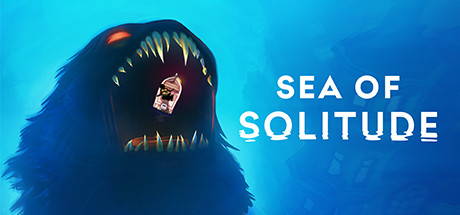
When humans get too lonely, they turn into monsters… Set sail across a beautiful and evolving world of darkness and light, and discover what it means to be human.
Modeled estimate, not a reported figure. How we estimate →
Discounts
Every price cut of more than 20% we have observed, in each market that quoted one, with this game's chart position on either side of it. These are episodes, not a model: a sale is one event, and one event cannot tell you what the next one will do.
Reviews, worldwide (the counter carries no country): 0.43/day in the week to Jul 30 → 0.29/day in the week after.
For scale, across Steam · Top Sellers · Brazil over the last 30 days: the 26 chart moves that followed a price cut of more than 20% went a median of 7 places towards #1, and the 2,400 moves with no price cut behind them went 2 away. One store, one chart, one country — it is the only place we have enough observations to say even that.
Prices outside the United States have been collected since 6 August 2026 and chart positions since 19 July 2026, so a cut older than that has no market to compare and a market that joined later has no history yet. Nothing here is converted between currencies.
About
Genres
Sums Steam only; PlayStation, Epic publish no volume signal, so the true total is higher by an unknown amount.
| Store | Price | Audience | Score | Chart | Est. revenue |
|---|---|---|---|---|---|
SteamYou are here | $19.99 | 2.1Kreviews | 83% | — | $400.2K |
| $4.99−75% | 1.7Kratings | 79% | — | not modelled | |
Engagement
Reviews
Themes across 70 recent reviews and how positive each mention is. A keyword signal, not full sentiment analysis.
Reviews
Game made me install and download EA software, then I had to make a EA account to run the game. You have to have Steam and EA software running at the same time for the game to work.
Sea of Solitude is a narrative adventure developed by Jo-Mei Games and published by Electronic Arts under the EA Originals program. Released in 2019, the game distinguishes itself through its focus on emotional storytelling rather than traditional gameplay complexity. Built as a deeply personal project inspired by the developer’s own struggles with loneliness, the game transforms internal emotional battles into literal monsters and environments that players must confront. Instead of presenting a conventional hero’s journey, Sea of Solitude offers a symbolic exploration of mental health, self-doubt, and emotional healing, creating an experience that feels closer to an interactive allegory than a typical action-adventure title. The story follows Kay, a young woman who finds herself alone in a surreal, flooded city after being transformed into a shadowy monster. This transformation is not random; it represents the overwhelming loneliness and emotional pain she feels in her life. The world she wakes up in is a distorted reflection of reality where towering buildings emerge from endless water and strange creatures roam the environment. As Kay travels through this drowned landscape, she encounters massive monsters that embody specific emotional wounds tied to her relationships with family members, friends, and her own sense of identity. Rather than functioning as enemies to defeat, these creatures serve as symbolic manifestations of unresolved trauma. Each encounter reveals fragments of Kay’s past, slowly piecing together the reasons behind her isolation and emotional struggles. Exploration forms the backbone of the gameplay. Players guide Kay across the flooded city primarily by using a small motorboat, navigating canals formed between submerged streets and collapsed structures. From time to time, she disembarks to explore rooftops, abandoned buildings, and fragmented urban spaces that rise above the waterline. These areas contain simple environmental puzzles, platforming sections, and interactive objects that help move the narrative forward. The puzzles rarely demand intense problem-solving but instead function as pacing devices that allow players to absorb the story and atmosphere. The game’s design deliberately avoids combat, reinforcing the idea that Kay’s journey is not about defeating enemies but understanding them. The monsters Kay encounters represent different emotional conflicts from her life. One massive sea creature symbolizes her fear of abandonment and the breakdown of family relationships, while other encounters revolve around themes such as bullying, self-loathing, and feelings of inadequacy. Each chapter introduces a new environment tied to these emotional themes. For example, certain sections are filled with raging storms and dark waters that mirror Kay’s inner turmoil, while calmer areas reflect moments of reflection or acceptance. These environments function almost like psychological landscapes, where the external world mirrors the character’s internal state. By confronting these symbolic figures and restoring fragments of light scattered throughout the world, Kay gradually begins to understand the roots of her loneliness. The visual design of the game plays a major role in conveying this emotional narrative. The flooded city itself is hauntingly beautiful, blending vibrant colors with ominous darkness. Bright sunlight can illuminate the water in one moment, only for thick storm clouds and shadowy monsters to dominate the scene moments later. This shifting atmosphere reflects Kay’s emotional instability and the unpredictable nature of her journey. The artistic direction relies heavily on contrasts between light and darkness, using environmental changes to signal shifts in mood and narrative progression. Even though the environments are stylized rather than realistic, they carry a strong sense of melancholy that reinforces the game’s themes. Sound and music contribute significantly to the emotional impact of the experience. The soundtrack relies on quiet ambient melodies and reflective piano themes that highlight the loneliness of Kay’s journey. At key moments the music becomes more dramatic, particularly when confronting the giant creatures that symbolize major emotional conflicts. Kay frequently narrates her thoughts during exploration, allowing players to hear her internal monologue as she processes memories and emotions. This narration transforms the game into something deeply introspective, almost like listening to someone slowly confront painful memories while searching for peace. Although the narrative ambition of Sea of Solitude has been widely praised, the gameplay itself has received more mixed reactions. The puzzles and platforming sections remain relatively simple throughout the game, and the mechanics rarely evolve in significant ways. Because of this, some players may find the gameplay repetitive after several hours. The story also delivers its emotional themes very directly, leaving little room for subtle interpretation in some scenes. For players who prefer games driven by complex mechanics or high levels of challenge, the experience may feel somewhat limited. Despite these criticisms, Sea of Solitude succeeds in delivering something that few games attempt: a heartfelt exploration of loneliness and emotional vulnerability. Its greatest strength lies in how it transforms psychological struggles into interactive storytelling elements. The flooded city, the monstrous creatures, and the fragments of light Kay restores all function as metaphors for healing and self-acceptance. The journey itself is relatively short, typically lasting four to six hours, but the emotional weight of the narrative lingers well beyond the final moments. Ultimately, Sea of Solitude stands as a powerful example of how video games can be used to explore deeply human experiences. It may not provide the mechanical depth or challenge found in more traditional adventure games, but it offers something equally meaningful: an emotional narrative that encourages empathy and reflection. Through its haunting environments, symbolic storytelling, and personal themes, the game presents a moving portrait of loneliness and the difficult process of overcoming it. Rating: 8/10
Media

Related
Related
Price dynamics, follower growth, revenue and sales trajectories with interactive tooltips
This and every other Pro feature is free until October 20, 2026. A free account is all it takes.
Stats
All-time low is the lowest price we've recorded for this game since we started tracking it.
Languages: English*, French, Italian, German, Spanish - Spain, Japanese*languages with full audio support
| $3.99−80% |
| — |
| — |
| — |
| not modelled |
Matched by title — a reused name can pair the wrong games. * is a critic aggregate. Prices and positions are each store's United States storefront; Epic charts worldwide. Audience and Score too, except Steam's, which is worldwide.
Hours played at review time, across 70 reviews with recorded playtime.
positive critical· bar length = how often the theme comes up
[b]Sea of Solitude[/b], c’est une œuvre singulière. Une direction artistique sublime, un univers unique, presque pictural, qui te parle avant même que le jeu ne commence vraiment. Les énigmes sont simples mais sympathiques, toujours au service de l’ambiance et du propos. Mais ce qui m’a marqué, c’est le message global. Le jeu touche juste. Très juste. Peut‑être parce que je suis passé par là — la dépression — et qu’elle ne m’a jamais vraiment quitté. Le jeu ne cherche pas à faire le malin, il ne force rien, il ne dramatise pas. Il montre. Il symbolise. Il met en scène ce que ça fait d’être englouti, d’être seul, d’être submergé. Et c’est précisément cette absence de prétention qui lui donne une vraie force de frappe. Une histoire glauque, malsaine parfois, mais profondément humaine. [b]Ce que j’ai vraiment apprécié :[/b] • [b]La DA[/b] sublime, unique, immédiatement reconnaissable. • [b]L’univers[/b] métaphorique, cohérent, chargé de sens. • [b]Les énigmes[/b] simples mais bien intégrées. • [b]Le message[/b] touchant, honnête, sans fioritures. • [b]L’émotion[/b] ça parle de solitude, de douleur, de reconstruction… et ça le fait bien. [b]Sea of Solitude[/b], c’est court, mais ça reste. Un jeu qui ne cherche pas à plaire à tout le monde, mais qui touche profondément ceux qui s’y reconnaissent. [b]Si tu veux une expérience intime, artistique et émotionnelle : fonce.[/b]
This game is beautiful... Reminds me "What remains of Edith Finch" - one of my all time favorite game.
At first the game was interesting but it turned out to be a waste of time and money.
This game tackles loneliness and depression in a really interesting way. i liked how it turns the monsters into a representation of the ones we carry in our own minds, the guilt from bad decisions, and how sometimes you just can't save people who are going through the same thing. The story is beautiful and definitely the main reason to play. the gameplay is pretty basic, but it's never bad, and honestly that's not really the focus.
This game was incredibly heavy... There were times where it did make me feel uncomfortable due to the themes. However it was a really beautiful and interesting puzzle platformer. The story was amazingly told and felt rewarding concurring the different challenges. My biggest issue with the game really came down to the movement mechanics. It felt very awkward to navigate the boat with mouse and keyboard and made me relatively frustrated at times. But that did not diminish how much I enjoyed the game.
A unique mix of established gameplay and emotional themes, on chapter-based rails. Pros: * Great animation, overall - excellent at the very start, only a cpl goofy bits mid-way thru. * Great music. * Okay voice-acting - accents kinda clashed between family members though, IMO. * No mindless wandering needed unless you wanna - game supplies you with a "Where TF do I go now?!?" button. * Level design was good. * Semi-good life lessons if a teen or pre-teen (obvious to anyone by their 20's). Cons: * Had to keep playing the same minigame (wait for the monster to swim away, doggy-paddle to the next platform - ad infinitum) for the 1st 1/2 of the game... which got kinda boring by 1/3-through. * By the time you've watched the MC get eaten a 20th time by failing the above minigame, you realize the death sequence was longer than need be. * Collectibles w/ only minor exploring allowed - you can venture to optional platforms for collectibles as you progress thru a chapter, but you can't go back if you missed anything. Meh: * Combat was okay - nothing too challenging, but required a lil' coordination between running, firing your beacon/weapon/flaregun, and collecting glowy bits. TL;DR: I had fun, but by the end was yearning for [spoiler]Submerged[/spoiler].
The game is fine, fun to play actually, but as others have said, the story and voice acting is terrible. Play with the volume and subtitles off, maybe that'll help it.
No tengo si no cosas buenas que decir de este juego, de verdad una gran experiencia, en 5 horas lo terminas pero vale la pena
Players by region
Where this game's players are, estimated from review languages.
Players also reviewed
The games this title's players most often review too — audience affinity.
Related
| Game | Estimated lifetime revenue | Reviews | Review score | Price |
|---|---|---|---|---|
| $0 | 16 | 62% | Free | |
| $14.4M | 52.9K | 96% | $19.99 | |
| $710.3K | 2K | 93% | $14.99 | |
| $459.9K | 2.6K | 94% | $14.99 | |
| — | 0 | — | — | |
| — | 0 | — | — |
Related
| Game | Estimated lifetime revenue | Reviews | Review score | Price |
|---|---|---|---|---|
| $400K | 907 | 78% | $19.99 | |
| $399.9K | 881 | 88% | $29.99 | |
| $399.9K | 1.5K | 84% | $9.99 | |
| $400.6K | 228 | 66% | $49.99 | |
| $399.2K | 648 | 82% | $44.99 | |
| $399.1K | 648 | 76% | $19.99 |