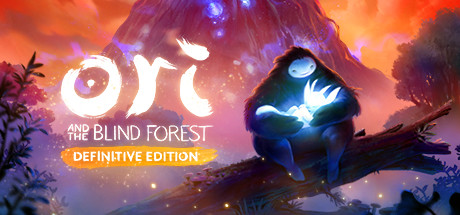
[h1]Ori and the Blind Forest: Definitive Edition[/h1]
Ori is a game I remembered loving. The original helped draw me into platformers, so I wanted to revisit it years later and see whether it held up beyond nostalgia.
It does, but this replay also made its shortcomings much more obvious.
[h2]Visuals & Sound[/h2]
Ori is still absolutely beautiful. Foreground elements, the playable plane, and multiple background layers move independently, giving the world incredible depth. Every biome feels distinct, and even more than a decade later there were places where I stopped simply because the scene was pretty.
I played primarily using a [b]SteelSeries Arctis Nova Pro Wireless headset[/b] as my audio reference. The music is repetitive, but [i]extremely[/i] well composed. Repetitive game music normally irritates me quickly, yet that never happened here. Familiar themes sometimes gain different sounds and layers depending on the area, while dangerous sequences receive appropriate musical changes.
Audio settings are extremely limited, with no options for different configurations or output modes. The sound is lovely; the player's control over it is not.
[h2]PC Settings[/h2]
The Definitive Edition's PC presentation hasn't aged nearly as gracefully.
On my 2560x1440 dual-monitor setup, Ori launched on the wrong monitor. I had to disable fullscreen, drag it over, then re-enable it. Windowed at native resolution produced an oversized window between both monitors, while fullscreen refused 2560x1440, leaving me at 2048x1152.
The graphics settings are remarkably limited for a PC "Definitive Edition." There isn't a proper fullscreen/borderless/windowed selection, so using my second monitor minimizes the game entirely.
Motion blur can be disabled, but Ori still has a noticeable after-image effect I disliked. Text remained crisp while the general graphics did not, and Ori's sprite could have used cleaner edges to distinguish it from the surrounding layers.
[h2]Gameplay & Exploration[/h2]
Thankfully, the actual gameplay is a lot of fun.
Movement becomes increasingly satisfying as abilities accumulate, environmental physics are used creatively, and hazards are visually distinct. Exploration is rewarding, particularly for completionists, and checking the map regularly pays off with secrets and upgrades.
[spoiler]Dash is hidden in an optional Definitive Edition area unnecessary for completing the story, yet the skill tree lets you purchase Air Dash before discovering Dash. I did exactly that while progressing toward Water Breath. There is no prerequisite warning, and spending points saves immediately, leaving those points temporarily useless. Air Dash needed a "Requires Dash" warning, needed to remain locked, or should have been farther down the tree.[/spoiler]
[spoiler]Stomp felt unintuitive after gaining additional jumps. The instructions to hold down while airborne are technically correct, but you must continue holding down without other inputs. It works as described, but can feel awkward during hectic platforming.[/spoiler]
[h2]Story[/h2]
[b]Major story spoilers are hidden below.[/b]
The emotional moments are [i]extremely[/i] effective. The opening remains gorgeous, [spoiler]Kuro's reveal completely changes the context of her actions without telegraphing the twist, and the ending made me cry.[/spoiler]
Those moments hit me [b]much harder now than when I first played in 2015[/b]. I'm a parent now, which changed how I experienced [spoiler]Kuro's story. Losing your children is horrifying, but knowing what caused that loss while having one remaining child to protect gave her grief and desperation a weight I couldn't relate to when the game originally released.[/spoiler] I understood it then. I [i]felt[/i] it this time.
The fictional spoken language paired with translated text also adds wonderfully to the world's mysticism.
Unfortunately, strong emotional moments don't compensate for missing connective storytelling.
[spoiler]The entire conflict is driven by the Spirit Tree's Light killing Kuro's children, yet the game never adequately explains [i]why[/i]. Developers have provided context outside the game, but I shouldn't need an interview to understand the event motivating the primary antagonist.[/spoiler]
The Definitive Edition makes this more frustrating because [spoiler]Black Root Burrows/Lost Grove expands Naru's backstory. We learn her people lived beneath the Spirit Tree, were "lightless," and that her father opposed her friendship with creatures of Light.
But why? Where are the rest of Naru's people? Why are they lightless? Why does her father fear or hate Light creatures? What is the relationship between Light and creatures not born from it?
The game introduces these questions and walks away.[/spoiler]
[spoiler]Gumo has similar wasted potential. Being the last of his people provides the foundation for an incredible character arc, yet he largely becomes background afterward. His choice to use his people's Light Vessel to revive Naru could carry enormous meaning considering his own loss, but the game doesn't develop him enough for that depth to be fully realized.[/spoiler]
That's my biggest disappointment with Ori's story: [b]the connections are already there.[/b]
[spoiler]Kuro's children, Naru's lightless people, her father's prejudice, Gumo's loss, the Light Vessel, Ori, and the Spirit Tree[/spoiler] contain the ingredients for much richer worldbuilding. The game didn't need hours of exposition. It needed to connect ideas it had already introduced.
[b]Potential character depth isn't the same thing as character depth.[/b]
The Definitive Edition had an opportunity to expand the story, yet its additions create more questions without answering existing ones.
[h2]Length, Difficulty & Completion[/h2]
I finished the story casually on Normal in [b]7:40[/b], without rushing and while exploring optional paths. I then went back for 100% completion and finished at [b]9:28[/b].
The compact biomes are both a strength and weakness. They reward exploration without making you lose your purpose, but are beautiful enough that I would've happily spent more time in them.
Difficulty felt gentle for most of the game before spiking near the end.
I encountered a physics softlock in [spoiler]Mount Horu[/spoiler], where a boulder intended as cover pinned Ori against the environment and left me unable to escape. Grabbing it prevented the issue afterward, but using environmental cover as intended shouldn't trap the player.
Cutscenes become mandatory repeat viewing if you die immediately afterward because they cannot be skipped. The final credits are similarly unskippable.
[h2]Final Thoughts[/h2]
Despite all of that, I recommend Ori, particularly for people new to platformers or experienced players looking for something easier and more relaxed.
I played on Normal as a casual gamer and found the difficulty enjoyable without feeling overtuned. Higher difficulties are available, but Normal gave me enough resistance to keep the platforming satisfying without making progression a constant battle.
The platforming is fun, exploration rewarding, environments gorgeous, and soundtrack spectacularly composed. Its strongest emotional moments still hit remarkably hard. There is a reason this game helped make me love platformers.
I finished this replay realizing how much more it [i]could[/i] have been. The foundations for a thick, interconnected story are here, but too many connections are left unwritten. For a Definitive Edition, that feels like a missed opportunity.
[b]Beautiful, emotionally powerful, mechanically enjoyable, and frustratingly incomplete in its storytelling.[/b]
[hr][/hr]
[b]Story completion:[/b] 7:40
[b]100% completion:[/b] 9:28
[b]Difficulty:[/b] Normal
[b]Played with:[/b] Controller
[b]Audio reference:[/b] SteelSeries Arctis Nova Pro Wireless headset