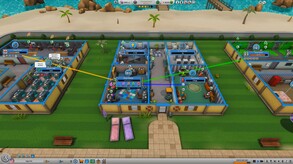
Start your own game development studio in 1976. Build your own offices, production facilities and server rooms. Develop the games of your dreams and produce the next next-gen console. Rise from a small garage company to a huge corporation.
Modeled estimate, not a reported figure. How we estimate →
Prices
The United States storefront in every case, so this compares stores and not countries.
Prices
Each in the currency that store quoted — not converted: the gap between two rows is the publisher's pricing, not an exchange rate.
Every market we collect.
Discounts
Every price cut of more than 20% we have observed, in each market that quoted one, with this game's chart position on either side of it. These are episodes, not a model: a sale is one event, and one event cannot tell you what the next one will do.
Reviews, worldwide (the counter carries no country): 1.71/day in the week to Aug 15 → 2.14/day in the week after.
For scale, across Steam · Top Sellers · Brazil over the last 30 days: the 23 chart moves that followed a price cut of more than 20% went a median of 14 places towards #1, and the 2,515 moves with no price cut behind them went 2 away. One store, one chart, one country — it is the only place we have enough observations to say even that.
Prices outside the United States have been collected since 6 August 2026 and chart positions since 19 July 2026, so a cut older than that has no market to compare and a market that joined later has no history yet. Nothing here is converted between currencies.
About
Sums Steam only; PlayStation publishes no volume signal, so the true total is higher by an unknown amount.
| Store | Price | Audience | Score | Chart | Est. revenue |
|---|---|---|---|---|---|
SteamYou are here | $24.99 | 7.8Kreviews | 94% | — | $6.9M |
| $19.99 | 67ratings | 81% | — | not modelled |
Matched by title — a reused name can pair the wrong games. * is a critic aggregate. Prices and positions are each store's United States storefront; Epic charts worldwide. Audience and Score too, except Steam's, which is worldwide.
Updates
Build ids and update times come straight from Steam's PICS — the same source SteamDB reads. Patch history grows as we record new builds.
Engagement
Reviews
Themes across 869 recent reviews and how positive each mention is. A keyword signal, not full sentiment analysis.
Reviews
Mad Games Tycoon 2 doesn’t reinvent the wheel, but it absolutely refines it. While the core gameplay remains faithful to the original (starting in a garage, building custom engines, hiring staff, creating games, and gradually expanding your company into a global powerhouse) the sequel introduces a wide array of new mechanics and layers of depth that make the original feel more like a proof of concept than a fully realized vision. Players coming from the first game will feel right at home. The familiar loop of researching tech, tweaking development sliders, combining genres and topics, and releasing games to climb the charts is still the foundation. You’ll still move from modest office spaces to full-fledged headquarters, hire developers and artists, build marketing and QA departments, and even create your own consoles. The visual style retains its colorful, cartoon-like isometric aesthetic, though now polished by a more modern engine. But while the basics remain, almost everything surrounding them has been either expanded or reworked to offer a far more engaging experience. One of the most immediate and impactful additions is the inclusion of online multiplayer, something completely absent from the first game. You can now compete (or collaborate) with other human-run studios in the same game world, fighting over awards, staff, contracts, and market dominance. It’s entirely optional, of course, but it adds a new dimension of replayability and competitiveness that elevates the experience. The physical layout of your studio also changes significantly. While the first game forced you to move between fixed building sizes, MGT2 allows you to expand freely within massive, campus-style maps. You can buy plots, construct adjacent buildings, and plan your layout with far more flexibility. It’s still limited to one floor per structure, but the available space is leagues ahead of what the first game offered. Personnel management also receives a substantial overhaul. Employees now have individual traits (both positive and negative) that influence productivity, and morale is now a meaningful factor. Overworked, underpaid, or neglected staff will eventually quit, forcing you to consider working conditions, break rooms, and HR policies in ways the original never asked you to. In MGT1, your staff were simply numbers on a spreadsheet; in MGT2, they feel more like people. Another major innovation is the IP system. In the original, sequels existed, but franchises were little more than a naming convention. Now, each game contributes to a franchise’s IP value, which influences future sales, boosts merchandise revenue, and gives real weight to building long-term sagas. There’s even a leaderboard that tracks the top 100 franchises across all studios, adding a strategic layer to how and when you release sequels or spin-offs. And the types of products you can create have exploded in variety. While the first game stuck mostly to full games and basic sequels, MGT2 lets you develop MMOs, expansion packs, F2P titles, remasters, GOTY editions, ports, mobile versions, bundles, and even arcade machines. You can manufacture physical editions, manage stock, set up your own production lines, and become a publisher for other studios. This significantly expands your role from game developer to full-fledged entertainment corporation. Platform development is also much more sophisticated. Every console now has a complexity rating and technology level that directly impact your development pipeline. Advanced engines might be too much for older systems, while cutting-edge consoles demand longer dev cycles and higher budgets. These considerations were nonexistent in the original, where platform selection was primarily about market share. The market itself has also evolved. Fans are no longer a generic number; instead, they are segmented by genre. If your studio repeatedly produces successful RPGs, you'll gain a loyal RPG fanbase, but releasing a racing game might disappoint them. Market trends now fluctuate, and you can conduct research to identify emerging platforms or genre popularity, allowing you to plan ahead strategically. This makes each decision more meaningful, and each release carries real consequences for your reputation. The simulation of the gaming world is also more dynamic. Historical and random events can now affect the market in unexpected ways: economic crashes, sudden booms in casual games, or shifts in platform popularity... which weren’t present in the original. Yearly awards still exist, but are now more detailed, and every annual winner is recorded in a persistent timeline for long-term comparison. MMOs and online games, previously limited and somewhat abstract, are now fully supported through server management. If you launch a live-service title, you’ll need to allocate server capacity, manage subscriptions, release patches, and handle customer support tickets to maintain user engagement. Ignoring this aspect leads to player loss and damaged reputation, reinforcing the reality of maintaining games post-launch, a layer that was completely missing in MGT1. Artificial intelligence also sees a major upgrade. In MGT1, rival companies existed but felt largely passive. In MGT2, they are aggressive, competitive, and play by the same rules as you do. They develop franchises, release consoles, and may even keep exclusive games to boost their platforms. On higher difficulties, they’ll actively challenge you for market dominance and Game of the Year awards. Planned features like acquiring other companies (turning them into subsidiaries) further reinforce the idea that you’re part of a living, breathing industry. Other features (such as multiple difficulty levels, adjustable game speed, automation of production and development pipelines, a more responsive UI, and basic modding support) round out the improvements. These quality-of-life enhancements don’t change the core mechanics, but they greatly streamline long sessions and improve usability, particularly in the late game where MGT1 sometimes became unwieldy. In really-short: Mad Games Tycoon 2 is Mad Games Tycoon 1, but massively expanded, deepened, and matured. It retains what made the original compelling, but introduces enough strategic systems, management depth, and simulation realism to make the first game feel comparatively barebones. It’s not a complete overhaul, but it doesn’t need to be: it builds upward and outward, making each part of the simulation more robust and interconnected. For returning players, this is the definitive version of the experience. For new players, this is the one to start with. The first game is still respectable in its own right, but MGT2 renders it largely obsolete through sheer scope and polish. Score: 8/10 – While it doesn’t change the formula, it improves almost every part of it, delivering the most complete and polished game dev simulator currently available.
Media

Related
Related
Price dynamics, follower growth, revenue and sales trajectories with interactive tooltips
This and every other Pro feature is free until October 20, 2026. A free account is all it takes.
Genres
Stats
All-time low is the lowest price we've recorded for this game since we started tracking it.
Languages: English, German, Simplified Chinese, Turkish, French, Spanish - Spain, Portuguese - Brazil, Hungarian, Traditional Chinese, Russian, Polish, Czech +8 more
Hours played at review time, across 875 reviews with recorded playtime.
positive critical· bar length = how often the theme comes up
[h1]Qu'est-ce que Mad Games Tycoon 2 ?[/h1] [quote=Peet] [b]Mad Games Tycoon 2[/b], développé par [b]Eggcode[/b], est la suite directe du simulateur de gestion de studio de jeux vidéo, où vous partez d’un petit bureau dans un garage pour devenir un géant de l’industrie vidéoludique. Cette suite reprend l’essence du premier jeu, mais l’enrichit sur presque tous les plans : gameplay, profondeur, possibilités, et qualité de vie.[/quote] [h1]Un simulateur de studio toujours plus riche[/h1] Ce qui fait la force de [b]Mad Games Tycoon 2[/b], c’est sa capacité à capturer la montée en puissance d’un petit studio indépendant jusqu’à un empire de développement AAA. On y retrouve une grande liberté : choix des plateformes, genres, moteurs de jeux, types de marketing, gestion des licences, équipes spécialisées… C’est ultra complet. Vous pouvez désormais construire votre propre bâtiment étage par étage, en créant des salles dédiées à chaque aspect de votre studio : développement, recherche, son, graphismes, QA, serveur multijoueur… Tout ça s'emboîte dans une simulation fluide et très gratifiante. [h1]Une vraie amélioration du gameplay[/h1] Par rapport au premier opus, tout a été peaufiné : plus de types de jeux à développer, une meilleure gestion des employés et des projets, un moteur plus stable, plus de défis économiques. La personnalisation est au cœur de l’expérience, et on ressent beaucoup mieux l’évolution de notre studio. Le jeu pousse à optimiser sa structure, à former des employés, à jongler entre les licences, les jeux contractuels, les moteurs maison et la compétition toujours plus rude. Les choix ont plus de poids qu’avant, et c’est franchement satisfaisant. [h1]Interface plus claire mais encore perfectible[/h1] L’interface a été revue et corrigée, elle est plus lisible que dans le premier, même si certains menus restent un peu denses ou pas toujours intuitifs au premier abord. On finit par s’y faire, mais un effort supplémentaire de clarté n’aurait pas été de trop. [h1]Une direction artistique fonctionnelle[/h1] Le jeu ne brille pas par ses graphismes — ce n’est pas le but — mais il reste clair, lisible et coloré. On voit ce qu’on fait, et c’est ce qui compte. L’ambiance sonore est discrète mais suffisante, et les bruitages liés aux employés ou aux notifications remplissent leur rôle. [h1]Un contenu solide, un suivi un peu plus actif[/h1] Le développeur a proposé des patchs et du contenu depuis la sortie, avec une vraie écoute de la communauté. C’est encore un projet indépendant, donc le rythme est plus lent que dans un studio AAA, mais on sent qu’il y a de la passion derrière. Le jeu propose un challenge bien calibré, avec une rejouabilité énorme. [h1]Mods et communauté[/h1] Comme le premier, [b]Mad Games Tycoon 2[/b] peut être moddé, et la communauté a déjà produit pas mal d’ajouts intéressants : nouvelles plateformes, genres, équilibrages, traductions, etc. Un vrai plus si vous voulez prolonger l’expérience. [h1]Conclusion[/h1] [b]Mad Games Tycoon 2[/b] est la version ultime du premier opus. Plus profond, plus complet, plus exigeant, il corrige de nombreux défauts du premier tout en gardant ce qui faisait son charme. Il n’est pas parfait — l’interface pourrait encore être affinée — mais il s’impose comme l’un des meilleurs simulateurs de studio de jeux vidéo sur le marché. [code][h1] ---{ La note }--- ☑ 8.2 / 10[/h1] [/code]
Mad Games Tycoon 2 Mad Games Tycoon 2 is a great game with many solid mechanics, and the gameplay feels excellent. One of the few issues I can point to is that the game tends to get repetitive. 8/10 If this is your type of game, it's worth the money.
Hoş vakit geçirirsiniz 3-4 saate bayar birkaç ay sonra geri oynarsınız
gud
8.9/10 从开罗时代开始玩游戏开发模拟爱上这种类型的游戏。这款游戏的前作的评价是:作为游戏开发模拟神作出现的独立游戏,相比游戏发展国少了RPG的内容以外几乎拥有所有功能。 2的制作组这是一股脑把所有东西都塞进去了,但是后期又卡又繁琐,智能化还不够,希望有更优秀的续作。
If you played Mad Games Tycoon you will be very familiar with how the sequel plays. I will not go into details here about how the game functions or works, you can see my review on the first game if you want details about that as both games play very much the same. The biggest differences in Mad Games Tycoon 2 are new features, more consoles, and enhancements to the first game's gameplay. The biggest new feature is being able to develop and sell games on an arcade unit. It works similar to putting out a console as you have to research the hardware and develop the hardware to sell it. Another feature is developing games on smartphones. Like Arcade units it is treated differently, when choosing to develop a new game you have three options now. Develop on a console/PC, Smartphone, or Arcade Unit. The other big feature is having a Gamepass. If you develop enough games on a specific platform, like PC for example, you can start to sell subscriptions to a Gamepass and allow your newly developed games release straight to there. Though the price of Gamepass can only go up to $10 max so you may not want to release everything on Gamepass only. Plus you'll have to pay for servers to host Gamepass for your customers. Its a neat feature and can be used to put games on after their release to retail is complete for added income. Keep in mind though, the feature doesn't unlock till the 2010s. So if you start in the 1970s you'll have to wait to use this feature. Same for smartphones as well. Arcade Units are unlocked if you choose to start in the 1970s. Another feature that can add more revenue is a fan store. If you can get your games IP rating up you can start selling merch on a website. Depending on how high of a IP score your game franchise has will unlock items to sell for said IP. Best way to increase the IP score is pumping out games of said franchise. If you keep making sequels or spin-offs of the game franchise you don't get penalties like you would if you spam a genre type of game. Like pumping out tons of FPS games with the same category. One of the biggest improvements I saw in this sequel was self-publishing. In the first game I found it really hard to get high amounts of sales when you self publish your games or other companies' games. Also you no longer have to setup a digital store to sell them digitally either. Here it just does it automatically once the internet is unlocked. You no longer need servers to sell digitally either. You can see how many copies sold by digital and adjust prices accordingly. Overall Mad Games Tycoon 2 is a much needed improvement of the first game. Many improvements and enhancements that make Mad Games Tycoon enjoyable to play again. If you haven't played any of these games I would say start with this one, as it is the better version. Final Verdict: 5/5 Amazing Game My review of the first game: https://steamcommunity.com/id/jbthegamer/recommended/341000?snr=1_5_9__402
Ich verstehe den Hype nicht! Warum eine negative Bewertung? Das Spiel hat interessante Ansätze und die ersten vier Stunden habe ich es durchgesuchtet und alles um mich herum vergessen bei meiner Zeitreise durch die Gameswelt. Aber dann stellte ich so langsam fest, dass es das auch war. Mehr nicht. Es macht kaum einen Unterschied, ob man als erster DIE revolutionäre Technik entwickelt hat. Das hat Spiel wirklich viele Einstellungen und geht da voll in die Tiefe, aber es wirkt sich nicht aus. Über den Blödsinn, dass ich eine Sounddesignerlegende einstellen durfte und Traumnoten für den besten Spielsound kassiert habe, obwohl ich nur PC-Speaker im Angebot hatte, konnte ich ja noch wegsehen, aber trotz der Einstellung realistische Entwicklungszeit, knallt man ein Spiel nach dem anderen raus. Man bekommt gar keinen Bezug mehr zu ihnen, wenn man innerhalb kürzester Zeit das revolutionäre Hauptspiel, das Addon, die Fortsetzung und das Spinn-Off schneller rausknallt, als ein T4 Förderband bei Factorio liefern kann. Es gibt eine gewaltige Menge an Themensets für die Spiele, aber nur einen willkürlich gesetzten Hype. Da sind zu Spielbeginn aus irgendeinem Grund Handballspiele total angesagt und Farmspiele nicht, ohne dass es einen Grund dafür gibt. Man kann keinen Hype erzeugen, man kann kein Genre, keine Technik oder sonst etwas spürbar revolutionieren. Einzig die Plattformen auf denen das Spiel angeboten wird, werden durch die Spiel Verkäufe scheinbar positiv beeinflusst. Es ist einfach nur langweilig, wenn man aus tausend Optionen auswählen kann es aber keine echten Auswirkungen auf die Gameswelt gibt und sich das dann so schnell wiederholt, dass man keine Lust mehr hat wieder die tollsten Optionen zu finden nur um wieder einen 80+% rauszuhauen. SCHADE!
经营游戏公司游戏里找不到对手的水平,毋庸置疑的top1
Como ser la única y maldita dueña del entretenimiento mundial: el simulador. Básicamente compré Sony, Micro$oft, Bugisoft, Bugthesda, Nintendo y a cualquier pobre infeliz que hiciera jueguitos. Ahora mismo soy el monopolio absoluto, no solo fabrico todas las consolas del mercado, mi plan maestro para exterminar el formato físico salió mejor que el de Sony y Rockstar y nadie me critico... Saque GTA 7 antes que saliera el 6. 10/10, ideal para calmar tus ansias de tiranía corporativa capitalista sin ir preso.
Active players
Estimated daily and monthly active players (DAU/MAU) modeled from peak concurrency.
Players by region
Where this game's players are, estimated from review languages.
Players also reviewed
The games this title's players most often review too — audience affinity.
Related
| Game | Estimated lifetime revenue | Reviews | Review score | Price |
|---|---|---|---|---|
| $6.9M | 6.3K | 91% | $44.99 | |
| $6.9M | 15.9K | 93% | $12.99 | |
| $6.9M | 34.2K | 85% | $8.74 | |
| $6.9M | 17.4K | 90% | $19.99 | |
| $6.9M | 13.3K | 90% | $19.99 | |
| $6.9M | 29K | 73% | $9.99 |
Related
| Game | Estimated lifetime revenue | Reviews | Review score | Price |
|---|---|---|---|---|
| $2.4M | 4.4K | 91% | $14.99 | |
| $198.9K | 662 | 71% | $11.99 | |
| — | 0 | — | — | |
| — | 0 | — | — | |
| $6M | 7.8K | 94% | $22.99 | |
| $251.9K | 445 | 78% | $14.99 |