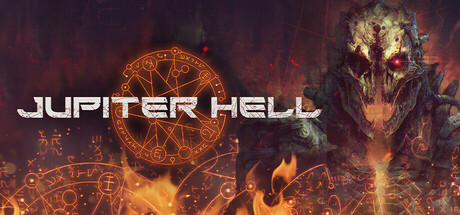
True Roguelike. Turn-based shooter. Permadeath. Tribute to the sci-fi classics of the Golden VHS era. Successor to DRL. Just you and your gun against hordes of horrors and monstrosities. Give them hell to the rhythm of heavy metal.
Modeled estimate, not a reported figure. How we estimate →
Prices
Each in the currency that store quoted — not converted: the gap between two rows is the publisher's pricing, not an exchange rate.
Discounts
Every price cut of more than 20% we have observed, in each market that quoted one, with this game's chart position on either side of it. These are episodes, not a model: a sale is one event, and one event cannot tell you what the next one will do.
Reviews, worldwide (the counter carries no country): 0.14/day in the week to Sep 2 → 0.57/day in the week after.
About


Sums Steam only; GOG, Nintendo publish no volume signal, so the true total is higher by an unknown amount.
| Store | Price | Audience | Score | Chart | Est. revenue |
|---|---|---|---|---|---|
SteamYou are here | $24.99 | 2.1Kreviews | 92% | — | $1.3M |
| $7.49−70% | 200ratings | 88% | — | not modelled | |
Engagement
Reviews
Themes across 62 recent reviews and how positive each mention is. A keyword signal, not full sentiment analysis.
Reviews
Game no longer runs on macOS after recent update.
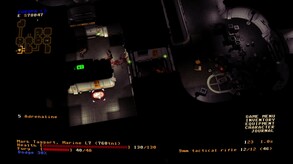
Really fun blend of traditional roguelike with classic FPS, as much about tactics and long term plans as about ragdolling, exploding, and gibbing enemies. JG follows a straightforward structure for its main game mode. In early levels you try to defeat as many enemies as you can for experience and items, in midgame you complete the key parts of your skills and keep improving your stuff, and at the end you use everything you have for the final gauntlet to defeat the demon leader. Each of the stages has a main branch, where you can do an optional harder stage for more items, and side branches, with different enemies and rewards, along with a special mission. This is usually something you can go out of your way to do for the best rewards. After these, you get the stage's boss fight. In the short term, you try to gain advantage over enemies by using cover, being faster, exploiting their weaknesses to damage types, or using some special skill. Enemies are generally fragile and so are you, so you either win them quickly or there are too many of them and you need to use your contingency plan. It is possible to plan well ahead because an individual run is, to a rather large extent for this kind of game, predictable. Levels are generally consistent across runs in what kind of enemies they have, what kind of ranges their fights will happen at, and what kind of rewards you can expect at the end. The harder levels throw tough demons at you that cost a lot of ammo to go though and you need to be ready or avoid those levels. Many of the levels also have a fixed layout. I really like the levels in this game, they're really good at creating interesting situations even when procedurally generated (something DRL/JHC I feel wasn't as good as). All in all, the levels are consistent and you won't be unprepared or prepared for something that doesn't happen. Character progression works through skills and equipment/items. You gain skills from defeating enemies and gaining levels. Each of the character classes has their own skill options, each with 3 levels: basic ones, advanced ones unlocked by taking the required basic skills first, and master skills that may require advanced skills. Certain basic skills on one class are advanced skills of another. Most of them make big differences in your build: for example Grenadier, an advanced Technician skill that improves your grenades and gives you more when opening crates. As for equipment, there are rare and unique items, but most of them are not guaranteed and they are not required. You might find some unique that is exactly what you wanted or find two that you can't use and just rely on common equipment. There are enough chances in the game to find rare items, so you'll certainly go into the final battle having at least something special. A big problem for the new player is that it's hard to do it when much of the information is not actually explained ingame. There is a mod that replaces the ingame help menu with a reference sheet with most of the information, but it would be nice to have more things explained. For example, the item that teleports you away from enemies also makes them break their chase, making it a great countermeasure for the level event that makes all of them come for you directly. The fighting in this game is fun in that classic FPS sense, Weapons are generally not effective past the maximum vision range, so generally you have to fight and accept their counterattack if you fail to take them down before it's their turn. You can hear them by listening to the game and there are ways to detect where they are exactly before seeing them. It takes 1-3 attacks to take down a typical enemy and for a strong one to do the same to you. It looks really cool: great weapon sounds, the explosions look good, and most of all Mark Meer does great as the action movie hero, both in his cheesy and serious lines. The very small dev team did come with costs. The balance in this game is all over the shop. Some skills and branches are manifestly bad, the minor relics that are supposed to be equipped for minor bonuses are mostly bad (unless modded), by Kornel Kisielewicz' own admission Nightmare! mode respawning enemies wasn't a good thing to base the highest difficulty around (a problem not as bad in DRL, surprisingly), the game's framerate is set to the monitor's refresh rate and JH can't lower it, and there are some other inconveniences which are mostly fixed by the QoL mod. So Jupiter Hell is fun, it's just that after you enjoy it at a beginner level where you can just shoot demons you need mods and other outside resources to make up for some omissions.
Media

Related
Related
Price dynamics, follower growth, revenue and sales trajectories with interactive tooltips
This and every other Pro feature is free until October 20, 2026. A free account is all it takes.
Every market we collect.
Reviews, worldwide (the counter carries no country): 0.38/day in the week to Jul 21 → 0.8/day in the week after.
For scale, across Steam · Top Sellers · Brazil over the last 30 days: the 25 chart moves that followed a price cut of more than 20% went a median of 10 places towards #1, and the 2,413 moves with no price cut behind them went 2 away. One store, one chart, one country — it is the only place we have enough observations to say even that.
Prices outside the United States have been collected since 6 August 2026 and chart positions since 19 July 2026, so a cut older than that has no market to compare and a market that joined later has no history yet. Nothing here is converted between currencies.
Genres
Stats
All-time low is the lowest price we've recorded for this game since we started tracking it.
Languages: English*, German, Polish, Japanese*languages with full audio support
| $24.99 |
| — |
| — |
| — |
| not modelled |
Matched by title — a reused name can pair the wrong games. * is a critic aggregate. Prices and positions are each store's United States storefront; Epic charts worldwide. Audience and Score too, except Steam's, which is worldwide.
Hours played at review time, across 62 reviews with recorded playtime.
positive critical· bar length = how often the theme comes up
This is a great game. This is a difficult game. I am very bad at it. I am a sucker for punishment
Fun so far, and simple. Not as long or hard as other traditional roguelikes, and less mechanics. Good. I love some of those games but if you ripped out half the mechanics in ADOM or C:DDA I don't think anyone would even notice. And ♥♥♥♥♥♥♥♥♥, opening a door and gibbing every enemy, table, and planter in sight with the shotgun feels great. That's another thing, this game actually has real feedback, and you can tell wtf is going on by the visuals. That's a foreign concept in this autistic ass genre.
Since Steam isn't happy with a plain thumbs-up you get to read this.
Jupiter Hell was my first foray into the traditional roguelike genre, which was a corner of gaming that I’d always been curious about but couldn’t muster up enough courage to explore, at least until a friend recommended this title to me. With its relatively short run length of 3 to 4 hours and an easily digestible visual presentation, Jupiter Hell was considered one of the more “approachable” and “beginner-friendly” games in the genre. And at least for my tastes, its Doom inspired setting and the focus on ranged, probabilistic combat reminiscent of XCOM worked in its favor. So how approachable was Jupiter Hell, actually? Despite its modern trappings and 3-D animated art assets, I still found the game to be an intense, unforgiving roguelike that demanded good strategy, build synergy, and of course hard-earned gameplay knowledge for its players to have any hope for victory. However, it also wasn’t such an obtuse game that required me to have a wiki open all the time in order to advance. I felt that anyone with some familiarity with turn based games and an understanding of concepts like cover, hit chance, or the fog of war would be able to adapt to Jupiter Hell’s mechanics without much trouble. But understanding a game’s mechanics and winning with it are different things, and as I set out to clear Jupiter Hell with all 3 classes, the repetitive and predictable early game ended up getting on my nerves after a while. Run variety as a whole seemed to be an issue, with the same sets of enemies and bosses appearing in the same 4 regions during every run. Each of the regions had several different side branches that could be chosen for their unique challenges and rewards, but since the total pool of levels to draw from was so small, it was quite easy for me to predict and even plan builds around them. This no doubt increased Jupiter Hell’s “beginner-friendiness” as it limited the amount of trial and error required to experiment with routes and builds, but it also ended up harming its replayability. I still enjoyed my time with Jupiter Hell though, and even the bland early levels felt helpful while I was still internalizing the game’s basics. One of the more novel mechanics for me was its simultaneous turn structure. In most turn-based tactics games, each character usually has a chance to take action while the rest of the game state stays frozen. In Jupiter Hell and other traditional roguelikes, simultaneous turns seemed to be the staple, meaning that the entire game state advanced whenever I took a single step or a shot. This would’ve been easier to parse in a melee focused game, but every fight was a firefight in Jupiter Hell, and it was crucial to constantly evaluate the entire battlefield and even off-screen variables in order to survive. It became a cause of some dumb deaths on my part, but it was also an elegant way to enhance both the game’s tactical depth and player immersion during combat. Once I finally beat the game, I ended up purchasing several more traditional roguelikes that I’m now excited to delve into. So yes, despite its flaws, Jupiter Hell turned out to be an excellent introduction to the genre.
What if DOOM were an isometric turn-based tactical game? ...Now we know! Lovingly crafted & intensely atmospheric, you can leisurely slay demons in this rogue-like celebration of gibs, gore, and guns.
Disclaimer: Most of my hours are on the Switch version. The Sonic of rogue-likes. Highly recommend, whenever I get the itch for another actual rogue-like, i boot this because it's the gold standard in my opinion of bringing the "rogue" format into the modern day. Fast, brutal and so, so much fun. The graphics really grew on me over time (pixel fan at heart) and i actually find myself wanting to play this more than JH Classic because of them. 10/10
The game is junky af, randomly decides to corrupt player data, does benchmark amount of load on my hardware and desperately wants to look cool. Not bad, not awesome.
This is a really fun little game! What if Doom played like Nethack? I like how easy it is to pick up and put down, and I've found myself quitting out and then resuming it at multiple points throughout my day when I've had free time. I'd call this an excellent lunch break game.
Players by region
Where this game's players are, estimated from review languages.
Players also reviewed
The games this title's players most often review too — audience affinity.
Related
| Game | Estimated lifetime revenue | Reviews | Review score | Price |
|---|---|---|---|---|
| $115.1K | 239 | 96% | $14.99 | |
| — | 0 | — | — | |
| — | 0 | — | — | |
| $135.4K | 326 | 79% | $14.99 | |
| $10.3K | 43 | 95% | $12.99 | |
| $8.3K | 20 | 100% | $14.99 |
Related
| Game | Estimated lifetime revenue | Reviews | Review score | Price |
|---|---|---|---|---|
| $1.3M | 2K | 83% | $19.99 | |
| $1.3M | 1.7K | 70% | $24.99 | |
| $1.3M | 7.4K | 96% | $14.99 | |
| $1.3M | 1.2K | 58% | $17.99 | |
| $1.3M | 2.1K | 80% | $19.99 | |
| $1.3M | 1.9K | 91% | $24.99 |