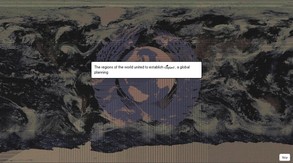
Try your hand as a global planner of a future society. Play with a wide range of technologies and policies spanning different fields and ideologies. Will you lead the world to ecological utopia or planetary ruin?
Revenue comes from in-game items and microtransactions, which our price-based model doesn't estimate. The player count below is how many people own it, not what they spent.
About


Genres
Stats
Languages: English, French, German, Spanish - Spain, Japanese, Portuguese - Brazil, Portuguese - Portugal, Thai
Engagement
Reviews
Themes across 63 recent reviews and how positive each mention is. A keyword signal, not full sentiment analysis.
Reviews
nice
It's bad. It's unbalanced. It's fun until you got hit with a wall of "WHAT AM I SUPPOSE TO DO?" In general, the game works by making you balance between energy, water, food, and heat supply. You implement policies and transit industries (from coal to wind, etc.) to reduce the negativities. Sounds good on paper, but I lost my enjoyment midgame. No matter what you do, you will never be informed of how much does each option provides, how long for complete transition, and how many to fulfill estimate needs of your people. This leads to frustrating midgame when the Earth decides to topple you for not enough energy, but you have no idea how to keep up with the demand. Then the guide, of course optimal strategy to beat the game. It has a very narrow pick, meaning you are not supposed to win if you miss by a few years, or choose wrong alternative methods. It forces you to cuddle a specific group, which is fine, except it's the "you must pick them specifically." It's a propaganda, and a bad criticism on whether capitalism or socialism is better. I don't get the message of this game, because it switch ideologies nonstop that you never know what a true "socialism" is. Some of its topics are downright hilarious and make you feel like a dictator than a true benevolent leader. That includes: making African starving to death, forcing no meat days... So what kind of ideology it presents? Ultimately it's boiled down to you being exposed and forced to kneejerk with author's viewpoints. It's a mess, by combining the lack of knowledge on many subjects together. Many details ingame are pseudo-intellectism. What a mess of a project.
Media

Related
Related
Price dynamics, follower growth, revenue and sales trajectories with interactive tooltips
This and every other Pro feature is free until October 20, 2026. A free account is all it takes.
Hours played at review time, across 64 reviews with recorded playtime.
positive critical· bar length = how often the theme comes up
Buenisimo
this game does not ♥♥♥♥♥♥♥ work. no matter what you do in the first turn, your emissions spike and they keep going up even when you fully divest from fossil fuels for both electricity and fuel. it's currently unwinnable because it is horribly bugged.
Really hard to win but I keep getting close. I've never quite gotten everything in place but I'm going based off of just the experience in the game, if I read the book, it is possible I would have more knowledge on how to properly win the game. Or I never win because socialism doesn't work. Who knows?
Quite Fun
Socialism is the only answer and it works
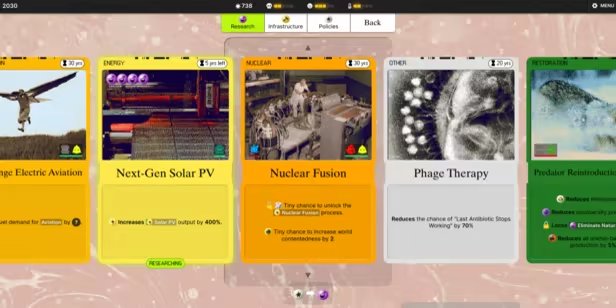
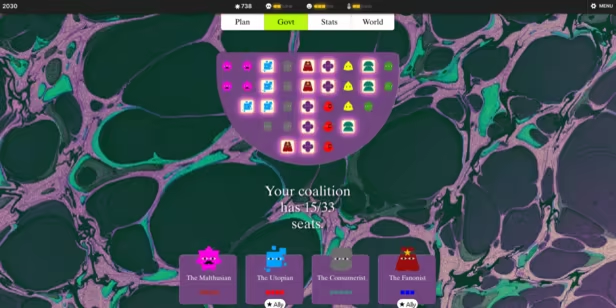
Half-Earth Socialism is a strategy and political simulation game developed by Francis Tseng, Son La Pham, Drew Pendergrass, and Troy Vettese, and published by Trust, that transforms climate survival, economic planning, and ecological management into a deeply thoughtful and surprisingly engaging strategy experience. Inspired by real-world environmental debates and political theory, the game challenges players to guide humanity through climate collapse while balancing social stability, industrial transformation, food production, biodiversity preservation, and political support. Rather than focusing on warfare or territorial conquest like many strategy games, Half-Earth Socialism centers entirely on rebuilding civilization in a sustainable way before ecological disaster spirals beyond control. The game places players in charge of a future global planning organization tasked with navigating humanity through a rapidly worsening environmental crisis. Rising temperatures, collapsing ecosystems, political instability, and resource shortages constantly threaten civilization, forcing players to make difficult long-term decisions that affect billions of lives. Every policy implemented carries consequences, and the game quickly establishes that there are no simple solutions to global climate problems. Expanding renewable energy may reduce emissions while creating new resource demands, aggressive industrial reforms may destabilize public support, and ecological protection measures may conflict with immediate economic needs. This constant tension between environmental responsibility and political survival becomes the core of the experience. One of the game’s greatest strengths is how effectively it transforms real-world climate policy into meaningful gameplay. Instead of reducing environmental systems into simplistic numbers, Half-Earth Socialism creates interconnected mechanics where almost every decision influences multiple parts of society simultaneously. Energy production, transportation, agriculture, housing, and biodiversity all interact with one another in ways that feel both realistic and strategically challenging. The result is a management experience where long-term planning becomes absolutely essential because short-term solutions often create entirely new problems later. The card-based structure helps organize the game’s enormous complexity into a more approachable format. Players unlock and implement policies, technologies, and infrastructure projects through cards representing different ideological and scientific approaches to planetary management. These choices range from renewable energy investments and public transportation systems to agricultural reforms and advanced climate technologies. The system works surprisingly well because it simplifies complicated ecological and economic concepts without removing the strategic depth behind them. Another major strength is the game’s scientific foundation. Climate systems, emissions, food production, and biodiversity loss are modeled using real environmental concepts rather than abstract fictional mechanics. This gives the simulation an unusual sense of authenticity and educational value while still remaining engaging as a strategy game. Players quickly begin to understand how interconnected environmental systems truly are and how difficult it becomes to reduce emissions without disrupting other aspects of civilization. Political management adds another compelling layer to the gameplay. Players are not simply trying to save the environment in isolation; they must also maintain enough public support and political influence to continue governing effectively. Radical reforms may improve environmental outcomes while simultaneously triggering social unrest or political backlash. Ignoring economic concerns can destabilize entire regions, while moving too slowly may accelerate climate collapse. The constant balancing between idealism and political survival creates a level of tension rarely seen in strategy games. The pacing is deliberately thoughtful and methodical, encouraging players to carefully analyze systems rather than react impulsively. Much of the experience revolves around examining statistics, comparing policies, and considering the long-term consequences of decisions that may not show immediate results. This slower pace gives the game a more reflective atmosphere than traditional management simulations focused entirely on rapid expansion or optimization. Visually, Half-Earth Socialism embraces a minimalist design style that prioritizes clarity and information management over flashy graphics. Menus, charts, environmental indicators, and policy cards are presented cleanly, helping players navigate the large amount of information without becoming completely overwhelmed. While the presentation lacks the cinematic spectacle of larger strategy titles, the simplicity works in the game’s favor because the focus remains entirely on systems and decision-making. The soundtrack and audio design remain understated throughout most of the experience, helping reinforce the game’s reflective and serious tone. Quiet ambient music supports long planning sessions without becoming distracting, allowing players to focus on strategy and analysis while the world slowly changes around them. One of the most interesting aspects of Half-Earth Socialism is how openly ideological it is. The game does not attempt to present itself as politically neutral. Instead, it directly explores ideas involving planned economies, sustainability, public infrastructure, and ecological socialism. This clear ideological perspective gives the game a unique identity and allows it to tackle environmental politics more directly than most strategy games would attempt. Some players may strongly agree with its assumptions while others may disagree, but the game succeeds remarkably well at encouraging discussion and critical thinking about climate policy and economic organization. The educational value is particularly impressive because the game rarely feels like a lecture. Instead of overwhelming players with direct explanations, it teaches through consequences and systems. Players naturally learn how difficult it is to balance emissions reduction, food production, economic stability, and political support because the simulation forces them to experience those conflicts firsthand. However, the game’s complexity and slower pacing will not appeal to everyone. Players unfamiliar with political simulations or climate-focused strategy games may initially find the systems intimidating or overly dense. Much of the gameplay revolves around reading, planning, and analyzing long-term outcomes rather than fast-paced interaction or cinematic storytelling. The strong ideological framing may also divide audiences. Because the game openly embraces specific political perspectives, players looking for a more neutral or sandbox-style simulation may find parts of the experience overly opinionated. Some mechanics can also feel difficult to fully understand during early playthroughs, especially when multiple systems begin interacting simultaneously. Half-Earth Socialism ultimately stands out as one of the most original and thought-provoking strategy simulations in recent years. Its combination of ecological planning, political management, scientific modeling, and economic transformation creates a deeply engaging experience unlike most modern strategy games. While its slower pace and politically charged themes may not appeal to every player, those interested in climate strategy, social planning, and complex systems management will likely find Half-Earth Socialism to be an intelligent, fascinating, and highly rewarding experience. Rating: 8/10
cool hopeful world gov sim. Love the ideas/music/pixel images/little pixel earth. There's both new and mainstream climate/gov/industry policy concepts, plus a bunch of niche ones that would be suggested by a large global coalition IRL, including 'conservative' and 'liberal' ones. Some are kind of gross ones for me personally but some can stop disasters quickly- or give you the supporting faction as a supporting ally. Interesting give-and-take there. Pixel art gives it a retro game vibe mixed with Cold War old computer vibes. The music is so good it calms me when i accidentally burn down Europe with wildfires. Amaze amaze amaze Some friction to gameplay stuff (that I'm sure will improve soon) includes: The stats, which id like always visible on a side screen. It's hard to remember some of the resource types at first, and it'd be cool to stare at climate-coal effect drop as I repeatedly gut it >:). And Controls. Maybe mouse-scroll-wheel through the card options for faster play. Graphics, i'd like more of the same, honestly. Can the Earth model be always visible, and maybe the stats could be displayed in the same 'side-window'? And the government stamp APPROVED on the card the moment you play it is very crispy... unilateral power is going to my head... could we get similar on infrastructure and research when those cards are played? But I'm really just nit picking, the vibes are the point and they are immaculate. And more of a side-comment: If 'free' is a main feature, could this become a website game, so ppl could share via text or email? This game could go viral- it reminds me of a some website clicker games ive played, although this is higher quality. The Earth model could be made 2D to reduce load. Just an idea. Many activist, political, and hobby clubs ive been in have one or two ppl who are good at website coding and setup. Overall. I love the 'card' design, and that you 'play' them by just pushing them up or down. This really gamifies large-party-politics, which i like. Politics needs more gamified presentations like this, as politics is something anyone (should) effortlessly contribute to/control. Also lemme pay you devs a few dollars, good stuff, good music, good vibes, ty
bro its going well plebs dont revolt i fixed it dw about the climate
Players by region
Where this game's players are, estimated from review languages.
Players also reviewed
The games this title's players most often review too — audience affinity.
Related
| Game | Estimated lifetime revenue | Reviews | Review score | Price |
|---|---|---|---|---|
| $7.1M | 6.4K | 82% | $29.99 | |
| $177.5K | 734 | 81% | $7.99 | |
| $3.4K | 21 | 52% | $4.99 | |
| — | 0 | — | — | |
| — | 0 | — | — | |
| — | 0 | — | — |