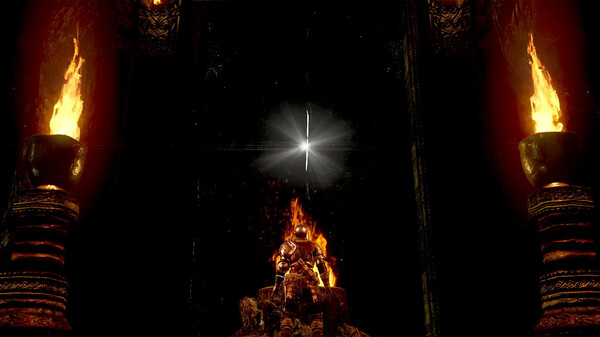
Then, there was fire. Re-experience the critically acclaimed, genre-defining game that started it all. Beautifully remastered, return to Lordran in stunning high-definition detail running at 60fps.
Modeled estimate, not a reported figure. How we estimate →
Prices
The United States storefront in every case, so this compares stores and not countries.
Prices
Each in the currency that store quoted — not converted: the gap between two rows is the publisher's pricing, not an exchange rate.
Every market we collect.
About
Genres
Sums Steam only; PlayStation publishes no volume signal, so the true total is higher by an unknown amount.
| Store | Price | Audience | Score | Chart | Est. revenue |
|---|---|---|---|---|---|
SteamYou are here | $39.99 | 155.5Kreviews | 92% | — | $98.5M |
| $39.99 | 37.3Kratings | 94% | — | not modelled |
Matched by title — a reused name can pair the wrong games. * is a critic aggregate. Prices and positions are each store's United States storefront; Epic charts worldwide. Audience and Score too, except Steam's, which is worldwide.
Updates
Build ids and update times come straight from Steam's PICS — the same source SteamDB reads. Patch history grows as we record new builds.
Engagement
Reviews
Themes across 3114 recent reviews and how positive each mention is. A keyword signal, not full sentiment analysis.
Reviews
The 2000s was a decade of unprecedented change in gaming. Sega unceremoniously exited the hardware market, Nintendo became reduced to a sense of novelty, Microsoft erupted as an insatiable giant, and Sony reigned supreme as a common household icon. Online gaming was becoming the norm, previously being something only enjoyed on PCs in the 90s. Gaming itself became increasingly accessible to a wider audience. The difficulty and brutality of older arcade titles was becoming irrelevant in the home. Instead of games demanding tokens to keep playing after dying, they now allured players through other means, especially through offering DLC. The difficulty now largely became limited to multiplayer competitive play, which is where developers spent most of their effort and resources. The single player experience quickly became an afterthought, offering players at most some value in addition to the meat and potatoes which is PVP. Stealth games also became increasingly popular, with their mechanics becoming integrated into other genres as well. However, this mixture of reduced overall difficulty, a sidelined single player experience and stealth mechanics resulted in many games feeling too easy, with passive play styles being rewarded and poor skill being unpunished. A low skill ceiling had now become expected in a game, along with generous guard rails to ensure a pain-free experience from start to end. In 2009 however, we saw the release of Fromsoftware's Demon's Souls (DeS). The team described it as being an attempt to bring back the feeling of classic games through a modern lens. It offered a delicate balance between immense challenge and satisfying reward. DeS had a hub world format, through which you could access various unique locations. Weapons and armour degraded with use, but could also be repaired and upgraded (in most cases). You had to learn the attack patterns of enemies, which were often counter intuitive, and carefully use your limited stamina to attack and defend. Mastering timing was the core skill that resulted in progress. Different enemies had different weaknesses, demanding that the player experiment and make use of a variety of weapons and abilities to target unique weakpoints but also defend against potent attacks. Although looting was a mechanic in the game, the most important currency was souls. Upon killing an enemy, you gained a certain amount of souls, which could be used to upgrade your player stats, have work done on weapons and armour, or learn magic abilities. Of course, the most memorable mechanic introduced was where, upon death, your souls would be dropped alongside your corpse, and you had to reclaim them before dying again, otherwise they would be lost. This would become a staple in the souls-like formula, and even be incorporated into games in the broader action genre like Nier Automata. DeS however was a PS3 exclusive. The next Fromsoft title, Dark Souls (DS), would also be released on Xbox 360 and PC in 2011. DS was, for the most part, a straight derivative of DeS. Its mechanics, weapons, abilities, enemy types, location types and NPC archetypes shared a lot in common, in many cases being close to identical. One might even call it a glorified re-do of DeS. However, it differed from its predecessor in several profound ways. Firstly, it was largely an interconnected semi-open world, in contrast to DeS' hub design. The psychological impression this made was nothing short of profound, inspiring awe at the intricate and lovingly designed locations and how they connected to one another. Second was the introduction of bonfires. In DeS, the player relied on a finite amount of healing items obtained mostly from fallen enemies or merchants. They also used arch stones to travel back and forth to the main hub area called the Nexus. In DS, these mechanics were unified and enhanced. Bonfires replaced archstones, and also healed the player. The player carried healing estus flasks which could be refilled infinitely from the bonfires. This system rejuvenated and streamlined the gameplay, and also helped to contrast the safe and warm bonfires from the dangerous and cold areas between them. The overall balance of difficulty was also completely restructured. In DeS, the journeys between arch stones and bosses were daunting and nerve wracking, but the bosses were mostly gimmicky puzzles and didn't pose overwhelming difficulty the way regular enemies did. In DS, this formula was flipped on its head. The journeys to bosses were softened by having a more generous scattering of bonfires available, but the bosses were stripped of any gimmicky puzzles and made simply brutal and difficult to deal with. Two big features of DeS were omitted from DS, which most players consider an improvement. The first was where a player's health was halved if they were playing in souls form. The second was the mechanic of world tendency, which was a mostly half-heartedly implemented concept where a player's actions influenced the world around them. One such action was dying in human form, which worsened the world tendency. These two features combined were frustrating in DeS because the tendency mechanic encouraged playing in soul form, which had half health. In DS there was no penalty to dying in human form: no tendency and no health loss. The scope of DS was significantly broader. Areas felt more grandiose, victories more epic, and the overall adventure more rewarding. It does not simply replace DeS, however. DeS simply had much more charm with its homely hub which houses various NPCs, more potent ambience in its locales, and a unique tone expressed through its scattered lore, world design and characters which simply stands completely apart from DS despite aesthetic and mechanical similarities. Both are masterpieces in their own right, both being absolutely worth experiencing to completion. And finally, it is no exaggeration to state that both DS and DeS before it totally reimagined what videogames can be. These two games are profound metaphors for overcoming hardships and enjoying the full satisfaction of one's own hard earned rewards. They punish stubbornness and demand careful observation and innovation. Once you experience what they have to offer, other games will simply pale in comparison. Enjoy!
Media

Related
Related
Price dynamics, follower growth, revenue and sales trajectories with interactive tooltips
This and every other Pro feature is free until October 20, 2026. A free account is all it takes.
Related
| Game | Estimated lifetime revenue | Reviews | Review score | Price |
|---|---|---|---|---|
| $98M | 108.7K | 72% | $39.99 | |
| $97.1M | 270.5K | 96% | $19.99 | |
| $96.9M | 224.8K | 56% | $19.99 | |
| $96.8M | 96.8K | 94% | $59.99 | |
| $101.7M | 562.3K | 97% | $14.99 | |
| $102M | 117.2K | 89% | $49.99 |
Related
| Game | Estimated lifetime revenue | Reviews | Review score | Price |
|---|---|---|---|---|
| $469.4M | 440.1K | 94% | $59.99 | |
| $1.1M | 1.7K | 77% | $24.99 | |
| — | 78.6K | 92% | — | |
| $94.2M | 132.2K | 84% | $39.99 | |
| $187.3M | 517.6K | 89% | $29.99 | |
| $29.6M | 33.3K | 87% | $39.99 |
Stats
All-time low is the lowest price we've recorded for this game since we started tracking it.
Languages: English*, French, Italian, German, Spanish - Spain, Japanese, Korean, Polish, Portuguese - Brazil, Russian, Simplified Chinese, Traditional Chinese*languages with full audio support
Hours played at review time, across 3.1K reviews with recorded playtime.
positive critical· bar length = how often the theme comes up
cool
ทำไมไม่วาร์ป
praise the sun
a great classic!
Dark Souls, for me, is a piece of art. No game comes close to it in terms of how well designed, structured, and thought out it is regarding atmosphere and ambience. The way the world feels and looks miserable and empty, being inhabited only by monsters and enemies. The places you discover are all full of dread and suffering, a kingdom holding on to a glory long gone. And, despite this, the characters you meet throughout the game are full of hope, a big contrast to the world around them, going on in their adventures, most likely to fail and go hollow. And despite them knowing this, they help you along your journey, hoping for your safety, constantly reminding you, "never go hollow. " It 's beautiful. The designs of the player character and enemies reflect this very thing. You're just a random undead who happened to be chosen, and yet, you're no different from the other undead you meet. You're no god, you're no king, you're no dragon or monster, you're just an undead knight. You're even shorter than most humanoid enemies you meet throughout the game. This is done on purpose as a method of intimidation. In theory, you have no chance of succeeding , and the gameplay reflects that. You'll die, over and over again, but eventually, you learn , and you manage to get through it. The entire game is about, against all odds, succeeding and not giving up in a world where hope is long gone. The in-game term of "going hollow" indicates a loss of self and becoming a mindless husk, stripped of purpose and meaning. This is what would happen to the player if , during a hard level or boss, they gave up. You see characters go hollow during the game, a constant reminder to not give up and never go hollow, like they did. Pair this with the amazing level design, interesting and well-connected areas that shape the kingdom of Lordran , innovative gameplay, deep lore, and atmospheric storytelling, enemy variety, and some of the best boss design in gaming, along with loads of different weapons and armors that allow many different builds, you'll get Dark Souls. It is a shame that despite this, the game had to be rushed at some points due to a lack of time and money, and so, you'll find that some aspects of this game aren't as great during a third of the game (Tomb of the Giants and Lost Izalith). Still, this is definitely not enough of an issue to make this game anything but what I described it as.
♥♥♥♥♥ созданная дебилами для дебилов
Mario Games morreu sem jogar Dark Souzen.
Que jogo incrível! Sempre tive vontade de iniciar a série Dark Souls, mas estava esperando o momento certo para montar toda a coleção e, finalmente, começar essa maratona. E confesso: fico muito feliz em perceber que toda essa espera valeu a pena. Dark Souls 1 foi uma jornada simplesmente fantástica. É um jogo que vai muito além de batalhas difíceis. Ele recompensa a exploração, desperta a curiosidade e, principalmente, faz você valorizar cada pequena conquista. Cada inimigo derrotado, cada caminho descoberto e, claro, cada chegada à tão aguardada fogueira carregam um sentimento único de alívio e satisfação. Mesmo tendo sido lançado há tantos anos, ainda me impressiona o quanto este jogo consegue ser profundo e envolvente. As áreas perfeitamente conectadas, os cenários marcantes e a variedade de inimigos fazem daquele mundo aparentemente morto um lugar cheio de vida, histórias e mistérios para descobrir. Fico muito feliz por ter concluído essa primeira jornada. E, embora a vontade de partir imediatamente para Dark Souls 2 seja enorme, ainda quero aproveitar um pouco mais este primeiro capítulo. Quero revisitar alguns combates, explorar novamente seus caminhos e, quem sabe, reviver alguns daqueles momentos épicos que fizeram dessa experiência algo tão especial.
Priscilla my beloved
Active players
Estimated daily and monthly active players (DAU/MAU) modeled from peak concurrency.
Players by region
Where this game's players are, estimated from review languages.
Players also reviewed
The games this title's players most often review too — audience affinity.