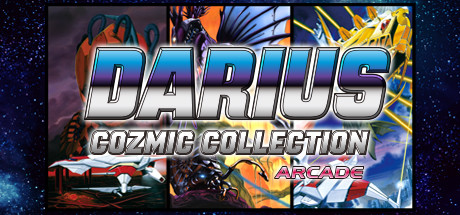
Darius Cozmic Collection Arcade, developed by TAITO CORP. and M2 Co., Ltd. and published by TAITO CORP., is a meticulous restoration of one of the most influential horizontal shooter series in arcade history. Rather than merely bundling emulated versions of old titles, this collection serves as a museum-grade preservation effort that highlights Taito’s legacy of innovation in the shoot ’em up genre. Across its selection of classic Darius entries, the compilation captures the defining characteristics of the series—its sprawling multi-screen environments, aquatic-themed enemy designs, branching stage routes, and atmospheric soundtracks—while introducing a suite of modern features that make these demanding arcade experiences approachable without compromising their authenticity.
The collection’s content centers on four foundational titles, each represented by multiple regional and cabinet variations: the original Darius (1986), Darius II (1989), Sagaia (the international release of Darius II with revised balancing), and Darius Gaiden (1994). Each game showcases a distinct stage in the series’ evolution, from the awe-inspiring triple-screen projection of the first Darius to the refined visual fidelity and mechanical fluidity of Gaiden. The branching progression system, where players choose diverging paths after each boss encounter, remains one of the most enduring aspects of the series. It not only adds replayability but also a sense of agency rarely seen in early shooters. M2’s emulation work ensures these features are faithfully represented, with input lag minimized and every sound, sprite flicker, and frame of slowdown preserved exactly as they were in the arcades.
Technically, the collection stands as a masterclass in how to modernize classic games without diluting their soul. M2, long respected for its precision in retro curation, includes features that cater to both newcomers and veterans. Save states, difficulty customization, and instant stage select options allow players to practice challenging sections or experiment with branching routes at will. The “gadgets,” M2’s signature on-screen overlays, provide vital real-time information such as boss health, enemy spawn indicators, and weapon power-up status—information that would have been invisible in the original arcade versions. Even the legendary “rumble cabinet” effect, where Darius machines physically vibrated during explosions, is recreated through controller vibration. These modern enhancements elevate the play experience without compromising the challenge or pacing that defined the series’ original arcade presence.
From a gameplay standpoint, Darius remains a study in controlled chaos. Each title is built around tight, pattern-based combat where memorization and adaptability are equally essential. The first Darius, while visually dated, still impresses with its enormous bosses inspired by marine life—an artistic direction that distinguished the series from its contemporaries. Darius II refines the gameplay with more aggressive enemy formations and faster pacing, and Sagaia’s revisions improve balance for international audiences, making it slightly more forgiving while maintaining intensity. Darius Gaiden, arguably the crown jewel of the collection, represents the series at its most polished, with dynamic backgrounds, layered parallax scrolling, and a hypnotic Zuntata soundtrack that blends electronica and melancholy melodies into something hauntingly beautiful. Gaiden also introduced mechanical depth through its “capture bomb” system, which allows players to convert certain enemies into temporary allies, adding a strategic twist to the pure reflex-based gameplay of earlier entries.
While the content is rich, the presentation is deliberately minimalistic. M2’s philosophy leans toward authenticity over embellishment. The games are presented with optional screen filters—scanlines, pixel-perfect scaling, or full widescreen stretching—but the menus and interface are utilitarian rather than flashy. For purists, this is a strength; the collection focuses entirely on the games themselves, free of unnecessary modern gloss. However, players hoping for behind-the-scenes materials, concept art, or historical commentary may find the absence of such extras disappointing. Other retro compilations, such as those from Digital Eclipse or Capcom Arcade Stadium, have set expectations for comprehensive museum-style additions. Darius Cozmic Collection Arcade instead opts for functional curation, emphasizing performance and fidelity over archival storytelling.
The difficulty remains high, even with the added conveniences. Darius has always been a series that rewards mastery rather than casual play. Power-ups are vital, and losing them upon death can be devastating, forcing the player to re-learn boss encounters from a position of disadvantage. The branching path structure ensures that even repeated playthroughs rarely feel identical, but the intensity of enemy patterns and the limited screen space can test patience. The inclusion of save states and training modes does alleviate this, giving modern players tools to gradually learn and appreciate the intricacies of enemy design and scoring systems. This accessibility, combined with M2’s technical precision, allows Darius to transcend its era and remain engaging even for players discovering it for the first time.
A key part of the Darius experience has always been its audiovisual identity. The marine motif—turning mechanical fish, whales, and crustaceans into titanic bosses—remains one of the most original aesthetic ideas in arcade gaming. Each battle feels grand and surreal, enhanced by Zuntata’s moody, often melancholic compositions. The music of Darius Gaiden, in particular, remains an enduring highlight; its fusion of ambient synths and operatic tones turns every encounter into something strangely elegiac. Sound effects, too, have been preserved with care—the hum of the ship’s laser, the roar of explosions, the ominous cues before a boss encounter—all reproduced with clarity and weight. On modern sound systems or headphones, these details add a layer of immersion that rivals even contemporary indie shooters inspired by the genre.
If there is a criticism to be made, it lies in the limited scope of the collection and its price point. While the emulation quality is superb, the selection of titles feels narrowly focused compared to other anthologies. The absence of later Darius entries such as G-Darius or Dariusburst means that the collection stops short of offering a complete historical arc. Moreover, the lack of supplementary content—interviews, concept sketches, or a timeline of development—makes the package feel austere, appealing mainly to enthusiasts who already know the series’ significance. For casual players, this can make the collection feel more like a specialist’s archive than a celebratory retrospective.
Despite these limitations, Darius Cozmic Collection Arcade succeeds in its most important mission: to preserve and present a cornerstone of arcade history with care, respect, and precision. It captures the essence of an era when shoot ’em ups demanded both dexterity and endurance, when arcade cabinets were spectacles of engineering and imagination. The craftsmanship of M2’s emulation, the timeless design of Taito’s original games, and the haunting atmosphere of their art and music combine to create an experience that feels both nostalgic and timeless. For genre enthusiasts, it is an essential addition to any library; for newcomers, it is an invitation to witness one of gaming’s most enduring and artful legacies—the fusion of mechanical precision, surreal artistry, and musical grandeur that defined the golden age of arcades.
Rating: 8/10