CALENDULA, developed and published by Blooming Buds Studio, is an experimental meta-horror experience that deliberately challenges the very concept of what it means to “play” a game. Rather than offering a conventional narrative structure or straightforward puzzle progression, it builds its identity around disruption, uncertainty, and psychological discomfort. From the moment it launches, the game makes it clear that it will not follow traditional design rules, transforming menus, settings, and interface elements into the primary battleground.
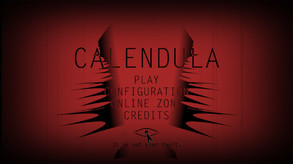
The opening moments establish the tone immediately. Instead of presenting a functional “Start Game” option, the interface appears broken or hostile. Buttons refuse to work as expected, error messages interrupt progress, and seemingly normal settings like brightness or resolution adjustments become tools for advancement. What initially feels like technical malfunction gradually reveals itself as intentional design. The player’s confusion becomes part of the experience, forcing them to experiment with the interface itself in order to move forward. In doing so, CALENDULA blurs the boundary between player and system, making the act of navigating menus feel like solving a puzzle.
Once fragments of the actual game world begin to appear, they do so in fleeting, disjointed sequences. The environments are surreal and sparse—abstract corridors, unsettling rooms, and dreamlike spaces that feel more symbolic than literal. There is no direct exposition explaining what is happening. Instead, the narrative emerges through implication and atmosphere. The game relies heavily on ambiguity, encouraging players to interpret meaning from fragmented clues rather than explicit storytelling. This design choice reinforces the unsettling feeling that the game world itself may be unstable or incomplete.
The horror in CALENDULA is psychological rather than visceral. There are no traditional jump scares or overt threats. Instead, tension arises from the persistent sense of unpredictability. The interface behaves erratically, sound cues are minimal and often unsettling, and the lack of clear objectives fosters a lingering unease. By stripping away familiar gameplay conventions, the game creates a discomfort rooted in uncertainty. Players are not simply navigating a haunted environment; they are navigating a system that appears to resist their presence.
Visually, the presentation embraces minimalism and distortion. The environments are deliberately abstract, often accompanied by glitch-like visual artifacts or strange graphical behavior. These elements enhance the feeling that the game is aware of itself as a digital construct. Sound design is equally restrained, relying on ambient tones and silence to build atmosphere. The absence of a guiding soundtrack or clear audio feedback reinforces the sensation of isolation and instability.
Mechanically, CALENDULA functions more as an interactive concept than a traditional game. Progression is nonlinear and sometimes opaque. There are no clear checkpoints or reward systems in the conventional sense. The satisfaction comes from deciphering how to proceed rather than from overcoming enemies or mastering mechanics. This unconventional structure can be deeply engaging for players who appreciate experimental design, but it may feel frustrating to those expecting clarity or structured progression.
The runtime is relatively concise, typically lasting a few hours, yet its impact often extends beyond its length. The experience lingers because it challenges assumptions about agency and interaction. By turning the interface into an obstacle and using confusion as a narrative device, CALENDULA positions itself as both game and commentary on games. It invites players to question how much control they truly have within digital systems and whether the line between player and program is as stable as it seems.
Ultimately, CALENDULA stands as a bold example of experimental indie design. It sacrifices accessibility and conventional satisfaction in favor of conceptual ambition. While not universally approachable, it succeeds in crafting a distinctive psychological experience that remains memorable precisely because it defies expectations. For players willing to embrace ambiguity and meta-horror concepts, it offers a thought-provoking journey that redefines the relationship between user, interface, and game world.
Rating: 7/10