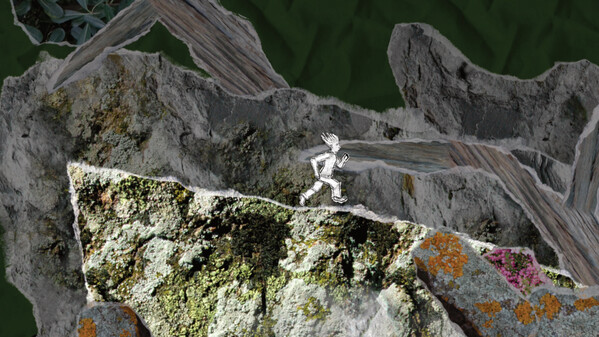
And Yet It Moves is a puzzle-platformer, set in a unique world, made of ripped paper. Within the paper-collage you can jump, run and last but certainly not least: rotate the world. Learn how to apply the physical consequences of rotation to master the many tricky situations you may encounter.
Modeled estimate, not a reported figure. How we estimate →
Discounts
Every price cut of more than 20% we have observed, in each market that quoted one, with this game's chart position on either side of it. These are episodes, not a model: a sale is one event, and one event cannot tell you what the next one will do.
For scale, across Steam · Top Sellers · Brazil over the last 30 days: the 26 chart moves that followed a price cut of more than 20% went a median of 7 places towards #1, and the 2,400 moves with no price cut behind them went 2 away. One store, one chart, one country — it is the only place we have enough observations to say even that.
Prices outside the United States have been collected since 6 August 2026 and chart positions since 19 July 2026, so a cut older than that has no market to compare and a market that joined later has no history yet. Nothing here is converted between currencies.
About
Genres
Engagement
Reviews
Themes across 44 recent reviews and how positive each mention is. A keyword signal, not full sentiment analysis.
Reviews
НУ 20 ЛЕТ ПРОШЛО СУКАБЛЯТЬ ЧИСТИЛ МАСЛЁНКА РУБАНУЛ ПО ПАЛЬЦУБЛЯТЬ НУ ПРИКЛЕИЛ СУПЕРКЛЕЕМ А ИГРА ТАКИМ ЖЕ ГOВНОМ ОСТАЛАСЬ
Started as a computer science project of the Vienna University of Technology in 2007, And Yet It Moves is an innovative platform/puzzle game made by an independent developer. There is no real story in the game; as a nameless character, the goal is to traverse levels from a start to an endpoint. Jumping is the only move the protagonist has, but that is not all that can be done. At any time, the level the protagonist is in can be spun by 90° or 180°, causing time to freeze for a brief moment, and gravity to resume after the rotation has been completed. Spinning the screen has physical consequences, since gravity always points downwards, and rotating the level does not impact neither the momentum of the protagonist nor that of any other objects in the level. Falling from too high, though, kills the protagonist, so endlessly spinning a level to reach the end is not an option. Other obstacles like fires or black holes can also kill the protagonist. There are no lives, though, and a series of well-placed checkpoints make the challenges manageable; each checkpoint also clearly indicates in which direction the next one is, making navigation easy. And Yet It Moves has really stylish and unique visuals; the levels resemble a paper collage and even the main character is just a cutout pencil line-drawing on white paper. The soundtrack is mostly composed of ambient noises and amazingly performed beat-boxing. There are only 17 levels, making the game short, yet excellently paced. All things considered, And Yet It Moves is a very solid indie platform/puzzle game, worth the time it takes to finish it.
Media

Related
Related
Price dynamics, follower growth, revenue and sales trajectories with interactive tooltips
This and every other Pro feature is free until October 20, 2026. A free account is all it takes.
Stats
All-time low is the lowest price we've recorded for this game since we started tracking it.
Languages: English, French, German, Italian, Japanese, Spanish - Spain
Hours played at review time, across 44 reviews with recorded playtime.
positive critical· bar length = how often the theme comes up
An unusual indie platformer built around one strong core mechanic: rotating the entire world around your character. You can change the direction of gravity, which makes familiar platforming situations work in unexpected ways. A wall can become the floor, the ceiling can turn into the path forward, and a simple jump can become a small puzzle about momentum, timing, and fall distance. The gameplay is mostly about careful movement, spatial puzzle-solving, and knowing when to rotate the world at the right moment. At times the game demands precision and can be a bit frustrating, especially when a bad rotation or fall forces you to replay a section. Still, the main idea is implemented well, and the levels gradually find different ways to use the mechanic instead of relying on the same trick over and over. The visual style is also worth mentioning. The game looks like an animated paper collage, with torn edges, cut-out textures, and slightly surreal backgrounds. It is not just a decorative choice, but an important part of the atmosphere. The world feels strange, fragile, and a little abstract, which fits very well with the constant disruption of normal gravity. Overall, "And Yet It Moves" is a very distinctive and memorable platformer. A good choice for players who enjoy experimental indie games, unusual puzzles, and visual styles that stand apart from the usual look.
Personally, I enjoyed the game. None of the mechanics overstayed their welcome, though none of the puzzles were particularly difficult. It was a bit difficult to get the world turning right, and the fall damage due to momentum can feel a bit wonky, at times. Getting the turns themselves right can also be difficult, as the player turns from the core, and not the feet. Additionally, scaling in the OS settings itself has to be reduced to 100% for the game to display properly. Haven't tried the epilogue levels yet, and I've heard some negativity around those, so I may update my review once I finish those. EDIT: First two epilogue levels are easy, second one's a nice balance of challenge, but the last one is hell.
the straight up definition of a hidden gem
And Yet It Moves is a distinctive indie puzzle-platformer that stands as an early example of how a single, well-executed idea can redefine an entire gameplay experience. Developed and published by Broken Rules, the game takes familiar platforming fundamentals—running, jumping, avoiding hazards—and reframes them through a deceptively radical mechanic: the ability to rotate the entire world. Rather than merely controlling a character within a static environment, players are asked to think spatially, treating the level itself as a manipulable object whose orientation directly determines gravity, momentum, and survival. From the first moments, the game establishes its unusual identity through its visual presentation. Everything appears to be constructed from layered paper cutouts, rough sketches, and collage-like textures, giving the impression that the world has been assembled by hand rather than rendered digitally. This aesthetic choice is more than cosmetic; it reinforces the experimental, playful tone of the game and helps players accept the strange logic of a world that can be spun on its axis at any time. The fragile look of the protagonist—who literally tears apart when crushed or dropped from too great a height—further ties the visual style into the mechanics, making failure feel thematically consistent rather than merely punitive. The core mechanic of rotating the world is what truly defines And Yet It Moves. With a simple input, the entire level can be turned in 90-degree increments, instantly changing which surfaces function as floors, walls, or ceilings. Gravity always pulls downward relative to the screen, so every rotation becomes a deliberate act of problem-solving. Obstacles that seem impossible when approached traditionally often become trivial once the world is reoriented, and safe ground can instantly become a deadly drop if rotated carelessly. This constant recontextualization of space forces players to abandon conventional platforming instincts and instead think in terms of geometry, timing, and cause-and-effect. Level design is tightly built around teaching and expanding this idea without overwhelming the player. Early stages act as gentle tutorials, introducing rotation in safe environments where experimentation is encouraged. As the game progresses, new hazards such as falling rocks, crushing walls, spikes, and fire are layered in, demanding more precise rotations and quicker reactions. Mistakes are frequent, but the checkpoint system is forgiving, ensuring that failure serves as a learning tool rather than a source of frustration. The rhythm of trial, error, and discovery becomes the backbone of the experience. Although the game lacks a traditional narrative, there is a subtle sense of progression conveyed through atmosphere and structure. Environments gradually evolve from claustrophobic caves into more abstract and open spaces, giving the impression of a journey without explicitly telling a story. Music and sound design play a quiet but effective role here, supporting the surreal tone without drawing attention away from the puzzles themselves. The absence of dialogue or exposition allows players to focus entirely on interaction and interpretation, letting the mechanics speak for themselves. One of the most common criticisms of And Yet It Moves is its relatively short length. Once players fully grasp the rotation mechanic, the game does not dramatically expand or subvert it with additional systems, meaning the experience can feel brief for those seeking long-term depth or replayability. Some players may also find the physics occasionally unforgiving, especially in later sections where precise timing is required and a single misjudged rotation can result in instant failure. However, these moments rarely feel unfair, as the rules of the world remain consistent throughout. Ultimately, And Yet It Moves endures because of its confidence and restraint. It does not attempt to pad its runtime with unnecessary features or dilute its identity with unrelated mechanics. Instead, it commits fully to a single, elegant idea and explores it thoroughly within a compact framework. For fans of puzzle-platformers who enjoy games that challenge spatial reasoning and reward creative thinking, it remains a memorable and influential title. Even years after its release, its core concept still feels fresh, serving as a reminder that innovation in games often comes not from complexity, but from seeing familiar ideas from an entirely new angle. Rating: 7/10
Full review: https://thegamehoard.com/2026/05/01/picking-up-steam-and-yet-it-moves/ And Yet It Moves gradually finds its footing with the rotation mechanic in the same way the player does. Right as the novelty of walking on walls and ceilings wears out, new objects and entities start to interact with your world spinning antics, giving you more puzzles to figure out and trickier platforming to pull off. At times though, the game’s rough nature gets in the way of your enjoyment, your standard jumping already a bit weak but some gimmicks can be a bit unruly to wrangle if you don’t do them perfectly on your first attempt. The game gets more creative the deeper you get into it, but it’s certainly held back by how often your failures arise from little issues in how the game handles the way you and other objects move.
Brutto idea e poi non si capisce dove devo andare.
a very unique game perfect for steam deck super mind bending and the artstyle is great if you have'nt played check it out 8/10
amazing little game lasts like 2-3 hours if your dumb like me, but there is a lot of replayability. Could not recommend this enough
Selling now
See how fast this game is selling right now — estimated copies and revenue per day from recent review growth.
Players by region
Where this game's players are, estimated from review languages.
Related
| Game | Estimated lifetime revenue | Reviews | Review score | Price |
|---|---|---|---|---|
| $33 | 2 | 0% | $0.99 | |
| $17.6M | 62.1K | 92% | $12.49 | |
| $89.4K | 424 | 90% | $9.99 | |
| $411 | 6 | 83% | $3.99 | |
| $1.3M | 4.4K | 87% | $9.99 | |
| $103K | 482 | 85% | $11.99 |
Related
| Game | Estimated lifetime revenue | Reviews | Review score | Price |
|---|---|---|---|---|
| $92K | 739 | 97% | $6.99 | |
| $92.1K | 730 | 97% | $4.99 | |
| $92.1K | 256 | 77% | $15.99 | |
| $92.1K | 661 | 85% | $2.72 | |
| $92K | 290 | 99% | $9.99 | |
| $92.1K | 388 | 92% | $9.99 |