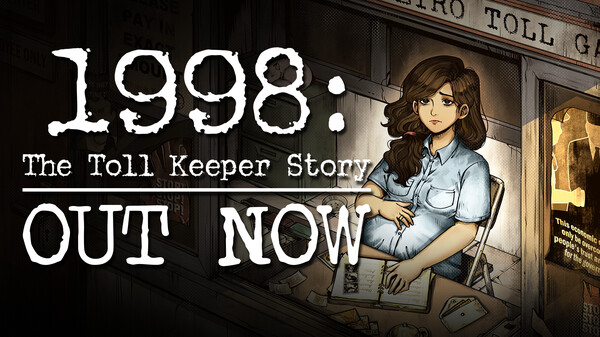
A narrative simulation game where you play as a mother-to-be working as a toll keeper in the fictional country of Janapa, a nation on the brink of chaos. Navigate daily challenges and make difficult moral choices to survive—all for the sake of your unborn child.
Modeled estimate, not a reported figure. How we estimate →
Every price cut of more than 20% we have observed, in each market that quoted one, with this game's chart position on either side of it. These are episodes, not a model: a sale is one event, and one event cannot tell you what the next one will do.
Reviews, worldwide (the counter carries no country): 0.13/day in the week to Aug 3 → 0.29/day in the week after.
For scale, across Steam · Top Sellers · Brazil over the last 30 days: the 26 chart moves that followed a price cut of more than 20% went a median of 7 places towards #1, and the 2,400 moves with no price cut behind them went 2 away. One store, one chart, one country — it is the only place we have enough observations to say even that.
Prices outside the United States have been collected since 6 August 2026 and chart positions since 19 July 2026, so a cut older than that has no market to compare and a market that joined later has no history yet. Nothing here is converted between currencies.
About
1998: The Toll Keeper Story is a narrative simulation about survival, motherhood, and moral weight during a nation’s collapse, inspired by one of the darkest chapters of Indonesia's history.
You play as Dewi, a pregnant woman working as a toll keeper, caught in the middle of growing civil unrest and financial turmoil in the fictional Southeast Asian country of Janapa. The nation is crumbling—protests erupt, prices skyrocket, and trust in authority fades. Every shift, you inspect vehicles, verify documents, and decide who gets to pass—all while trying to stay safe, keep your job, and protect your unborn child.
You’re not a hero or a fighter—just a regular human being trying to endure overwhelming hardship. But even your smallest decisions carry consequences. Will you follow every rule, or look the other way when someone begs for help? Can you stay strong through fear, uncertainty, and pressure?
Features:
A Story of Survival and Motherhood: Make difficult choices not just for your safety, but also for your unborn child.
Narrative Simulation Gameplay: Check vehicles, documents, and identities while managing rising tension and limited resources.
Small Decisions, Heavy Consequences: Every action matters: who you let through, who you turn away, what rules you follow or bend.
Distinct 90s-Inspired Visual Style: Fusing dot textures, old-paper aesthetics, and a blueish filter, the art direction echoes printed materials from the 90s—grounding the game in the mood and texture of its era.
Inspired by True Events: This game is set during the 1998 Asian financial crisis, with Indonesia’s situation serving as one of the primary inspirations. Set in a fictional Southeast Asian country, it explores the fear, chaos, and uncertainty of the era, challenging you to navigate through moral dilemmas where survival demands difficult sacrifices.
Add-ons
Each DLC is estimated with the same model as a game, then summed — a modeled figure, not reported DLC sales.
Sums Steam only; PlayStation, Epic publish no volume signal, so the true total is higher by an unknown amount.
| Store | Price | Audience | Score | Chart | Est. revenue |
|---|---|---|---|---|---|
SteamYou are here | $11.99 | 367reviews | 91% | — | $133.7K |
| $11.99 | 18ratings | 83% | — | not modelled | |
Engagement
Reviews
Themes across 54 recent reviews and how positive each mention is. A keyword signal, not full sentiment analysis.
Reviews
What a great game!!! It made me feel like I was in a country on the brink of collapse. I felt sad, happy, nervous, and all of the emotions. Well done developers!!!
Great game! I hope the developers will release more games like this in the future. I'm from Vietnam. ♥♥
superwoman和她的傻子丈夫
Media

Related
Related
Price dynamics, follower growth, revenue and sales trajectories with interactive tooltips
This and every other Pro feature is free until October 20, 2026. A free account is all it takes.
Genres
Stats
All-time low is the lowest price we've recorded for this game since we started tracking it.
Languages: English*, Indonesian*, Simplified Chinese, Traditional Chinese, Japanese*languages with full audio support
| $11.99 |
| — |
| — |
| — |
| not modelled |
Matched by title — a reused name can pair the wrong games. * is a critic aggregate. Prices and positions are each store's United States storefront; Epic charts worldwide. Audience and Score too, except Steam's, which is worldwide.
Hours played at review time, across 54 reviews with recorded playtime.
positive critical· bar length = how often the theme comes up
日本語版は未プレイ。 Papers, Pleaseのフォロワーといえるが、こちらの方がより家族の物語、そして史実の表現に注力している感じがする。 妊娠というある意味、社会の経済性、合理性から外れた状態の主人公を据えることで、Papers, Pleaseの倫理と経済生活の葛藤のほかに、社会と個人の葛藤をも描いている点が秀逸。 ゲームとしての難易度は高くなく、長さもそこまでないが、このストーリーは体験する価値がある。
1998: The Toll Keeper Story is a deeply personal and emotionally heavy narrative game that explores political collapse and economic hardship through the perspective of an ordinary worker simply trying to survive another day. Rather than focusing on large-scale warfare or heroic rebellion, the game narrows its attention to the quiet desperation experienced by civilians trapped inside a crumbling society. This grounded approach gives the experience an unusual level of emotional realism, transforming seemingly routine tasks into tense moral dilemmas filled with anxiety, fear, and uncertainty. The story follows Dewi, a pregnant toll booth employee working in the fictional nation of Janapa during a period of severe political and economic unrest inspired by the Southeast Asian crisis of the late 1990s. Her daily responsibilities initially seem simple enough: collect toll payments, inspect documents, and process vehicles passing through the checkpoint. However, as the country spirals deeper into instability, even these ordinary duties become emotionally exhausting. New regulations appear constantly, protesters flood the roads, food prices rise, corruption spreads, and citizens grow increasingly desperate. Through Dewi’s perspective, the game captures the terrifying feeling of watching society slowly unravel while still needing to wake up every morning and continue working to survive. One of the game’s greatest strengths is how effectively it builds tension through gradual escalation. Early shifts feel manageable, with only occasional signs of unrest appearing around the checkpoint. Over time, however, the atmosphere becomes increasingly oppressive. Desperate civilians plead for help, counterfeit money becomes common, suspicious travelers appear more frequently, and government oversight grows harsher. The game never relies on exaggerated spectacle to create emotional impact. Instead, it focuses on small moments of pressure and uncertainty that slowly accumulate until every interaction feels emotionally draining. This restrained storytelling approach makes the unfolding crisis feel disturbingly believable. Dewi is an exceptionally well-written protagonist because she feels painfully human throughout the entire experience. She is not a revolutionary leader or action hero, but a tired working woman carrying the physical and emotional burden of pregnancy while trying to protect her family from forces completely outside her control. Her vulnerability shapes every decision players make. Financial struggles, concerns about healthcare, and fear of losing her job remain constant sources of stress. The game succeeds because it places players inside the mindset of someone trapped between survival and morality, where even small choices can carry devastating consequences. The moral decision-making system is one of the most compelling aspects of the game. Players constantly encounter situations where there is no truly correct answer. Should a struggling family without proper documents be allowed through the checkpoint? Is it worth accepting bribes when your own family barely has enough money to survive? Can you risk showing compassion if government authorities are watching closely? The game avoids simplistic morality systems and instead presents choices that feel messy, uncomfortable, and emotionally complicated. Most decisions involve sacrifice in one form or another, reinforcing the central theme that survival during societal collapse often demands painful compromises. The storytelling is subtle and highly atmospheric. Rather than delivering heavy exposition directly, the game reveals the state of the country gradually through overheard conversations, newspaper headlines, environmental changes, and the behavior of people arriving at the toll booth. Familiar faces begin disappearing. Rumors of violence and arrests spread quietly. Tension builds not because the game constantly explains what is happening, but because players witness ordinary life deteriorating piece by piece. This understated narrative style creates a far stronger emotional effect than dramatic cutscenes or excessive dialogue ever could. Visually, the game adopts a retro-inspired presentation that perfectly matches its bleak atmosphere. Grainy textures, muted colors, and soft lighting effects create a constant feeling of exhaustion and unease. The toll booth itself becomes almost claustrophobic over time, reinforcing Dewi’s growing emotional isolation. While the graphics are relatively simple, the art direction is highly effective because it captures the mood of economic decline and social instability so convincingly. The sound design contributes enormously to the game’s emotional tension. Distant protests, traffic noise, radio broadcasts, and subdued music constantly remind players that unrest exists beyond the booth walls. Silence is used especially well during emotionally difficult moments, making certain interactions feel painfully intimate and uncomfortable. The audio never becomes melodramatic or manipulative, instead maintaining a grounded realism that strengthens immersion throughout the experience. The gameplay mechanics themselves are relatively straightforward, focusing primarily on document inspection, conversations, and branching narrative decisions. Players looking for deep simulation systems or complex management mechanics may find the core gameplay somewhat repetitive over extended sessions. However, this simplicity ultimately works in the game’s favor because it keeps attention focused entirely on emotional storytelling and moral pressure rather than mechanical complexity. The repetitive nature of the work itself even reinforces the exhausting routine Dewi experiences daily. Another particularly effective aspect is how the game portrays authority and systemic abuse. Supervisors, government officials, and law enforcement figures create a constant sense of discomfort through intimidation, corruption, and exploitation. The writing handles these themes seriously, showing how ordinary people become trapped within systems that gradually strip away dignity and security. Several scenes are emotionally difficult to watch because of how realistically they portray fear, helplessness, and emotional exhaustion. 1998: The Toll Keeper Story is not designed as a traditional power fantasy or exciting political thriller. Instead, it focuses entirely on the emotional reality of surviving inside a collapsing society where ordinary people are forced to make impossible decisions every single day. By narrowing its perspective to one pregnant worker trapped inside an increasingly hostile system, the game creates a remarkably intimate and emotionally impactful narrative experience. The game succeeds because it approaches its subject matter with empathy and restraint. It does not sensationalize suffering or rely on exaggerated drama to make its point. Instead, it quietly shows how political instability affects the lives of ordinary civilians trying to protect their families and preserve their humanity under unbearable pressure. The result is one of the more emotionally mature and thought-provoking narrative games in recent years. Rating: 9/10
This game is heavily based off the events that took place during May 1998 riot in Indonesia, it captured the sheer despair and hopelessness of the situation yet also the human compassion and kindness that also took place during those dark times. The gameplay itself complements the atmosphere and themes of the story, it constantly piles you with endless obligations that complicates your job with so little pay increment while your boss who serves as a yes man to the authority constantly tries to harass you. My minor nitpick is that a single playthrough feels too short as a game, the game has multiple endings but they can be best described as mere cosmetic changes with some scenes added or removed. Fortunately the game also now has Endless mode for those who like to challenge themselves but I doubt I will try it very often nor for very long. Another issue I have specific to the Indonesian dialogues is that they feel too formal and stiff at times, almost as if they're translated first from English dialogues, nonetheless they still captivate your heart and stir your emotions.
内容非常少,不值这个价。 制作组明明可以做的更好,却敷衍了事,文案一笔带过甚至不愿意做个支线。 以下内容含剧透 1.关键剧情丈夫被抓走后,我以为要我们艰苦奋斗拯救丈夫,此处明明可以做两个结局,结果过几天丈夫自己努力出来了(无能的丈夫唯一有用但破坏游戏性的一次) 2.闺蜜一家想出国躲避,缺少关键道具护照,理应主角上下打点,此处可以做两个支线,结果丈夫一句话就办好了,最后闺蜜高兴的白送了几百块,难顶 3.前两天教程教我们帮助弱小,还会在新闻上反馈结果,还有道具正反馈,结果教程结束后,完全没有相关事件了,来的全是抠门司机,而不是困难户······ 4.后面出了搜查违禁物品部分+粮食疯涨新闻,我以为没收司机的超载食物能减少伙食费呢,结果完全没有用,光罚款······甚至伙食费疯涨的新闻完全影响不到主角一家呢,主角一家是不需要去超市买吃的吗?为什么伙食费根本不变 类似的槽点不一一列举了,这本该是一个好游戏。但制作组极其偷懒,变成一个非常糟糕,游玩时间2小时就能玩完,游戏性非常低!!!脸皮还那么厚卖那么贵 完全比不上类似作品请出示证件的脚指头
1998: The Toll Keeper Story 90’lar atmosferini ve gişede çalışmanın o yalnız hissini çok iyi yansıtıyor. Gelen geçen insanlarla uğraşırken küçük detaylar oyunun havasını güçlendiriyor. Sade görünse de içine çeken, sakin ama merak uyandıran bir akışı var. Ben çok beğendim, nostaljik ve hikâye odaklı kısa deneyimleri sevenlere kesin öneririm.
Joguinho curtinho na pegada de Papers Please, assim como todo jogo de escolha eu peguei o pior final possível Mas enfim, uma história mt boa, recomendo pra quem gosta de jogo nesse estilo
I didn’t expect a game like 1998: A Toll Keeper Story to affect me this much. What starts as a simple “check papers and let cars pass” concept slowly turns into something emotional, tense, and deeply human. The atmosphere is incredible — the pixel art, the music, the lonely feeling of the checkpoint, everything works together perfectly. What I loved most is how the game makes you think. Every choice feels important, and the small details in conversations or documents can completely change outcomes. It’s one of those games where you finish it and immediately want to replay to see different endings and understand the world better. The storytelling is subtle but powerful. It doesn’t throw everything at your face, and that makes the experience even stronger. I got attached to characters, questioned my decisions, and genuinely cared about what happened next. If you enjoy story-driven games with moral choices, mystery, emotional weight, and a unique atmosphere, this game is absolutely worth playing. Easily one of the most memorable indie games I’ve played in a long time.
Selling now
See how fast this game is selling right now — estimated copies and revenue per day from recent review growth.
Players by region
Where this game's players are, estimated from review languages.
Players also reviewed
The games this title's players most often review too — audience affinity.
Related
| Game | Estimated lifetime revenue | Reviews | Review score | Price |
|---|---|---|---|---|
| $1.3K | 23 | 91% | $1.99 | |
| — | 0 | — | — | |
| — | 0 | — | — | |
| $2.6M | 7.9K | 86% | $12.99 | |
| $732.7K | 1.1K | 86% | $15.99 | |
| $362K | 817 | 89% | $13.99 |
Related
| Game | Estimated lifetime revenue | Reviews | Review score | Price |
|---|---|---|---|---|
| $133.7K | 584 | 95% | $5.99 | |
| $133.6K | 351 | 82% | $17.99 | |
| $133.6K | 241 | 90% | $19.99 | |
| $133.7K | 136 | 79% | $19.99 | |
| $133.6K | 434 | 53% | $14.99 | |
| $133.8K | 165 | 45% | $39.99 |