Voice of Cards: The Isle Dragon Roars is an RPG set in a world of swords and sorcery, told entirely through the medium of cards.
Modeled estimate, not a reported figure. How we estimate →
Prices
Each in the currency that store quoted — not converted: the gap between two rows is the publisher's pricing, not an exchange rate.
Availability
We put this game to every storefront we collect. A market that answered not sold has told us something about the game; a market we never asked has not, and the two are never drawn the same.
Discounts
Every price cut of more than 20% we have observed, in each market that quoted one, with this game's chart position on either side of it. These are episodes, not a model: a sale is one event, and one event cannot tell you what the next one will do.
Reviews, worldwide (the counter carries no country): 0.11/day in the week to Aug 4 → 0/day in the week after.
For scale, across Steam · Top Sellers · Brazil over the last 30 days: the 26 chart moves that followed a price cut of more than 20% went a median of 7 places towards #1, and the 2,400 moves with no price cut behind them went 2 away. One store, one chart, one country — it is the only place we have enough observations to say even that.
Prices outside the United States have been collected since 6 August 2026 and chart positions since 19 July 2026, so a cut older than that has no market to compare and a market that joined later has no history yet. Nothing here is converted between currencies.
About
Genres
Add-ons
Each DLC is estimated with the same model as a game, then summed — a modeled figure, not reported DLC sales.
Sums Steam only; PlayStation, Nintendo publish no volume signal, so the true total is higher by an unknown amount.
| Store | Price | Audience | Score | Chart | Est. revenue |
|---|---|---|---|---|---|
SteamYou are here | $29.99 | 1.3Kreviews | 80% | — | $1.1M |
| $49.99 | 1.2Kratings | 88% | — | not modelled | |
Engagement
Reviews
Themes across 49 recent reviews and how positive each mention is. A keyword signal, not full sentiment analysis.
Reviews
一人用TRPG風のJRPG 全てカードで表現されているのが新鮮 いい声のGMによるナレーション&音楽が良い テンポが悪いという意見もあるがアプデで高速モードが追加され自分は終始楽しくプレイ出来た🥳 ストーリは薄味、[u] カードゲームでは無いので注意![/u]
当年在ns上购买的steam上补票,无中文,但是有日文,对我来说没啥。可能很多其它玩家不太友好吧。 怎么说当年很喜欢,我很喜欢卡牌类的或者jrpg的游戏。很喜欢,但是但是但是,剧情又臭又长,玩到后期真的不好玩。不好玩!剧情基本都是意料之中,没啥反转。反转了你也知道是什么反转。 怎么说呢,推荐,但是并不完全推荐!薛定谔的推! ps:评价完突然想起来续作我也入库了,还没玩。好吧自己花的钱怎么都要咬着牙玩了。
卡牌是为了以简洁的美术来表现思想的宏伟,不是让你偷懒的!
Media

Related
Related
Price dynamics, follower growth, revenue and sales trajectories with interactive tooltips
This and every other Pro feature is free until October 20, 2026. A free account is all it takes.
14 of 15 markets; the rest we haven't asked for this title, not markets where it is unavailable.
14 on sale1 answered “not sold”0 we did not ask
The 1 “not sold” market is read from the Steam price pass of Aug 22: that day the store answered for this game elsewhere and gave no price there. The 14 priced markets are the same rows as the table above — each the latest price we hold, dated here when it is older than that pass. The 0 marked “not asked” were not put to this store at all — either it has no storefront there or we do not collect it yet, and neither is a statement about the game. A refusal is a refusal on one day; a store can list a title again tomorrow.
Stats
All-time low is the lowest price we've recorded for this game since we started tracking it.
Languages: English*, French, Italian, German, Spanish - Spain, Japanese**languages with full audio support
| $11.99−60% |
| — |
| — |
| — |
| not modelled |
Matched by title — a reused name can pair the wrong games. * is a critic aggregate. Prices and positions are each store's United States storefront; Epic charts worldwide. Audience and Score too, except Steam's, which is worldwide.
Hours played at review time, across 49 reviews with recorded playtime.
positive critical· bar length = how often the theme comes up
Voice of Cards: The Isle Dragon Roars turns a familiar fantasy RPG premise into something visually distinctive by presenting nearly everything as cards laid across a tabletop. The world, characters, enemies, equipment, locations, and events all follow this concept, creating the impression that an unseen group is playing an elaborate tabletop adventure. Square Enix serves as both developer and publisher, with creative director Yoko Taro, composer Keiichi Okabe, and character designer Kimihiko Fujisaka giving the project a recognizable artistic identity. Despite the unusual appearance, the experience underneath is closer to a traditional turn-based JRPG than a conventional collectible card game. The story begins with an intentionally straightforward fantasy objective. A dragon has awakened, and a self-proclaimed hero sets out to defeat it. What initially sounds like a standard heroic quest gradually develops additional personality through the companions, discoveries, humor, and unexpected turns encountered along the journey. The gamesmaster narration is particularly important because the adventure rarely depends on elaborate animated cinematics. Instead, descriptions, illustrations, sound effects, and narration invite players to imagine events much as they would during a tabletop campaign. This restrained storytelling approach fits the card aesthetic surprisingly well. Exploration reinforces the tabletop concept by having players move a piece across cards representing the surrounding world. Previously unseen areas remain concealed until approached, producing a pleasant feeling of gradually revealing a physical game board. Towns and other locations continue the same philosophy, while encounters and discoveries emerge naturally from exploration. There is something satisfying about watching the world unfold card by card, although the deliberate animations can eventually become repetitive. Players who prefer extremely fast navigation may find the constant flipping and movement slower than necessary. Combat uses accessible turn-based mechanics rather than complicated deck construction. Party members possess different attacks and abilities, while resources must be managed to activate more powerful actions. Dice-based elements occasionally introduce uncertainty and strengthen the tabletop atmosphere. Battles are easy to understand, and the straightforward design makes the game welcoming even to players without extensive experience in strategic RPGs. The downside is that experienced players seeking demanding tactical complexity may find the system somewhat lightweight. Once the basic rhythm becomes familiar, ordinary encounters can feel predictable. The card concept deserves considerable praise because it extends far beyond a decorative interface. Characters are illustrated cards, enemies appear as cards, and practically every element is integrated into the same physical presentation. Kimihiko Fujisaka's artwork provides personality to characters that otherwise have relatively little traditional animation. The illustrations are expressive enough to encourage players to fill in the missing movement with their imagination. Small touches involving card placement, tokens, dice, and tabletop effects further sell the illusion that the entire adventure exists on an enormous game board. Music is another major strength. Keiichi Okabe's involvement results in a soundtrack capable of supplying much of the emotional weight that would ordinarily come from cinematic presentation. Peaceful exploration, mysterious situations, battles, and dramatic scenes are supported by music that complements the storybook atmosphere. Combined with narration and the tactile sounds of cards being handled, the audio creates a surprisingly immersive environment despite the deliberately minimalist visuals. The biggest weakness is pacing. The same presentation that initially makes the adventure fascinating can occasionally slow routine activities. Card animations are charming when first encountered but become less impressive after seeing them repeatedly. Random encounters can also interrupt exploration, and the relatively straightforward battle system means these interruptions are not always particularly exciting. Players expecting extensive deck customization should also understand that the card imagery does not transform this into a deep deckbuilding game. Its foundations remain firmly rooted in conventional JRPG exploration and turn-based battles. The smaller-scale structure ultimately works in its favor. Rather than attempting to compete through enormous environments or excessive mechanical complexity, the game concentrates on atmosphere, characters, storytelling, and its unusual tabletop identity. There are optional discoveries and additional reasons to investigate the world, while achievements provide further objectives for completion-minded players. The combination of nostalgic RPG conventions and experimental presentation creates an experience that feels simultaneously familiar and unusual. Steam Deck compatibility is good, with Valve's compatibility data categorizing the game as Playable rather than fully Verified. The default controller configuration provides access to the game's functionality, controller icons are displayed correctly, interface text is considered legible, and the default graphics configuration performs well on Steam Deck. The primary limitation is that some text entry requires manually bringing up the on-screen keyboard. Given the turn-based gameplay and card-driven interface, however, the overall design is naturally well suited to handheld sessions. Ultimately, this is a creative interpretation of the traditional fantasy JRPG rather than a radical reinvention of its underlying mechanics. Its combat could have offered greater strategic depth, and the intentionally measured presentation occasionally becomes tedious, but those shortcomings are balanced by beautiful artwork, excellent music, memorable narration, appealing characters, and remarkable consistency in its tabletop aesthetic. The card-based world gives the adventure an identity that remains memorable long after its fundamental RPG systems have become familiar. It is an imaginative, atmospheric, and accessible RPG whose strongest achievement is transforming a conventional fantasy journey into something resembling a beautifully illustrated tabletop campaign. Players attracted to storytelling, turn-based combat, distinctive art direction, and Yoko Taro's creative sensibilities should find plenty to appreciate, particularly if they are comfortable with its deliberately relaxed pace. Rating: 8/10
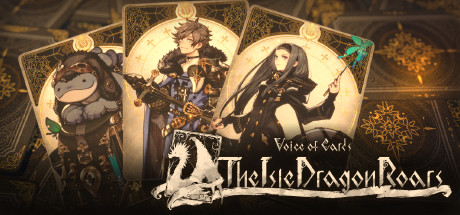
Pros: Creative concept and great music. Cons: Combat can become repetitive. Conclusion: The whole concept of playing a turned base RPG through cards is very creative. The music score was great and I found myself sitting there just listening to it. Combat is random and can get repetitive since you have limited actions you can do on your turn. The game is recommended if you like turn base RPGs and want a fresh way to play.
I feel like I played a different game from everyone else. I mean, i do agree that the gameplay is bad. But so is everything else. I mean, yes, the sound and art are nice but also still clearly lacking. You see the same artwork constantly repeated, and it really isn't so nice that it would be impressive. The story is about as basic as it can get, and the characters are actively unlikable. Especially the protagonist, whose main character traits are that he is both selfish as well as pathetic. Then you just have random side stuff like you helping some hurt woman get her ankle fixed up only to unlock the information that she killed her husband and is now eating him... okay? Like yeah, it is random, but it feels random without there being a point. The game is also agonizingly slow due to the card gimmick. In total you have a game where most parts of it are mediocre at best and straight up bad at worst.
Un très bon jeu même si le gameplay est un peu rébarbatif. L'aspect "cartes" est vraiment très bien exploité. L'histoire est vraiment excellente et quelle fin...
+ Un gameplay minimaliste mais qui fonctionne très bien + Une BO très très bonne + Le chara design est comme toujours sublime (gros gros gros coup de coeur pour Melanie, qui me rappelle le chara design de Mirania dans The Last Story) + Très accessible ; on pourrait croire que le gameplay un peu "unique" en fasse fuir plus d'un pour sa complexité alors qu'en réalité pas du tout, le jeu n'oppose quasiment aucune résistance (bon j'ai pas mal galéré pour le boss final et le boss post game mais seulement parce que je m'équippais pas des bons sorts ahem) + Comptez 20h pour le finir à 100% (par là j'entends débloquer tous les succès, aucun succès n'est manquable, vous pouvez jouer de la manière dont vous le désirez) - Histoire bidon. Le terme est fort mais je m'attendais à mieux, là clairement y'a zéro effort. - Un peu redondant et lent (je vous conseille d'accélerer le jeu depuis les options) - Quasiment pas d'activités annexes - J'ai trouvé que le GM n'avait pas la bonne intonation des fois, ça me bloquait pour l'immersion... Un jeu très sympa dans l'ensemble malgré de gros défauts, je vous déconseille d'acheter ce jeu 30 euros quand même, attendez qu'il soit en solde.
Fun gameplay comes second to the focus on card style presentation. This game had a lot of potential. The aesthetic is beautiful and card based story telling interesting. Unfortunately, they leaned into the card based theme so far that it becomes a hinderance to playing the game. The story starts slow and doesn't become interesting until the very end. Unfortunately, time wasted waiting for animations to finish and the overly repetitive encounters removed my desire to see the story through to the end. Looking back, even the narrator comes off as bored when commenting during the battles. Pros: Gorgeous artwork and good music Fun use of cards as a way to interact with the game and tell a story Well voice acted (though there is only one voice narrating the story rather than individual characters) Card animations are initially fun and engaging Overworld using flipping cards up encourages exploring every corner Allowing you to jump to previously explored cards while traveling was a great QOL feature Any card you see or acquire becomes added to a collection you can look back on Cons: The animations are slow and delayed making it feel like you are waiting to play the game (there is a speed increase option, but I'd argue if they saw a need to make the entire game play faster, there is a flaw in its design) Average encounters should be reduced by at least 30% and are used as a way to lengthen the game without adding fun or variety to gameplay Combat feels secondary to visual experience and a chore to get to the bigger boss fights which are a bit more interesting Poor UI as a result of leaning too far into the card theme (e.g., each item is an individual card in the battle menu and to cycle through up to 30 items requires moving through each card and waiting for an animation to play. Why not have a card for each type of item and then a number for qty?) Illusion of choices (personal frustration with games that give you options of how to respond but the outcome is the same). Overall, a lot of wasted potential that could have been solved with a bit more iteration and focus on the gameplay. To use a silly metaphor, Voice of Cards is a beautifully presented Turkey carefully prepared to make your mouth water and your stomach clamor to be filled. Though after a few bites, you see through the presentation as a facade hiding the chore of eating the same dry and chewy meat over and over. What you thought would be a feast becomes a question of whether or not to finish your plate.
关于三部曲,看玩家自己想要分配的时间 时间长一点建议玩第三作,浅尝建议玩本作。不要玩第二部。 演出方式很好玩,本质JRPG。 第一部像小品实验作。真的很小,同时导致缺点也不那么显眼,毕竟一下子就过去了,没等痛苦就结束了。 只是想体验一下voic of card的话,第一部是最便捷的。 因为三部核心体验没有变化太多,同时第一部没有任何的拖沓设计。值得一个好评。 主角人设存在感很强,要多选符合角色性格的选项才会有有趣的文字演出看。选项多少有那么点回馈,蛮难得。 音乐上上,美术上上,玩法中中,演出上中
Selling now
See how fast this game is selling right now — estimated copies and revenue per day from recent review growth.
Players by region
Where this game's players are, estimated from review languages.
Related
| Game | Estimated lifetime revenue | Reviews | Review score | Price |
|---|---|---|---|---|
| $101K | 311 | 76% | $14.99 | |
| $124.8K | 182 | 78% | $29.99 | |
| $28.9M | 45.1K | 94% | $29.99 | |
| $1.8M | 2.9K | 84% | $24.99 | |
| $83.2K | 501 | 67% | $5.99 | |
| $112.1K | 358 | 81% | $14.99 |
Related
| Game | Estimated lifetime revenue | Reviews | Review score | Price |
|---|---|---|---|---|
| $1.1M | 6.1K | 88% | $6.99 | |
| $1.1M | 726 | 71% | $49.99 | |
| $1.1M | 1.2K | 78% | $14.99 | |
| $1.1M | 4.3K | 94% | $19.99 | |
| $1.1M | 4.5K | 98% | $19.99 | |
| $1.1M | 1.4K | 95% | $24.99 |