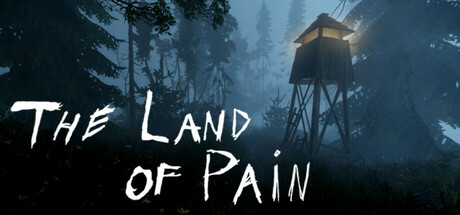
Something strange appears in the woods. Lost in a dark and unknown place, survive an unrelenting enemy, solve puzzles, and uncover the ancient mystery that’s befallen this land in this Lovecraftian Cosmic Horror adventure.
Modeled estimate, not a reported figure. How we estimate →
Prices
The United States storefront in every case, so this compares stores and not countries.
Discounts
Every price cut of more than 20% we have observed, in each market that quoted one, with this game's chart position on either side of it. These are episodes, not a model: a sale is one event, and one event cannot tell you what the next one will do.
Reviews, worldwide (the counter carries no country): 0.71/day in the week to Sep 10 → 1.29/day in the week after.
Reviews, worldwide (the counter carries no country): 0.29/day in the week to Jul 30 → 0.14/day in the week after.
For scale, across Steam · Top Sellers · Brazil over the last 30 days: the 26 chart moves that followed a price cut of more than 20% went a median of 7 places towards #1, and the 2,400 moves with no price cut behind them went 2 away. One store, one chart, one country — it is the only place we have enough observations to say even that.
Prices outside the United States have been collected since 6 August 2026 and chart positions since 19 July 2026, so a cut older than that has no market to compare and a market that joined later has no history yet. Nothing here is converted between currencies.
About
Genres
Add-ons
Each DLC is estimated with the same model as a game, then summed — a modeled figure, not reported DLC sales.
Sums Steam only; Epic publishes no volume signal, so the true total is higher by an unknown amount.
| Store | Price | Audience | Score | Chart | Est. revenue |
|---|---|---|---|---|---|
SteamYou are here | $2.39−80% | 581reviews | 77% | — | $19.8K |
| $11.99 | — | — | — | not modelled |
Matched by title — a reused name can pair the wrong games. * is a critic aggregate. Prices and positions are each store's United States storefront; Epic charts worldwide. Audience and Score too, except Steam's, which is worldwide.
Engagement
Reviews
Themes across 63 recent reviews and how positive each mention is. A keyword signal, not full sentiment analysis.
Reviews
Okay, I hate to thumbs down. But MY GOD there is just one tiny single little thing making this game completely unplayable for me. The environment is *gorgeous*, the story is very intriguing, the mechanics are fun to me, I enjoy the problem solving. I do NOT enjoy that the dev claims you can "hide", because no, you cant'. I've respawned like 8 times now at the same spot, during the first encounter with the "entity" which can always spot you and chase you forever. I've tried other routes, I've explored everything else first and avoided even going near it, and when I can do no more I try to go back and scout that temple thing..only to be hit again by the inevitable. If not for that one thing I'd say do yourself a favor if you like Lovecraft and walking sim horror, and buy this game. But because of this creature, I say respect your wallet and time until the Dev figures out a way to make it feel balanced. I wanna love this game so bad man.
If you love ALL things Lovecraft then yeah, you'll enjoy it. As a casual experience, the ride just isn't worth the time.
Media

Related
Related
Price dynamics, follower growth, revenue and sales trajectories with interactive tooltips
This and every other Pro feature is free until October 20, 2026. A free account is all it takes.
Stats
All-time low is the lowest price we've recorded for this game since we started tracking it.
Languages: English, Italian, French, German, Russian, Spanish - Spain, Spanish - Latin America, Turkish
Hours played at review time, across 63 reviews with recorded playtime.
positive critical· bar length = how often the theme comes up
Perhaps it is my fault for coming to this game looking for a Narrative Adventure experience. This has the Walking Simulator and Exploration tags, and I am a big fan of Lovecraftian cosmic horror stories, so I really wanted to like this one. Unfortunately, the narrative adventure elements are sparse and fairly weak. This is absolutely a survival horror game akin to Amnesia. I found The Land of Pain overall just unpleasant to play. The actual narrative is extremely minimal. The environments are uniformly dark and similar to one another, and there is only one instance of what I would call a genuine puzzle. The rest of the game is about trying to find the object in the environment that will allow you to pass through the next blocked entryway. Without fail. Every single time. This would have been fine if it were not for the completely unnecessary chase sequences. I would have had a lot more patience with this game if it actually let you explore everywhere and drink in the atmosphere and spend time reading through the notes. Instead, however, it does the worst thing that one of these games can do; it puts you in several unskippable chase sequences with a monster that kills you instantly and you are forced to reload from your last checkpoint. Nothing kills tension and immersion like frustration and repetition. Obviously this game just is not for me. You may like the thrill of the chase and the challenge of surviving, but for me it just felt like a bunch of frustrating busywork keeping me from actually enjoying the interesting parts of the game, which are the very minimal bits of story. As a Narrative Adventure / Walking simulator, I just cannot recommend this one. Check out Call of the Sea if you are looking for a decent Lovecraftian narrative adventure with a lot of puzzles and personality. Call of the Sea does everything that I wished that this game would do.
Madd Vladd brought me here xD - Despite the age of the game, the game looks great and the atmosphere is next level.
I am sorry for giving this game a thumbs down, since it’s made by a solo dev (from the credits, the only other ppl listed worked on translation/proof-reading), and I give kudos to the dev. But the problem is that the game is tedious, mainly because of puzzles requiring you to go and back forward a lot. And calling them puzzles is a stretch since all require finding item A and get it to point B, that’s it, there was one where you gotta adjust pressure in pipes but that’s as complex as it will get. Next is the only enemy which can kill you, I will just say, that thing is so annoying, it doesn’t help that is one of those enemies which can smell you, so no matter if you run or walk it seems to start chasing you. It also does not help that the thing is a cloud, sometimes invisible, you cant even see where it is so you can avoid it. BUT, you can feel that those factors are just there for padding, otherwise it would be even shorter (btw, takes about 3 hours to finish). Also, I found a secret item, but there are no achievements or menus to see what they are, so I am not sure why such items are around. Anyway, I will play the sequel, The Alien Cube, because despite the tediousness I did enjoy the story and atmosphere, and hopefully those annoying factors are dimmed down or non-existent in the sequel.
Reading a book is scarier than this walking simulator cuz you at least wont fall asleep reading, its just holding w to go forward with shift i got this game for free and i feel like i wasted my money here
Jank simulator where nothing really happens
The Land of Pain, developed and published by Alessandro Guzzo, is a first-person psychological horror adventure that embraces cosmic horror themes through atmosphere, exploration, and slow-building tension. Rather than following traditional survival horror formulas built around combat and resource management, the game focuses heavily on isolation, environmental storytelling, and the unsettling fear of confronting forces beyond human understanding. Inspired by classic Lovecraftian horror concepts, it creates an experience designed to make players feel vulnerable not through overwhelming action, but through uncertainty and growing dread. The story begins with a quiet and seemingly harmless situation. The protagonist finds themselves in a remote natural environment surrounded by forests and open wilderness, only for reality to slowly distort into something deeply disturbing. Strange events begin unfolding without explanation, ordinary locations become increasingly hostile, and what initially feels like peaceful isolation transforms into a desperate fight for survival against forces that remain difficult to fully comprehend. One of the strongest aspects of The Land of Pain is how effectively it handles atmosphere. Horror works best when players feel uncomfortable long before danger appears directly, and the game consistently succeeds at creating that emotional pressure. Dense forests, abandoned structures, caves, hidden paths, and forgotten environments establish a world that feels both beautiful and deeply unsettling. Exploration rarely feels safe because even quieter moments carry tension. The environment becomes one of the primary storytelling tools throughout progression. Instead of relying heavily on lengthy dialogue or direct exposition, the game encourages players to investigate surroundings and piece together information naturally. Strange discoveries scattered across the world slowly reveal larger mysteries while maintaining uncertainty. The experience consistently rewards observation and curiosity. Visual presentation contributes significantly toward immersion. Natural environments feel detailed and convincing, creating a strong contrast between realism and supernatural horror. Forests appear inviting during one moment and deeply threatening the next. Lighting effects and environmental detail help strengthen the emotional impact of exploration because unsettling moments feel grounded inside believable surroundings. The visual design also supports one of the game's central strengths: isolation. The world often feels enormous and empty in ways that reinforce vulnerability. Players spend long periods navigating unfamiliar locations without comfort or reassurance. That loneliness becomes a major source of tension because danger often feels invisible until it suddenly becomes unavoidable. Gameplay emphasizes exploration and survival rather than combat. Players are not empowered through large weapon systems or direct confrontation mechanics. Survival frequently depends on movement, awareness, and understanding environmental threats rather than overpowering enemies directly. This design choice strengthens fear because danger feels more threatening when players cannot simply eliminate obstacles through force. Puzzle-solving mechanics add additional structure to progression without disrupting atmosphere. Environmental clues and careful observation become important tools for moving forward. The puzzles generally avoid feeling disconnected from the world itself, instead functioning naturally alongside exploration and narrative progression. The pacing favors slower psychological tension over immediate intensity. Rather than overwhelming players with nonstop encounters, The Land of Pain allows fear to develop gradually. Long periods of exploration create uncertainty that makes dangerous moments significantly more effective. Quiet spaces often become just as unsettling as direct threats because players begin expecting something terrible to happen even when nothing immediately appears. Audio design plays an equally important role in maintaining tension. Environmental sounds constantly reinforce atmosphere through distant noises, weather effects, unsettling disturbances, and carefully used silence. Horror frequently depends on anticipation, and the sound design consistently contributes toward building that emotional pressure. The cosmic horror influences become increasingly noticeable as progression continues. Fear emerges less from traditional monsters and more from confronting mysteries that feel impossible to fully understand. The game embraces uncertainty effectively, allowing imagination to strengthen fear rather than explaining every detail directly. As an independent project, certain limitations occasionally become visible. Some systems feel simpler than larger horror productions, and players expecting faster pacing or more mechanically complex gameplay may initially struggle with its slower structure. The experience commits heavily to atmosphere and exploration, which naturally creates a more deliberate pace. However, Alessandro Guzzo succeeds remarkably well at understanding what makes psychological horror effective. The game rarely relies on excessive spectacle or constant action. Instead, it builds discomfort patiently and trusts atmosphere to carry much of the experience. What ultimately separates The Land of Pain from more conventional horror games is its understanding of vulnerability and uncertainty. The fear comes not from fighting enemies but from realizing how little control players truly have over the increasingly strange world surrounding them. Players who appreciate atmospheric horror, exploration-driven storytelling, psychological tension, and Lovecraft-inspired themes will likely discover an experience worth remembering. The Land of Pain succeeds by creating fear through isolation and mystery rather than overwhelming players with constant danger. A haunting psychological horror experience that combines strong environmental storytelling, immersive atmosphere, and cosmic horror influences into a memorable adventure built around mystery, isolation, and slow-burning tension. Rating: 7/10
I really enjoyed this game. It had some chilling moments and made for an enjoyable evening. I'll play more of these.
This was the first game I played when I first got my PC
Selling now
See how fast this game is selling right now — estimated copies and revenue per day from recent review growth.
Players by region
Where this game's players are, estimated from review languages.
Players also reviewed
The games this title's players most often review too — audience affinity.
Related
| Game | Estimated lifetime revenue | Reviews | Review score | Price |
|---|---|---|---|---|
| $228.7K | 710 | 43% | $19.99 | |
| $35.1K | 191 | 88% | $10.99 | |
| $11.7K | 67 | 79% | $8.99 | |
| — | 0 | — | — | |
| $0 | 18 | 78% | Free | |
| $9.2M | 27.7K | 88% | $19.99 |
Related
| Game | Estimated lifetime revenue | Reviews | Review score | Price |
|---|---|---|---|---|
| $19.8K | 409 | 99% | $2.99 | |
| $19.8K | 191 | 94% | $4.99 | |
| $19.8K | 213 | 62% | $4.89 | |
| $19.8K | 1.4K | 62% | $0.99 | |
| $19.8K | 109 | 53% | $9.99 | |
| $19.8K | 58 | 79% | $9.99 |