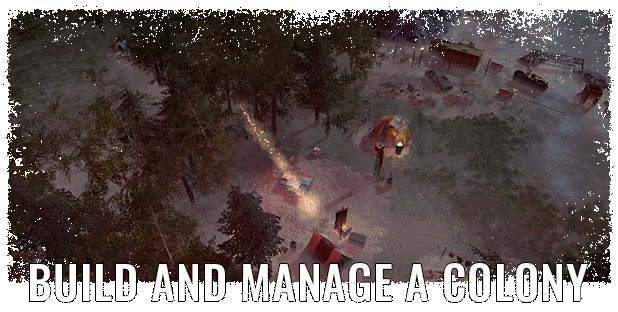
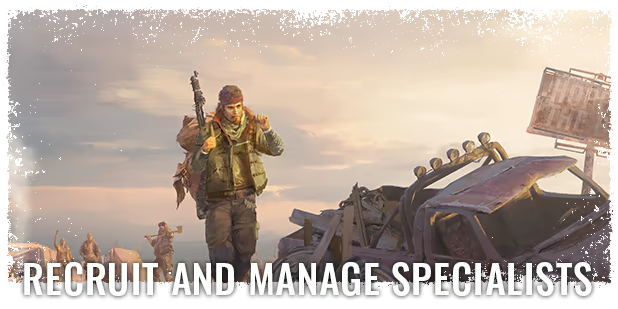
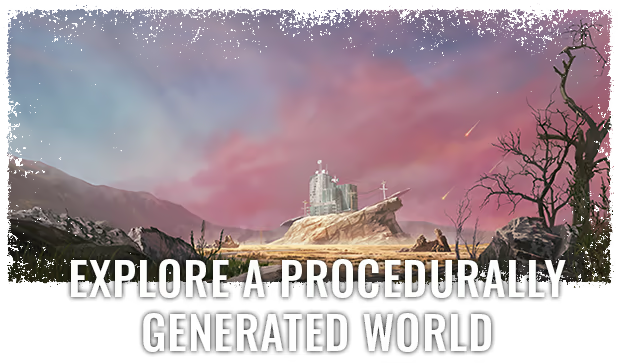
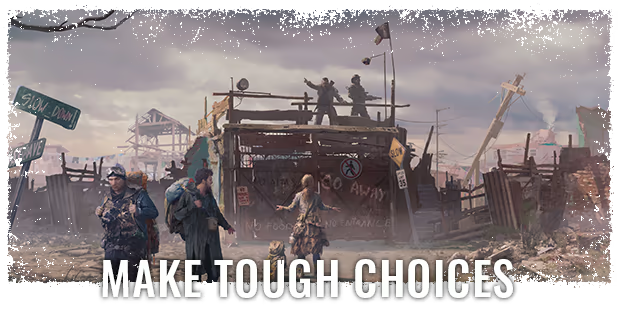
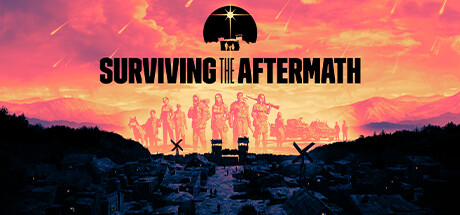
Survive and thrive in a post-apocalyptic future — resources are scarce, but opportunity calls! Build the ultimate disaster proof colony, protect your colonists, and restore civilization to a devastated world.
Modeled estimate, not a reported figure. How we estimate →
Prices
Each in the currency that store quoted — not converted: the gap between two rows is the publisher's pricing, not an exchange rate.
Discounts
Every price cut of more than 20% we have observed, in each market that quoted one, with this game's chart position on either side of it. These are episodes, not a model: a sale is one event, and one event cannot tell you what the next one will do.
Reviews, worldwide (the counter carries no country): 0.29/day in the week to Aug 17 → 0.86/day in the week after.
For scale, across Steam · Top Sellers · Brazil over the last 30 days: the 24 chart moves that followed a price cut of more than 20% went a median of 9 places towards #1, and the 2,404 moves with no price cut behind them went 2 away. One store, one chart, one country — it is the only place we have enough observations to say even that.
Prices outside the United States have been collected since 6 August 2026 and chart positions since 19 July 2026, so a cut older than that has no market to compare and a market that joined later has no history yet. Nothing here is converted between currencies.
About


Sums Steam only; PlayStation, GOG, Epic, Nintendo publish no volume signal, so the true total is higher by an unknown amount.
| Store | Price | Audience | Score | Chart | Est. revenue |
|---|---|---|---|---|---|
SteamYou are here | $29.99 | 4.6Kreviews | 71% | — | $3.6M |
| $29.99 | 2.3Kratings | 78% | — | not modelled | |
Updates
Build ids and update times come straight from Steam's PICS — the same source SteamDB reads. Patch history grows as we record new builds.
Engagement
Reviews
Themes across 829 recent reviews and how positive each mention is. A keyword signal, not full sentiment analysis.
Reviews
Surviving the Aftermath is a post-apocalyptic colony management simulation developed by Iceflake Studios that plunges players into a harsh, unforgiving world devastated by an unspecified global catastrophe. Released on Steam, the game challenges you to build, expand, and sustain a settlement of survivors struggling to reclaim some semblance of civilization amid ruins, scarcity, and constant threats. It combines city-building mechanics with survival elements, resource management, and exploration in a procedurally generated, often hostile environment. For fans of strategy and survival games, Surviving the Aftermath offers a rewarding but demanding experience that balances creative freedom with the brutal realities of rebuilding society from the ashes. At its core, the game revolves around managing a colony of survivors, ensuring their basic needs—food, water, shelter, and health—are met while navigating a world filled with unpredictable dangers. You begin with a handful of settlers and limited resources, tasked with establishing infrastructure such as farms, water purifiers, medical facilities, and defenses. Every decision carries weight, from where to place your buildings to which technologies to research. The settlers themselves have stats and traits that affect their efficiency and morale, making personnel management an important facet of gameplay. Keeping your community happy and healthy is a constant juggling act, as unmet needs quickly lead to sickness, unrest, or death. Resource gathering and logistics form the backbone of Surviving the Aftermath. Scavenging is key—sending out expeditions to nearby ruins or hostile zones to recover vital supplies, technology, or survivors adds an exciting layer of risk and reward. Each expedition is a mini-adventure, sometimes leading to intense combat or critical choices about who to save or what to prioritize. The procedural generation ensures that every map and mission offers unique challenges, keeping exploration fresh. Meanwhile, resource scarcity forces players to carefully plan and optimize production chains, balancing immediate needs against long-term sustainability. This economic tension is enhanced by occasional environmental hazards like dust storms or radiation zones, which require adaptive strategies and clever use of technology. Technology research and development play a pivotal role in shaping your colony’s chances of survival and expansion. The game features a tech tree that unlocks improvements across agriculture, medicine, defense, and industry. Deciding which branches to pursue depends largely on your current challenges and playstyle. For example, investing in advanced water purification might solve ongoing water shortages, while military upgrades are critical when facing frequent raider attacks. Research is not instant, creating periods of vulnerability that test your colony’s resilience. The gradual unlocking of technologies adds a sense of progression and hope amid the bleak setting, rewarding careful planning and risk-taking. One of the standout features of Surviving the Aftermath is its dynamic world and emergent storytelling. Random events such as raids, sickness outbreaks, or internal conflicts inject tension and unpredictability, forcing players to adapt rapidly. The game also integrates moral choices and diplomacy, especially when interacting with rival colonies or wandering survivors. These interactions can lead to alliances, trade agreements, or hostile confrontations, adding depth beyond pure resource management. The balance between cooperation and competition underscores the fragile nature of post-apocalyptic society and enhances the game’s narrative texture. Visually, the game employs an isometric perspective with detailed, stylized graphics that convey the desolation and decay of a world in ruins. The environments are richly designed, from crumbling cities and barren wastelands to makeshift settlements cobbled together from scavenged parts. Weather effects and lighting further enhance the mood, immersing players in the struggle for survival. While not pushing technical boundaries, the art style suits the game’s tone well and provides clarity in managing complex base layouts and scouting missions. The UI is generally accessible, although some inventory and management screens can feel cumbersome as your colony grows in size. The audio design complements the visuals effectively, with ambient sounds that evoke a desolate atmosphere—wind howling through ruins, distant mechanical groans, and occasional wildlife. The soundtrack blends somber melodies with more urgent tones during raids or critical moments, heightening emotional engagement. Sound cues are functional and helpful for gameplay, alerting players to emergencies or important events without overwhelming the experience. Voice acting is limited but used effectively in key moments, particularly during narrative events or interactions with other survivors. Despite its many strengths, Surviving the Aftermath has areas that can frustrate players. The pacing sometimes suffers from long downtime between major events, leading to periods of repetitive resource micromanagement. AI behavior, both for your settlers and enemies, can occasionally be erratic or inefficient, impacting combat or task execution. Some random events feel punishing rather than challenging, requiring restarts or heavy grinding to recover. Additionally, multiplayer modes are limited and don’t always feel fully integrated with the core gameplay loop, which may disappoint those hoping for cooperative colony building. Nonetheless, the game’s overall design shines through these minor issues. It offers a compelling blend of strategy, survival, and storytelling that keeps players invested in their colony’s fate. The emergent narratives born from random events, combined with the pressure of resource scarcity and hostile encounters, create a tense yet rewarding experience. The freedom to experiment with different strategies—whether focusing on diplomacy, aggressive expansion, or technological dominance—adds significant replay value. For players who enjoy methodical, challenging city-builders with a survival twist, Surviving the Aftermath delivers a thoughtful and engaging journey into the harsh realities of rebuilding civilization. In conclusion, Surviving the Aftermath is a rich and multifaceted simulation that successfully captures the spirit of post-apocalyptic survival and colony management. Its combination of detailed resource systems, procedural exploration, emergent storytelling, and moral decision-making creates an immersive and challenging experience. While it demands patience and strategic thinking, the satisfaction of guiding a small group of survivors toward a hopeful future makes every hard-fought victory feel meaningful. It stands out as a worthy addition to the genre and a compelling option for players looking to test their leadership skills amid the ruins of a broken world. Rating: 6/10
Media

Related
Related
Price dynamics, follower growth, revenue and sales trajectories with interactive tooltips
This and every other Pro feature is free until October 20, 2026. A free account is all it takes.
Every market we collect.
Genres
Stats
All-time low is the lowest price we've recorded for this game since we started tracking it.
Languages: English, French, German, Polish, Portuguese - Brazil, Russian, Simplified Chinese, Spanish - Latin America
| $8.99−70% |
| 33ratings |
| 74% |
| — |
| not modelled |
| $26.99−10% | — | — | — | not modelled |
| $29.99 | — | — | — | not modelled |
Matched by title — a reused name can pair the wrong games. * is a critic aggregate. Prices and positions are each store's United States storefront; Epic charts worldwide. Audience and Score too, except Steam's, which is worldwide.
Hours played at review time, across 830 reviews with recorded playtime.
positive critical· bar length = how often the theme comes up
at 8 euros, i got my money's worth, but there's a couple things: 1. it's a strategy game, but not really. buildings get damaged, but there is a 'repair' button. or you can build a building that will repair automatically. there is an overworld map to explore, but again, you send the scientist to get the beakers, the scavenger to get the goodies, the soldier to fight the bad guys. there's really no choice involved. 2. it's trying to do that Rimworld thing of bad stuff happening, but it feels programmed, not organic. like 'ok, time for disaster now, better add challenge!' it just feels artificial, somehow. i'm probably spoiled by Rimworld. having said all that, sometimes you just want to make the colony grow, even if the game is perhaps lacking in the strategy department. no guilt if that's what you want, i get it. YES, BUT NO MORE THAN 10€, preferably 5€.
7/10. Not a great game, but an okay game. Its worth it if you get it on a 50%off+ sale. It will keep you busy for hours. The story is very thin and there is very little lore or investment in making this a unique experience. The enemies are not interesting and very 1 dimensional (or no dimension). Diplomacy doesn't exist. The "surviving" doesn't take much to figure out and the difficulty comes from having to demolish/rebuild as you go along since you cannot just move structures, so most of your plays will be very unorganized. The graphics are actually quite low for a game in this era. It isn't stylized in that way either, its literally poorly optimized, blurry images and low res sprites. The music is alright, but nothing Ill ever want to hear again. I got the radio DLC hoping it would add ambiance...it add voices and irritating songs about being 'lonely' that is bleh. Dont get that DLC, waste of money. Id recommend this if you have nothing else on your plate at the moment. I had expected more from a Pdox game, but this was very much a college project.
Good game play. Wish it could be sped up further though. Worth the money to game play hours.
Ну такое. Механики игры лепились на скорую руку. Хуже всего что очки исследования нельзя произвести в поселении, их надо искать на глобальной карте. Зачем? Почему? Непонятно. На глобальную карту надо отправить героя - сделано. Он в любую сторону может ходить на 1 ход, а ему надо сделать 6 ходов. Что делать - непонятно. Инструкций нет, просто отправь героя на глобальную карту, пусть разведывает. Ресурсы кончаются быстро, видимо это должно стимулировать исследовать новые территории. В итоге, у меня задание: постройте строение Х а я его ещё не открыл, построить не могу. Денег добыть на первом уровне никак нельзя кроме как от случайных событий, из-за этого не удалось один раз нанять героя. В целом, как-то всё неочевидно, геймдизайн не дотягивает до нужного уровня.
Ich habe echt viel Spielspaß gehabt.Das Game hat zwar kleine Macken ab und an , aber welches Spiel hat das nicht ? :-) Der Kauf hat sich definitiv gelohnt , Anno , mit Civ, Fallout.... nice!
傻杯!
Poor game developers.Paradox Interactive supports Tibet independence in HOI4 and maliciously vilifies and discriminates against Chinese players! We need to report Paradox Interactive and ban all games developed and published by Paradox Interactive!
Wait for a sale. Game is reasonably fun, but buy Surviving Mars instead.
Great game thoroughly enjoy this it. I wish they were still doing updates and DLC for it.
Active players
Estimated daily and monthly active players (DAU/MAU) modeled from peak concurrency.
Players by region
Where this game's players are, estimated from review languages.
Players also reviewed
The games this title's players most often review too — audience affinity.
Related
| Game | Estimated lifetime revenue | Reviews | Review score | Price |
|---|---|---|---|---|
| $4.5M | 4.3K | 89% | $29.99 | |
| $201.7K | 1.5K | 61% | $4.99 | |
| $28M | 51.5K | 85% | $29.99 | |
| $19.7M | 15.3K | 78% | $34.99 | |
| $10.3M | 11.1K | 86% | $24.99 | |
| $6.7M | 10K | 77% | $24.99 |
Related
| Game | Estimated lifetime revenue | Reviews | Review score | Price |
|---|---|---|---|---|
| $3.6M | 10.1K | 94% | $9.99 | |
| $3.6M | 14.9K | 97% | $6.99 | |
| $3.6M | 4.3K | 68% | $29.99 | |
| $3.6M | 8.1K | 91% | $14.99 | |
| $3.6M | 10.5K | 89% | $9.74 | |
| $3.6M | 3.8K | 92% | $22.49 |