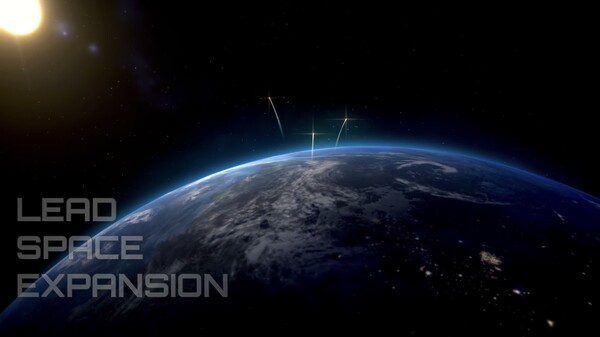
Explore the Solar System. Mine and drop asteroids. Colonize and terraform. Lead the space race and compete with other corporations on your way to profit. Watch the expansion of human race over the centuries.
Modeled estimate, not a reported figure. How we estimate →
Prices
Each in the currency that store quoted — not converted: the gap between two rows is the publisher's pricing, not an exchange rate.
Every market we collect.
Discounts
Every price cut of more than 20% we have observed, in each market that quoted one, with this game's chart position on either side of it. These are episodes, not a model: a sale is one event, and one event cannot tell you what the next one will do.
About
In Solar Expanse, you take the lead of one of the early XXI century space exploration companies. Your goal will be to reach the planets, moons and asteroids of the system in order to mine and colonize them.
Optimize the costs and schedule of the flights. Mind that each object is in constant motion, so exact planning is crucial. Utilize the gravity effects and slingshot your rockets further beyond.
There is a multitude of objects in the asteroid belt alone. Some are made of water, others might contain precious metals. Deploy various telescopes, arrays and probes to know the system better and plan your next flights. Scan for the most profitable and useful materials. Research new technologies
Send your rockets and deliver the asteroids to Earth or colonies. Gain the profits to expand your corporation and start the projects on much larger scale.
In time, you will get contracts to establish permanent bases on various objects. Build fuel stations, launch sites, space catapults, elevators and entire colonies!
Your ultimate goal will be to make the moons and planets of different systems habitable. This task will take centuries, enormous resources, technologies and thousands of rocket flights. Drop the water asteroids from the asteroid belt on Mars. Mine Io and Titan for necessary resources.
Once you are done with the Solar System, build an interstellar ship. Once the game is fully released, you'll be able to venture into real and generated systems, such as Alpha & Proxima, Centauri, Trappist, Gliese & Kepler… you name them!

Genres
Engagement
Reviews
Themes across 204 recent reviews and how positive each mention is. A keyword signal, not full sentiment analysis.
Reviews
I love what this game could become. It has so much potential. The tech tree is awesome. I love the wide variety of resources and the challenge of acquiring them and moving them around the solar system. I love the careful planning needed to expand and grow. (I play with a spreadsheet open, and it's glorious. That said, the game currently has a TON of problems. The main one is that the UI is really awful. Doing anything involves a huge number of clicks and sub menus, and a single mistaken click can double the number of clicks needed. The biggest problem is related. To play, you need information. You need to know what days and months are optimal for a launch. You need to know how much fuel you need to launch, and how much you need to get back. To perform a gravitational slingshot, you need to know when the planets line up. To keep colonies supplied, you need to know when your cyclical missions are running correctly, when they'll arrive, and when they'll return. And the game does its best to keep you ignorant of all these things. Seriously, it is so tedious getting the information you need. If you can get it at all. These problems are much smaller in the early stages of the game. I had a blast building out Earth and colonizing Luna and Mars. But after that, the game just became unplayable. I'm taking a step back until a new iteration is available. The devs seem aware of these problems and are working on solutions. God's speed, I say. If I can make a fee suggestions: (1) Make the mission planning menu like a spreadsheet. Everything should be visible on one screen without clicking through to multiple sub menus. Make more use of sliders so resources amounts can be adjusted easily on the fly. Above all, make it easier to see how much delta v and fuel is needed, and make it easier to see how much fuel is needed for the return mission. (2) Make it easy to see where a cyclical mission is. We should be able to click it just like a regular mission to find out what leg of the mission its on and how much longer it has. (3) Here's a big one. Make a mission que so cyclical missions will try to start even after they've stalled. Seriously this is so obnoxious. (4) Give us better planning tools for gravitational sling shot planning. The current system is practically unusable. I'm sorry to complain. I'm sure some hard core fans are going to mock me for a sissy. But I'm trying to enjoy the game, not tough out the tedium. I'll be back when the UI improves. Hopefully soon, because this game has SO much potential.
Media

Related
Related
Price dynamics, follower growth, revenue and sales trajectories with interactive tooltips
This and every other Pro feature is free until October 20, 2026. A free account is all it takes.
Reviews, worldwide (the counter carries no country): 2.29/day in the week to Aug 2 → 2.57/day in the week after.
For scale, across Steam · Top Sellers · Brazil over the last 30 days: the 25 chart moves that followed a price cut of more than 20% went a median of 10 places towards #1, and the 2,413 moves with no price cut behind them went 2 away. One store, one chart, one country — it is the only place we have enough observations to say even that.
Prices outside the United States have been collected since 6 August 2026 and chart positions since 19 July 2026, so a cut older than that has no market to compare and a market that joined later has no history yet. Nothing here is converted between currencies.
Stats
All-time low is the lowest price we've recorded for this game since we started tracking it.
Languages: English, French, Italian, German, Spanish - Spain, Japanese, Korean, Polish, Russian, Simplified Chinese, Portuguese - Portugal, Turkish +1 more
Hours played at review time, across 204 reviews with recorded playtime.
positive critical· bar length = how often the theme comes up
What makes a spreadsheet game? Is it a game that requires a literal spreadsheet? Screens full of numbers and data? Is it a game you need to pull out a calculator for? Solar Expanse is a really interesting simulation as seen from the perspective of a space program's Chief Financial Officer, or possibly Head Accountant. There are important decisions to be made, such as whether to invest research in to Space Elevators or invest in your Lunar colony. But the view through which you interact with these lenses is purely micro-economic and the gameplay follows from it. We need to obtain fuel. Possibly. It's hard to tell, because we actually have 12 million dollars but fuel seems to be running out - so the game's strategy is about obtaining the resources you need. but to calculate that, you need to work out the trajectory of every single resource in the game across the entire Earth economy to know what resources are liable to become a bottleneck first. You could spreadsheet the game's entire economy - but it's sort of implied you're supposed to figure out by 'vibe' what you actually need, because the calculations involved in giving you any sense of actual budget trajectory would take all day and we've barely started the game. Ok, let's get Fuel from Luna. That Lunar Colony plan be made up of 8 Fuel Refineries, 2 Solar Arrays, and a Habitat for the requisite crew. If a Fuel Refinery costs 50 Metal, 10 Rare Metals. And a Solar Array costs 10 Allows and 50 Glass. and if the Fuel for the DeltaV required to move them costs 5 launches and each of those incurs a to-orbit cost of 400 dV themselves, we have to ask what equation solves for boredom? Sure, each of those material movements is a bunch of tedious clicks, that's definitely a UX flaw. and we don't really know if or when we'll run out of Fuel, so maybe it'd just make more sense to build 100 big rockets and ship it all from Earth (after all, it also pushes the price up for our competitors and we'd have a monopoly on fuel if we did that), but then we'd need to calculate that too and that's... dull. From the perspective of a lot of these reviews you could be forgiven for thinking the issue is purely one of UX. That if you just revisit the interface you could address these problems, but I don't think it's that simple. The issue is that the strategy is obscured beneath a ton of micro-economic calculations. And the core loop is micro-economic calculations. And everything in between is micro-economic calculations. Do I want the asteroid with the 0.1T/d water calculation or do I want the further away source of 0.2T/d water? I don't know without a calculator and knowledge of the entire Fuel market presently, plus predictions for where it might be in 3 years which definitely feels like a spreadsheet. The game takes these interesting problems and gives you an abacus as your only tool to solve them. You could see that as a UX problem - but I think it's more fundamental. Your verbs, the way in which you as a character interact with this game, are the verbs of an CFO - making budget decisions, clicking through invoices, and doing financial trend analysis. It follows that the gameplay is mostly budget calculations, approving numbers, and spreadsheets. I don't think that the designers' intention. I feel like the intended goal is that you're supposed to feel like Elon Musk or Jeff Bezos, the CEO making the big decisions on the future of space flight. But that isn't the character you play in this game. You play an accountant. But I don't think this is necessarily fatal to the game. Beneath this dull exterior there is a really interesting game yearning to escape. Something like a software version of the board game High Frontier, where you're racing other parties by choosing which high-level risks you want, making tough decisions on the rockets you want to build, and building a complex ecosystem of interlocking dependent production chains that make factory games so compelling. For example, if I was the game's designer, here's the very first change I would make: if I tried to build something in orbit and didn't have the resources instead of waiting for the player to manually bean count it all over, I'd ask the player where they wanted the resources moving from. I'd then propose a mission (or 3) to move it using the resources already there. The player could approve the proposal, they could modify the proposed set, or they could go back to doing it manually. Either way, on average, way less clicks and way less accountancy. The second thing I could do is give some perspective to the resources available to the player. Attribute them a dollar value - and provide a projected trend extrapolating how that value is increasing over time as that good becomes scarcer on Earth instead of expecting the player to manually calculate the value of all their assets constantly, I'd provide that to the player so they can focus on the decision-making instead. This would then inform the player's decision of where to invest, and understand where the risks are coming from that they need to work around. Rare metals becoming expensive? Cool, I'll send out my probes to look for more. Hypergolic resources becoming scarce? I'll migrate to nuclear instead. These two changes alone would remove the two biggest economic slogs from the game, while also reducing the numbers of clicks by an order of magnitude. You'd skip most of the minor calculations and most of the major ones too, without detracting from the existing game at all. Then add a few high-value UX tweaks such the ability to name my rockets and capsules by their intent, and group my resources by their intended purpose so I don't accidentally draw resources meant for another mission (alternatively, or additionally, let me lock them so they're unavailable for missions until I allow them to be). Then I would no longer need to take on the cognitive load of tracking an entire solar systems' worth of resources and vehicles via Excel - I'd be able to work with it all in game without my head exploding and the quality of life would shoot through the roof. Once you solve the problem of the player no longer being treated like an accountant, I suspect there's a gem of a game hidden underneath the surface. I look forward hopefully to seeing if they can take a detour and fundamentally address what the game's designers think the players role in the simulation sandbox is supposed to be. Until then I can't, in good faith, recommend this game to others. For now it's less 'SpaceX CEO fantasy' and more 'SpaceX chief accountant fantasy' and it just isn't very respectful of your time and energy.
I can definitely see an interesting long-term game there but its just buried under excessively heavy micro (no QoL like auto-restock on certain levels or time intervals) and a poorly built UX that requires a large amount of menu navigation and clicking, The text being small kind of makes it extra annoying to read on ultrawide/superultrawide.
[h3] The following represents my opinion and not the actual state of the game, sometimes because you like something, you expect more [/h3] Solar Expanse is that game many space nerds like me have always wanted but never got, until now. It sits right in that perfect bridge between the modern era and the sci-fi future. There are barely any games in this niche, that middle ground between Space History (Cold War, Space Race) with games like Mars Horizon, Buzz Aldrin's Space Program, or Space Agency on Android, and the far future stuff like Distant Worlds 2 or Stellaris. In this game, you start with nothing and end with terraforming planets. No interstellar civilizations yet, but that's planned. Now, if you want a solar system conquering simulator and don't care about realism or astronomical accuracy, this game is for you. But if you do care about those things? [i]I'd call this game basically a tease.[/i] The premise is great, and I genuinely love the visual language and attention to detail. But so many things that catch your eye just fall short. [h3]1. The Space Agencies[/h3] In my first 30 minutes, my main gripe was the agency lineup. You've got your SpaceX analog, NASA, CNSA, Roscosmos, and ESA. Fine. But for a game set in the modern world with a thriving space industry, it's missing some big players. The big ones are [b]ISRO and JAXA.[/b] ISRO is hugely accomplished. Established in the 1960s, they're no new player, with major feats like a first-attempt Mars mission and the first successful landing near the lunar south pole. They're pushing boundaries in space and in the boardroom with extremely cost-effective solutions. JAXA also has an impressive resume, much of it underappreciated. They've tested solar sails, discovered moons around asteroids, landed and returned asteroid samples, and partnered on BepiColombo. Leaving both out feels like a miss, especially in a game meant to replicate the cutthroat nature of the space industry. Two key players are just not there. [h3]2. The Orrery View[/h3] The solar system view uses exaggerated planet sizes and distances. A game design choice I get, since it's more intuitive. But when you've built such a complex system around mission launches and trajectories, it takes away from the experience considerably. Half of Saturn's major moons are inside the ring system, for example. That's not accurate, and it makes the game look slightly cartoonish. [h3]3. The Graphics and Missing Phases[/h3] The graphical modeling is beautiful: detailed spacecraft, realistic planet textures. But it just doesn't work when everything is giant (the Orrery problem again) and you can't even see the launch, the orbital insertion, or the landing. That's a big miss. The game accurately models travel time and shows real-time transit, but skipping those key phases kills immersion and cheapens the mechanic. [h3]4. Time Speed[/h3] The slowest time speed is too fast. At a few hours per second, you can't catch the finer details: the launch, the approach, the landing. It all blurs by. [h3]5. The Magnetosphere[/h3] The magnetosphere visualization is really cool, if only it were accurate. Right now, Venus, Mars, and the Moon all have magnetospheres in-game, which they don't in reality. And Jupiter's magnetosphere in the Orrery view isn't even a tenth as big as it should be. At that point, you have to ask, what's the point of displaying it at all? [hr][/hr] I'm sure the devs will improve this game, and maybe they have a different direction in mind. That's fine, it's still Early Access. But my recommendation is to wait a while for the game to be more fully fleshed out. I'll likely keep playing and overlook these issues, because the developers have certainly made a cool game. [i]This is purely my opinion, this game has surpassed many other competitors in quality, but I just feel it could be more[/i]
Not intuative and extremly confusing gameplay, unfortunately. Lots of potential to do a lot of things, but no idea how to, game doesn't help you with that.
Great game. I've completed all the achievements and really enjoyed it. If the devs read this there are a few QoL things that would help the experience, there is too much clicking, allowing us to queue up 100 or 1000 builds at once rather than just 1 or 10, building 10000 orbital gas extractors around Saturn took a lot of clicking. It would also be useful to have a tab that shows which planets our ships are at. I will be back to play when they are further down the road map but so far it's shaping up to be a great game.
本质上是一款行星际物流游戏——地外星球的资源都不全面(并且逼迫玩家摆脱对地球的依赖),需要把资源运去,星球上机制就很简单(不过操作依旧繁琐) 最恶心的就是设施就算没法运作一样自动扣钱(吃白饭),一不留神就会因为没有取消订阅而产生大量亏损——可能制作组那边就是这样,不上班工资照发。关闭设施之后要用到的时候还要手动打开,颇为断手。唯一的仁慈就是在飞船上乘员舱不会吃钱了,不然运人的成本会爆炸。 运载火箭和星际飞船无法关闭,所以不运东西就会全自动亏钱(不得不说大小火箭都是每个月吃600,逼迫玩家走质量,但是科技又慢)。 转移规划的“星云图“虽然经典,但是实际上玩家不会直接关心什么时候出发(毕竟后面没有敌人追过来),只会首先关心delta-v消耗、什么时候到达以及转移用时(运人时),因此一个横坐标是到达时间,纵坐标是转移用时的图更加适用。而且我想要使图表上选中的点引出一条横线或者竖线,并自动选择该线上delta-v使用最少的方案的功能,以及可以滑动delta-v预算(独立于给予的总推进剂量,毕竟不是单程票),自动给出该delta-v预算的最早达到的方案。SX的转移规划应当只是让玩家在速度、运力和成本之间权衡,而不是考验玩家的鼠标精细操作能力(你好歹给个能把图表放大到全屏让我不用小心翼翼地挪鼠标一边同时查看各种参数)。 周期性任务非常简陋,而且损失一部分运力,间接性地全自动亏钱。 电脑里有一款不断手就会全自动亏钱的游戏。 SX的很多数值是被放缩的,资源数量和改造需求量都少了很多个数量级(不然改造要改到40K去),恒星之间的距离也少了两个数量级左右。剧情设定则是一个基础科技更为发达(而且熟练掌握外太空建筑和工业技术,可能是超级国际空间站超级俺寻思出来的,开局之前把自己燃尽了)的世界线在2020年突破了可回收火箭技术(感谢Solex开源),进入太空的成本大幅降低,各国达成一致和平利用太空,并开始了新一轮太空竞赛。玩家扮演的太空公司(在初期)需要尽快达成里程碑以获得资金,否则就会破产落败。 话虽如此,但是地球方面太薄情了,既然都不好好爱护地球环境那我就把地球的水和大气都抽走给火星用好啦
Удовольствие от всего процесса игры ! Вердикт: Гениальная экономическая стратегия, которая заставляет вас влюбиться в космическую логистику, а затем — возненавидеть её из-за багов. Если вы готовы прощать разработчикам «детские болезни» раннего доступа за уникальный геймплей — берите, но будьте готовы к боли. Что понравилось: Эволюция мышления и «снести всё к чертям» Это лучшая часть игры. Solar Expanse не просто про добычу ресурсов, а про полную трансформацию вашего подхода к ним. Смена парадигмы ресурсов. В начале ты дрожишь над каждой тонной топлива на Земле. Потом открываешь добычу воды на астероидах и понимаешь: теперь это не ресурс, а расходник. А когда доходишь до терраформирования и межзвёздных перелётов, ты начинаешь мыслить категориями целых планет, а не тонн груза. Отношение к ресурсам меняется кардинально на каждом технологическом этапе — это сделано блестяще. Выстраивание логистических цепочек. Ощущение, когда ты настраиваешь цикличные миссии между Землёй, Марсом и поясом астероидов, и система начинает работать как часы — это кайф. Ты реально чувствуешь себя главой космической корпорации. Полный снос и перестройка. Это мой любимый момент. Когда ты понимаешь, что старые орбитальные станции или шахты на спутниках Юпитера больше неэффективны, и ты сносишь всё к чертям, чтобы построить новую инфраструктуру с нуля с учетом новых технологий. Это не рутина, а осознанное перепроектирование всей империи, и это чертовски увлекательно. Что не понравилось: Тупики логистики и «проклятые» проценты А теперь ложка дегтя, которая портит всё впечатление. Игра в текущем состоянии (ранний доступ) буквально кишит багами в логистике, которые сводят на нет все ваши усилия. Тупняки в сложных цепочках. Как только вы пытаетесь построить логистику с участием >3 звеньев (например, Астероид А -> Перевалочный пункт Б -> Марс -> Земля с дозаправкой на спутнике), игра начинает «тупить» . Миссии зависают, корабли не могут состыковаться, или просто перестают выполнять команды. Автоматизация, ради которой ты всё затевал, превращается в ручной кошмар. «Корабли не прилетали, а прогресс уходил за 1000%». Вот это самый хардкорный баг. Вы планируете миссию, видите, что топлива достаточно (например, 45 тонн из 90), но после запуска корабль либо сжигает ВСЁ топливо в баке без остатка, либо прогресс уходит в бесконечность . Я сталкивался с тем, что таймер миссии переваливал за 1000%, хотя по расчетам корабль уже должен был приземлиться. Создавалось ощущение, что корабль физически не может приземлиться из-за бага с темпоральными петлями или сбросом топлива в орбиту вместо расхода. Особенно часто это происходит с миссиями к астероидам или с использованием гравитационных маневров . А так же при указании цикла логистики корабли вместо постоянного ускорения используют импульс что очень сильно увеличивает время прилета что нельзя изменить в настройках Итог: Игра — алмаз, но с огромным количеством сколов. Я готов сносить и перестраивать свою инфраструктуру тысячи раз, это весело. Но сражаться с багами, когда у тебя сгорает 200 тонн топлива просто потому, что «так сработал баг», — это выматывает.
incredible game, i've been playing until 5am, what's good about it: -everything feels so dynamic, it's like you're starting off as a normal space agency and by the end you're playing god with the solar system -very satisfying gameplay loop -very pretty models of the planets -fairly performant even in late game I get 3Ofps with lots of stuff happening -huge potential even with a game that feels too good to be true already !! what could be improved: - ux and ui is the big one, some things take too many clicks if repeated a lot, for example sending things to orbit, or having orbit selected when you want the planet, also construction late game since there's no hundred option - no kuiper belt in a game half about terraforming is kinda funny because that's the biggest source of nitrogen ice there is, but i'm sure it'll be in eventually -relating to this point, nitrogen is rather hard to get because of the fact there's no kuiper belt, especially if you want to keep the atmosphere of titan mostly intact. - the random asteroids usually have like 11-31kt water outside of the 3he asteroids, they should have more ranges IMO - why on earth can you move ceres with only 33 atlases but some orders of magnitude smaller asteroids need 28. surely the amount you need to move ceres should be in the thousands lol. it is however hillarious -more powerful automation features like the ability to top up a stockpile rather then continiously sending resources or up to a limit sent 9/1O game, i'm addicted help
Early Access? Sorry... this feels like a Pre-Alpha. I usually enjoy supporting Early Access games. Bugs happen. Missing content happens. That's part of the deal. But this? The very first rocket launch should be the moment that gets you excited. Instead, it's about as emotional as watching paint dry. No short cinematic, no atmosphere, no "Welcome to space!" moment. Just... okay, I guess we're here now. Then comes the tutorial. "Click here." "Click there." "Click this." At one point the button says "Next", and suddenly asks if you want to close the tutorial. Wait... what? If "Next" actually means "Exit", someone on the UI team had a very creative day. The game also dumps an absolute mountain of information on you immediately. Resources, factories, production chains, numbers, icons, planets... everything at once. There is no learning curve. There is only a learning cliff. Instead of introducing mechanics step by step, the game basically says: "Good luck, Commander. May the spreadsheet be with you." I still have no clue how Earth's production is supposed to work efficiently. Yes, I can hover over everything and read tooltips, but if your onboarding strategy is "Just hover over 400 icons until something makes sense," you've already lost me. The gameplay so far feels incredibly clunky. Build. Fast forward. Wait. Repeat. Speaking of confusing... I wanted to save my game. I honestly wasn't even sure whether it actually saved. No confirmation. No satisfying feedback. Nothing that tells you, "Yes, your progress is safe." Games figured this out twenty years ago. And then there are the translation issues, which make the whole experience feel even rougher. At this point I honestly have no idea who approved this release. My current theory is that someone accidentally let the office cleaning lady commit directly to the production branch after three cans of energy drink and a sugar overdose. Either that, or nobody actually played the first hour before pressing the release button. The frustrating part is that the core idea actually has potential. But right now this doesn't feel like an Early Access game. It feels like someone accidentally uploaded the internal development build. I refunded the game. Maybe I'll buy it again someday if it receives some serious updates, because the idea itself has potential. But if a game manages to bore me within the first five minutes, something has gone terribly wrong. I'd genuinely rather play Pong.
Active players
Estimated daily and monthly active players (DAU/MAU) modeled from peak concurrency.
Players by region
Where this game's players are, estimated from review languages.
Players also reviewed
The games this title's players most often review too — audience affinity.
Related
| Game | Estimated lifetime revenue | Reviews | Review score | Price |
|---|---|---|---|---|
| $33.2K | 17 | 82% | $49.69 | |
| $6.3M | 5.6K | 75% | $23.99 | |
| $90.9K | 165 | 81% | $19.99 | |
| — | 0 | — | — | |
| — | 0 | — | — | |
| — | 0 | — | — |
Related
| Game | Estimated lifetime revenue | Reviews | Review score | Price |
|---|---|---|---|---|
| $896.6K | 672 | 79% | $34.99 | |
| $896.9K | 2.1K | 79% | $7.99 | |
| $897.5K | 1.3K | 62% | $24.99 | |
| $895.7K | 3.2K | 81% | $9.99 | |
| $897.6K | 1.7K | 54% | $16.99 | |
| $897.9K | 1.1K | 92% | $19.99 |