Modeled estimate, not a reported figure. How we estimate →
Prices
The United States storefront in every case, so this compares stores and not countries.
Discounts
Every price cut of more than 20% we have observed, in each market that quoted one, with this game's chart position on either side of it. These are episodes, not a model: a sale is one event, and one event cannot tell you what the next one will do.
Reviews, worldwide (the counter carries no country): 0.14/day in the week to Sep 3 → 0/day in the week after.
For scale, across Steam · Top Sellers · Brazil over the last 30 days: the 25 chart moves that followed a price cut of more than 20% went a median of 10 places towards #1, and the 2,413 moves with no price cut behind them went 2 away. One store, one chart, one country — it is the only place we have enough observations to say even that.
Prices outside the United States have been collected since 6 August 2026 and chart positions since 19 July 2026, so a cut older than that has no market to compare and a market that joined later has no history yet. Nothing here is converted between currencies.
About
Stats
All-time low is the lowest price we've recorded for this game since we started tracking it.
Sums Steam only; GOG publishes no volume signal, so the true total is higher by an unknown amount.
| Store | Price | Audience | Score | Chart | Est. revenue |
|---|---|---|---|---|---|
SteamYou are here | $1.97−67% | 107reviews | 64% | — | $4.5K |
| $5.99 | 443ratings | 78% | — | not modelled |
Matched by title — a reused name can pair the wrong games. * is a critic aggregate. Prices and positions are each store's United States storefront; Epic charts worldwide. Audience and Score too, except Steam's, which is worldwide.
Engagement
Reviews
Themes across 43 recent reviews and how positive each mention is. A keyword signal, not full sentiment analysis.
Reviews
Return to Krondor is an interesting RPG that tries to do something new. It was developed by an entirely different team than those that made Betrayal at Krondor and takes a different approach to a story focused RPG. Return to Krondor is lacking complexity in its mechanics and is a much more linear, story focused experience. Betrayal at Krondor was story focused too, but it didn’t cost the rest of the game’s depth and mechanics for the sake of its story. The more I played Return to Krondor, the more I came to realize that the game was designed as an Adventure game first, and an RPG second. I wouldn’t be surprised if that was the case, and the game was repurposed into an RPG at some point mid-way through development. Since each character is a set class with specific assigned skills, attributes, and gear restrictions, there isn’t much room for build variety or choice. You can choose to spec James into bows or blade weapons, or focus on a specific school of magic for your two mages, but that is about all you can do. On top of that, the economic system was not very well thought out. There is so much low quality gear that is thrown at you over the course of the game that you won’t be using by the time you reach chapter 3 anyway. You have enemies dropping basic leather armor and low tier Keshian swords all the way to the end game dungeon. Also, once you leave the city of Krondor, the only other shop in the game is in the village of Haldon Head, which sells the same basic equipment that you had available to you at the beginning of the game. All of this to say that the RPG aspect of the game seems like an afterthought. I think Return to Krondor has more in common with the Quest For Glory series than its predecessor or other classic RPGs. In the end, I still enjoyed Return to Krondor. It had beautiful and timeless 3D environments that added to the atmosphere and immersion. A story that while simple, had great characters and world building that I loved, even as someone that hasn’t read the books. A fun and well designed turn-based combat system that had enough complexity to keep things interesting despite the RPG systems in general being lackluster. If you played and enjoyed Betrayal at Krondor, you may not love this game. However, if you want to explore and immerse yourself more into the world of Midkemia, then I think it’s worth a playthrough. [u]Running on a modern system:[/u] I guess I should consider myself lucky because I had almost zero issues running the Steam version of Return to Krondor. Judging by the general reception from everyone else however, I would be hesitant to recommend the Steam version to someone else. It’s probably a safer bet to buy it on GOG instead. In my experience, the only technical issue I ran into was the in-game font not scaling up properly to my 1080p monitor. The game still runs in its original resolution of 640x480, but my GPU scales up the image to my screen while keeping the original 4:3 aspect ratio. Normally this isn’t an issue for other old games that I’ve played. In this game however, the text becomes jumbled together making it difficult to read item and spell descriptions. This didn’t make the game unplayable, but it was an annoying glitch. https://steamcommunity.com/sharedfiles/filedetails/?id=3790673435
Media
Related
Related
Price dynamics, follower growth, revenue and sales trajectories with interactive tooltips
This and every other Pro feature is free until October 20, 2026. A free account is all it takes.
Languages: English**languages with full audio support
Hours played at review time, across 43 reviews with recorded playtime.
positive critical· bar length = how often the theme comes up
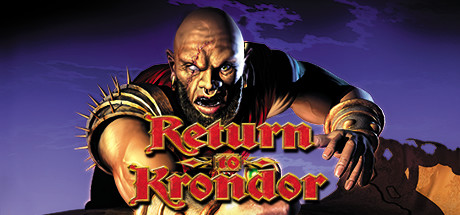
Return to Krondor is a classic fantasy role-playing game that continues the journey through the world of Midkemia, a setting created by fantasy author Raymond E. Feist. Released during the late 1990s, the game embraces many of the traditional RPG mechanics that defined the era, combining party-based exploration, tactical combat, character progression, and story-driven adventure into a large fantasy quest filled with political intrigue and supernatural danger. Although its age is immediately noticeable by modern standards, the game still carries a strong sense of atmosphere and worldbuilding that helps it remain memorable decades after its original release. The story centers around the theft of the Tear of the Gods, a sacred artifact belonging to the Ishapian Church. What begins as a mysterious disappearance soon evolves into a much larger conflict involving dark magic, hidden conspiracies, dangerous factions, and ancient forces threatening the stability of Midkemia itself. Players are gradually drawn into a sprawling adventure that leads through cities, forests, ruins, underground passages, and dangerous territories filled with enemies and secrets. The narrative constantly expands in scale, introducing political tension and supernatural threats that keep the journey engaging throughout most of the campaign. One of the game’s greatest strengths is its setting. Midkemia feels like a fully realized fantasy world shaped by history, religion, and conflict rather than simply existing as a backdrop for combat encounters. Towns feel connected to larger political structures, ruins hint at forgotten civilizations, and conversations with characters frequently reveal details about the world’s cultures and ongoing struggles. Fans of Raymond E. Feist’s novels will appreciate the many connections to the Riftwar universe, but even players unfamiliar with the books can still enjoy the depth of the setting through the game’s extensive lore and storytelling. Gameplay revolves around controlling a party of adventurers with different combat roles and specialized skills. Warriors dominate close combat, spellcasters provide magical support and offensive power, while thieves and alchemists contribute through utility systems such as lockpicking, trap disarming, and potion crafting. Character progression follows a traditional RPG structure involving equipment upgrades, stat growth, spell acquisition, and skill improvement. The variety of character roles encourages strategic planning because party balance becomes increasingly important during more difficult sections of the game. The combat system is turn-based and heavily focused on tactical positioning and resource management. Battles can become challenging, especially when facing enemies capable of using magic or inflicting status effects on the party. Players must carefully manage healing resources, spell usage, equipment durability, and character placement to survive tougher encounters. While combat moves at a slower pace compared to modern RPGs, it still provides satisfying strategic depth for players who enjoy thoughtful, methodical gameplay. One of the more interesting systems is the game’s approach to alchemy and thievery. Instead of simplifying these mechanics into passive skills, Return to Krondor allows players to actively engage with them through interactive systems. Potions can be crafted using collected ingredients, while traps and locked containers require careful handling to bypass successfully. These mechanics add additional immersion and help make the world feel more interactive than many other RPGs from the same period. Visually, the game clearly reflects its late-1990s origins, with dated character models, stiff animations, and older pre-rendered environments. However, despite the aging graphics, there is still charm in the game’s presentation. Cities, dungeons, and wilderness areas each have their own visual identity, and the darker lighting combined with atmospheric environments helps create a strong sense of adventure. The world often feels dangerous and mysterious, especially during exploration-heavy sections involving ruins or underground locations. The soundtrack remains one of the game’s strongest presentation elements. Musical themes shift naturally between calm exploration and more dramatic moments, helping reinforce the fantasy atmosphere throughout the campaign. Combined with ambient sounds and occasional voice acting, the audio design gives many scenes additional emotional weight and helps strengthen immersion within the world of Midkemia. However, Return to Krondor is undeniably a product of its era, and several mechanics have aged poorly. The interface can feel awkward and unintuitive, particularly when managing inventory or navigating menus. Movement sometimes feels stiff, and certain sections involve excessive backtracking that slows the pacing considerably. Modern players may also struggle with the slower combat speed and older RPG design philosophy, especially during lengthy dungeon segments that emphasize endurance over fast progression. The game also exists under the shadow of Betrayal at Krondor, its predecessor and one of the most beloved RPGs of the 1990s. While Return to Krondor succeeds in continuing the setting and atmosphere of Midkemia, many players still view it as less refined in terms of storytelling and overall pacing. Even so, the sequel still offers enough depth, worldbuilding, and strategic gameplay to remain worthwhile for fans of classic RPGs. What ultimately makes Return to Krondor memorable is its dedication to immersive fantasy storytelling and traditional role-playing systems. It does not rely on cinematic spectacle or modern action mechanics. Instead, it focuses entirely on exploration, character growth, tactical combat, and the gradual unraveling of a large fantasy narrative. The slower pace may not appeal to everyone today, but players willing to embrace older RPG design will discover a rich and atmospheric adventure filled with lore and strategic depth. For fans of classic fantasy RPGs and old-school computer role-playing games, Return to Krondor remains an engaging journey through one of fantasy gaming’s more detailed worlds. Its dated mechanics and slower pacing are balanced by strong worldbuilding, memorable atmosphere, and rewarding party progression systems that still capture much of the charm associated with late-1990s RPG design. Rating: 6/10
Wont run, steam wouldn't refund because i spent more than two hours trying to get it running.
great game from the late 90's
Says "game running", but game does not start up. *shrug emoji*
This is the way games were made long ago. If you like puzzles and action, try Return to Krondor.
[h1][i]Return to Krondor[/i] (1998) is the sequel to [i]Betrayal at Krondor[/i] (1993), a team/party turn-based RPG game like Final Fantasy set in medieval times. I ran around the prologue fountain for 15 minutes, never finding the mage I was sent to look for. The controls are non-existent and the map is useless. It took a J*wTube video to help me figure out you needed to buy a weapon and armor up to kill random people in a house YOU BROKE INTO to venture through. Nice. 5/10[/h1]
GOOD rpg game a little on the slow side excelent for beginners
Отличная RPG.
Fun retro RPG game!
Selling now
See how fast this game is selling right now — estimated copies and revenue per day from recent review growth.
Players by region
Where this game's players are, estimated from review languages.
Related
| Game | Estimated lifetime revenue | Reviews | Review score | Price |
|---|---|---|---|---|
| $2.8M | 9.5K | 88% | $11.99 | |
| $2M | 5.6K | 76% | $19.99 | |
| $1.4M | 3.6K | 82% | $15.99 | |
| $1.2M | 3.2K | 84% | $15.99 | |
| $749.6K | 643 | 92% | $29.99 | |
| $574K | 2.2K | 90% | $9.99 |
Related
| Game | Estimated lifetime revenue | Reviews | Review score | Price |
|---|---|---|---|---|
| $4.5K | 112 | 76% | $1.99 | |
| $4.5K | 142 | 77% | $0.99 | |
| $4.5K | 146 | 81% | $2.99 | |
| $4.5K | 106 | 75% | $1.99 | |
| $4.5K | 159 | 74% | $1.99 | |
| $4.5K | 165 | 78% | $0.99 |