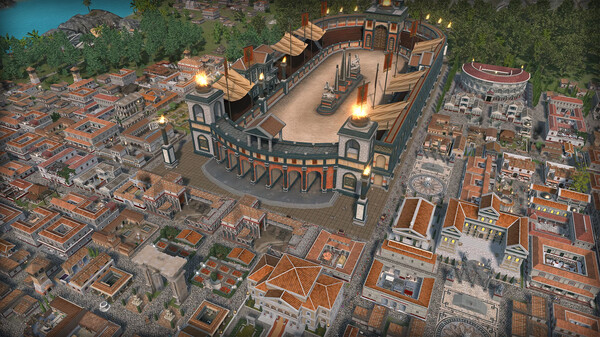
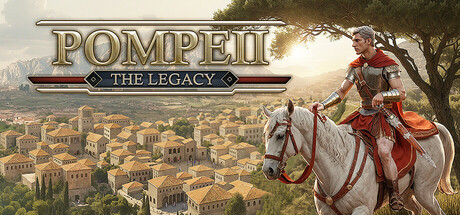
Rebuild Pompeii from the ashes and lead it through centuries of politics, intrigue, and survival. Shape laws, expand trade across the Empire, guide your city through disasters, and command legions in optional real-time battles. Your legacy begins now.
Modeled estimate, not a reported figure. How we estimate →
Discounts
Every price cut of more than 20% we have observed, in each market that quoted one, with this game's chart position on either side of it. These are episodes, not a model: a sale is one event, and one event cannot tell you what the next one will do.
Reviews, worldwide (the counter carries no country): 0/day in the week to Aug 31 → 0.43/day in the week after.
About

Twenty years after the devastating eruption of Mount Vesuvius in 79 AD, Pompeii rises from the ashes. As the head of a Roman family, you will guide the city's rebirth, shaping its future through politics, trade, and the challenges of life in the Empire.

The city may have been destroyed, but its spirit endures. Rebuild Pompeii from the ground up, balancing the needs of patricians, plebeians, and slaves, each with their own ambitions and grudges. Every street, forum, market, and aqueduct shapes not just the city, but the fortunes of your family for centuries to come.

Lead across decades, navigating the shifting tides of Roman politics. Shape laws, negotiate trade rights, and form alliances through marriage or contract. Secure favor with emperors, outwit rivals, and expand your family's influence far beyond Pompeii's walls.

Construct housing, temples, arenas, and more to meet your citizens' needs. Establish trade routes across the Empire, monitor shifting markets, and keep your economy strong. Every decision, good or bad, can echo for generations.

The game incorporates active and passive bonuses through Family Bonuses, Research and Development, and Imperial Privileges. There are two main research branches: Technology and Philosophy.

The greatest threats are not always on the battlefield. Earthquakes, fires, famine, plagues, and political sabotage can strike without warning. Some enemies will wear armor, others will smile as they shake your hand, all will test your leadership.
Co-financed by the Croatian Audiovisual Centre

Sums Steam only; GOG, Epic publish no volume signal, so the true total is higher by an unknown amount.
| Store | Price | Audience | Score | Chart | Est. revenue |
|---|---|---|---|---|---|
SteamYou are here | $19.99 | 290reviews | 81% | — | $199.8K |
| $9.99−50% | 9ratings | 82% | — | not modelled | |
Engagement
Reviews
Themes across 70 recent reviews and how positive each mention is. A keyword signal, not full sentiment analysis.
Reviews
Relaxed city builder with a deep tech tree. Enough variation in buildings and decor to create cities with a unique feel. Good support as well. Had a save game that didn't wanna load and it got fixed that day.
Наверное я не поставлю игре лайк. Почему? Потому что я несколько раз начинал и не дошёл до конца. Что понравилось: 1. Динамическая система торговли, которая зависит от запасов других городов. 2. Возможность развивать науки и повышать эффективность зданий. 3. Взаимозависимость эффективности зданий от их расположения относительно друг друга. 4. Красивая игра, не везде анимация есть, мало разных вариантов одних и тех же зданий, но игра красивая. А теперь по недостаткам... 1. Делать игру где здания могут смотреть по 4 направлениям в 2026 году - это ещё можно. Но почему - ПОЧЕМУ?!?! - здания на береговой линии и на переходе от равнины к горе не меняют ландшафт?! Ну если так сделали, то тогда и берега делайте прямоугольными, а они тут, сцук, по диагонали в половине случаев расположены. Выбесило... 2. Неочевидный переход города от одного уровня к другому. Вы нигде не увидите этого, но город повышает свой уровень. Если в самом начале вашим жителям достаточно двух видов простой пищи и одного вида простых предметов, то со временем они хотят большего. Появляется нужда в роскошной пище, в роскошных предметах, требуется больше видов всего... Только в какой момент совершается этот переход я так и не понял, и не горю желанием проверять. Просто в какой-то момент им надо ещё и если, не дай Бог, ты этого не заметил - люди начинают уходить. Произвводства встают, дефицит растёт и как итог - вырулить становится сложно. 3. Есть три вида населения: патриции, плебеи и рабы. Но все три вида населения будут подъедать всю доступную еду. Хотя требуются некоторые виды еды - только одному виду населения. И я нигде не нашёл возможность одному виду населения (к примеру рабам) потреблять тот или иной вид продуктов. В итоге делаешь роскшную пищу, чтобы удовлетворить запросы патрициев, а её требуется просто запредельное количество. 4. Баланс... Это, блин, отдельная песня, которая, собственно, и не дала мне доиграть ни одну из игр до конца. Бланас отражает сколько ресурсов производится, и сколько потребляется. Так вот он некорректно работает. У меня бывало так, что я произвожу в неделю 1700 брёвен, используется 1100, а у меня их постоянно не хватает! И ладно бы, там у меня склады были забиты и роста бы не было - нет... Минус идёт! А от брёвен страдают - доски. А без досок вообще ничего не работает. Ну вот как экономику-то строить?! Вобщем... Была бы классная игра, но получилось, что получилось.
Media

Related
Related
Price dynamics, follower growth, revenue and sales trajectories with interactive tooltips
This and every other Pro feature is free until October 20, 2026. A free account is all it takes.
Reviews, worldwide (the counter carries no country): 0.17/day in the week to Jul 21 → 0.6/day in the week after.
For scale, across Steam · Top Sellers · Brazil over the last 30 days: the 26 chart moves that followed a price cut of more than 20% went a median of 7 places towards #1, and the 2,400 moves with no price cut behind them went 2 away. One store, one chart, one country — it is the only place we have enough observations to say even that.
Prices outside the United States have been collected since 6 August 2026 and chart positions since 19 July 2026, so a cut older than that has no market to compare and a market that joined later has no history yet. Nothing here is converted between currencies.
Genres
Stats
All-time low is the lowest price we've recorded for this game since we started tracking it.
Languages: English*, French, Italian, German, Spanish - Spain, Japanese, Portuguese - Brazil, Russian, Simplified Chinese, Korean, Polish*languages with full audio support
| $19.99 |
| — |
| — |
| — |
| not modelled |
Matched by title — a reused name can pair the wrong games. * is a critic aggregate. Prices and positions are each store's United States storefront; Epic charts worldwide. Audience and Score too, except Steam's, which is worldwide.
Hours played at review time, across 70 reviews with recorded playtime.
positive critical· bar length = how often the theme comes up
Pretty solid - appealing historical city builder. The campagin may be a bit "cheesy". But well done to the devolper!
I wanted to get a quick review in while it is on sale. So far it is fun. Looks and feels like an older game. It does seem to have a good bit of depth to the tech tree and buildings. The lack of other maps will hamper replay ability some and some of the controls are a little clunky but maybe they will fix that as it seems to be a new release. I would def recommend it on sale and will update the review when I have more time with it.
Basically and idle clicker: 1. research 2. place building 3. research 4. place new building infinite loop. If you like clickers - fine, if you want strategic city builder - look elsewhere.
I love this game. It's interesting to rebuild Pompeii, with some challenge and strategy.
It is certainly a tribute to old classics city builders. It surely was made with love. There are some problems with optimizations but... It really made an old timer like me feels at home. 7.5/10.
Pompeii: The Legacy, developed and published by Siscia Games, takes a unique approach to the city-building genre by focusing on the rebirth of one of history’s most iconic cities. Instead of placing players in the middle of the catastrophic eruption that destroyed Pompeii, the game explores the years that follow, challenging them to restore the city to prominence within the Roman Empire. This premise gives the experience a refreshing identity and allows it to blend historical themes with deep management mechanics. At its heart, the game is a detailed city-building simulation where every district, road, public structure, and residential area contributes to the growth of the settlement. Players must carefully balance expansion with efficiency, ensuring that citizens have access to housing, services, food, and employment. The Roman setting is more than a visual backdrop, as social classes such as patricians, plebeians, and slaves each influence how the city develops. Their differing needs create a constant challenge, forcing players to think strategically about both prosperity and social order. A standout feature is the family legacy system, which introduces a personal dimension to city management. Rather than acting as a faceless administrator, players guide a Roman household through multiple generations. Political alliances, marriages, influence, and prestige become just as important as constructing buildings. This system gives long-term decisions greater significance and creates a sense of continuity that many traditional city builders lack. Watching a family rise from modest beginnings to a position of power provides a rewarding layer of progression beyond simple economic success. The economic mechanics are equally substantial. Trade plays a central role in the city’s development, with players establishing commercial routes and managing resources across a wider Roman network. Market conditions can shift, requiring careful planning and adaptation. Maintaining a stable economy while expanding infrastructure becomes an engaging balancing act, and the trade system helps keep the gameplay dynamic throughout extended campaigns. There is a satisfying feeling of growth as small production chains evolve into thriving commercial enterprises that support an increasingly complex city. Technology and cultural advancement further enrich the experience. Players can invest in different forms of research that unlock new opportunities and bonuses. These progression systems encourage experimentation and allow cities to develop according to different priorities. Some players may focus on economic optimization, while others may pursue political influence or civic improvements. This flexibility adds replay value and ensures that each playthrough can unfold differently. Visually, Pompeii: The Legacy captures the atmosphere of ancient Rome with impressive attention to detail. The city gradually transforms from a struggling settlement into a bustling urban center filled with recognizable Roman architecture and activity. Buildings, public spaces, and infrastructure all contribute to a convincing sense of place. While the graphics are not designed to compete with the largest modern strategy titles, they effectively support the historical setting and provide a satisfying sense of progression as the city expands. The political elements add another layer of depth. Players are not only responsible for construction and trade but must also navigate relationships, secure privileges, and manage influence within the broader structure of the empire. These mechanics help the game feel like more than a standard city builder, creating a stronger connection between local development and larger regional ambitions. Success often depends on making smart political decisions as much as efficient economic ones. The game’s ambition can occasionally work against it. New players may find the number of interconnected systems intimidating during the opening hours, and the learning curve can be steeper than expected. Some interface elements require patience to master, particularly when dealing with the more advanced political and economic mechanics. However, players willing to invest time in understanding these systems will discover a rewarding and layered strategy experience. Pompeii: The Legacy succeeds because it combines historical authenticity, city planning, family management, politics, and commerce into a cohesive package. The concept of rebuilding a legendary city gives the game a strong sense of purpose, while the variety of interconnected mechanics ensures there is always another challenge to tackle. It is a thoughtful and engaging strategy title that offers far more depth than its historical premise might initially suggest. For fans of city-building and historical management games, Pompeii: The Legacy delivers a rich and immersive experience that successfully transforms the reconstruction of an ancient city into a compelling long-term strategy adventure. Rating: 8/10
あまり複雑ではない街づくりが楽しめるが、各建物は時間と共に劣化し、修理をする必要がある。それがとても面倒。なんでこんな仕様にしたのか疑問。 ↑コメント欄で対応策を教えてもらえました。普通に楽しいゲームになりました。
genial
Players by region
Where this game's players are, estimated from review languages.
Players also reviewed
The games this title's players most often review too — audience affinity.
Related
| Game | Estimated lifetime revenue | Reviews | Review score | Price |
|---|---|---|---|---|
| — | 0 | — | — | |
| $3.8M | 7.7K | 95% | $24.99 | |
| $2.3M | 1.8K | 75% | $32.00 | |
| $80.9K | 1.4K | 80% | $2.49 | |
| $952.8K | 1.1K | 84% | $24.99 | |
| $741.1K | 770 | 84% | $14.99 |
Related
| Game | Estimated lifetime revenue | Reviews | Review score | Price |
|---|---|---|---|---|
| $199.8K | 1.2K | 79% | $9.99 | |
| $199.7K | 631 | 79% | $9.99 | |
| $199.6K | 2.4K | 98% | $4.99 | |
| $199.5K | 321 | 92% | $14.99 | |
| $199.5K | 140 | 89% | $39.99 | |
| $200.1K | 803 | 91% | $9.99 |