Please Knock on My Door, developed and published by Levall Games AB, is a powerful and intimate exploration of depression and the quiet struggles of everyday life. It is not a game in the traditional sense, but rather a window into the lived experience of mental illness—a slow, deliberate depiction of how the smallest actions can feel like monumental challenges. Set in the confined routine of an unnamed protagonist, it tasks the player with navigating the daily grind of waking up, preparing for work, completing mundane tasks, and finding the strength to get through another day. Yet within this simplicity lies a profound emotional depth. The game’s intent is not to entertain, but to help players understand what it feels like to live under the heavy weight of isolation, anxiety, and self-doubt.
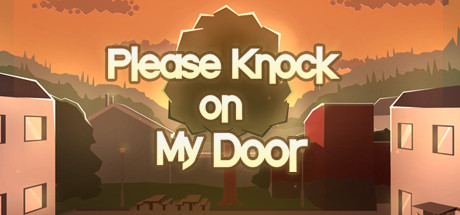
The design of Please Knock on My Door is intentionally minimalistic. The art is plain and subdued, composed of soft, washed-out colors and simple environments that mirror the monotony and emptiness of the protagonist’s world. You spend most of your time inside a small apartment or at the office, where the sterile surroundings and repetitive actions convey a deep sense of routine and claustrophobia. Every choice you make—whether to eat breakfast, check messages, or stay in bed—affects the protagonist’s mental fortitude. As this mental state deteriorates, interactions become more difficult, dialogue options narrow, and the world itself seems to lose its color. This subtle feedback loop effectively captures how depression slowly consumes one’s ability to engage with life, not through grand narrative moments but through the erosion of ordinary habits.
The gameplay follows a simple structure: you guide the protagonist through several days, making choices that balance work obligations, social contact, and self-care. Each decision carries emotional weight because it represents an internal battle between obligation and exhaustion. The act of eating a meal or talking to a co-worker becomes as significant as facing a boss fight in another game. Fail to maintain balance, and the internal voice of despair begins to dominate, whispering thoughts of worthlessness or self-blame. Success, if it can be called that, is fragile—achieved not through victory but through persistence. The player begins to understand that survival in this context is not about winning, but about enduring, making the game’s emotional stakes both universal and deeply personal.
One of the most striking elements of Please Knock on My Door is its portrayal of inner dialogue. The game represents the protagonist’s conflicting thoughts as contrasting voices—one encouraging self-compassion and another pulling them toward despair. These internal conversations feel painfully authentic, capturing the looping, self-destructive patterns of thought that accompany depression. The writing is spare but eloquent, managing to communicate vulnerability without melodrama. Every word feels chosen with care, and every silence lingers with meaning. The result is an experience that draws players into the protagonist’s perspective, not by telling them what to feel, but by making them live through the exhaustion and repetition that define mental illness.
The game’s quiet realism is also one of its most affecting qualities. There are no overtly dramatic moments or external antagonists—just the constant weight of expectation and self-doubt. Work deadlines, household chores, and social interactions become recurring tests of emotional strength. Co-workers may offer sympathy, but their words often feel hollow. Friends might call, but answering the phone requires more energy than the protagonist can muster. Through these vignettes, the game captures a universal truth about depression: that it is often invisible to those around you, and that simply existing can be an act of courage. The lack of traditional “rewards” reinforces this point—there is no sense of accomplishment, only the small relief of making it through another day.
Please Knock on My Door’s greatest achievement lies in its honesty. It never offers easy solutions or pretends that recovery is a linear process. Instead, it presents a nuanced portrayal of mental health where improvement comes in small, uncertain steps. The different endings reflect this ambiguity—some are hopeful, others painfully realistic, depending on the choices you make. The game’s short runtime ensures its message is concentrated, but it also leaves a lasting impression that extends beyond the screen. It is not about curing depression, but about understanding it, sitting with it, and recognizing its quiet grip on ordinary lives.
While the experience is emotionally resonant, its simplicity may alienate players expecting a more conventional narrative or mechanical depth. The environments are repetitive, the pacing slow, and the interactivity limited. Yet these qualities serve the story’s purpose. The repetition mimics the numbing sameness of living with depression, and the lack of traditional progression underlines the idea that not all struggles have a clear arc. This design choice reinforces the emotional authenticity that defines the entire project, allowing the player to feel what the protagonist feels rather than merely observe it.
In the end, Please Knock on My Door stands as one of the most empathetic depictions of depression in interactive media. It offers a rare chance to experience the invisible battles fought within the confines of ordinary life. By focusing on the small details—the hesitation before getting out of bed, the decision to send a text, the quiet ache of loneliness—it creates a sense of connection and understanding that transcends its simple structure. It is a sobering, heartfelt work that asks for patience and compassion, not mastery or achievement. For those willing to engage with its slow, heavy rhythm, it offers not entertainment, but perspective—a reminder that sometimes the hardest thing in the world is simply to open the door and face another day.
Rating: 8/10