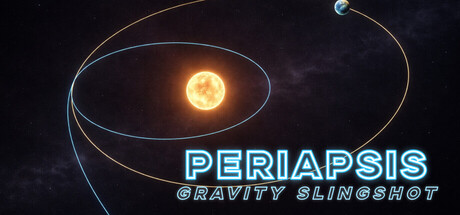
Lead humanity’s final journey beyond Earth. Launch ships, harness gravity slingshots, and explore distant star systems to make humanity multi-planetary.
Modeled estimate, not a reported figure. How we estimate →
Discounts
Every price cut of more than 20% we have observed, in each market that quoted one, with this game's chart position on either side of it. These are episodes, not a model: a sale is one event, and one event cannot tell you what the next one will do.
Reviews, worldwide (the counter carries no country): 0/day in the week to Sep 3 → 0/day in the week after.
For scale, across Steam · Top Sellers · Brazil over the last 30 days: the 26 chart moves that followed a price cut of more than 20% went a median of 7 places towards #1, and the 2,400 moves with no price cut behind them went 2 away. One store, one chart, one country — it is the only place we have enough observations to say even that.
Prices outside the United States have been collected since 6 August 2026 and chart positions since 19 July 2026, so a cut older than that has no market to compare and a market that joined later has no history yet. Nothing here is converted between currencies.
About
Lead humanity’s final journey beyond the Solar System. Launch ships from fragile worlds, use gravity to bend your path, discover new star systems, and search for planets that could carry civilization forward.
Plan each launch, manage fuel and cargo space, and decide when to scan, deploy, trade, or push deeper into the unknown. Every expedition costs time and resources, and every discovery may open a new route for humanity.
Will you guide humanity to become a multi-planet species?
Skill-Based Launch & Gravity Navigation
Time your engine burns, reach escape velocity, and use planetary gravity to bend trajectories and reduce fuel costs.
Strategic Expedition Planning
Choose what to carry, where to fly, and when to spend fuel — preparation matters before every launch.
Planet Scanning & Orbital Deployment
Scan planets for data, then deploy probes from orbit to recover resources and rare samples.
Star Atlas & Stargate Exploration
Reveal new star systems, travel through stargates, and gradually expand humanity’s reachable frontier.
Ships, Equipment & Colonization
Buy tools, unlock new hulls, seed promising planets, and establish colonies beyond Earth.
Genres
Engagement
Reviews
You start by picking one of the five characters, each with a perk that won’t make much sense until you’ve already played the game. There’s also a sixth character, but they don’t come with any perks and are the only option if you choose the hard difficulty setting. Gameplay feels strange at first because there’s no tutorial, so you’re not exactly sure what to do. You start on Earth, which is going to blow up in 60 years, and your task is to travel to other planets and star systems to gather resources and find one that can support life. The system map and star map are very detailed, but apart from our own Solar System, everything else has to be discovered through scanning. Even then, you’ll only see codenames until you actually visit a planet. This is done by buying fuel and loading it into your ship. Then you press the launch button, which starts a timing mini game where you need to press the button when it lines up with the target. Some situations are easier than others, and in some you have no control at all, but you’re still expected to get as close as possible. If you succeed, you’ll escape the planet’s gravity and be able to slingshot toward another planet. This is shown with a guiding line that twists and turns depending on gravity, but you can still choose exactly where you want to go. More distant planets require more fuel to reach, but there’s a limit, so you can’t travel to every planet in the system directly. Instead, you have to jump from planet to planet. Once you reach your destination, you can scan the planet and send probes to gather resources. Unfortunately, this is a game about resource management and planning, which means you need to think ahead. For example, you might reach a new planet, mine it, and then realize you don’t have enough fuel to return to Earth. You can still transfer your consciousness back, but you’ll lose all your cargo along with some money. The problem is that this can leave you with no money and no way to buy anything. Everything costs money, including fuel, scanners, and plenty of other equipment that you might not even be able to afford in the first place. There’s no help or even a message telling you the game is over when you run out of money. All you can do is quit to the main menu, delete your profile, and start over.
Media

Related
Related
Price dynamics, follower growth, revenue and sales trajectories with interactive tooltips
This and every other Pro feature is free until October 20, 2026. A free account is all it takes.
Stats
All-time low is the lowest price we've recorded for this game since we started tracking it.
Languages: English, French, Italian, German, Spanish - Spain, Danish, Ukrainian, Russian, Bulgarian, Hungarian, Indonesian, Turkish +19 more
Hours played at review time, across 30 reviews with recorded playtime.
The game has potential, but playability is severely hampered by broken progression mechanics tied to resource scarcity. Here are my main criticisms: 1) Starter ship lacks escape velocity warning The initial vessel being too weak to escape strong gravitational fields is understandable by design. However, the game doesn't warn you that you can only reach low-gravity planets. Once you land on a heavy planet, you're trapped with no way to escape = an instant game over with no second chance. 2) Critical resources are too rare Some resources like fossils are extremely rare despite being essential for progression. After 37 minutes of play, I obtained only one fossil from the 3 planets the starting ship can reach safely. Yet five are needed to progress. The game become quickly unplayable. 3) Travel resources deplete too quickly Resources required for travel and planetary scanning drain far too rapidly, forcing constant trips back to the market. This becomes tedious and counterproductive. 4) No incentive to revisit planets Once a planet is explored, there's no reason to return. Their is no way in scanning for new ressource. This severely limits progression paths and resource sources. 5) Cargo management creates a grinding loop Cargo capacity is severely limited, yet each market purchase occupies a slot with no in-game grouping system (unlike the grouped resources at game start). Your cargo fills quickly, forcing repetitive cycles: sell items at market → buy travel resources → return to last planet → collect items you couldn't carry → return to sell. You end up spending more time managing inventory logistics than exploring for rare resources. Worse, once a planet is depleted, you're stuck any planet didn't provide what you needed. Result: After multiple attempts, each lasting only around 10 minutes, I hit an unrecoverable game-over state with no resources and no way to progress. Requested reimbursement.
I really tried to give this game a chance because I love hard sci-fi and the concept looked cool, but it's extremely buggy and kinda lacking in content. Obvious bugs include: - Stacking doesn't work correctly, and there's no drag and drop. The only way to combine stacks is through the "sort" button, which is finnicky. - High-gravity planets are impossible to leave. "Escape velocity" is not escape velocity. Sometimes the gravity of a planet will be high enough that reaching escape velocity just sends you back down into the planet. - Founding a colony before using your scan data makes it do nothing when "used" except delete itself. - Using "consciousness backup" does not drop your items into planet loot and just deletes them, you have to transfer it manually. Once you get through the first few stages, it's just more of the same - you go to a planet, you scan it, you go back to a colony to sell stuff.
Periapsis: Gravity Slingshot is a thoughtful and surprisingly ambitious entry into the space simulation genre, offering players an experience built around the scientific principles of orbital travel rather than the usual emphasis on combat or cinematic spectacle. Developed and published by PcZ Games, the title presents a future in which humanity stands at the edge of extinction, forcing players to search for a new home among the stars. Its central premise is immediately intriguing: use the power of planetary gravity, careful calculations, and limited resources to expand humanity's reach across the cosmos. This focus on realistic spaceflight gives the game a distinctive identity and sets expectations for a slower, more methodical adventure. At the heart of the experience lies the gravity slingshot mechanic, which is more than just a feature—it is the foundation of nearly every decision players make. Launching ships requires careful preparation, from selecting equipment and cargo to planning trajectories that maximize efficiency while minimizing fuel consumption. The game challenges players to think several steps ahead, rewarding patience and experimentation. Mistakes can be costly, and successful missions feel genuinely earned. Unlike many strategy titles that simplify travel into a matter of clicking destinations, Periapsis encourages players to understand the relationship between celestial bodies and use them to their advantage, creating an experience that feels educational without losing its sense of adventure. Exploration is another major pillar of the game, and PcZ Games has designed a progression system that reinforces the excitement of discovery. Players can scan planets for useful data, deploy probes to gather resources, and gradually unlock access to new technologies and destinations. The introduction of star atlases and stargates expands the scale of the journey, ensuring that the universe continues to open up as players advance. Colonization mechanics add additional depth, allowing humanity's survival to become a tangible goal rather than a distant narrative backdrop. Every successful expedition contributes to a larger sense of progress, making each new colony feel like a meaningful achievement. The game's presentation is modest but effective. Rather than attempting to compete with visually extravagant space epics, Periapsis focuses on delivering clear interfaces and readable information. Trajectories, planetary systems, and mission data are presented in a way that supports strategic planning, which is essential given the complexity of the gameplay. There is a quiet atmosphere to the experience that complements its themes of isolation and exploration. Space feels immense and indifferent, and the absence of constant action creates a contemplative tone that will appeal to players who enjoy simulation-heavy titles. While the visuals may not leave a lasting impression on everyone, they serve the game's objectives well. That said, Periapsis: Gravity Slingshot is not an easy game to recommend to every audience. Its dedication to realism comes with a steep learning curve, and newcomers may struggle with the lack of extensive tutorials or in-game guidance. Understanding orbital mechanics and resource management requires time and patience, and early failures can feel discouraging. Some players will appreciate the uncompromising design philosophy, while others may find it difficult to overcome the initial barriers. A more comprehensive onboarding process would go a long way toward making the experience more approachable without sacrificing its complexity. Despite these issues, the game succeeds in delivering something genuinely uncommon in today's market. It transforms scientific concepts into engaging gameplay systems and frames them within a compelling narrative about humanity's search for survival. Ship upgrades, expanding colonies, and uncovering new corners of the galaxy provide a satisfying sense of progression that keeps the experience engaging over time. It is a title that clearly understands its target audience and remains committed to serving players who enjoy thoughtful strategy and realistic simulations. Periapsis: Gravity Slingshot may not become a mainstream success, but it deserves recognition for its ambition and originality. It captures the wonder of space exploration while reminding players of the immense challenges involved in leaving one world behind in search of another. For those willing to invest the time required to learn its systems, it offers a rewarding journey filled with discovery, experimentation, and hard-earned victories. Rating: 7/10
Jogo é interessante. Eu gosto muito desse tipo de jogo, mas tudo custa dinheiro. Demorei pelo menos 5 jogos para conseguir colonizar o planeta e salvar a terra. Acabou o jogo, por que eu não tinha mais dinheiro. Como não existem sondas, a primeira nave tem pouca capacidade, o melhor piloto é o que possui "consciousness backup". Assim vc pode sempre montar uma exploração com o mínimo para explorar o planeta ou a galaxia e retornar com custo zero. O problema de velocidade de fuga é grande, então tem que minimizar o custo da viagem. Você dificilmente vai conseguir fazer mais de uma viagem para outros planetas sem voltar para a Terra. No meu 7 jogo, consegui desbloquear a MK-16 e MK-23, são ótimas naves. Agora até dá pra buscar recursos em planteta com +25 de velocidade de saída. Pontos a melhorar, seria a opção de visualizar o "loot" dos planetas que já foram explorados. Não faz sentido "perder" os dados e ter que voltar ao planeta para ver se ficou alguma coisa. Quando utilizar a exploração avançada, gerar os dados dos demais planetas no "loot" e não no inventário da nave. Se usar o "consciousness backup" e perder os dados dos planetas, não tem mais como explorar, deveria ter a opção de fazer um novo scan ou que esses dados ficassem no "loot" do planeta. Assim daria para recuperar. Tem um BUG ao usar 5 voltas em um planeta, a linha de tragetória não aparece e a nave acaba presa no planeta,
有、东西,前期逃逸几次失败,让我以为干入理科生频道了。。。。 就是个休闲小游戏飞向太空。 然后收集东西。 可以当个QTE玩
[b]Periapsis: Gravity Slingshot[/b] to ciekawa kosmiczna koncepcja z gatunku gier survivalowo-eksploracyjnych w której to gracz wyrusza w gwiezdną przygodę w nieznane aby znaleźć nowe schronienie dla ludzkości – ścigając się z czasem i innymi przeciwnościami losu aby znaleźć nowy dom. I nie byłoby w tym nic złego, gdyby nie jego mocno „pogmatwana” i dosyć niezrozumiała struktura rozgrywki która bardzo szybko zmienia się w problem nie do przeskoczenia – to specyficzna zabawa, bez wątpienia nie dla każdego. Rozpoczynając od braku jakiegokolwiek samouczka, praktycznego wprowadzenia na czym polega ta zabawa, jak np. operować statkami mającymi uratować ludzkość (które wizualnie przypominają te z gry Homeworld, lecz ogólnie są do niczego) – z czym mniej doświadczeni gracze na pewno będą mieli problem. Eksploracja planet jest po prostu nudnym i żmudnym przeżyciem, zdobywanie zasobów niezbędnych do dalszej planetarnej wędrówki (powrót do macierzystej bazy/handel) jest niewspółmierny do wysiłku jaki wkłada się w ich zdobycie. A kiedy jakimś cudem uda wam się zdobyć coś więcej, to macie ogromną szanse, że wasz statek nie będzie mógł opuścić orbity danej planety z waszym drogocennym ładunkiem – co sprowadzać was będzie do dwóch opcji: jego utraty i powrót na Ziemię (gracie dalej), bądź rozpoczęcia gry od samego początku. W grze nie ma łagodnego startu, stopniowego rozwoju, gracz zostaje z miejsca wrzucony na głęboką wodę bez przygotowań i z minimum sprzętu (w tym paliwa) które wyczerpuje się w mgnieniu oka – gospodarka w tej grze jest dosyć rygorystyczna co wymagać będzie od was sporego zaangażowania i typowego grindu (latania od planety do planety) aby spieniężyć łupy i zakupić potrzebne rzeczy które pozwolą wam dotrzeć dalej. Co ponownie jest dosyć nudnym zajęciem, bo kiedy popełnicie większy błąd – może to się on kończyć nieciekawie dla was, przemieniając zabawę w solidną irytację. Uwielbiam gry eksploracyjne, lecz przy tej ciężko jest czerpać jakąkolwiek przyjemność. Być może w przyszłości, po gruntownym przeobrażeniu w poszczególnych jej sferach, gra się zmieni w bardziej przyjazną dla graczy, przy której można by spędzić przyjemnie czas. Co do kwestii technicznych oprawa audiowizualna jest dobra, sterowanie banalnie proste, interfejs posty i przejrzysty w którym występuje polska lokalizacja (napisy). [quote]Zachęcam wszystkich do obserwacji [url=https://store.steampowered.com/curator/32785706/ ]kuratora[/url] i jego nowej sekcji recenzenckiej [url=https://store.steampowered.com/curator/45946673/]walas85+[/url], by na bieżąco otrzymywać świeże informacje o nowo zrecenzowanych tytułach.[/quote]
星际版弹球(不是,不会玩就多弹几次
很不错的游戏,设计很新颖
好搞笑,不过前期缺乏新手引导, 这个技术还是挺希望可以实现的。
Selling now
See how fast this game is selling right now — estimated copies and revenue per day from recent review growth.
Players by region
Where this game's players are, estimated from review languages.
Related
| Game | Estimated lifetime revenue | Reviews | Review score | Price |
|---|---|---|---|---|
| $896.6K | 1.3K | 88% | $14.39 | |
| — | 0 | — | — | |
| $10.7M | 10.7K | 79% | $29.99 | |
| $10.3M | 11.1K | 86% | $24.99 | |
| $1.6M | 1.6K | 87% | $29.99 | |
| $1.2M | 3.5K | 92% | $9.99 |
Related
| Game | Estimated lifetime revenue | Reviews | Review score | Price |
|---|---|---|---|---|
| $6.9K | 60 | 97% | $4.99 | |
| $6.9K | 160 | 71% | $1.99 | |
| $6.9K | 91 | 36% | $2.99 | |
| $6.9K | 83 | 95% | $2.99 | |
| $6.9K | 200 | 98% | $1.99 | |
| $6.9K | 94 | 86% | $4.99 |