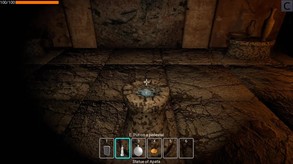
In this game you will play as an archaeologist who is driven by a desire to find an ancient artifact. The hero will travel to Greece to solve riddles and avoid hazardous traps. But he is not the only one who wishes to obtain the treasure. Two other adventurers also arrive at the forgotten island.
Modeled estimate, not a reported figure. How we estimate →
Prices
The United States storefront in every case, so this compares stores and not countries.
Discounts
Every price cut of more than 20% we have observed, in each market that quoted one, with this game's chart position on either side of it. These are episodes, not a model: a sale is one event, and one event cannot tell you what the next one will do.
Reviews, worldwide (the counter carries no country): 0/day in the week to Jul 21 → 0/day in the week after.
For scale, across Steam · Top Sellers · Brazil over the last 30 days: the 26 chart moves that followed a price cut of more than 20% went a median of 7 places towards #1, and the 2,400 moves with no price cut behind them went 2 away. One store, one chart, one country — it is the only place we have enough observations to say even that.
Prices outside the United States have been collected since 6 August 2026 and chart positions since 19 July 2026, so a cut older than that has no market to compare and a market that joined later has no history yet. Nothing here is converted between currencies.
About
Genres
Sums Steam only; Epic publishes no volume signal, so the true total is higher by an unknown amount.
| Store | Price | Audience | Score | Chart | Est. revenue |
|---|---|---|---|---|---|
SteamYou are here | $9.99 | 23reviews | 91% | — | $3.2K |
| $9.99 | — | — | — | not modelled |
Matched by title — a reused name can pair the wrong games. * is a critic aggregate. Prices and positions are each store's United States storefront; Epic charts worldwide. Audience and Score too, except Steam's, which is worldwide.
Engagement
Reviews
Инди 3D бродилка с упором на квестовость. Придётся много побегать, но видно что авторы старались. Среди инди-игр смотрится нормально. О чём описание не упоминает, так это о триггерах. В игре много пауков. Спрятанных пауков. Скримеры с пауками. Просто потому что подземелья, наверное. Я вас предупредил.
Decent adventure game where you solve puzzles in a labyrinth. The story follows an explorer who decides to search for the legendary labyrinth. When he becomes stuck on the island when his boat gets swept away, he meets two strangers who may not be there by chance. The first is a girl who allegedly missed a ferry and understands a lot of languages, while the second is a more technical guy. Both will assist you navigate the labyrinth's puzzles and dangers. However, after the first trap, you can choose which one to bring with you. This means that you will receive different advise on how to deal with a situation. If you care about achievements or want to see everything, you must play the game at least three times. I say three because there is also an option to explore the labyrinth on your own. It’s still a good idea to go with a companion the first time because there are no hints. The gameplay consists of navigating through rooms and solving puzzles. If you've ever seen an adventure film where they explore old, mysterious areas, you'll know that they're full of traps designed to kill you. This game is no different. Almost every room contains a trap that requires you to rapidly solve the riddles. Fortunately, you can save the game at any point. Puzzles involve using items on correct spots, mainly statues for opening doors. There are almost no logic puzzles that would require you to do something crazy. There’s only one exception where you need to search the internet: one of the first room wants you to connect three goddesses to an apple. I knew about the legend, but not which goddesses it included. Using items takes a bit work because the game doesn’t make things easy for you. Items aren’t used automatically when you interact with the spot, and most of the times you don’t even get a prompt that it can be used. Before you can do anything, you must first select the correct item in your inventory. Most items make sense where they go, so it’s not that big of an issue. Item handling can be somewhat frustrating. You only have six spots for easy access. If the essential item isn't in one of the slots, you'll need to go into inventory and change it. However, you must juggle with a few keyboard keys because you cannot just drag and drop an item into its proper location. Later you get chased around by an enemy. While you can hide in pots, it’s much easier to run away because the enemy is very easy to dodge. You can also stun it for a while with a certain item. While the graphics aren't particularly impressive, they do match the game well. The beginning on the island's surface may appear amateurish and from a few generations ago, but this is quickly forgotten when unattractive patches of grass are replaced with elaborate underground sections. This is critical since you do not want a puzzle game in which the solution is obstructed by technical constraints.
Media

Related
Related
Price dynamics, follower growth, revenue and sales trajectories with interactive tooltips
This and every other Pro feature is free until October 20, 2026. A free account is all it takes.
Stats
All-time low is the lowest price we've recorded for this game since we started tracking it.
Languages: English*, Russian**languages with full audio support
Hours played at review time, across 23 reviews with recorded playtime.
Игра понравилась, доигрывал правда в автономном режиме, интернета не было. Хорошо поставленный сюжет, много озвучки, звуки прикольные в игре. Дается права выбора, нет линейности. Головоломки. Рекомендую!
Отличная игра, с интересным сюжетом. Одна из немногих игр которую хочется пройти до конца. Рекомендую.
Played with the woman as my companion. Good fun
Palladium: Adventure in Greece is an exploration-focused adventure game developed and published by NLB project that blends archaeological discovery, ancient mythology, and environmental puzzle-solving into a thoughtful narrative experience. Set against the backdrop of Greek legends and forgotten ruins, the game follows Andreas, a determined archaeologist who sets out to uncover the mythical Palladium, an artifact believed to grant prosperity and success to its owner. What begins as a simple treasure hunt gradually evolves into a journey filled with mysteries, rival explorers, dangerous traps, and difficult decisions that shape the outcome of the adventure. The game's story draws considerable inspiration from classic archaeological fiction. Andreas is driven by ambition and curiosity, traits that push him toward an isolated island hiding secrets buried for centuries. However, the search for the legendary relic is far from straightforward. Other adventurers have arrived with the same objective, creating a competitive atmosphere that adds tension to the narrative. The presence of rival treasure hunters transforms the expedition into more than a simple exploration exercise, as players constantly feel the pressure of being in a race against individuals pursuing the same prize. One of the strongest aspects of the game is its use of Greek mythology as a central gameplay element rather than simple thematic decoration. Ancient legends, historical references, and mythological symbolism are woven directly into the puzzles and narrative progression. Players are encouraged to pay attention to clues hidden throughout the environment and use logical reasoning to overcome obstacles. This approach gives the game a unique educational quality without sacrificing entertainment value. The mythology feels meaningful because it directly influences the player's journey through the labyrinth and the challenges encountered along the way. The labyrinth itself serves as the primary setting and functions almost like a character in its own right. Filled with hidden chambers, ancient mechanisms, traps, and riddles, it constantly rewards curiosity and careful observation. Exploration is paced in a way that encourages players to examine every corner, search for clues, and gradually piece together the history behind the artifact. The sense of mystery remains strong throughout the experience, as the labyrinth continuously reveals new secrets that deepen the intrigue surrounding the Palladium. A particularly interesting feature is the companion system. Early in the adventure, players choose between two companions who accompany Andreas throughout the expedition. Each companion offers different expertise and approaches to problem-solving. One possesses extensive knowledge of mythology and ancient cultures, making her invaluable when deciphering clues and understanding historical references. The other approaches challenges from a more technical perspective and provides alternative solutions to certain obstacles. This choice affects portions of the gameplay and narrative, adding replay value and encouraging multiple playthroughs. The branching narrative structure further enhances replayability. Decisions made throughout the journey influence character relationships, story developments, and ultimately the ending players receive. Themes such as greed, ambition, friendship, and personal sacrifice become increasingly important as the story unfolds. Rather than presenting a completely linear narrative, the game allows players to shape Andreas's priorities and determine what truly matters in the pursuit of legendary treasure. These choices give greater weight to the adventure and make the outcome feel more personal. From a gameplay perspective, Palladium focuses heavily on puzzle-solving and exploration rather than action. There is little emphasis on combat, and progression depends primarily on observation, logic, and environmental interaction. This design choice helps the game stand apart from many modern adventure titles that rely heavily on action sequences. The slower pace allows players to fully immerse themselves in the world and appreciate the details hidden throughout the environments. Those who enjoy cerebral challenges and methodical exploration will likely find this approach rewarding. Visually, the game delivers a respectable presentation that effectively captures the atmosphere of ancient Greece. Ruined structures, underground chambers, and forgotten pathways create an environment that feels appropriately mysterious and adventurous. While the graphics are not designed to compete with high-budget productions, they succeed in establishing a convincing sense of place. The first-person perspective further enhances immersion by allowing players to experience discoveries directly through the eyes of the protagonist. The game's pacing is another notable strength. Rather than rushing players from one objective to another, it allows the adventure to unfold naturally. The gradual introduction of new puzzles, story revelations, and environmental challenges creates a satisfying sense of progression. Every discovery feels earned, and the steady accumulation of knowledge about the island and its secrets helps maintain engagement throughout the journey. Its limitations largely stem from its modest scale as an independent production. Players expecting highly cinematic storytelling, advanced graphical technology, or revolutionary gameplay systems may find the experience somewhat restrained. Nevertheless, the game compensates for these limitations through strong world-building, thoughtful puzzle design, and a clear passion for mythology and archaeology. The focus remains firmly on delivering a coherent adventure rather than overwhelming players with unnecessary complexity. Ultimately, Palladium: Adventure in Greece succeeds as a charming and intelligent adventure game that combines mythological storytelling with rewarding exploration. Its compelling archaeological premise, branching narrative paths, companion-based replayability, and puzzle-driven progression create an experience that feels both engaging and distinctive. While it may not have the scale of larger adventure franchises, it offers a memorable journey through ancient mysteries that will particularly appeal to players who enjoy history, mythology, and thoughtful problem-solving. Rating: 7/10
Поначалу не ожидал многого от игры - озвучка, интерфейс, физика весьма низкобюджетные. Но потом втянулся, решать загадки с Ксенией было довольно интересно. Из отмеченных плюсов: Загадки логичные и решаются пусть и не сразу, но решаемы Анимации. Спутники ощущаются живыми, не просто стоят как истуканы. Достижения иногда подсказывают, что делать, и в целом значимо дополняют игру Из минусов: Дизайн интерфейса (жизни, предметы, инвентарь) слишком простой, можно чуть лучше Графические баги - факелы зажигаются резко, когда к ним приближаешься, хотя должен видеть их издалека Достижение по греческому языку - с самого начала игры лазил в каждый уголок, но нашел 16 из 17 надписей, и это слегка печалит
Loads of fun! A must for fans of History and Archeology!
Funny Game lol https://www.youtube.com/watch?v=2Tl-VHoegXI
It´s a low budget puzzle game that is actually pretty good at what it propouses to do. I think the puzzles were creative given the game's tecnical limitations and used very well the greek mythology background. The voice acting is obviously bad, but in kind of a "The Room" vibe? i dont know i found it pretty funny
Selling now
See how fast this game is selling right now — estimated copies and revenue per day from recent review growth.
Players by region
Where this game's players are, estimated from review languages.
Related
| Game | Estimated lifetime revenue | Reviews | Review score | Price |
|---|---|---|---|---|
| $47.9K | 207 | 63% | $12.99 | |
| $3.2M | 9K | 88% | $19.99 | |
| $2.3M | 7.5K | 92% | $14.99 | |
| $2.1M | 4K | 80% | $29.99 | |
| $1.2M | 2.2K | 88% | $34.99 | |
| $904.8K | 2.5K | 84% | $24.99 |
Related
| Game | Estimated lifetime revenue | Reviews | Review score | Price |
|---|---|---|---|---|
| $3.2K | 142 | 65% | $1.00 | |
| $3.2K | 100 | 80% | $2.99 | |
| $3.2K | 229 | 83% | $0.99 | |
| $3.2K | 107 | 94% | $0.59 | |
| $3.2K | 64 | 53% | $2.49 | |
| $3.2K | 57 | 89% | $1.99 |