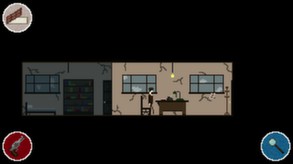
Noir Syndrome is a procedurally generated Detective Murder-Mystery with a new story every time! Featuring slick pixel art animations and a jazzy soundtrack, the player is thrown right in to a highly stylized vision of film noir.
Modeled estimate, not a reported figure. How we estimate →
About
Genres
Stats
All-time low is the lowest price we've recorded for this game since we started tracking it.
Languages: English
Engagement
Reviews
Themes across 40 recent reviews and how positive each mention is. A keyword signal, not full sentiment analysis.
Reviews
Constantly changing, funny and addictive.
It's cheap and it's fun.
This game gives me a solid puzzle to play when I don't have time to sit down for hours and play another game. Each mystery is about 15 minutes long, and there is usually a bonus challange you can try, make so much money, use so many lockpicks, etc. It's got a swanky soundtrack. Also there is not much handholding which I respect. I had to figure out a lot of the mechanics by playing through a few times. I recommend figuring them out instead of looking them up. Unfortunately each mystery is the same even if the culprit is always different. In one game mode, one of the houseguests did it. In the other, an occult serial killer is on the loose. Almost every clue is binary, and from there it's process of elimination. The killer is a poet or artist, an artist or chef etc, a cop or a civilian, a civilian or a mobster, a woman's fingerprints, etc. Suspects give you tips on people or locations. They have no individual personalities themselves, and you don't question them. So gameplay is limited, and it feels more like a logic puzzle game than a full fledged mystery with characters and a plot driving the puzzle. Worth getting for a couple of hours of fun, and maybe complete the achievements. Characters will try to shoot you through walls and doors, otherwise i've had no problems with bugs.
Media

Related
Related
Price dynamics, follower growth, revenue and sales trajectories with interactive tooltips
This and every other Pro feature is free until October 20, 2026. A free account is all it takes.
Hours played at review time, across 40 reviews with recorded playtime.
positive critical· bar length = how often the theme comes up
Noir Syndrome is an atmospheric and unconventional detective game that attempts to reinterpret the murder-mystery genre through procedural generation and tight time pressure rather than scripted storytelling. Developed and published by Glass Knuckle Games, it places players in the role of a lone private investigator racing against the clock to identify and stop a serial killer within a limited number of in-game days. Instead of guiding players through a carefully authored narrative, the game emphasizes replayability, uncertainty, and deduction under imperfect conditions, creating an experience that feels closer to solving a shifting logic puzzle than following a traditional noir plot. From the moment a new case begins, the game establishes a sense of urgency. Every action consumes time and drains a hunger meter, forcing players to constantly weigh curiosity against survival. Visiting locations, questioning suspects, and searching environments all carry a cost, and poor planning can abruptly end an investigation before enough evidence is gathered. This structure creates tension not through dramatic cutscenes, but through scarcity, pushing players to make deliberate choices about where to go and what to pursue. The pressure of limited resources gives each decision weight, reinforcing the feeling of being an underprepared detective operating in a hostile, uncaring city. Investigation in Noir Syndrome revolves around collecting clues that point toward the killer’s identity. These clues are abstracted into attributes such as profession, faction, habits, or locations, which are recorded in a notebook that functions as the player’s primary tool for deduction. The challenge lies in cross-referencing this information to eliminate innocent suspects while narrowing the field. Because suspects and clues are procedurally generated, no two cases are the same, and players must adapt their investigative approach each time. This system rewards pattern recognition and logical elimination rather than narrative intuition, making success feel earned through careful analysis rather than scripted revelation. The procedural design, however, is a double-edged sword. While it ensures high replay value and unpredictability, it can also make investigations feel impersonal or opaque. Clues may appear in unexpected or mundane places, and the lack of contextual storytelling around discoveries means that connections between evidence often feel mechanical rather than organic. Instead of piecing together motives or reconstructing events, players are primarily matching data points and narrowing variables. For some, this abstraction enhances the puzzle-like appeal of the game; for others, it can undermine the fantasy of being a detective immersed in a living narrative. Presentation is one of the game’s strongest elements. The pixel art aesthetic captures the moody essence of noir with dim lighting, shadowy interiors, and a subdued color palette that reinforces the bleak tone. Characters are stylized but expressive enough to convey personality, and environments feel cohesive despite their procedural nature. The soundtrack plays a crucial role in maintaining atmosphere, with smoky jazz themes that lend weight and melancholy to each step of the investigation. Together, the visuals and music do much of the storytelling work, filling in emotional gaps left by the game’s minimalist narrative approach. Replayability is further encouraged through unlockable badges and alternate modes that tweak the rules or provide small advantages in future runs. These additions give players long-term goals beyond simply solving a single case and help soften the frustration of failed investigations. A separate, more contained mode offers a distilled version of the experience with all suspects present from the start, appealing to players who prefer a tighter, more focused deduction challenge without extensive exploration. Despite its ambition, Noir Syndrome is not always welcoming to new players. Mechanics are introduced with minimal explanation, and early failures can feel abrupt or confusing until the underlying systems are fully understood. The balance between randomness and logic can also be uneven, occasionally making success feel dependent on luck rather than deduction. These rough edges can be discouraging, particularly for players expecting a more guided or narrative-driven mystery experience. Ultimately, Noir Syndrome is best understood as a procedural deduction experiment rather than a traditional detective story. It trades authored drama for systemic uncertainty, atmosphere for exposition, and narrative depth for replayable logic puzzles. For players drawn to abstract problem-solving wrapped in a strong noir aesthetic, it offers a unique and memorable experience. Those seeking rich character development or carefully constructed mysteries may find it lacking, but as a tense, replayable exercise in deduction under pressure, Noir Syndrome stands out as a thoughtful and distinctive take on the detective genre. Rating: 6/10
Great idea but unfortunately it doesn't quite make it. The detecting never really makes sense and it's all just luck.
Pretty fun game.
💋
"You have starved to death" .. While I didn't see that one coming, I hoped for a little deeper plot twist from a noir themed game...
Tags: Sidescroll - Survival & Questing Additional Tags: Delete Local Content & Remove from Library TLDR: Backtracking oriented hotspot exploration with a lot of procedural dead ends. MSpaint noir universe is a bit limited. Cardboard cutout depth. Procedurally generated sidescroll point&click dialogue content that leads you down to identify one suspect which you gun down. Keep fed and try to beat the clock as civilizans die every day. Turn based. Board-game like. 14 days, visit locations until you run out of days. Interact with npcs and objects to grind clues and cash. Try to cross reference clues to narrow them down. Once you narrow it down, find the person on the clue that you believe is the killer (somehow), and use the gun button, presumably winning the game. You get a hunger bar which is a annoying. All suspects, clues, and most interactions feel identical every time, just with randomly generated names. Locations are okay, setting is okay, and interface is okay once you warm up to it. Main issue I have is the procedural generation is not very engaging and it just feels a little bit aimless and artificial. The limited audiovisual appeal does not help matters much either. Conclusion: Altogether this is sort of a more expanded, exploration oriented version of something like Hidden in Plain Sight. I like the concept and it is somewhat engaging. It does a good job at showcasing that but too many layers of polish are missing to make the title really worthwhile to hold on to or sink time in.
fun little detective game, highly recommend
Selling now
See how fast this game is selling right now — estimated copies and revenue per day from recent review growth.
Players by region
Where this game's players are, estimated from review languages.
Related
| Game | Estimated lifetime revenue | Reviews | Review score | Price |
|---|---|---|---|---|
| $9.5M | 17.8K | 82% | $24.99 | |
| $829K | 2.6K | 96% | $14.99 | |
| $667.7K | 4K | 92% | $9.99 | |
| $433.8K | 866 | 75% | $19.99 | |
| $154.4K | 445 | 88% | $12.99 | |
| $93.3K | 121 | 87% | $19.99 |
Related
| Game | Estimated lifetime revenue | Reviews | Review score | Price |
|---|---|---|---|---|
| $19.5K | 183 | 58% | $4.99 | |
| $19.5K | 183 | 57% | $4.99 | |
| $19.5K | 183 | 77% | $4.99 | |
| $19.5K | 612 | 83% | $1.99 | |
| $19.5K | 341 | 93% | $1.99 | |
| $19.5K | 129 | 11% | $5.99 |