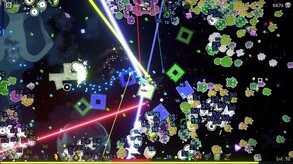
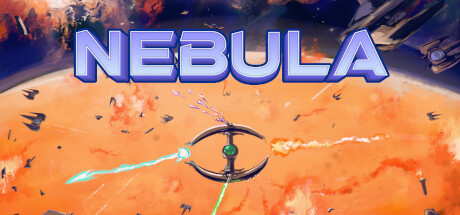
Survive in the deep void of the galaxy against thousands of invaders! Nebula is a challenging bullet hell, twin stick shooter where you have to face endless waves of space enemies. Additional map resources and space drones can provide you a support but be wary, they can as well become a deadly trap.
Modeled estimate, not a reported figure. How we estimate →
Discounts
Every price cut of more than 20% we have observed, in each market that quoted one, with this game's chart position on either side of it. These are episodes, not a model: a sale is one event, and one event cannot tell you what the next one will do.
Reviews, worldwide (the counter carries no country): 0/day in the week to Aug 25 → 0/day in the week after.
For scale, across Steam · Top Sellers · Brazil over the last 30 days: the 26 chart moves that followed a price cut of more than 20% went a median of 7 places towards #1, and the 2,400 moves with no price cut behind them went 2 away. One store, one chart, one country — it is the only place we have enough observations to say even that.
Prices outside the United States have been collected since 6 August 2026 and chart positions since 19 July 2026, so a cut older than that has no market to compare and a market that joined later has no history yet. Nothing here is converted between currencies.
About
Genres
Engagement
Reviews
Themes across 42 recent reviews and how positive each mention is. A keyword signal, not full sentiment analysis.
Reviews
Nebula – An Epic Bullet Hell in the Depths of Space! 🚀💥 Nebula takes the twin-stick shooter genre to the next level with its heart-pounding, bullet-hell chaos set against the vast emptiness of space. You’re up against relentless waves of invaders, and it’s your job to survive by dodging, weaving, and blasting through everything that comes at you. If you love a challenge, this game is a true test of reflexes, precision, and strategic thinking. 👾🔫 The gameplay is fast-paced and intense, with endless waves of enemies coming at you from all directions. You’ll need quick thumbs and a cool head to avoid the ever-growing storm of bullets while firing back with everything you’ve got. But it’s not all about survival—resources and space drones are there to help, offering power-ups and support. However, don’t get too comfortable, because they can just as easily turn into deadly traps that make every decision a tense one. ⚡👽 Visually, Nebula nails the atmosphere with its vibrant space-themed environments, where the stars and explosions create a truly immersive backdrop. The controls are tight and responsive, making the chaos feel thrilling rather than frustrating. Plus, the endless waves mean there’s always a new challenge waiting for you. 🌌💨 If you’re a fan of bullet hell games and love the thrill of dodging and shooting in the vastness of space, Nebula will have you hooked. It’s a tough, rewarding, and absolutely addictive ride through the stars, where survival isn’t just about shooting—it’s about outsmarting the cosmos itself. 🌠💥 Score: 7/10 Created with <3
Media

Related
Related
Price dynamics, follower growth, revenue and sales trajectories with interactive tooltips
This and every other Pro feature is free until October 20, 2026. A free account is all it takes.
Stats
All-time low is the lowest price we've recorded for this game since we started tracking it.
Languages: English
Hours played at review time, across 42 reviews with recorded playtime.
positive critical· bar length = how often the theme comes up
Really nice game. And it's free!
Probably the grindiest game I've ever played. It feels like the laser is the only good weapon and even if I've got multiple of them at a high level, it barely even scratches the boss enemies who I swear have like 3 million HP. The gameplay is just going around in circles around the big clump of enemies that builds up and syphoning any bit of XP you can just to add 1 damage to your useless weapon. Then after what feels like 2 hours of doing that you look at your objective and realize you're only half way done, only to get killed by invincible projectiles from the boss enemies. You can upgrade your weapons in the menu using the gears you got in missions, but they are so expensive compared to how slow you obtain gears, it feels like such a slog.
Nebula is a compact yet surprisingly addictive twin-stick space shooter developed and published by JuTek Pixel that leans into classic arcade sensibilities while layering in modern roguelite progression. On the surface, it presents a straightforward premise: pilot a small spacecraft through hostile sectors of space, fend off relentless waves of enemies, gather resources, and survive as long as possible. But beneath that simple foundation lies a carefully tuned gameplay loop built around incremental growth, build experimentation, and reflex-driven combat that keeps players returning for just one more run. The core gameplay revolves around tight twin-stick shooting mechanics, with movement and firing handled independently for fluid control. Whether using a keyboard and mouse or a controller, the ship responds sharply to input, which is critical when the screen begins to fill with incoming projectiles and swarming enemies. Early waves feel manageable, offering room to get comfortable with movement patterns and weapon behavior, but the escalation curve ramps up steadily. Enemy formations diversify, bullet density increases, and positioning becomes a constant tactical calculation. Success hinges not just on raw reflexes but on spatial awareness and knowing when to aggressively clear threats versus when to retreat and kite enemies around the map. What elevates Nebula beyond a simple arcade shooter is its persistent progression system. Each run rewards players with resources—often referred to as gears or scrap—that can be spent in the hangar to unlock permanent upgrades, new ships, and enhanced starting attributes. This meta-progression loop provides a tangible sense of growth even when individual runs end in defeat. You might fall to an overwhelming wave, but you’ll return slightly stronger, armed with a new weapon configuration or passive bonus that meaningfully shifts your approach. Over time, these upgrades stack into noticeable power increases, smoothing out early difficulty spikes while encouraging players to push further into higher-intensity waves. Ship variety plays a major role in maintaining replay value. Nebula offers multiple spacecraft options, each with distinct base weapons and unique traits that subtly alter strategy. Some ships favor aggressive, high-damage output at the cost of durability, while others emphasize survivability or speed. Unlocking hidden ships adds another layer of motivation, as these vessels often introduce more specialized playstyles. Combined with in-run power-ups that appear randomly during each session, the interplay between permanent upgrades and temporary buffs ensures that no two runs feel exactly the same. You may stumble upon synergistic combinations that melt entire enemy swarms, or find yourself adapting to a more defensive build when ideal upgrades fail to appear. Visually, the game embraces a pixel art aesthetic that prioritizes clarity over spectacle. Ships, enemies, and projectiles are cleanly rendered, ensuring readability even during chaotic late-game waves. Explosions and visual effects are satisfying without obscuring critical information, which is essential in a bullet-heavy shooter. The minimalistic style evokes classic arcade titles while maintaining a modern polish. Audio design complements this presentation with punchy sound effects for weapons and explosions, reinforcing the tactile feel of combat. The soundtrack, though not overly elaborate, sustains the energetic pacing and adds tension as wave intensity increases. Despite its strengths, Nebula remains intentionally modest in scope. There is no overarching narrative or expansive campaign structure; the experience is entirely built around survival, optimization, and high-score chasing. Some players may find that once all ships and upgrades are unlocked, the novelty plateaus unless they are driven by leaderboard competition or personal challenge goals. Map variety is present but limited, and while escalating difficulty keeps sessions engaging, the core loop remains fundamentally consistent throughout. However, this focused design can also be viewed as one of Nebula’s greatest strengths. It understands exactly what it wants to be: a fast, replayable arcade shooter with roguelite progression hooks. Sessions are concise, making it ideal for short bursts of gameplay, yet the escalating wave structure ensures that skilled players can extend runs into intense endurance tests. Its accessibility—low system requirements, controller support, and intuitive mechanics—makes it easy to pick up, while mastery requires genuine skill and strategic planning. Ultimately, Nebula succeeds by delivering tight mechanics, meaningful progression, and satisfying action within a streamlined package. It may not redefine the genre or offer sprawling content, but it executes its vision with confidence and polish. For players who enjoy reflex-driven space shooters with incremental unlock systems and build experimentation, Nebula offers a compelling and affordable experience that rewards persistence and quick thinking. Its simplicity is deliberate rather than limiting, and within that focused framework, it provides hours of engaging, adrenaline-charged gameplay. Rating: 8/10
<('')
silahlar çok başına buyruk lazerler fazla güçlü kalıyor. fazlasıyla dengesiz
The first decision you make is choosing a ship. Each one comes with its own perk, such as piercing attacks or increased speed, along with a starting weapon. You will likely find one that suits you best and stick with it for most future runs, since many of the ships are fairly similar aside from small percentage differences that affect how often certain effects occur. Next, you select a stage. Only two are available at the beginning, while the others must be unlocked by completing the ones that are already open. Instead of surviving for a set number of minutes or clearing waves, the main objective is to collect a required number of gears. These sometimes drop from defeated enemies or can be obtained by reaching event circles, where you must stay inside for a few seconds until the meter fills. From there, the gameplay follows the familiar structure of a survivors style game. You move around the area, either aiming manually or enabling auto aim, while auto fire handles enemies that come within range. However, auto-aim is a bit all over the place, and weapons will tend to aim at something that’s not even visible on the screen or prefer distant enemies instead of those right next to you. Destroyed enemies drop experience, or scrap, which fills a progress bar. Once the bar is full, you choose a perk from four random options. These perks can be stat upgrades such as increased health, higher damage, additional projectiles, or faster rotation speed. Rotation speed matters because weapons orbit around your ship and cannot fire from every direction instantly. Another option is obtaining a new weapon, which is placed on your ship and attacks enemies alongside your main gun. Each weapon targets different enemies, and you can equip up to nine weapons, while stat upgrades are limited to five slots. Both stats and weapons can appear again during future selections. Choosing them again improves their effectiveness. Stat upgrades simply increase the relevant numbers or percentages, while weapon upgrades clearly state what changes, such as higher bullet damage, additional projectiles, piercing capability, larger projectile size, and similar improvements. Enemies grow more numerous and more dangerous the longer you survive, and new types appear over time. Stronger enemies also have a chance to drop better experience orbs and more valuable gears. Event circles provide random rewards in addition to gears. These can include spawning a drone, triggering an explosion that clears nearby enemies, temporarily increasing your firepower, or granting items such as a magnet or health. Gears serve as the game's currency and are spent between runs to permanently improve various stats such as damage, scrap value, and health, or to upgrade individual weapons. Although the cost increases with each purchase, upgrades are capped at four levels. This limit prevents any single stat or weapon from becoming excessively powerful. Some ships, stats, and weapons start out locked and require completing certain gameplay milestones to unlock them, which happens naturally as you continue playing.
Bullet Hell muito bom, desafiador
A simple but fun bullet heaven. I enjoyed it for what it is, perfect for playing with a video/podcast playing in the background.
A great space survivors game. Pretty tough for the first few hours until you flesh out the meta tree a bit then you start to roll and it gets pretty satisfying.
Selling now
See how fast this game is selling right now — estimated copies and revenue per day from recent review growth.
Players by region
Where this game's players are, estimated from review languages.
Related
| Game | Estimated lifetime revenue | Reviews | Review score | Price |
|---|---|---|---|---|
| $25K | 115 | 94% | $7.99 | |
| $3.9K | 38 | 95% | $4.49 | |
| $14.6K | 135 | 84% | $4.99 | |
| $151 | 1 | 100% | $7.99 | |
| $104 | 1 | 100% | $4.99 | |
| $0 | 74 | 93% | Free |
Related
| Game | Estimated lifetime revenue | Reviews | Review score | Price |
|---|---|---|---|---|
| $17K | 238 | 97% | $4.99 | |
| $17K | 88 | 93% | $9.99 | |
| $17K | 88 | 65% | $9.99 | |
| $17K | 155 | 82% | $6.24 | |
| $17K | 400 | 52% | $1.99 | |
| $17K | 69 | 75% | $9.99 |