MetaCard:The Turing Test is a roguelike deck-building game developed and published by 肉鸽鸽独立游戏工作室 that clearly positions itself as both a homage to classic card-based roguelikes and an attempt to meaningfully expand on the formula. At first glance, it sits comfortably alongside familiar genre staples, offering tower-climbing progression, procedurally generated encounters, and the steady refinement of a deck through repeated runs. However, as players spend time with its systems, the game reveals a more ambitious core, one that asks them to juggle multiple layers of strategy at once rather than relying on a single streamlined playstyle.
The most defining feature of MetaCard is its dual-character design. Instead of controlling one hero with one deck, players are required to manage two characters simultaneously, each with their own cards, resources, and tactical identity. This immediately changes how encounters are approached, as decisions are no longer isolated to a single turn cycle. One character might focus on steady defense and reliable damage, while the other leans into burst spells, delayed effects, or long-term resource planning. Success depends not just on optimizing each deck individually, but on understanding how their strengths and weaknesses overlap, compensate, or occasionally conflict with one another.
Combat unfolds in a familiar turn-based card format, but the presence of two active decks adds a constant sense of tension and foresight. Players must think several turns ahead, considering how one character’s actions will shape the battlefield for the other. This layered structure encourages experimentation, especially as new cards and relics introduce synergies that only become apparent after multiple runs. What initially feels overwhelming gradually becomes the game’s greatest strength, as mastery comes from learning how to balance tempo, resource flow, and risk across both characters rather than chasing a single optimal strategy.
As progression continues, MetaCard introduces additional mechanical ideas that further differentiate it from more conventional deckbuilders. Certain characters and card sets experiment with unconventional resource systems, including mechanics that reinterpret energy as time or impose conditional costs that reward patience and sequencing over raw power. These systems can feel unusual at first, particularly for players accustomed to rigid turn structures, but they reinforce the game’s broader theme of experimentation and intellectual challenge. The result is a deckbuilder that frequently asks players to unlearn habits formed in similar games and adapt to new rulesets on the fly.
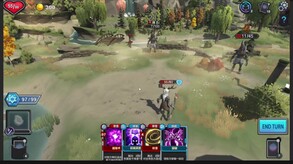
Visually, the game adopts a restrained 3D presentation that prioritizes clarity over spectacle. Environments, enemies, and character models are functional and readable, ensuring that the focus remains on card effects and decision making rather than visual noise. Card art and interface elements are straightforward, clearly communicating mechanics without excessive embellishment. While the overall presentation lacks the polish of higher-budget titles, it remains consistent and effective, supporting the gameplay rather than distracting from it.
The roguelike structure ensures that failure is an expected and even essential part of the experience. Early runs often end abruptly as players struggle to understand how the dual-deck system interacts with enemy patterns and relic effects. Over time, however, each defeat becomes a learning opportunity, gradually revealing how different strategies scale and which combinations offer the most resilience. This slow accumulation of knowledge gives MetaCard a strong sense of long-term progression, even when individual runs are short or unsuccessful.
Reception among players reflects the game’s balance between familiarity and ambition. Many appreciate its willingness to push beyond standard deckbuilding conventions, praising the depth created by managing multiple characters and experimental mechanics. Others find the learning curve steep or the systems underexplained, particularly during the early hours. These mixed reactions highlight the game’s niche appeal: it is not designed to be immediately comfortable, but rather to reward players who enjoy dissecting systems and discovering optimal play through repetition.
In the end, MetaCard:The Turing Test stands as a thoughtful and challenging entry in the indie deckbuilder space. It does not attempt to outshine genre giants through polish or scale, but instead differentiates itself through structural complexity and mechanical curiosity. For players who enjoy roguelike card games and are eager for something that demands deeper planning and sustained attention, it offers a rewarding and intellectually engaging experience. Those seeking a more streamlined or immediately accessible deckbuilder may find it demanding, but for the right audience, its layered design and strategic ambition make it a compelling and memorable journey.
Rating: 7/10