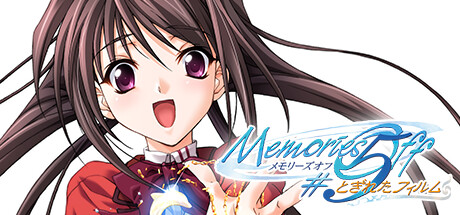
Memories Off #5 Togireta Film is a character-driven romantic visual novel that takes a noticeably reflective approach to love, friendship, grief, and the difficulty of moving beyond a painful past. Developed by MAGES. Inc. and published by Spike Chunsoft Co., Ltd., it represents the fifth main entry in the Memories Off series and preserves the traditional visual novel structure of extensive reading, character interaction, important decisions, branching routes, and multiple endings. Its greatest appeal comes from its emotional storytelling rather than mechanical complexity, making it best suited to players who enjoy patient narratives where relationships gradually reveal deeper personal conflicts.
The story centers on Haruto Kawai, a university student whose enthusiasm for filmmaking has faded following the death of his close friend Yusuke Hina. The two once shared creative ambitions, but Yusuke's absence leaves Haruto unable to fully continue with the dream they pursued together. A year later, filmmaking has become less of an exciting aspiration and more of a reminder of what he lost. This establishes a melancholy foundation that distinguishes the story from lighter romantic visual novels. Haruto's development revolves around more than finding a romantic partner, as he must also determine whether he can confront his memories and regain the motivation to create something meaningful.
The situation changes dramatically when Mahiro Sendo enters Haruto's life. Her connection to Yusuke and the circumstances surrounding the past immediately creates uncertainty and emotional friction. Rather than functioning merely as another romantic interest, Mahiro becomes an important catalyst for reopening issues that Haruto and those around him have never completely resolved. Yusuke's younger sister Asuka also plays an important role, and the relationships between these characters gradually expose different interpretations of loss, responsibility, affection, and regret.
One of the game's better qualities is the way romance develops alongside the larger emotional conflict. Characters have their own personalities and personal concerns instead of existing solely to provide different romantic outcomes for the protagonist. Haruto's interactions with Mahiro, Asuka, Kazuki, Miumi, Mizuho, and the wider cast help establish a believable social circle with shared history. The routes provide opportunities to examine these characters more closely, while multiple endings encourage additional playthroughs for anyone interested in understanding the broader picture. Certain routes inevitably feel more connected to the central themes than others, but exploring several paths provides a more complete appreciation of the cast.
Gameplay remains deliberately conventional. Most of the player's time is spent reading dialogue and narration before occasionally making decisions that affect subsequent events and relationships. There are no demanding combat systems, exploration mechanics, or elaborate minigames competing with the narrative. Consequently, enjoyment depends heavily on whether the player becomes invested in the characters. Those expecting frequent interaction may consider the experience overly passive, while established visual novel enthusiasts should feel comfortable with its straightforward structure. Achievements and gallery-related progression provide additional incentives for completionists to pursue different outcomes.
The filmmaking theme gives the narrative an identity beyond its romantic elements. Haruto's unfinished creative ambitions become symbolic of his emotional condition, with the abandoned project representing a part of his life that stopped progressing after Yusuke's death. Returning to filmmaking therefore becomes connected with confronting memories rather than simply restarting a hobby. This thematic relationship between creativity and emotional recovery gives several dramatic moments greater significance and helps unify otherwise separate romantic routes around a common idea of finding a reason to move forward.
Its visual presentation retains the recognizable appearance of a Japanese visual novel originating from the mid-2000s. Character designs have a distinctly older anime aesthetic compared with modern releases, but the Full HD presentation allows the artwork to appear cleaner on contemporary displays. The style may initially seem dated to players accustomed to newer visual novels, yet it also contributes considerable nostalgic character. Expressive portraits and event illustrations handle most of the visual storytelling, while full Japanese voice acting strengthens emotional scenes and gives individual characters clearer personalities.
The soundtrack complements the story's reflective atmosphere particularly well. Music tends to remain supportive rather than dominating scenes, helping conversations involving nostalgia, sadness, romance, and uncertainty maintain the appropriate tone. Combined with the voice performances, it makes quieter sequences more affecting. The tradeoff is pacing. The game frequently allows conversations and relationships considerable time to develop, so players wanting constant twists or immediate romantic progression could find some sections slow. Its deliberate pace works better when approached as a lengthy character drama rather than a fast-moving romance.
Language support is an important consideration. English is not officially supported, with the available text options centered on Japanese and Chinese languages while the spoken dialogue remains Japanese. Since virtually the entire experience depends on understanding dialogue, narration, choices, and subtle emotional exchanges, the absence of English support creates a substantial barrier for English-only audiences.
Steam Deck compatibility is officially categorized as Playable rather than fully Verified. Performance with the default graphics configuration is considered suitable, and the game can run successfully on SteamOS. However, handheld players should expect compromises. Some functionality is not fully accessible through the default controller configuration, touchscreen interaction or a community controller layout may occasionally be useful, and text entry can require manually opening the virtual keyboard. Some interface text may also appear small, while certain prompts can display keyboard, mouse, or non-Steam Deck controller icons. It is therefore functional on the Deck, but the experience is less seamless than a fully optimized handheld release.
Ultimately, Memories Off #5 Togireta Film succeeds because its romance is intertwined with a thoughtful examination of unfinished dreams and lingering grief. Its traditional mechanics and slow pacing make it a specialized experience, while the absence of English localization further restricts its audience. For players who can understand one of the supported languages and appreciate classic Japanese visual novels, however, the strong character relationships, branching narratives, nostalgic artwork, voice performances, and emotionally grounded filmmaking theme create a memorable experience that rewards patience.
Rating: 8/10