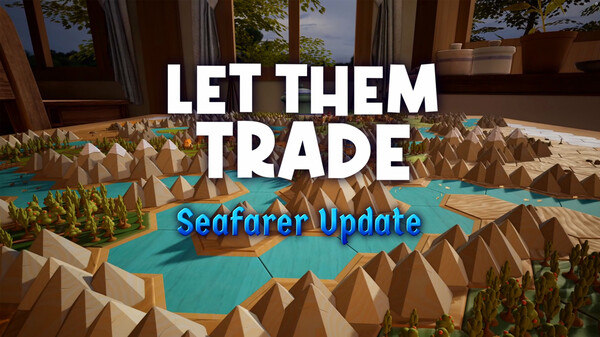
Build a network of cities that produce and trade resources, upgrade your castle, and protect the cities from cheeky bandits. Tinker with the economy at your own pace, and watch the charming wooden world grow into a lively and thriving kingdom.
Modeled estimate, not a reported figure. How we estimate →
Prices
Each in the currency that store quoted — not converted: the gap between two rows is the publisher's pricing, not an exchange rate.
Every market we collect.
Discounts
Every price cut of more than 20% we have observed, in each market that quoted one, with this game's chart position on either side of it. These are episodes, not a model: a sale is one event, and one event cannot tell you what the next one will do.
For scale, across Steam · Top Sellers · Brazil over the last 30 days: the 26 chart moves that followed a price cut of more than 20% went a median of 7 places towards #1, and the 2,402 moves with no price cut behind them went 2 away. One store, one chart, one country — it is the only place we have enough observations to say even that.
Prices outside the United States have been collected since 6 August 2026 and chart positions since 19 July 2026, so a cut older than that has no market to compare and a market that joined later has no history yet. Nothing here is converted between currencies.
About
In the name of the king, you need to build flourishing cities, explore and produce resources, and protect the economy from cheeky bandits.

Resources are scattered across the game map
Acquire resources by founding cities
You decide building placements; cities manage citizen needs autonomously
Cities have their own budget and resources

Cities buy/sell resources and goods independently
The player receives a percentage of taxes from city trades
Wealthy cities are generous; poorer cities are stingier
Happier citizens pay more taxes, increasing city revenue


Protect cities from robbers attracted by wealth
Purchase goods through the castle for various needs and improvements
Strategically trade goods for profit or store them for harder times
Various scenarios with different challenges for dynamic gameplay
Relaxing city-building without outside threats 🏰
Watch the complex economic systems unfold on their own 📈
Research many different production buildings and resources 🏭
Send out your knights to scout for new lands or to protect your economy from cheeky bandits 🤺
Check out our campaign and help the king and his trusty advisor, Mr. Nuts, prepare for their special event 👑
Or play on your own terms in sandbox mode 🤸
Create your own scenarios with our built-in scenario editor and share them on the Steam workshop 🔨
Engagement
Reviews
Themes across 84 recent reviews and how positive each mention is. A keyword signal, not full sentiment analysis.
Reviews
Excellent Game! Not sure if I will pick it back up any time soon, but it is continuously updated, so I'll probably pick it back up then, or for any DLC, which I would gladly pay for. 100 percented the game in 11.5 hours.
目前虽然还玩的不大明白,但是确实挺好玩的
This is a charming strategy game that does a lot of things right. It looks good , it sounds good and I had good fun working my way through the campaign and ramping up the achievements. unfortunately it doesn't have much to offer beyond that. Even though there are like a dozen maps and a lot more of them on the steam workshop it feels pointless as I am just doing same thing again and doing it on a different map does not make enough of a difference to keep it interesting
Media

Related
Related
Price dynamics, follower growth, revenue and sales trajectories with interactive tooltips
This and every other Pro feature is free until October 20, 2026. A free account is all it takes.
Genres
Stats
All-time low is the lowest price we've recorded for this game since we started tracking it.
Languages: English, German, Japanese, Simplified Chinese, Traditional Chinese, Korean, French, Portuguese - Brazil, Spanish - Spain
Hours played at review time, across 84 reviews with recorded playtime.
positive critical· bar length = how often the theme comes up
Primarily a cozy game, extremely intriguing mechanics where, like most city/empire builders you create various production chains, but the actual goal of the game is trading. The kingdom's (you) income source is taxes on trading, and therefore it is in your best interest to ensure the cities trade amongst themselves, and to balance their trading power. A lot of enjoyment comes from laying out the cities such that they need to train to complete their production chains, and balance that with the cases where directly owning multiple steps of a chain is more useful to speed up production and sale of the end product. The cities themselves look at what they have, what they need, and their relative wealth with others to price what they sell and prioritise what to buy. Whilst this may cause monopolies and price gouging if a city is poor, if they're already wealthy and have tons of the product they won't resort to that (how unrealistic). The game is pretty short, as far as campaign goes, but the campaign doesn't actually take you to the very end of the tech tree or the most expensive balance, so you've still got room to build a self-sustainable empire with the epitome of consumerism, like in a game like Anno. Unfortunately, despite this potential, there are a few downsides. The game allows you to directly intervene in the economy by collecting or donating 1K from the city's budget. Though limited by a 5 minute timer and it has consequences of reducing the city's ability to tax their inhabitants (for their own budget), in reality it just means you can balance the economy yourself and get all the money directly instead of through trading. This is a blessing that speeds up the game when you're otherwise in a position of just wating for taxes, but breaks the premise pretty solidly and allows you to just do whatever you want. Except for absolute extremes, where cities make 1K or lose more than 1K in 5 minutes, you have absolute control, and those extremes are simple to avoid or don't require avoiding by the point you reach them. I can only imagine some kind of different way of introducing money into the economy rather than it magically spawning from inhabitants, but as the simulation approaches reality, and with a self-contained kingdom, it's difficult to envision the approach. Secondly, the scale can often mean that the way cities conduct trade isn't optimal. As the kingdom becomes bigger the cities at the edge of the kingdom may end up stuck in simple trades if the things they require are at the very other end, and I'm not sure if they even take distance into the calculation when looking at the prices other cities sell their resources for. And you very often see traders that can carry 10 resources make long trips for 1, resulting in multiple traders from the same city all buying 1 resource. Note, if this is happening it also means the city is doing pretty well; they're just topping up their warehouse and are only sending traders because they're free. Whilst it may seem odd, it's not by itself a real indicator of bad AI, it could even be the optimal move to buy a resource cheap one by one than all at once where the high demand may cause a price increase. As mentioned, this second point is less of a concern and more of a logistical inevitability as long as natural resources force distances between cities.
希望出个一键收税,后期10个城镇一个个收。。。其实这很耐玩,每次重玩都有新的方案解决不同问题。很多人说的城镇运力问题其实是可以解决的,初期尽量围着主城造运力需求很小的。后期基本随便都不会不够了
Es ist albern, einer Wirtschaftssimulation vorzuwerfen, eine Wirtschaftssimulation zu sein. Aber bei diesem Titel kann ich nicht anders. Let Them Trade feiert mir den Turbokapitalismus doch eine Spur zu unreflektiert. Die Spielmechanik beruht auf einem einfachen „der Markt regelt das“, und eine tiefere, feinere Mechanik oder Steuerung gibt es nicht. Siedlungen verkaufen untereinander Waren, und dabei erhalte ich 25% des Preises als Steuer. Die Preise berechnen sich aus dem Vorrat und dem Bedarf. Backe ich zuviel Brot, sinkt der Preis, und die Bäckerstädte verlieren Geld, weil sie mehr ausgeben als einnehmen. Also backe ich absichtlich zu wenig Brot: die Bevölkerung wird unzufrieden, aber die Rendite stimmt wieder. Im späten Spielverlauf kann ich Schnaps herstellen. Um dahin zu kommen, braucht es mindestens sechs Bürger. Die wollen gerne 30 Flaschen Schnaps kaufen. Und kaum ist die erste Flasche auf dem Markt, verzehnfacht sich der Preis – 1900 Taler sind mein Rekord. Die Städte aber kaufen zu jedem Preis und ganz fix sind sie um 50.000 bis 60.000 Taler ärmer. Der Markt regelt das. Oder ich habe einen Engpass in der Lehmproduktion. Dann kostet ein Klumpen 200 Taler, die daraus produzierten fünf Vasen aber nur 160. Das Mantra aus Angebot und Nachfrage scheint die einzige Spielmechanik zu sein. Ich kann nicht eingreifen. Keine Extra-Steuern für Bürger und Adelige, keine Möglichkeit, Höchstpreise zu setzen. Aber ich kann die Produktion drosseln und mich mit unzufriedenen Einwohnern abfinden. Gefällt es ihnen bei mir nicht, ziehen sie aus, und Sekunden später zieht jemand anders ein. So geht man im Turbokapitalismus eben mit seinen Arbeitern um. Und das ganz ohne Konsequenzen. Dieses „der Markt regelt das“ zieht sich durch alle Ebenen des Spiels. Selbst im Karteneditor. Ich darf Landschaftskarten auf dem Tisch verteilen, Gebäude setzen und bestimmen, wieviele Banditen es gibt. Ich habe keine Möglichkeiten, Missionsziele zu bestimmen. Nicht einmal das kleinste Popup-Fenster darf ich den Spielern schicken – mit Botschaften wie „Hallo, du!“ oder „Baue ein Dorf am Strand.“ Der Karteneditor ist einfach nur ein Karteneditor. Darf ich ihm das vorwerfen? Selbstverständlich. Denn hier wurde an jedem kleinen Extra gespart. Weil der Markt sagt, die Entwicklung würde sonst zu teuer? Ich empfehle dieses Spiel trotzdem. Man muss sich nur klar machen, dass die Mechaniken so flach und unreflektiert sind und sich darauf einlassen wollen.
古き良きボードゲームの世界を楽しむゲーム。たった一つの重要なルールである「都市間でアイテムがやりとりされると、それぞれの都市から税金を徴収される」というところだけ押さえておけば、さらっと遊べて良い。自分だけのマップを作るもよし、投稿されたマップを遊ぶもよし。
Had much fun playing this game! The tutorial is a bit clunky, but when you understand how you earn money and how to build, I really had a good time with a mix of Sid Meier's Civilization and Anno. Things I really want to be in the game currently missing would be CPU-Enemys (with bigger maps), ship management (a little bit more Anno), and if there are CPU-Enemys also a multiplayer. Also, the bandits are in the late game very annoying, but no challenge, maybe it's possible to make the combat a little more complex. But in general, you have a cute building-sim with cool ideas and a good load of content
Ein entspannendes und knuffiges Spiel. Ideal zum Abschalten um eine Pause vom Alltag zu machen.
有趣的小品遊戲 有特價可以入手 稍微懂一點經營遊戲的話不會太難 水多了加麵 麵多了加水的類型XD
Active players
Estimated daily and monthly active players (DAU/MAU) modeled from peak concurrency.
Players by region
Where this game's players are, estimated from review languages.
Players also reviewed
The games this title's players most often review too — audience affinity.
Related
| Game | Estimated lifetime revenue | Reviews | Review score | Price |
|---|---|---|---|---|
| $14.8K | 60 | 93% | $5.99 | |
| $7.3K | 56 | 89% | $3.99 | |
| $3K | 8 | 100% | $11.99 | |
| — | 0 | — | — | |
| $683.7K | 1.1K | 76% | $9.99 | |
| $460.4K | 604 | 68% | $19.99 |
Related
| Game | Estimated lifetime revenue | Reviews | Review score | Price |
|---|---|---|---|---|
| $824.8K | 1.5K | 84% | $18.99 | |
| $825K | 1.8K | 82% | $29.99 | |
| $824.6K | 651 | 62% | $39.99 | |
| $825.3K | 2.1K | 93% | $24.99 | |
| $825.4K | 655 | 91% | $39.99 | |
| $825.6K | 1.6K | 85% | $9.99 |