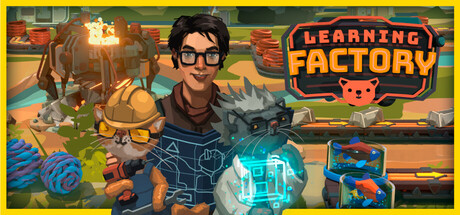
Build a factory for the galaxy's pickiest customers: cats. Automate production, route goods and cats to your stores, and grow across surface and underground layers. Experiment with machine learning to improve your business, with no enemies to interrupt your plans.
Modeled estimate, not a reported figure. How we estimate →
Discounts
Every price cut of more than 20% we have observed, in each market that quoted one, with this game's chart position on either side of it. These are episodes, not a model: a sale is one event, and one event cannot tell you what the next one will do.
Reviews, worldwide (the counter carries no country): 0/day in the week to Sep 11 → 0/day in the week after.
For scale, across Steam · Top Sellers · Brazil over the last 30 days: the 26 chart moves that followed a price cut of more than 20% went a median of 7 places towards #1, and the 2,400 moves with no price cut behind them went 2 away. One store, one chart, one country — it is the only place we have enough observations to say even that.
Prices outside the United States have been collected since 6 August 2026 and chart positions since 19 July 2026, so a cut older than that has no market to compare and a market that joined later has no history yet. Nothing here is converted between currencies.
About
Build a factory on Mars that serves the most demanding customers in the universe: cats. Learning Factory is a relaxing automation and management game where you turn raw materials into goods, deliver them to stores, and design a transport network that gets every kind of cat to the products it wants.
As the new chief engineer of an abandoned factory, you have a research mission: discover what makes cats happy. Restore the factory, develop the goods your customers want, and send them home with full paws.

Connect production lines with conveyor belts, move supplies underground, and extend your network with air transport. Research new possibilities and improve your layout as your factory grows.
Your cats travel through the factory alongside its goods. Guide customers to the right stores, keep shelves supplied, and expand production to meet their growing demands. Produce and sell the goods they want, then use your progress to make the factory more efficient.
Build toward a bigger future for felinekind: rebuild the ancient Monument and establish Catopia.
Experiment with real machine-learning models that analyze store sales data. Explore the in-game wiki and handpicked educational videos to learn more about the ideas behind your factory and its customers.
There are no enemies to fight. In this fail-safe environment, you can keep trying, stay curious, and refine your production chains. Explore procedural worlds and discover new ways to make cats happy as you work toward Catopia.
Genres
Add-ons
Each DLC is estimated with the same model as a game, then summed — a modeled figure, not reported DLC sales.
Sums Steam only; Xbox, GOG, Epic publish no volume signal, so the true total is higher by an unknown amount.
| Store | Price | Audience | Score | Chart | Est. revenue |
|---|---|---|---|---|---|
SteamYou are here | $8.99−40% | 523reviews | 86% | — | $215.4K |
| $14.99 | 32ratings | 70% | — | not modelled | |
Engagement
Reviews
Themes across 44 recent reviews and how positive each mention is. A keyword signal, not full sentiment analysis.
Reviews
Factorio with cats. No enemies, only cat(?) customers that you want to sell your goods for and satisfy them. There are some Machine learning component that the game tries to teach you (This area needs some improvement in my opinion). Is it well optimized? To a point yes, but expect fps drops in late game. Do I recommend it? Yeah it's quite fun.
Отличная игра, всем рекомендую! Нет врагов и давления, можно оставить и отлучиться. Получаю удовольствие от создания производства мотков пряжи и картонных коробок))
Media

Related
Related
Price dynamics, follower growth, revenue and sales trajectories with interactive tooltips
This and every other Pro feature is free until October 20, 2026. A free account is all it takes.
Stats
All-time low is the lowest price we've recorded for this game since we started tracking it.
Languages: English*, Russian*, Simplified Chinese*, Traditional Chinese*, German*, French, Italian, Spanish - Spain, Portuguese - Brazil*, Korean*, Japanese, Polish +20 more
| $14.99 |
| 16ratings |
| 78% |
| — |
| not modelled |
| $14.99 | — | — | — | not modelled |
Matched by title — a reused name can pair the wrong games. * is a critic aggregate. Prices and positions are each store's United States storefront; Epic charts worldwide. Audience and Score too, except Steam's, which is worldwide.
Hours played at review time, across 44 reviews with recorded playtime.
positive critical· bar length = how often the theme comes up
It's playable. It's an interesting spin on this genre. I think it starts of way too quickly and piles way too many features on top of the player. It took me very long to figure out some of the early stuff that I managed to skip "thanks" to that. The machine learning is something I don't understand the point of at all, and it makes the game kinda random and it's difficult to figure out what I'm doing wrong to make the cats unhappy. It feels like it was a core idea to the game, but then it fell flat on its' face and was just left in. The UI probably doesn't help. It's the worst UI I saw in a game that wasn't just a cash grab. Can we give it a game award for this? It's so bad there would be a new kind of mental illness if more people played this game. Also, what is the point of having a character? It doesn't add anything and it just substracts. You bump into everything and get slowed by everything and even with the upgrades it doesn't feel good moving around. In satisfactory, the character is really well connrected to the story, and playing a 3D game with just a camera would be dissorienting. In factorio, you can die and shoot. But for example shapez was doing fine without a playable character. In this game the story is nonsensical and it just feels like we have it because factorio did it. As a last point, it seems to have a lot of educational stuff? I don't think there's much to learn. It couldn't even teach me how to play the game, how am I supposed to learn anything else from it. I know some basics of how machine learning works, but the UI didn't allow me any of my basic knowledge to what is happening, so in the end I probably unlearned a few things. And why teach what a fish is, in a game like this? It could work if we we're hundreds of years post apocalypse, but as of writing this, we're not. This is a game where I really struggle with the steam review system. Would I recommend this game? No. But is it so bad I want people to stay away from it? Also no.
Почти 100 часов удовольствия для любителей Факторио
This is cute and challenging game. I wanted a factory game and this was perfect for me.
Déroutant au début, puis fun
Nettes Spielchen um etwas mit einfachem Machine Learning rumzuspielen. In Teilen mehr symbolischer Natur, aber es gibt auch vertiefende Weiterleitungen falls man sich dafür interessiert.
Learning Factory is an automation and management simulator developed and published by Luden.io that takes familiar factory-building concepts and gives them a surprisingly creative purpose. Rather than building massive industrial empires solely for expansion or profit, players are tasked with understanding one of humanity’s oldest mysteries: what cats actually want. By combining logistics management, production chains, machine learning concepts, and lighthearted humor, the game creates an experience that feels educational, relaxing, and mechanically rewarding at the same time. The premise immediately gives Learning Factory its identity. Players arrive on Mars to restore a neglected manufacturing facility originally designed to study feline preferences and produce products that satisfy cat consumers. The abandoned operation no longer functions properly, customer satisfaction has declined, and rebuilding the entire system becomes the central objective. Success depends not only on creating efficient production networks but also on gathering information, analyzing behavior patterns, and improving understanding of customer demand. At its heart, Learning Factory follows many principles familiar to automation genre veterans. Resources must be extracted, machinery carefully positioned, and transportation systems optimized to maintain smooth production flow. Early progression begins simply with manageable factory layouts and straightforward manufacturing chains. Over time, additional complexity appears naturally as expanding operations introduce larger logistical challenges and greater demands for efficiency. Designing production lines becomes one of the game's strongest features. Conveyor belts, assembly systems, and resource routing create satisfying optimization puzzles where small adjustments often generate significant improvements. Players constantly refine layouts, eliminate bottlenecks, and redesign infrastructure to improve performance. Few experiences in management games remain as consistently satisfying as watching disconnected machines slowly evolve into a highly efficient operation running with minimal intervention. The production mechanics remain engaging because Learning Factory steadily introduces additional systems rather than overwhelming players immediately. New technologies unlock gradually, expanding factory possibilities while encouraging experimentation. Research progression feels meaningful because upgrades significantly reshape how facilities operate. Early designs that initially appear effective eventually become outdated, encouraging players to rethink layouts and discover more advanced solutions. What separates Learning Factory from many factory simulators is how heavily it emphasizes information analysis. Data gathered through cat purchasing behavior influences production decisions directly. Understanding consumer preferences becomes equally important as manufacturing efficiency. The game cleverly transforms customer analytics into an interactive gameplay system where players gradually uncover patterns that shape future planning. Machine learning concepts further strengthen the experience's uniqueness. Rather than existing purely as background flavor, analytical systems play active roles in progression and factory management. Players collect information, interpret trends, and improve understanding of demand patterns over time. The educational ideas remain approachable even for players unfamiliar with technical subjects, allowing Learning Factory to introduce interesting concepts without becoming intimidating. The game's atmosphere also deserves recognition. Unlike many automation titles that introduce survival pressure or external threats, Learning Factory embraces a calmer pacing focused entirely on optimization and experimentation. There are no hostile forces disrupting progress or forcing defensive preparation. Challenges emerge from organization, scaling operations, and improving efficiency rather than reacting to danger. That design decision creates a more relaxed experience well-suited to players who enjoy thoughtful planning. Mars serves as an effective backdrop for progression. Expansion opportunities steadily increase as operations grow larger and more ambitious. The setting supports exploration while reinforcing the game's unusual scientific identity. Additional systems introduced later create greater opportunities for players who enjoy building increasingly sophisticated industrial networks. Visually, Learning Factory favors readability and function over technical spectacle. Factory management games naturally become more complicated over time, but the interface and presentation remain manageable even as production networks expand dramatically. Machines remain visually clear, transportation systems stay understandable, and information presentation supports long-term planning effectively. The art style also reinforces the game's lighter personality. The focus on cats and humorous presentation prevents the educational aspects from feeling overly serious or clinical. Despite involving logistics optimization and machine learning ideas, the experience maintains an approachable and charming tone throughout progression. Audio design complements the slower pacing effectively. Music supports longer play sessions comfortably without becoming distracting, while sound effects provide useful feedback that reinforces factory activity. Since optimization games often encourage extended sessions focused on planning and refinement, maintaining an unobtrusive presentation becomes especially important. The progression pace occasionally slows as factory demands increase. Larger operations require more planning, redesign work, and logistical improvements that may feel demanding for players unfamiliar with automation-heavy experiences. However, those who enjoy factory simulators will likely appreciate the deeper optimization opportunities introduced during later stages. Learning Factory succeeds because it balances education, creativity, and management systems exceptionally well. Luden.io created a factory-building experience that feels distinctive without sacrificing accessibility. The unusual objective gives the game personality, while its automation systems provide enough depth to satisfy players looking for meaningful optimization challenges. For fans of logistics simulations, factory-building games, management systems, and relaxed optimization experiences, Learning Factory delivers an intelligent and rewarding experience that stands out through originality and thoughtful design. Rating: 8/10
遊戲很好玩也值得去玩,大約就是生產東西去賣給貓,之後設計生產物品的路線最後可以生產出某個貨品的樣子,之後貓會找好友來買,買到一定數量會有新的貓出現,玩起來上百小時是沒有問題的,就是操作很蛋疼,用手把的手感太差,想用滑鼠但就要配鍵盤的ASDW才可以處理,連一隻滑鼠打天下都做不了,這是很遺憾的,再是這遊戲很容易出現不知要做甚麼和開著遊戲掛住等研發的情況,技能樹的研發實在太慢了,沒解鎖某東西就不能去建設某東西再去生產某東西出來,很容易就出現放在這裡完全不知做甚麼好,這不是說因為你研發了某東西之後就完了,而是這東西之後可能還可以和其他很多東西都有關聯,這一步步的解鎖是很影響地圖中的規畫,很少數玩家可以每研發一個新東西就把地圖清理一次重新起一次,這真是閑得慌了,這是遊戲中的指引設計的比軷差的一環,當然你說研發慢可以請貓去加速研發,但是請貓要錢,而賺錢這動作看起來非常的不夠直觀,完全都看不太懂那裡和那裡,有些地方攪得太專業了,比如AI的線性回歸,比如甚麼報告等看都看不懂,專業到小白看起來很難受,不是有編程底不是近排AI大火,鬼知道線性回歸是甚麼,那怕知道那裡面9成的人也就是聽過線性回歸而已,但要真理解線性回歸怎麼操作的可能就可能只有剩下的一成玩家了,而遊戲裡面雖然是有專業名詞的解說但很多時候都是轉跳去維基,本身都不懂,還要跳去一個更加不懂的地方,字還要比遊戲裡面的更多,這有點不是一個遊戲的感覺了,初衷是好的想藉著遊戲把很深的東西帶給玩家,但這深的東西為什麼深,就因為它們深呀深就不易懂,從一個不易懂得地方去了一個更不易懂的地方????????那怕遊戲中送了一個巨型的遊戲百科還是覺得太專業了,字太多以現代人來講是很難受的,想說看一下其他玩家寫的攻略,但出奇的非常非常的少,少到可有可無的,就有點白白把好遊戲浪費掉了的感覺,最後的結果是變成這遊戲有點"雞肋"的感覺
5/5 cats!
Selling now
See how fast this game is selling right now — estimated copies and revenue per day from recent review growth.
Players by region
Where this game's players are, estimated from review languages.
Related
| Game | Estimated lifetime revenue | Reviews | Review score | Price |
|---|---|---|---|---|
| — | 16 | 78% | $14.99 | |
| $1.6K | 60 | 70% | $0.99 | |
| $2M | 3.4K | 84% | $19.99 | |
| $92K | 11 | 36% | $199.99 | |
| $2M | 3.6K | 90% | $19.99 | |
| $764.6K | 1.2K | 86% | $24.99 |
Related
| Game | Estimated lifetime revenue | Reviews | Review score | Price |
|---|---|---|---|---|
| $215.4K | 1.3K | 65% | $4.99 | |
| $215.4K | 201 | 54% | $49.99 | |
| $215.4K | 1K | 92% | $9.99 | |
| $215.4K | 605 | 84% | $9.99 | |
| $215.4K | 319 | 92% | $19.99 | |
| $215.3K | 371 | 88% | $19.99 |