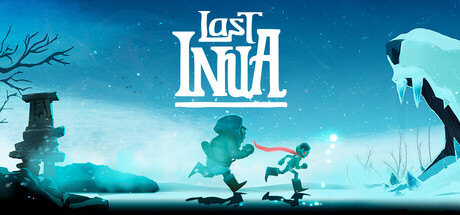
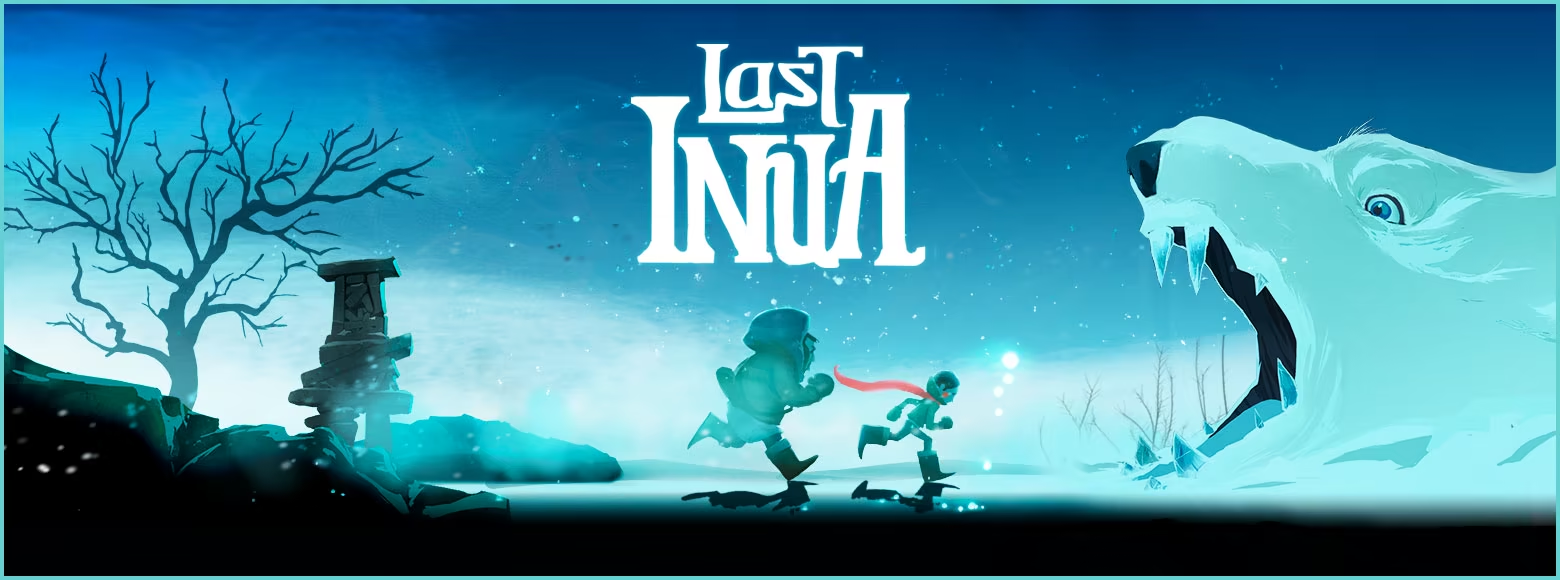
Last Inua, developed by Glowforth and published by Wired Productions, is a 2D puzzle-platformer that strives to blend mythology, atmosphere, and emotional storytelling into a single, cohesive journey. Set in a mystical, arctic world inspired by Inuit mythology, the game follows the story of Ataataq and his young son Hiko, as they navigate a world increasingly corrupted by the evil spirit Tonrar. Hiko possesses supernatural abilities, while Ataataq is physically strong but lacks magical power. Their bond is central to the game’s experience, and the player must use both characters in tandem to progress through an environment filled with frozen hazards, mythic creatures, and spiritual energy. It’s a premise that promises emotional depth and artistic ambition, and in many ways, Last Inua delivers on that promise—though not without its share of missteps along the way.
Visually, Last Inua is one of the more striking indie titles to emerge in its era. The art direction is both surreal and grounded, presenting a bleak, icy tundra that is still rich with personality. Snow-covered landscapes, crumbling temples, and strange dreamlike realms are rendered with painterly detail. The character designs are expressive, and the animations fluid, though somewhat restrained due to the game’s more contemplative pace. The audio design is just as evocative, with a haunting soundtrack that underscores the story’s somber tone. Ambient sounds of the wind, creaking ice, and mystical murmurs add to the immersion, crafting a world that feels both ancient and on the edge of ruin. Combined, the visuals and sound create an atmosphere that is quiet, melancholic, and often beautiful in its stillness.
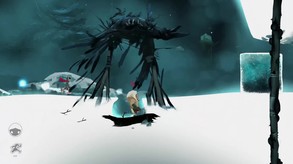
The gameplay structure revolves around puzzle-solving and environmental navigation using the unique abilities of each character. Ataataq, the father, can push heavy objects, lift Hiko, and traverse difficult terrain, while Hiko can activate ancient runes, summon magical light paths, and manipulate spiritual elements. Much of the challenge comes from switching between the two, often requiring one to create a path for the other, or to simultaneously overcome parallel obstacles. Some sections involve timing-based puzzles or hazards that force quick switches between the characters, but the overall tempo remains relatively measured. Unlike more kinetic platformers, Last Inua favors precision and planning over speed, which suits its narrative tone but may frustrate players looking for faster, more action-driven gameplay.
The emotional core of the game is clearly intended to be the father-son relationship. There is a quiet desperation in Ataataq’s journey to protect his sickly child, and Hiko’s magical burden is presented with an understated sense of responsibility. Their interactions are subtle but effective, relying less on dialogue and more on visual storytelling and environmental cues. However, while the emotional beats are present, they can sometimes feel underdeveloped or overly distant. Cutscenes are minimal, and the storytelling often leans on symbolism more than direct narrative progression. This works to create a dreamlike mood, but can also leave players feeling disconnected from the characters’ internal struggles. The game’s mythological roots offer intriguing glimpses of spiritual lore, but don’t always get the depth or clarity needed to feel fully realized.
Despite its strong conceptual foundation, Last Inua is not without its gameplay issues. The controls can feel slightly sluggish at times, particularly when maneuvering Ataataq. Some puzzles, while clever in design, are repeated in slightly varied forms too often, leading to a sense of mechanical monotony. Checkpoints are generally forgiving, but there are moments where failure leads to mildly frustrating repetition. Additionally, the AI for the non-active character occasionally lags behind or requires manual repositioning, which can interrupt the flow of puzzles that demand coordination. These aren’t game-breaking problems, but they do create moments of friction in an experience that’s otherwise built on mood and momentum.
On the technical side, the Steam release of Last Inua is solid. Originally developed for mobile platforms, this version brings improved resolution, better controls, and some additional levels that explore Hiko’s magical powers more deeply. The enhanced visual fidelity does justice to the game’s hand-drawn art, and the keyboard/mouse or gamepad support is functional, if not always perfectly responsive. The game isn’t resource-intensive, and it runs well on a wide range of PCs. That said, there are no major innovations or extras included in the PC port—no commentary, behind-the-scenes features, or deep system reworks. It’s a faithful port, but one that might feel a bit barebones for players used to more expansive indie re-releases.
In terms of content, Last Inua is a relatively short game. Most players will finish it in around two to three hours, depending on how quickly they solve the puzzles and how much time they spend exploring the environments. There’s little in the way of replayability, as the story is linear and the puzzles don’t change from one playthrough to the next. Still, the length feels appropriate for the kind of narrative being told. It’s not meant to be a sprawling epic, but rather a quiet, focused tale of survival, magic, and family. The brief runtime keeps the story from overstaying its welcome, even if it also limits how deeply the characters and themes can be explored.
Ultimately, Last Inua is a game of tone and feeling more than mechanics. It succeeds in crafting a haunting, beautiful world steeped in myth and emotion, and its visual and auditory design work together to create a uniquely immersive atmosphere. While its gameplay can be repetitive and its story sometimes underdeveloped, it remains a compelling experience for those who value artistry and emotional nuance in their games. It’s not likely to satisfy players looking for tight platforming or deep mechanical complexity, but for those drawn to narrative-driven experiences that emphasize mood and meaning, it offers a memorable, if brief, journey.
Rating: 6/10